 Instrumentiverse

Introduction to Chord Functions in Minor Keys
Chord functions form the backbone of harmonic movement in music, guiding how listeners perceive tension and resolution. While major keys offer bright, stable progressions, minor keys deliver darker, more introspective emotions that songwriters love for ballads, rock anthems and cinematic scores. This guide extends core concepts to natural, harmonic and melodic minor scales, helping you craft compelling progressions that resonate deeply with audiences. Understanding these functions allows songwriters to move beyond basic triads and create harmonic landscapes that evoke specific feelings, from quiet sorrow to intense drama.
Beginners will find clear explanations of each function, while advanced writers discover substitutions and voice leading techniques used in hit songs. By comparing minor key behaviors directly to major keys, you will gain tools to choose the right harmonic path for any emotional goal in your compositions.
Minor Scale Variants and Their Impact on Functions
Minor keys differ from major because of the flattened third scale degree, which immediately shifts emotional tone. Natural minor uses the unaltered descending form, producing a pure minor sound that feels grounded and melancholic. Harmonic minor raises the seventh degree to create a stronger leading tone for dominant chords, adding a sense of urgency and classical tension. Melodic minor raises both sixth and seventh degrees when ascending, smoothing melody lines while preserving minor color in descending passages.
These alterations change dominant and subdominant qualities dramatically. For instance, the raised seventh in harmonic minor strengthens the dominant function, making V chords resolve more powerfully to i. In contrast, natural minor allows for a softer v chord that can blend into modal styles. Songwriters often switch between variants within a single song to control the emotional arc, starting in natural minor for verses and shifting to harmonic minor for choruses that demand stronger resolution.
Tonic, Dominant and Subdominant Roles Explained
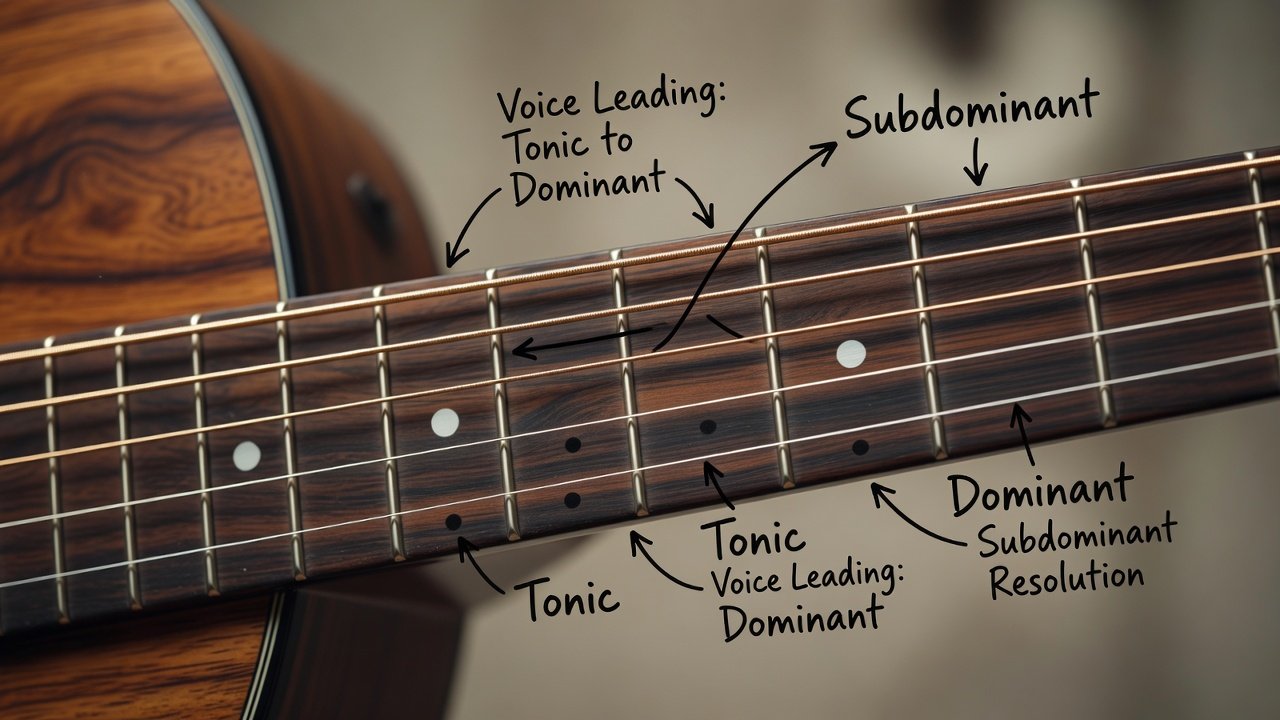
In any key, three primary functions drive harmony: tonic provides stability and home, dominant creates tension seeking resolution, and subdominant acts as a bridge or departure point. In minor keys these roles adapt to the scale variants, offering more flexibility than in major keys. The tonic chord, built on the first degree, grounds the progression emotionally and serves as the point of rest. The dominant, typically on the fifth degree, heightens tension through its leading tone, especially when using the major V from harmonic minor. The subdominant on the fourth degree offers movement away from tonic without full resolution, often introducing color through borrowed chords or scale changes.
Voice leading tips include keeping common tones between chords and moving outer voices by step for smooth transitions. For example, in A minor, moving from Am (tonic) to Dm (subdominant) keeps the A note common while the bass descends, creating a natural flow that feels inevitable yet expressive.
Common Substitutions and Advanced Applications
Songwriters frequently substitute chords to add color and surprise. The major IV in melodic minor can replace the minor iv for brighter lifts during bridges. Diminished chords built on the raised seventh often substitute for dominant function, adding chromatic tension that resolves satisfyingly. In natural minor, the major bVII chord serves as a subdominant substitute, common in rock and folk for its earthy, unresolved quality that pushes the progression forward.
Advanced writers layer these with secondary dominants or modal interchange from parallel major to heighten emotional contrast. For instance, borrowing the major IV from A major while staying in A minor creates a sudden lift that can signal hope amid darkness. These substitutions expand the harmonic vocabulary without abandoning the core functions that listeners instinctively follow.
Step-by-Step Examples from Popular Tracks
Consider Adele’s “Someone Like You,” which relies on a simple i–III–VII–IV progression in natural minor. The tonic establishes melancholy, while the subdominant IV provides brief hope before returning home, mirroring the song’s theme of lingering attachment. In “Hotel California” by the Eagles, the harmonic minor influence appears through V–i resolutions that create haunting tension, with the raised seventh driving the guitar solo’s emotional peak.
Another strong example is “Zombie” by The Cranberries, using a repeating i–VI–III–VII pattern in natural minor to convey frustration and despair. The subdominant and mediant chords provide movement while the tonic anchors the raw vocal delivery. Compare this to major key examples like the I–V–vi–IV in countless pop hits to hear how minor functions invert the emotional arc, turning resolution into longing instead of triumph. “Hurt” by Johnny Cash further demonstrates harmonic minor’s power through its V–i cadence that underscores themes of regret and finality.
Voice Leading Techniques for Minor Progressions
Effective voice leading ensures chords connect smoothly, preserving the emotional intent. Keep the third of the tonic chord in an inner voice when moving to the dominant, allowing the leading tone to rise naturally. In harmonic minor, the augmented second between the sixth and raised seventh requires careful handling to avoid awkward leaps in melody. Practice resolving the dominant seventh chord by moving the seventh down by step and the leading tone up by step, a technique that strengthens the pull toward tonic in any minor variant.
These methods become especially useful when layering multiple instruments, as they prevent muddiness and let each line contribute to the overall harmonic story.
Practical Exercises for Building Progressions
Start by writing an eight-bar loop using only i, iv and V in harmonic minor, such as Am–Dm–E–Am in A minor. Next, substitute the bVII for iv and note the mood shift toward a more open, folk-like feel. Experiment with voice leading by keeping the third of the tonic in the melody while changing bass notes across different inversions.
Record your loops and compare emotional impact against a parallel major key version using I–IV–V–I. Add a secondary dominant like E7 before the iv to introduce extra tension. Finally, try mixing natural and melodic minor within one progression to see how the raised sixth alters subdominant color. These exercises build intuition for when minor functions best serve your song’s narrative and help you avoid repetitive patterns.
Comparing Minor and Major Key Functions
Major keys favor bright dominant resolutions and predictable subdominant movement that leads to clear, uplifting conclusions. Minor keys introduce ambiguity through the variable sixth and seventh degrees, allowing more flexible dominant and subdominant choices that can delay or twist resolution. The result is greater emotional range: minor progressions can feel tragic, mysterious or even triumphant depending on scale choice and substitutions. For example, a major key V–I feels conclusive, while the minor V–i can feel bittersweet or incomplete, inviting continuation into the next section of a song.
How Functions Boost Emotional Impact
By deliberately choosing when to emphasize tonic stability versus dominant tension, songwriters control listener engagement. Subdominant chords in minor keys often carry a sense of departure that heightens the return to tonic, amplifying catharsis. This dynamic explains why minor key ballads frequently top charts during emotionally charged periods in popular music.
Conclusion
Mastering chord functions in minor keys unlocks richer harmonic palettes for songwriters at every level. Apply these principles across scale types, experiment with substitutions, and study real tracks to internalize the emotional power they deliver. With consistent practice, these tools will become second nature in your creative process.
FAQs on Common Pitfalls and Emotional Impact
How do I avoid weak dominant resolutions in minor keys? Always raise the seventh degree when using harmonic minor for stronger V–i motion, and ensure the leading tone resolves upward in the melody or top voice.
Which minor variant boosts emotional impact most? Harmonic minor excels at dramatic tension and classical resolution, while natural minor suits introspective verses and folk-inspired writing. Melodic minor works well for smoother, more vocal-driven sections.
Can I mix major and minor functions? Yes, modal interchange from the parallel major often heightens contrast and emotional depth, but maintain clear voice leading to prevent the harmony from sounding disjointed.
What resources can help deepen this knowledge? Explore foundational lessons at MusicTheory.net and detailed scale explanations on Wikipedia for further reading and audio examples.


No comments yet. Be the first!