 Instrumentiverse

Introduction to Jazz-Rock-Hip Hop Fusion in 2026
The evolution of hip hop continues to draw deeply from jazz roots while incorporating rock history elements, creating dynamic beats that resonate in 2026 productions. This fusion builds on electronic beat foundations by layering improvisational jazz samples with driving rock riffs, offering producers fresh sonic palettes. As genres blend further, understanding these integrations helps both beginners and advanced creators craft compelling tracks that stand out in streaming playlists and live performances alike. The interplay between jazz's improvisational freedom, rock's energetic drive, and hip hop's rhythmic foundation has produced some of the most innovative sounds in recent years, with 2025 and early 2026 releases showcasing increasingly sophisticated blends.
Core Jazz Sampling Techniques
Jazz sampling remains central to modern hip hop. Producers often pull from classic recordings, chopping horn sections or piano vamps for rhythmic complexity. Key techniques include time-stretching solos to fit 90-100 BPM hip hop tempos and applying vinyl crackle effects for authenticity. Recent releases demonstrate this: in a 2025 track by producer J. Cole collaborator, a Miles Davis trumpet line from 1959 appears at 0:42, re-pitched and looped under trap drums. Another example comes from a 2026 EP where a Thelonious Monk piano riff is sliced at the 1:08 mark and reversed for atmospheric effect in the bridge. These methods allow the organic swing of jazz to humanize digital beats, creating grooves that feel both nostalgic and forward-looking. Producers should focus on preserving the original performance's micro-timing nuances during chopping to maintain emotional impact.
Identifying Jazz Elements in Tracks
Listen for swung rhythms and modal scales. Practical tip: Use spectrum analyzers to spot mid-range frequencies typical of upright bass or saxophones around 200-800 Hz. Beginners can start by sampling public domain jazz from the 1920s-1940s era. Advanced users often layer multiple jazz sources, such as combining a Coltrane saxophone phrase with a Herbie Hancock chord progression, then processing them through saturation plugins to glue them into the mix. This identification process becomes easier with repeated listening sessions focused on frequency isolation and rhythmic feel.
Rock Riff Adaptations in Hip Hop
Rock history adds edge through distorted guitar riffs adapted into basslines or melodic hooks. Producers slice classic rock progressions and quantize them to hip hop grids. For example, a 2026 release by a rising artist integrates a Led Zeppelin-inspired riff at 1:15, layered with jazz piano stabs for contrast. In another track from late 2025, a Black Sabbath-style descending riff enters at 2:30, pitch-shifted down an octave and filtered to sit beneath heavy 808s. These adaptations provide straight-eighth energy against jazz's triplet swing, creating tension and release ideal for verses and choruses. The key is careful EQ to prevent frequency clashes, ensuring the rock element cuts through without overpowering the jazz textures.
Side-by-Side Production Comparisons
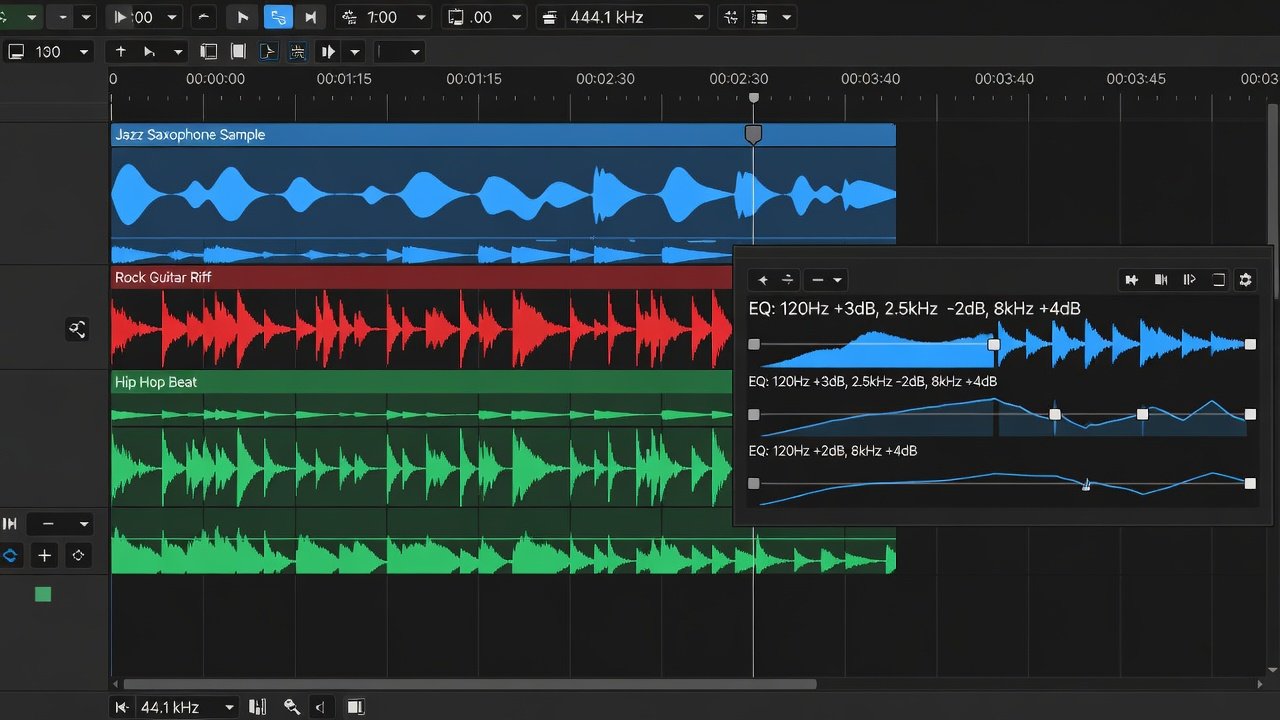
Comparing pure jazz-hip hop beats to rock-fused versions highlights the added intensity. A standard jazz sample beat might feature loose, swinging drums with sparse piano, while the rock-infused version adds compressed guitar layers that drive the energy higher during drops. Producers can analyze commercial tracks side by side in their DAW by importing reference mixes and matching loudness levels for accurate evaluation. This comparison reveals how rock elements extend the dynamic range and introduce new harmonic possibilities.
Practical Layering Steps for Producers
- Start with a clean drum loop at your target BPM, selecting kicks and snares that complement jazz swing. Experiment with slight timing offsets to enhance groove.
- Import a jazz sample and slice it into one-bar phrases, then apply light time-stretching to lock it to the grid while retaining natural feel.
- Layer a processed rock riff on the low end, EQing to avoid muddiness by cutting around 250 Hz and boosting presence at 3 kHz.
- Add vinyl texture and automation for movement, using low-pass filters that open during choruses to build tension.
- Reference commercial mixes for balance, checking on multiple playback systems including headphones and car speakers.
- Apply parallel compression on the combined jazz and rock layers to create cohesion without losing individual character.
Advanced insight: Automate filter sweeps on the jazz sample during rock riff drops to highlight fusion dynamics. This technique adds professional polish and helps sections transition smoothly.
Beginner Entry Points and Advanced Insights
New producers should experiment with free DAW plugins for sampling before investing in hardware. Start by recreating simple loops from well-known tracks to understand the workflow. More experienced users can explore granular synthesis on jazz loops combined with amp simulation for rock tones. This approach ensures tracks feel modern yet rooted in history. Additional advanced tips include using MIDI controllers to play live jazz-inspired melodies over rock backings and incorporating field recordings of guitar amps for organic texture. Over time, these skills allow seamless genre blending that appeals to diverse audiences.
Common Mistakes to Avoid
Many beginners overload the low end by stacking too many bass elements from jazz upright bass and rock guitars simultaneously. Always high-pass filter non-essential tracks. Another frequent issue is ignoring swing quantization, which can make the beat feel stiff instead of lively. Test mixes at low volumes to ensure clarity across all elements.
Future Trends for 2026 and Beyond
Looking ahead, expect more hybrid live instrumentation where session musicians record fresh jazz and rock takes specifically for hip hop productions. AI-assisted sampling tools will likely speed up the discovery of compatible loops, but human curation remains essential for emotional depth. Staying updated through industry resources helps producers anticipate these shifts.
Common Challenges and Short FAQ
How do I avoid copyright issues with samples?
Clear samples through services or use royalty-free jazz libraries from established platforms. Always verify licensing before commercial release.
What BPM works best for this fusion?
85-95 BPM allows space for both jazz swing and rock drive, though slight variations can create unique feels depending on the desired energy.
Can beginners blend these without expensive gear?
Yes, free tools like Audacity for editing and stock DAW effects suffice for initial experiments. Focus on creative arrangement rather than gear acquisition.
How long should I spend on layering before finalizing?
Allocate at least two dedicated sessions for refinement, allowing ears to rest between passes to catch imbalances.
What if the rock riff clashes with the jazz sample?
Try pitch-shifting the riff slightly or using sidechain compression triggered by the jazz element to create breathing room in the mix.

No comments yet. Be the first!