 Instrumentiverse

Introduction: Bridging Classical Music and 80s Rock
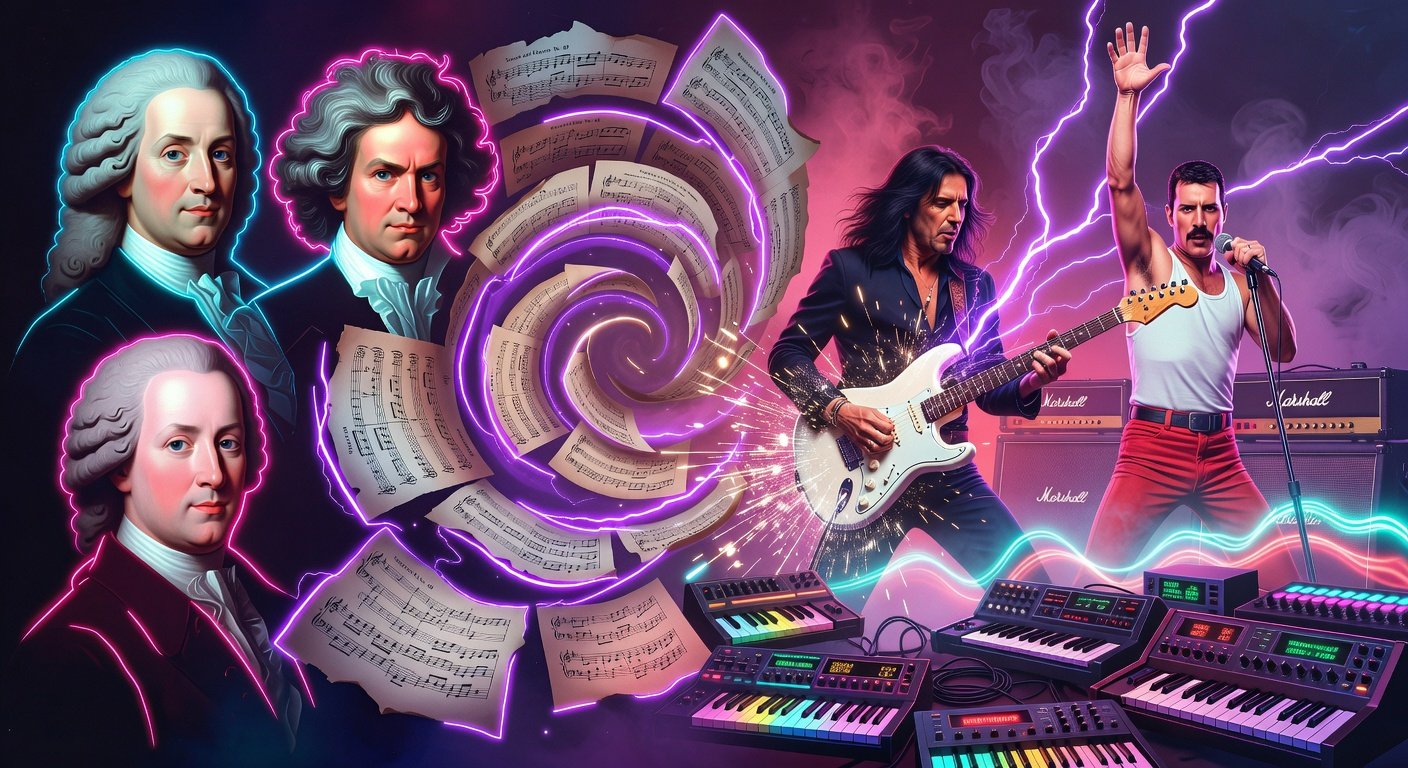
Rock music in the 1980s pulsed with energy, massive guitar solos, and bluesy riffs that defined a generation. But beneath the surface of those electrified anthems lies a surprising connection to the Classical Era (roughly 1750-1820), the golden age of composers like Mozart and Haydn. Through the blues roots that birthed rock 'n' roll, classical compositional techniques such as counterpoint, intricate harmonies, and modal structures snuck into 80s rock. This beginner's guide demystifies how to spot these overlooked links, making music history accessible for 2026 listeners.
Why does this matter? Recognizing these influences deepens your appreciation of rock evolution—from African-American blues traditions blending European classical elements to stadium-filling 80s power ballads. We'll explore history, break down techniques step-by-step, analyze real song examples, and share audio tips with playlist ideas. No music theory PhD required—just your ears and curiosity.
The Classical Era: Key Techniques to Know
The Classical Era emphasized balance, clarity, and structural elegance. Composers developed sophisticated tools that later echoed in blues and rock. Here's what to listen for:
- Counterpoint: Independent melodic lines weaving together, like voices in a conversation. Check out Wikipedia's overview of counterpoint for Bach's influence, which trickled into rock guitar duels.
- Harmonic Progressions: Smooth chord changes using secondary dominants or modal mixtures, creating tension and release—much like blues I-IV-V but elevated.
- Fugue-like Structures: A theme introduced and imitated across voices, appearing in layered guitar solos.
- Ornamentation and Phrasing: Trills, runs, and melodic contours borrowed from violin techniques, adapted to electric guitar bends.
These weren't direct copies but evolutions. Blues, born in the Delta South, fused African call-and-response with European hymns and classical modes, setting the stage for rock.
Blues Roots: The Bridge to Rock
Blues music emerged in the late 19th century, drawing from spirituals, work songs, and field hollers. Crucially, it absorbed classical elements via church music and traveling performers exposed to European scores. The blues scale (with its 'blue notes'—flattened thirds, fifths, sevenths) mirrors classical modal scales like the Mixolydian or Dorian.
Early blues pioneers like Robert Johnson used repetitive phrases akin to classical ostinatos. By the 1960s British Invasion, guitarists like Eric Clapton and Jimmy Page studied classical guitar (Page even referenced Bach). This blues-classical hybrid fueled 70s hard rock, exploding into the 80s with hair metal, arena rock, and blues revivalists.
For a deep dive into blues origins, visit the Blues Wikipedia page, which highlights its musical DNA.
Rock's Evolution: From Blues to 80s Stadium Sounds
The 1980s saw rock diversify: glam metal (Mötley Crüe), blues rock (Stevie Ray Vaughan), and prog-infused acts (Rush). Blues roots persisted in gritty solos, while classical crept in via virtuoso guitarists trained in both worlds.
Key evolutions:
- 1960s-70s Foundation: Cream and Led Zeppelin layered blues riffs with classical nods (e.g., Zeppelin's 'Achilles Last Stand' fugue vibes).
- 80s Amplification: Bigger production highlighted harmonies; synths mimicked harpsichords.
- Neoclassical Shred: Players like Yngwie Malmsteen fused Paganini with blues-rock speed.
This timeline shows how blues acted as a conduit, preserving classical DNA in amplified form.
Step-by-Step Guide: Spotting Classical in 80s Rock
Ready to train your ears? Follow these practical steps. Grab headphones, a Spotify/YouTube account, and slow down tracks to 0.75x speed for analysis.
Step 1: Isolate Guitar Solos
80s rock solos often hide counterpoint. Listen for two guitars trading melodies (e.g., harmony lines) or a solo over a contrapuntal rhythm section.
Step 2: Hunt for Harmonic Sophistication
Beyond basic blues I-IV-V, ear for borrowed chords (e.g., bVII or ii-V-I turnarounds from classical sonatas). Use apps like Chordify to visualize.
Step 3: Spot Modal Shifts
Classical modes appear in bluesy pentatonics. A solo starting in minor blues shifting to major evokes Haydn's surprises.
Step 4: Analyze Phrasing and Ornamentation
Fast scalar runs, double-stops, and vibrato mimic violin techniques. Compare to blues bends for hybrids.
Step 5: Check Song Structure
Look for ABA forms or development sections, classical hallmarks in rock epics.
Practice playlist: Search '80s Blues Rock Classical Influences' on Spotify, adding tracks below.
Real Examples: Classical Techniques in 80s Rock Songs
Let's dissect hits with blues roots showing Classical Era fingerprints.
Stevie Ray Vaughan - "Pride and Joy" (1983)
Blues staple, but Vaughan's solo weaves counterpoint with rhythm guitar. The rapid 16th-note runs echo Baroque violin fugues, rooted in his Delta blues study. Listen at 2:10—harmonic layers build like a Mozart development.
Rainbow - "Can't Happen Here" (1981, Ritchie Blackmore)
Blackmore, blues-rock vet with classical training, layers counterpoint in dual guitars. Bluesy riff underpins fugal solo (3:45), traceable to Bach via Deep Purple's 70s.
Gary Moore - "Still Got the Blues" (1990, late 80s style)
Modal interchange (Dorian to Mixolydian) plus ornamented bends scream classical phrasing over blues changes. For history, see Library of Congress on blues evolution.
Rush - "Limelight" (1981)
Prog-blues hybrid: Alex Lifeson's solo uses secondary dominants, counterpoint with bass. Geddy Lee's harmonies nod to choral classical.
Bonus: Yngwie Malmsteen - "Black Star" (1984)
Neoclassical shred: Paganini-inspired runs over blues-rock rhythm. Ultimate fusion.
Playlist tip: Create 'Blues-Classical 80s Rock' with these + 'Little Wing' covers for practice.
Common Mistakes to Avoid
- Missing Layers: Don't solo-track listen; use stereo imaging.
- Ignoring Context: Research guitarist bios—many studied classical.
- Overlooking Drums/Bass: True counterpoint involves full band interplay.
Tools and Resources for Deeper Listening
- Transcribe solos with Guitar Pro or Ultimate Guitar.
- Apps: Amazing Slow Downer for pitch analysis.
- Books: 'Zen Guitar' by Philip Toshio Sudo on influences.
- Communities: Reddit r/musictheory, r/blues.
Explore more at BBC Music for classical-rock crossovers.
Conclusion: Rediscover 80s Rock with Fresh Ears
Spotting Classical Era techniques in 80s rock via blues roots transforms casual listening into a historical adventure. From counterpoint solos to harmonic wizardry, these connections reveal rock's rich tapestry. Dive into the examples, build your playlist, and share discoveries. Music history isn't dusty—it's alive in every riff. What's your favorite hidden gem? Drop it in the comments.

No comments yet. Be the first!