 Instrumentiverse

Introduction: Uncovering Surprising Musical Threads
Many music fans assume blues, classical, and 80s pop exist in isolated worlds. Yet historical evidence reveals subtle but powerful connections. This guide traces blues origins in the early 20th-century American South, explores classical era influences during northern migrations, and highlights how those threads shaped rock precursors and 80s music. Whether you are a beginner or seasoned listener, you will gain practical insights through timelines, comparisons, and curated playlists.
Blues Origins in the Early 20th-Century Delta
The blues emerged in the Mississippi Delta around 1900-1920. African American musicians blended work songs, spirituals, and field hollers into a new form featuring bent notes, call-and-response patterns, and 12-bar structures. Artists like Charley Patton and Son House laid foundations that later influenced everyone from rock to electronic music. For deeper context on these roots, explore Britannica's overview of blues music.
Classical Era Harmonies and Their Subtle Reach
The Classical era (roughly 1750-1820) emphasized balanced phrases, clear tonality, and contrapuntal techniques from composers like Mozart and Haydn. These elements migrated into blues through European musical education available to some Southern musicians and through shared harmonic vocabularies. When blues artists moved north during the Great Migration, they carried scales that echoed classical motifs, setting the stage for rock and roll.
Northern Migrations and Rock Precursors
By the 1940s and 1950s, blues traveled from the Delta to Chicago and beyond. Electric amplification added edge while retaining classical-inspired chord progressions. This evolution directly fed into early rock. Chuck Berry's guitar riffs, for instance, fused blues scales with structured phrasing reminiscent of Baroque counterpoint.
80s Music Examples: Synth-Pop and Arena Rock
The 1980s revived these connections in surprising ways. Synth-pop acts like Depeche Mode used arpeggiated patterns echoing Baroque inventions. Arena rock bands such as Queen and Journey incorporated Beethoven-inspired motifs layered over blues-based solos. 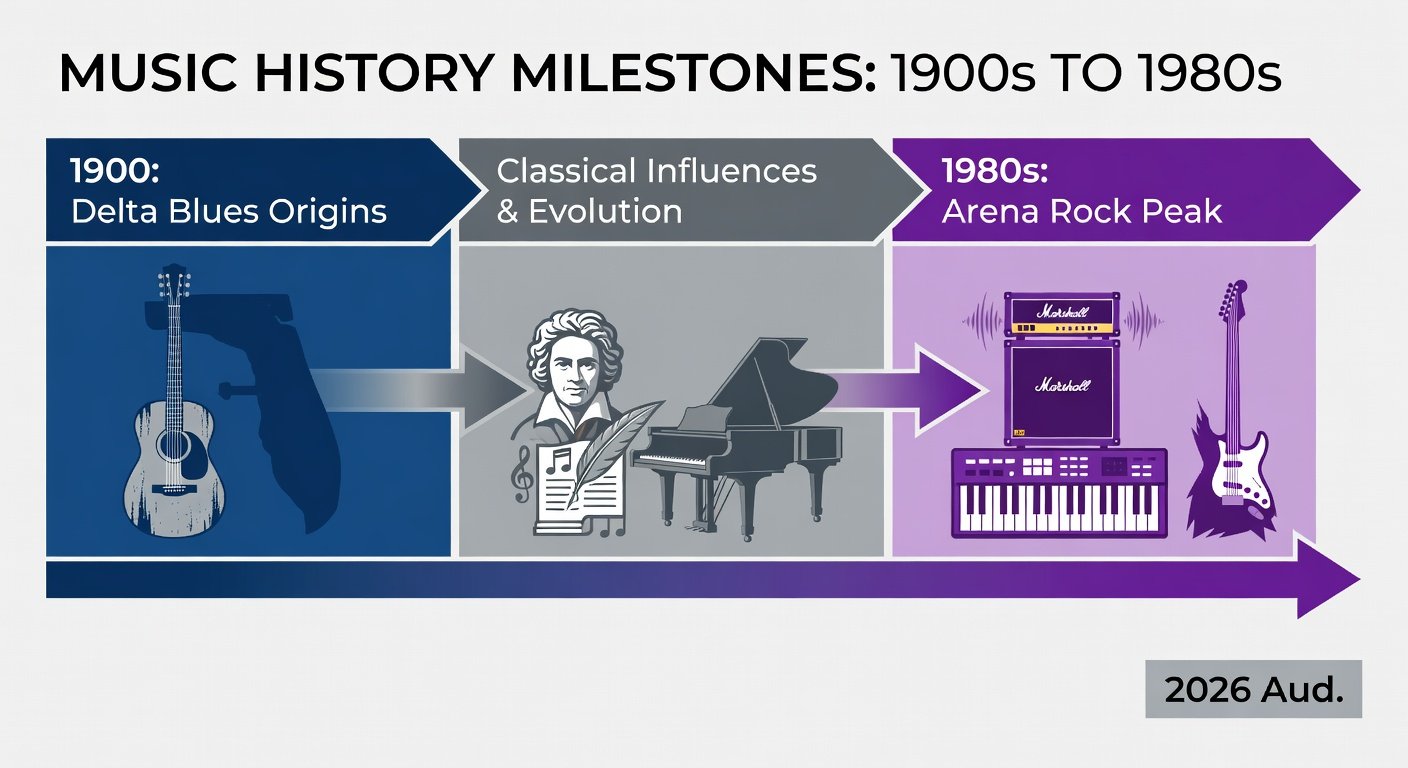
Step-by-Step Historical Timeline
- 1900-1920: Delta blues forms in Mississippi with raw, expressive structures.
- 1920-1940: Classical recordings reach Southern communities, influencing phrasing.
- 1940-1960: Great Migration carries blues northward; electric blues emerges.
- 1960-1980: Rock absorbs blues scales and classical harmonies.
- 1980-1990: Synth-pop and arena rock revive counterpoint and motif techniques.
Artist Comparisons: Robert Johnson vs. Chopin Structures
Robert Johnson's haunting Delta blues often used repeating 12-bar forms with emotional bends. Frédéric Chopin's nocturnes feature similar repetitive motifs and harmonic tension release. Both artists prioritized expressive storytelling over strict rules, proving structural parallels across centuries and continents. Listening side-by-side reveals shared emotional arcs.
5 FAQs Debunking Genre Isolation Myths
- Did blues really influence classical music? No, the influence flowed primarily from classical education into blues phrasing, not the reverse.
- Were 80s synths disconnected from earlier traditions? Many 80s producers studied classical theory and applied counterpoint to electronic arrangements.
- Is rock purely blues-derived? Rock blended blues scales with classical structures and other global influences.
- Can beginners hear these connections? Yes, start with side-by-side playlist tracks to notice motif repetitions.
- Do modern artists still use these threads? Contemporary producers continue referencing both blues and classical elements in 2026 productions.
Practical Listening Playlist for 2026 Audiences
Build your own journey with these accessible tracks available on major streaming platforms: Robert Johnson’s “Cross Road Blues,” Chopin’s Nocturne Op. 9 No. 2, Chuck Berry’s “Johnny B. Goode,” Depeche Mode’s “Enjoy the Silence,” and Journey’s “Don’t Stop Believin’.” Add modern remixes for fresh perspective. Start with one era per session to internalize the evolution.
Conclusion: Listening with New Ears
From Delta fields to 80s stadiums, classical harmonies quietly shaped blues migrations and rock innovation. Use the timeline and comparisons here to deepen your appreciation. Explore these connections yourself and enjoy music history as a living, interconnected story.

No comments yet. Be the first!