 Instrumentiverse
Introduction to Classical Influences on Rock
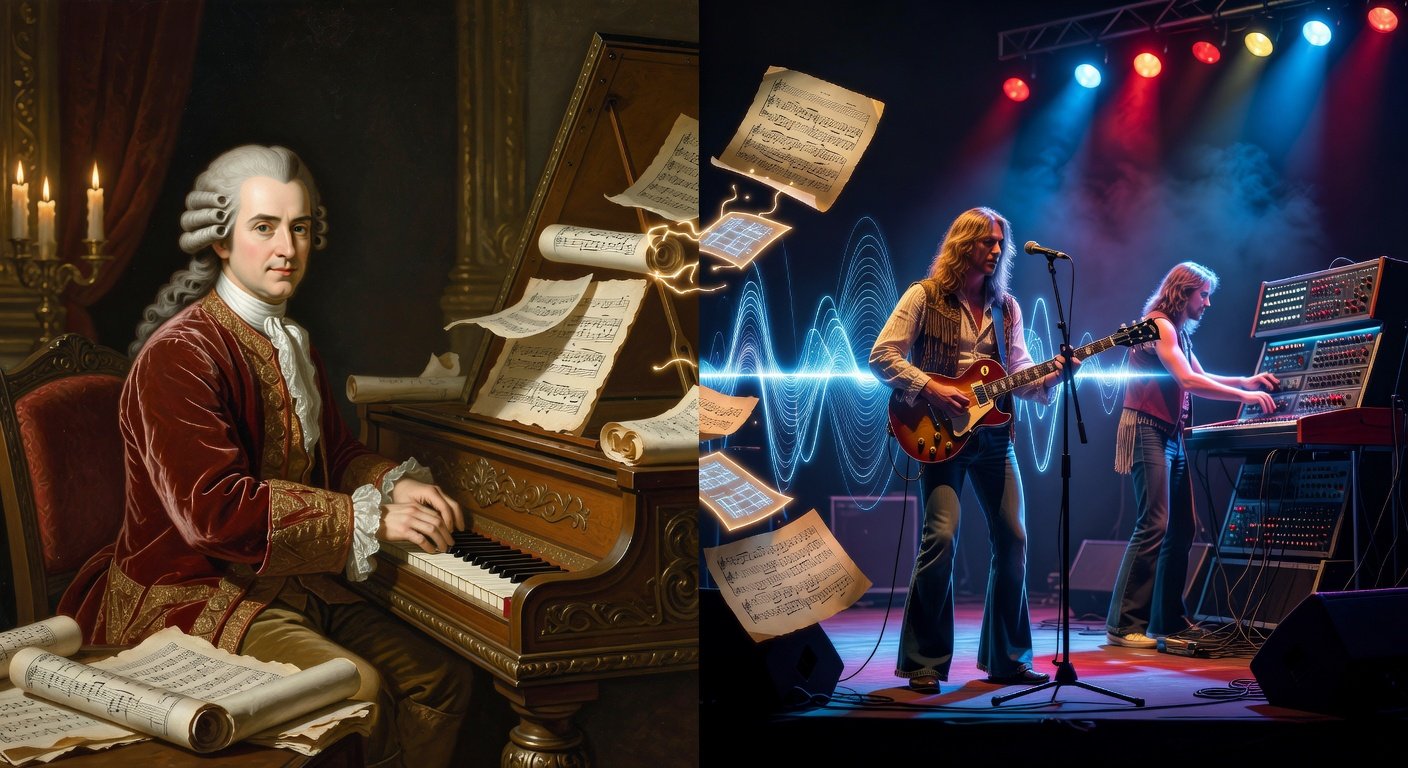
Rock music might seem worlds away from the powdered wigs and candlelit concert halls of the Classical era, but dig a little deeper, and you'll uncover profound connections. Composers like Wolfgang Amadeus Mozart and Ludwig van Beethoven laid the groundwork for rock's harmonic complexity and symphonic ambitions. Their innovations in structure, melody, and emotion resonated through centuries, influencing everything from progressive rock pioneers to 80s synth-rock innovations. This beginner's guide breaks it down with timelines, key examples, and fresh 2026 listening recommendations to bridge the gap.
Whether you're a rock newbie or a classical curious, understanding these crossovers reveals why rock isn't just rebellion—it's evolution.
Mozart and Beethoven: The Harmonic Architects
Mozart (1756–1791) was a master of balance and surprise, crafting melodies that twisted expectations with deceptive cadences and chromatic harmonies. Beethoven (1770–1827), bridging Classical and Romantic eras, pushed boundaries with dramatic dynamics and extended developments, foreshadowing rock's epic builds.
These techniques didn't vanish with the harpsichord. They seeped into 20th-century music via jazz, then exploded in rock. For more on these composers, check Britannica's Mozart profile.
Harmonic Complexity: From Sonatas to Riffs
Classical harmony relied on functional tonality—tensions resolved in satisfying ways. Mozart's use of secondary dominants (chords that heighten tension) mirrors rock's modal interchanges and borrowed chords.
- Mozart's Influence: His operas feature rapid modulations, akin to prog rock's key shifts.
- Beethoven's Legacy: Symphonies with unresolved dissonances inspired rock's tension-release cycles, like guitar solos building to cathartic peaks.
Early rock borrowed directly: The Beatles studied scores, infusing "A Day in the Life" with Beethoven-esque crescendos.
Symphonic Structures in Rock Evolution
Classical symphonies follow sonata form: exposition, development, recapitulation. Rock adopted this for multi-part suites.
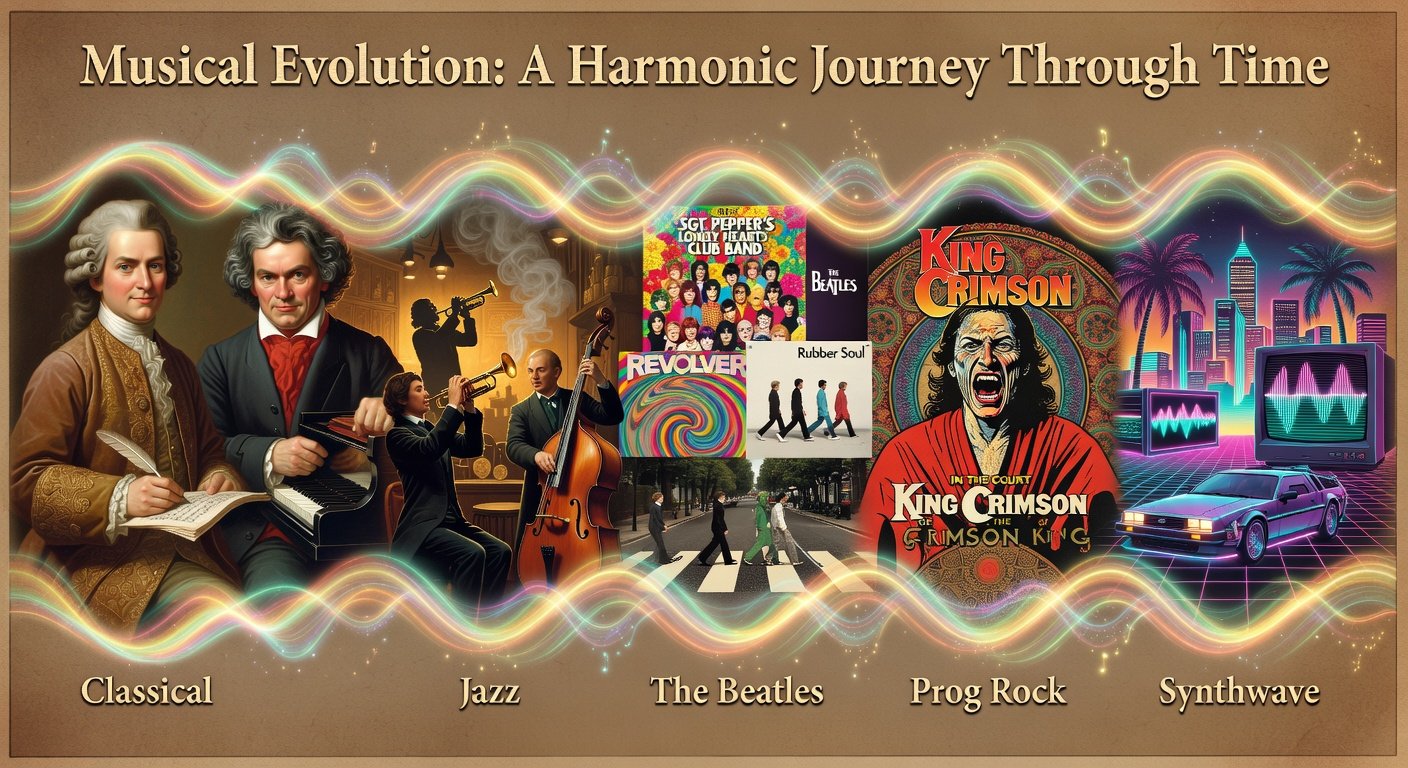
Prog rock pioneers in the 1960s-70s were the first to fully embrace it. Bands like King Crimson and Yes expanded songs into 20-minute odysseys, echoing Beethoven's Ninth Symphony.
Prog Rock Crossovers: Key Examples
Progressive rock (prog) was the direct bridge:
- King Crimson (1969): "21st Century Schizoid Man" uses jagged rhythms reminiscent of Beethoven's late quartets.
- Yes (1971): "Close to the Edge" mirrors Mozart's symphonic developments with thematic returns.
- Genesis (1974): "Supper's Ready" is a 23-minute epic, structured like a Classical mass.
Learn more about prog's roots on Wikipedia's Progressive Rock page.
Music History Timeline: Classical to 80s Innovations
Here's a beginner-friendly timeline tracing the lineage:
- 1780s-1820s: Classical Peak – Mozart's symphonies; Beethoven's Eroica (1804) introduces heroic themes.
- 1900s: Jazz Bridge – Syncopation from Classical absorbs ragtime influences.
- 1960s: Psychedelic Shift – The Beatles' "Sgt. Pepper" (1967) nods to Baroque via George Martin's arrangements.
- 1970s: Prog Explosion – Emerson, Lake & Palmer cover Mussorgsky; Rush channels Beethoven in "2112."
- 1980s: Synth Fusion – 80s innovations like Asia's debut (1982) blend prog with pop, using symphonic keyboards. New Wave acts like The Fixx employed modal harmonies from Classical.
By the 80s, hair metal and arena rock (e.g., Queen's operatic flair) owed debts to these structures.
From Prog to 80s: Specific Innovations
Prog's complexity paved the way for 80s pomp rock. Bands like Styx and Journey used multi-section songs with key changes straight from Classical playbooks.
- Harmonic Twists: Van Halen's "Jump" (1984) features unexpected modulations echoing Mozart.
- Symphonic Scale: Orchestral intros in Boston's self-titled album (1976, influencing 80s) mimic Beethoven overtures.
This era's innovations democratized Classical elements via synthesizers, making them accessible.
2026 Listening Recommendations: Fresh Fusion
Looking ahead to 2026, revisit classics and discover modern heirs blending these influences:
- Classic Pick: Yes' "Fragile" (1971) – Symphonic prog perfection.
- 80s Gem: Marillion's "Script for a Jester's Tear" (1983) – Neo-prog with Beethoven drama.
- Modern 2026 Must: Haken's upcoming album (rumored for 2026) continues prog tradition with Classical nods. Stream via Spotify.
- Fusion Future: Caligula's Horse – Their intricate harmonies scream Mozart meets metal.
- Beethoven Direct: Listen to Op. 131 Quartet alongside King Crimson's "Larks' Tongues."
For scores to compare, visit the International Music Score Library.
Conclusion: Timeless Musical Threads
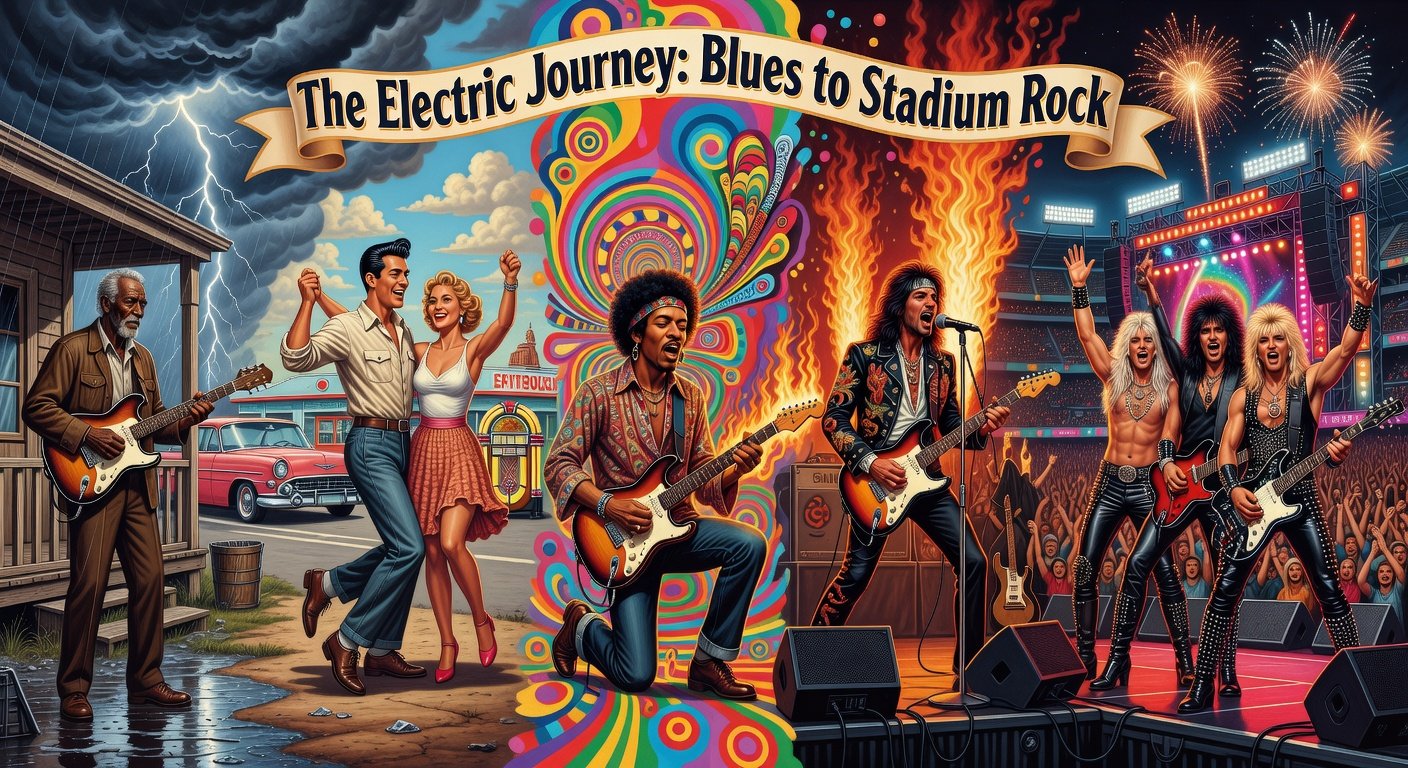
The journey from Mozart's elegance to 80s stadium anthems shows music's interconnected history. Harmonic complexity and symphonic forms gave rock depth and ambition. Dive into these timelines, spin the records, and hear the echoes yourself. Rock on—with a Classical twist!
No comments yet. Be the first!