 Instrumentiverse
The Roots of Rock: From Gritty Blues to Global Phenomenon
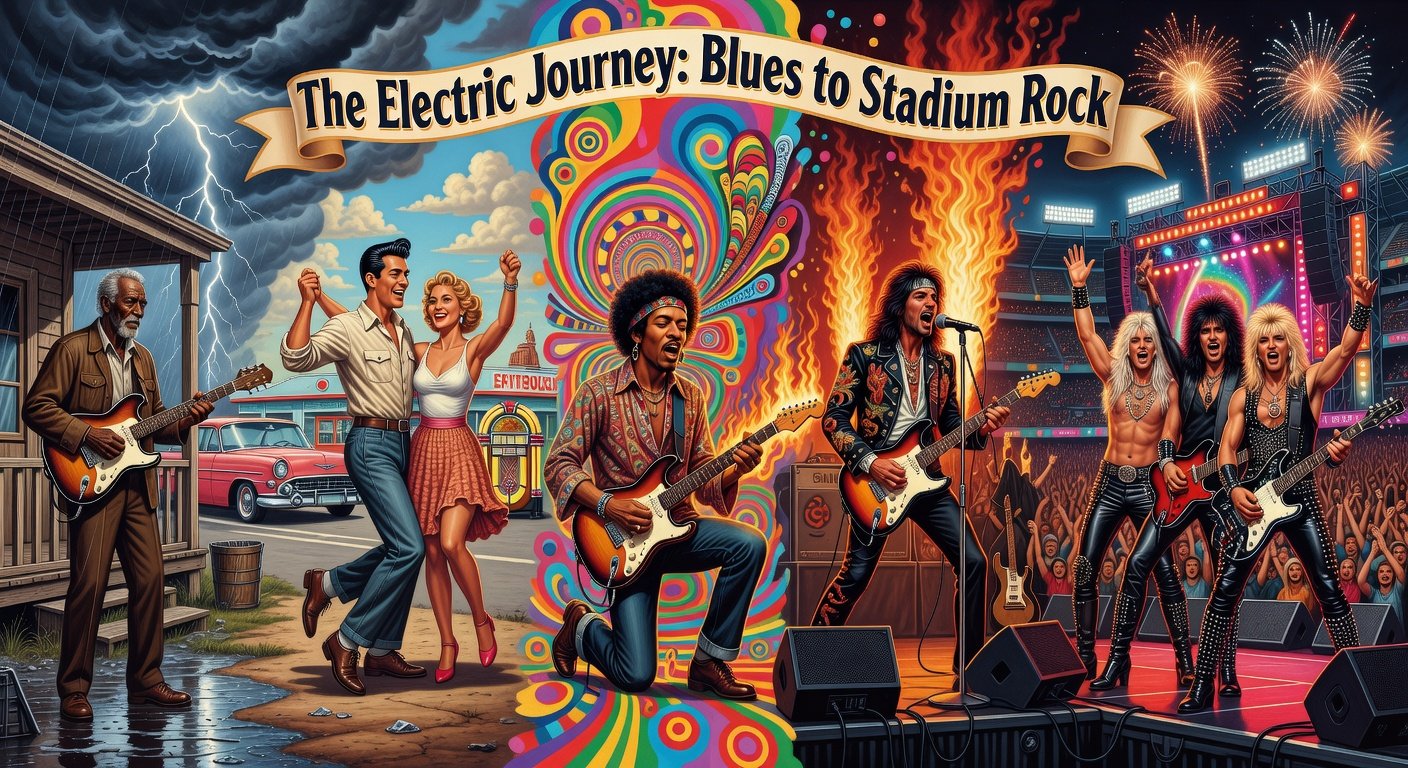
Rock music's story is one of raw passion, rebellion, and relentless innovation. It all began in the humid cotton fields of the Mississippi Delta, where the blues wailed through acoustic guitars and harmonicas. This genre, born from African American spirituals, work songs, and gospel, laid the foundation for what would become the world's most influential music form. Fast-forward to the thunderous guitar riffs and stadium-shaking anthems of the 1980s, and you've traced a cultural odyssey that redefined generations.
For readers in 2026, rediscovering these roots feels fresh thanks to high-res archival footage, AI-enhanced remasters on streaming platforms, and virtual reality concerts immersing fans in Woodstock or Live Aid. This article traces rock's evolution, spotlighting pivotal artists, technological leaps, and societal shifts that echo in today's indie rock, hip-hop fusions, and pop-rock hybrids.
Early Foundations: The Blues Era (1920s–1940s)
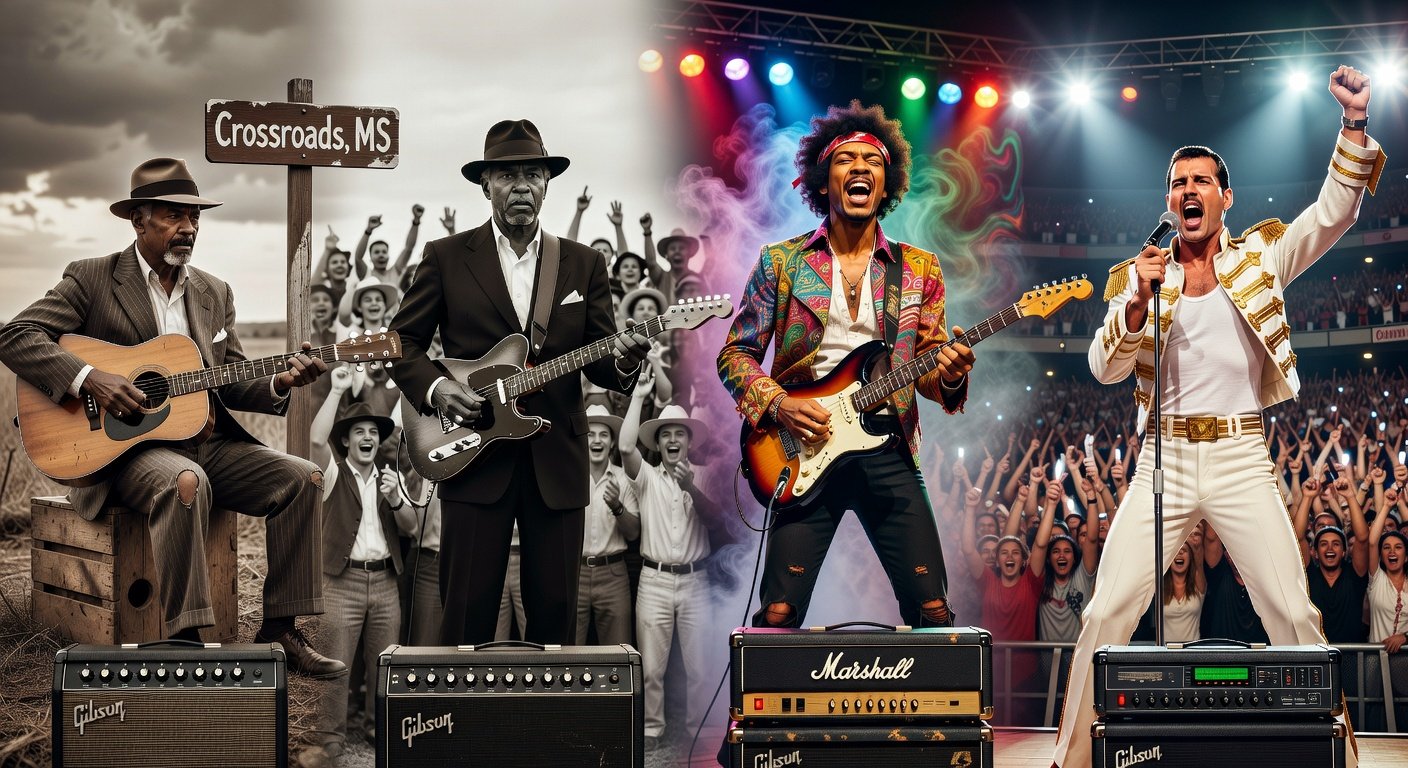
The Mississippi Delta, with its poverty-stricken sharecroppers, birthed legends like Charley Patton and Skip James. But Robert Johnson, mythologized at the crossroads selling his soul to the devil, epitomized the era. His haunting slide guitar and lyrics of heartbreak influenced everyone from Eric Clapton to Led Zeppelin.
Post-Great Migration, blues electrified in Chicago. Muddy Waters amplified the Delta sound with electric guitars at Chess Records, blending raw emotion with urban grit. Innovations like the electric guitar, pioneered by companies like Gibson, allowed bluesmen to cut through smoky clubs. Culturally, this was the Great Depression and World War II backdrop, where music became escapism and protest.
Check out the Library of Congress for digitized blues recordings that capture this authenticity.
Birth of Rock 'n' Roll (1950s)
The 1950s fused blues, country, and R&B into rock 'n' roll. Elvis Presley, the King, blended Black R&B with white country, igniting teen rebellion via TV shows like American Bandstand. Chuck Berry's duck-walk riffs and Little Richard's flamboyant piano drove the beat.
Bill Haley's "Rock Around the Clock" (1954) marked the explosion, soundtracking youth culture amid post-war prosperity and civil rights stirrings. Electric amplification and 45 RPM singles made rock accessible, shifting music from supper clubs to sock hops.
British Invasion and Psychedelia (1960s)
Across the pond, The Beatles absorbed American rock, adding melody and experimentation. Their 1964 Ed Sullivan appearance conquered the U.S., spawning the British Invasion with The Rolling Stones' blues-rock edge and The Who's mod power-pop.
The late '60s brought psychedelia: Jimi Hendrix's fiery Stratocaster wizardry at Monterey Pop (1967) revolutionized guitar effects. The Summer of Love saw San Francisco bands like Jefferson Airplane push boundaries with sitars and feedback, mirroring Vietnam War protests and counterculture.
Hard Rock and Arena Era (1970s)
The '70s amplified everything. Led Zeppelin's thunderous riffs fused blues with mythology, while Black Sabbath invented heavy metal's doom. Pink Floyd's Dark Side of the Moon (1973) explored prog-rock with synthesizers and quadrophonic sound.
Punk rebelled against excess: The Ramones' three-chord blitz and Sex Pistols' anarchy stripped rock bare, influencing DIY ethos still alive in garage bands today.
Explore inductees at the Rock & Roll Hall of Fame.
Anthems of the 80s: Hair Metal and Beyond
The 1980s delivered stadium anthems. Guns N' Roses' Appetite for Destruction (1987) revived danger with Slash's solos. Bon Jovi and Def Leppard's power ballads ruled MTV, where video became king. Queen’s Freddie Mercury belted operatic rock, blending genres.
Synth innovations like the Roland Jupiter-8 added sheen, while hair metal's glam excess reflected Reagan-era materialism. Culturally, it bridged to grunge's backlash.
10 Key Milestones in Rock's Evolution
- 1936: Robert Johnson's Cross Road Blues – Delta blues recordings mythologize the crossroads deal, influencing blues-rock forever. Timeline: Pre-WWII South. Modern echo: Sampled in rap.
- 1948: Muddy Waters' 'I Can't Be Satisfied' – First electric blues hit on Aristocrat Records. Chicago amplification era begins. Influences: British blues revival.
- 1954: Bill Haley’s 'Rock Around the Clock' – First rock 'n' roll #1, in Blackboard Jungle. Youth culture ignites.
- 1956: Elvis on Ed Sullivan – 60 million viewers; rock goes mainstream amid controversy.
- 1964: Beatles Invade America – I Want to Hold Your Hand tops charts; Beatlemania shifts songwriting to albums.
- 1967: Monterey Pop Festival – Hendrix burns guitar; psychedelic rock blooms.
- 1969: Woodstock – 400,000 hear Hendrix, CSNY; counterculture peaks.
- 1970: Led Zeppelin III – Acoustic-electric fusion; hard rock matures.
- 1977: Punk Explosion (Never Mind the Bollocks) – Sex Pistols kill dinosaurs of rock.
- 1987: MTV Era Peaks with Guns N' Roses – Sweet Child o' Mine; video anthems dominate 80s radio.
These milestones, drawn from timelines in encyclopedic sources like Britannica's rock music overview, show rock's adaptability.
Cultural Shifts and Innovations Driving Rock
Technology was pivotal: From acoustic to Les Paul electrics (1950s), Marshall stacks (1960s), to digital multitrack (1970s) and MTV (1980s). Socially, rock mirrored civil rights (integrated bands), Vietnam (protest anthems), and AIDS crisis (Live Aid 1985).
Women broke barriers: Janis Joplin's raw howl, Joan Jett's punk-pop. Globalism spread rock via festivals.
Rediscovering Rock in 2026: Archival Freshness
Today's fans mine 8K restorations of The Last Waltz or VR Delta juke joints. Streaming algorithms pair Zeppelin with Tame Impala, proving blues riffs underpin K-pop hooks. Archival docs like 20 Feet from Stardom highlight backups' roles.
Rock's legacy? Resilience. From Delta dirt to arena pyros, it evolved by absorbing influences, ensuring its DNA pulses in 2026's soundscape.
No comments yet. Be the first!