 Instrumentiverse

Introduction to Classical Influences on Blues
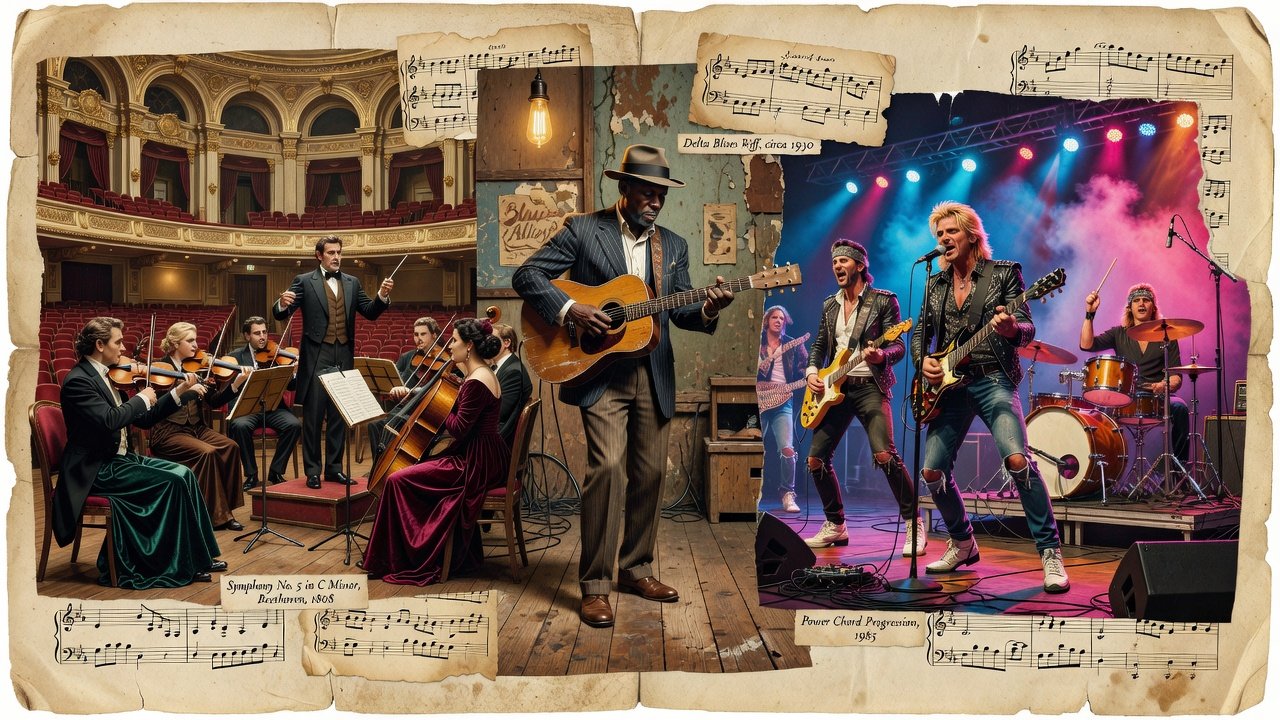
The blues emerged in the late 19th century American South, yet its roots draw deeply from earlier musical traditions. Classical era techniques from composers like Mozart and Haydn offer surprising insights into blues origins. These methods help musicians understand scale structures and improvisation in ways that directly apply to modern playing. By examining these connections, guitarists and composers gain practical tools for creating authentic blues sounds and tracing their evolution into rock genres. This article provides step-by-step comparisons, real 80s music examples, and actionable advice to bridge the eras effectively. Readers seeking deeper musical understanding will find concrete exercises and historical context that go beyond surface-level overviews.
Scale Structures: Classical Foundations Meet Blues
Classical era music often relied on major and minor scales with clear tonal centers. The blues scale modifies the minor pentatonic by adding a flattened fifth, creating tension and resolution similar to classical chromatic approaches. Understanding this overlap reveals why blues feels both structured and expressive. Step-by-step comparison begins with the classical minor scale, such as A minor consisting of A-B-C-D-E-F-G. Next, apply the blues modification by flatting the fifth note, introducing Eb in the A blues scale. Then practice resolving the blue note back to the root, mirroring classical cadences that provide satisfying closure. Expand this by incorporating classical appoggiaturas, where a note leans into the resolution for added emotional weight. Real-world example: Listen to the guitar work in ZZ Top's 1983 track "Sharp Dressed Man," where the blues scale echoes classical tension-building techniques through deliberate note choices that heighten drama before release. Another illustration appears in Eric Clapton's 1980s recordings, blending these elements seamlessly. Additional depth comes from comparing the classical use of leading tones with the blues tendency to slide into notes, creating microtonal inflections that add character. Britannica on blues music history offers deeper context on tonal evolutions across centuries.
Improvisation Methods Across Eras
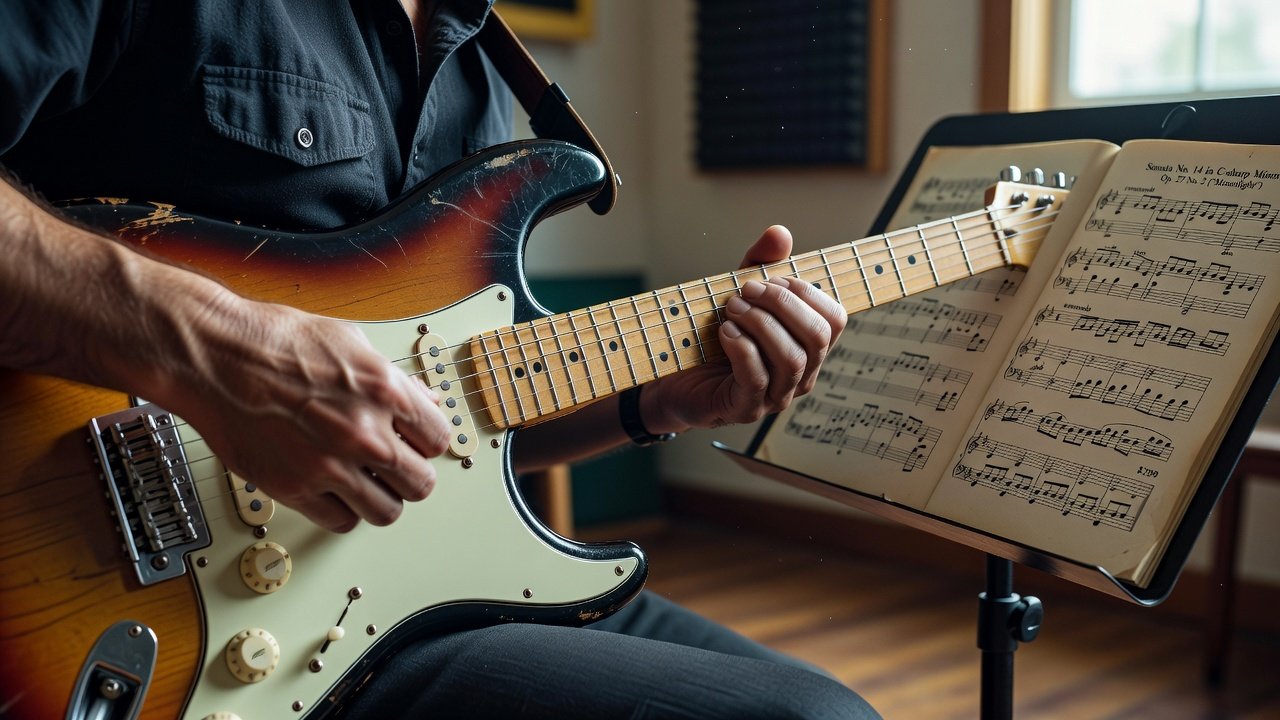
Classical improvisation involved ornamentation over figured bass, while blues players use call-and-response and bending notes. Both emphasize spontaneous variation within strict forms. To apply these practically, begin with a classical motif from a simple sonata theme. Then bend notes like blues guitarists to introduce microtonal expression. Apply this hybrid to 80s rock solos, such as those in Dire Straits' "Money for Nothing" from 1985, where Mark Knopfler's phrasing blends classical ornamentation with blues bends for a distinctive sound. Further examples include the layered guitar lines in Journey's 1981 hit "Don't Stop Believin'," which incorporate call-and-response patterns rooted in both traditions. Expand your practice by recording short improvisations daily, alternating between strict classical phrasing and free blues expression to build versatility. Consider how classical trills translate to blues vibrato techniques for richer tone variation during extended solos.
Common Mistakes to Avoid
- Overusing the blue note without resolution, which disrupts the classical sense of balance and leaves listeners unsatisfied.
- Ignoring rhythmic structure from classical phrasing, leading to blues lines that feel loose and unfocused.
- Skipping the foundational minor scale study, resulting in inaccurate scale applications when adapting to rock contexts.
- Failing to study 80s production techniques that amplified these hybrid approaches, missing opportunities for modern relevance.
- Neglecting dynamics, where classical crescendos can enhance blues emotional peaks in live performances.
Influence on Rock Evolution
Blues rock in the 1980s built directly on these foundations. Bands adapted classical harmonic progressions into 12-bar blues forms, leading to hits that dominated charts. Stevie Ray Vaughan's work incorporated classical-like arpeggios into blues improvisation, evident in tracks like "Pride and Joy" reinterpreted in live 80s performances. This lineage continues to inform guitar techniques today, helping players create solos with both technical precision and emotional depth. Compare how Van Halen's 1984 album utilized rapid classical-inspired runs within blues frameworks for high-energy rock anthems. Practical advice includes transcribing short phrases from these songs and overlaying classical cadences to see the connections firsthand. The evolution extended to bands like Aerosmith, whose 1980s material fused these elements into arena-ready anthems that still influence contemporary rock guitarists.
Practical Step-by-Step Guide to Applying Techniques
Follow these steps for hands-on learning: First, master the classical minor scale on your instrument for two weeks using a metronome to ensure even timing. Second, introduce the flattened fifth gradually while maintaining clean tone and experimenting with slight bends. Third, record yourself improvising over a 12-bar blues backing track, incorporating one classical ornament per phrase such as a trill or appoggiatura. Fourth, analyze 80s rock recordings for similar patterns and replicate them note-for-note before varying your own interpretations. Fifth, perform the hybrid lines in different keys to develop fluency across the fretboard. This method yields measurable improvement in both authenticity and creativity when practiced consistently over several weeks.
Additional 80s Track Analysis for Deeper Insight
Beyond the primary examples, examine how the Police's 1983 track "Every Breath You Take" subtly integrates blues-derived bends with classical harmonic resolutions in its guitar parts. Similarly, the guitar solos in Toto's 1982 hit "Rosanna" demonstrate call-and-response patterns that echo both eras. These cases illustrate how producers in the 1980s layered classical precision onto blues foundations to achieve commercial success while preserving emotional rawness. Musicians can replicate these by slowing down recordings and isolating individual phrases for study.
FAQ: Addressing Misconceptions
Is blues purely African American with no European influence?
No. Classical European techniques contributed scale and form elements that shaped early blues compositions through shared harmonic principles and structural similarities.
Can classical training hinder blues feel?
Properly applied, it enhances precision in improvisation without sacrificing emotional expression, as demonstrated by many crossover artists who successfully merge the styles.
Did 80s rock abandon blues roots?
Many tracks retained core blues elements while evolving production styles, preserving the connection to earlier traditions and allowing for innovative expansions.
How do these techniques affect modern guitar practice?
They provide a framework for more structured yet expressive playing, reducing reliance on trial-and-error methods alone and accelerating skill development.
What role does rhythm play in connecting the two styles?
Classical rhythmic discipline strengthens blues timing, creating grooves that feel both tight and swinging in rock contexts.
Further reading on music theory connections is available via Library of Congress music archives and Metropolitan Museum of Art music collections.
Conclusion
Classical era techniques continue to enrich understanding of blues origins and their path into rock. By integrating these methods through deliberate practice, musicians unlock deeper creative potential across genres and develop a more nuanced appreciation for music history that informs their own compositions and performances.
No comments yet. Be the first!