 Instrumentiverse
Introduction to Improvisation Across Musical Eras
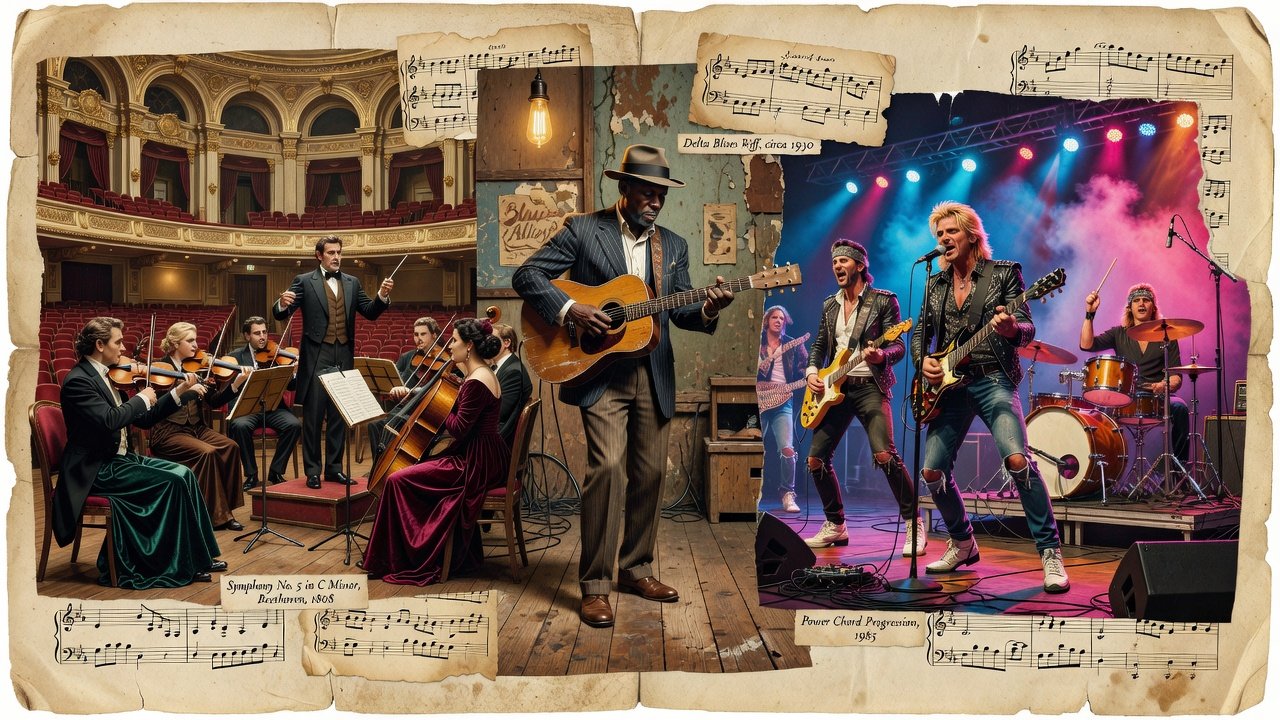
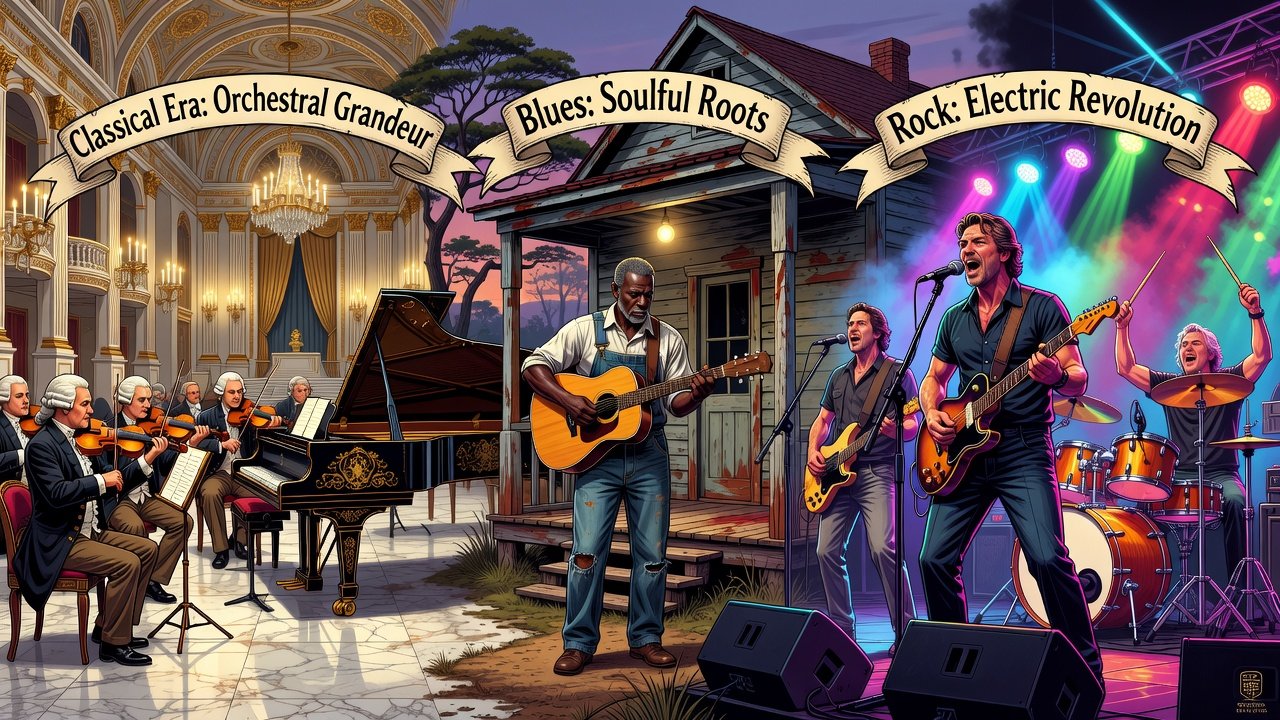
Improvisation has long served as a vital creative force in music, allowing performers to shape melodies and harmonies in the moment. Its roots stretch back to the classical era, where composers and musicians like Bach and Mozart treated it as an essential skill. Over centuries, these techniques migrated and transformed through blues origins into the explosive rock evolution of later decades, particularly evident in 80s music applications. This progression reflects broader cultural shifts while highlighting enduring musical principles that continue to influence artists today. The journey offers educational insights into music history, showing how spontaneous creation adapts across genres and instruments while preserving core ideas of real-time invention and emotional expression.
Understanding this lineage provides deeper appreciation for how styles connect. Key historical figures and specific musical examples illustrate the path from structured European concert halls to the gritty juke joints of the American South and finally to massive stadium stages. By examining these transformations, modern listeners gain tools to recognize influences in contemporary tracks and even apply similar approaches in their own playing or listening habits.
Classical Era Foundations of Improvisation
In the Baroque and Classical periods, improvisation formed the backbone of performance practice. Composers expected musicians to embellish written scores with ornaments, cadenzas, and variations. Johann Sebastian Bach routinely improvised complex fugues during organ recitals, weaving intricate counterpoint on the spot. Wolfgang Amadeus Mozart dazzled audiences with his ability to create entire sonatas or variations based on audience-suggested themes. Ludwig van Beethoven further pushed boundaries in his piano improvisations, often extending concert programs with spontaneous compositions that blurred the line between written and invented music.
These practices emphasized technical mastery, harmonic knowledge, and audience engagement. By the Romantic era, figures such as Franz Liszt and Frédéric Chopin elevated improvisation to theatrical heights, blending composed works with emotional flourishes and dramatic pauses. This era's focus on personal expression prepared the ground for more vernacular styles to emerge, carrying forward the idea that music could be both planned and alive in performance.
Transition Through Blues Origins
The blues emerged in the late 19th and early 20th centuries among African American communities in the American South, carrying improvisation forward in raw, expressive forms. Call-and-response patterns, blue notes, and bending strings or vocal pitches became hallmarks. Artists like Robert Johnson and Muddy Waters used improvisation to convey personal stories of hardship and resilience, adapting classical harmonic ideas into 12-bar structures with greater rhythmic freedom and emotional intensity.
Regional styles added depth: Delta blues favored acoustic slide techniques and sparse arrangements, while Chicago blues incorporated electric amplification and fuller band interplay. This foundation introduced pentatonic scales and vocal-like phrasing on guitar that diverged from European traditions yet retained the core idea of real-time invention. Britannica highlights the genre's ties to earlier folk and work songs, underscoring its role as a bridge in music history evolution.
Rock Evolution and 80s Applications
Rock music absorbed blues improvisation in the 1950s and 1960s through pioneers like Chuck Berry and later Jimi Hendrix, who pushed guitar solos into psychedelic and experimental territory. By the 1970s, players such as Jimmy Page and Eric Clapton refined these approaches with longer, more narrative-driven solos. The 1980s brought a new level of technical display, with Eddie Van Halen revolutionizing rock guitar through two-handed tapping and dive-bomb effects that combined speed with expressive bends.
Other 80s figures including Steve Vai and Joe Satriani expanded the palette with modal explorations and intricate phrasing over power chords. Bands like Guns N' Roses and Def Leppard featured extended solos that balanced technical precision with raw energy, often performed live with room for variation. These applications preserved the improvisational spirit while adapting it to high-volume electric contexts and arena audiences.
Technique Comparisons Across Eras
Comparing techniques reveals both continuity and innovation. Classical improvisation relied on counterpoint, ornamentation, and resolution within strict forms. Blues shifted focus to scalar runs, string bends, slides, and call-response interplay. Rock in the 80s amplified these elements with effects pedals, rapid alternate picking, tapping, and modal explorations over extended chord progressions.
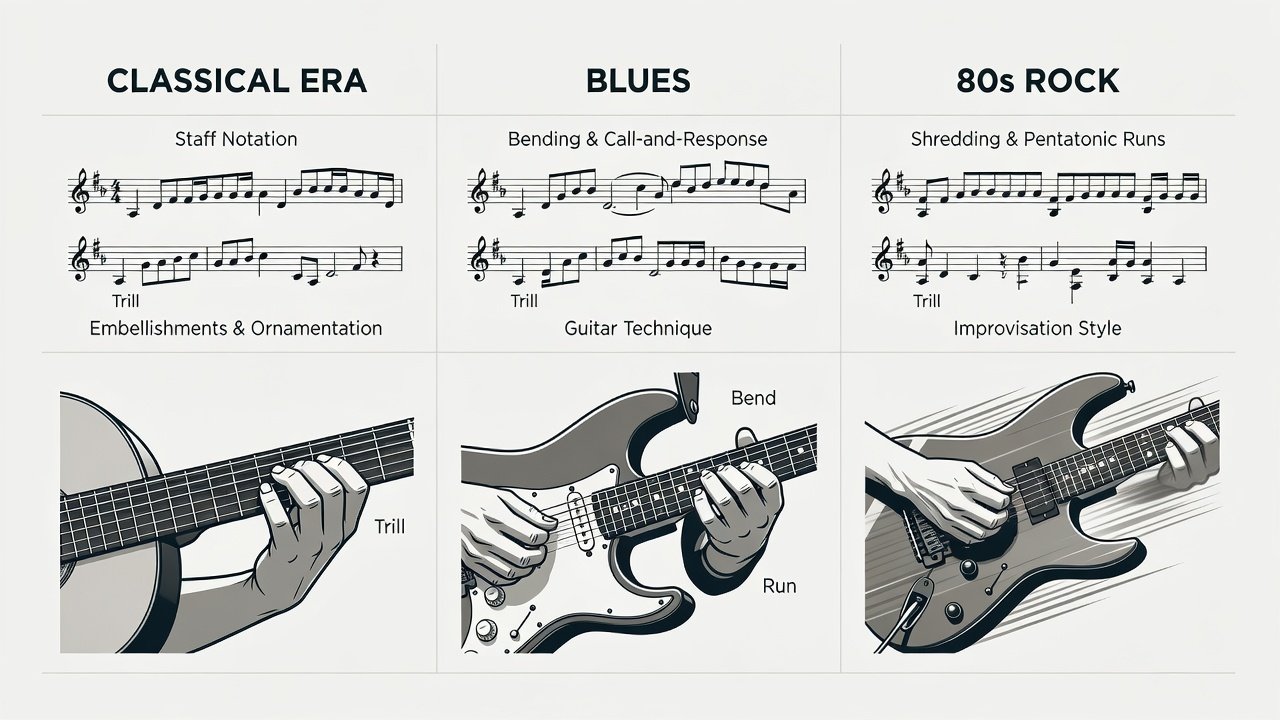
- Classical: Emphasis on harmonic resolution, trills, and cadenzas within sonata or fugue structures.
- Blues: Focus on emotional bends, pentatonic phrasing, and conversational interplay between instruments or voice and guitar.
- Rock (80s): Integration of speed picking, two-handed tapping, whammy bar dives, and extended solos that build tension over multiple choruses.
Modern listeners can identify these influences by noting structural rigidity and ornamentation in classical recordings versus the freer, gritty expressiveness and rhythmic swing in blues and rock tracks.
Identification Tips for Modern Listeners
Recognizing improvisational roots requires attentive listening across eras. Start by noting the presence of ornaments and formal cadenzas in classical pieces. In blues, listen for repeated motifs with variations and vocal inflections transferred to instruments. In 80s rock, identify rapid technical passages that feel spontaneous yet grounded in blues scales.
Additional clues include instrumentation: acoustic or piano dominance in earlier styles versus distorted electric guitars and effects in later rock. Tempo and dynamics also shift, with classical favoring controlled crescendos and rock embracing sudden dynamic changes and feedback.
Step-by-Step Listening Exercises
To train your ear effectively, follow these practical exercises. Begin with short excerpts and gradually increase complexity.
- Select one representative track from each era, such as a Bach toccata, a Muddy Waters recording, and Van Halen's "Eruption."
- Focus on a single element like scale choice or phrasing during the first listen.
- Repeat the session while noting differences in feel, structure, and emotional impact.
- Practice humming or air-guitaring along to internalize the approaches.
- Compare live versions where available to hear how improvisation changes night to night.
- Apply insights by attempting simple improvisations over backing tracks in each style.
These steps build progressive understanding and connect theory to actual sound.
Real Track Analyses and Broader Connections
Analyzing specific recordings deepens insight. Bach's improvisatory toccatas demonstrate spontaneous counterpoint. Johnson's "Cross Road Blues" showcases raw emotional bends within a simple form. Van Halen's live performances reveal how 80s rock expanded these ideas with speed and effects while maintaining blues roots. Further exploration through resources like Library of Congress and Metropolitan Museum of Art reveals additional cultural contexts and archival recordings that illustrate the full evolution.
Conclusion: Enduring Legacy in Music History
The journey from classical improvisation through blues to rock illustrates music's adaptive power. These connections enrich appreciation for how 80s innovations built upon centuries-old practices. Listeners and musicians who study this progression gain lasting educational value and practical skills for engaging with music across genres.
No comments yet. Be the first!