 Instrumentiverse

Introduction: Tracing the Musical Lineage
The journey from the Classical era to 1980s rock music reveals surprising connections through blues as a vital bridge. Compositional techniques evolved across centuries, influencing everything from Mozart's structured symphonies to the raw energy of 80s guitar solos. This exploration uncovers how harmonic progressions, improvisational freedom, and rhythmic innovations migrated, reshaping genres while preserving core elements. Music history demonstrates that no genre exists in isolation; instead, each builds upon predecessors in subtle yet profound ways. By studying these migrations, modern listeners gain a richer understanding of rock evolution and the creative processes that define artistic progress across time periods.
Understanding these threads enriches appreciation for rock evolution and highlights music's interconnected history. By examining specific examples from each period, listeners can trace direct influences that defy traditional genre boundaries. The Classical period, spanning roughly 1750 to 1820, emphasized balance and clarity in form. Blues emerged in the late 19th century American South, absorbing those formal elements while infusing African-derived expressive techniques. By the 1980s, rock musicians synthesized both traditions into stadium-filling anthems that still resonate today.
Harmonic Structures Across Eras
Classical composers like Mozart relied on functional harmony, using I-IV-V progressions to build tension and resolution in works such as Symphony No. 40. These same chord movements found new life in Delta blues, where artists adapted them into 12-bar forms with added blue notes for emotional depth. The 12-bar blues structure itself is a direct descendant of classical phrasing, stretched and bent to accommodate the expressive needs of singers and guitarists in the Mississippi Delta region during the 1920s and 1930s.
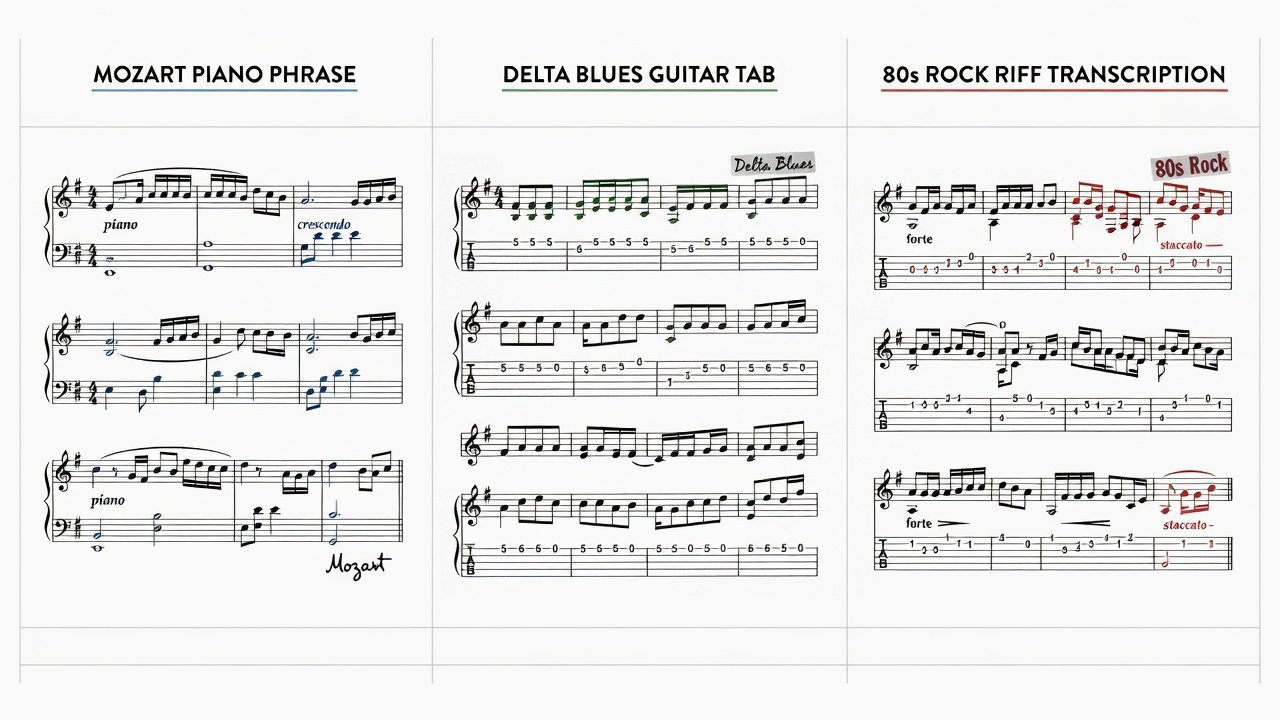
In 80s rock, bands like Van Halen and Journey incorporated these blues-derived progressions into power ballads and anthems. The migration is evident when comparing a Mozart minuet's chord sequence to a Muddy Waters riff and then to an 80s track's verse structure. For instance, the turnaround in a blues progression mirrors the cadential formulas found in late Classical sonatas. This continuity allowed 80s producers to create instantly recognizable hooks that felt both fresh and familiar to audiences raised on earlier radio formats.
Side-by-Side Harmonic Comparison
- Mozart-era: Clean major-minor shifts emphasizing resolution, often resolving on the tonic after a dominant seventh chord for dramatic effect.
- Delta blues: Flattened thirds and sevenths creating tension over the same base progression, allowing vocalists to slide between notes for a wailing quality.
- 80s rock: Extended chords and modal mixtures adding complexity to blues foundations, frequently layered with synthesizers to expand the sonic palette without losing the underlying groove.
Improvisation Methods and Their Evolution
Classical music featured limited improvisation within cadenzas, but the spirit of spontaneous variation influenced later forms. Blues artists expanded this into call-and-response solos and bending notes for expressive freedom, drawing from African oral traditions blended with European structures. Guitarists such as Robert Johnson used single-string bends that echoed the ornamental turns in Baroque and Classical keyboard music, transforming them into a distinctly American vernacular style.
By the 1980s, rock guitarists like Eddie Van Halen turned blues improvisation into virtuosic displays with tapping techniques and rapid scales. These methods echo classical variation forms while channeling blues emotional intensity. Listeners can hear parallels between a Mozart piano improvisation in a concerto and Van Halen's two-handed tapping in "Eruption," both relying on rapid scalar passages to showcase technical mastery and emotional release. The key difference lies in amplification and distortion, which allowed 80s players to sustain notes longer and explore harmonic extensions that earlier acoustic instruments could not achieve.
Explore foundational music theory on Britannica for deeper context on these evolutions. Additional historical recordings available through major archives further illustrate how these techniques traveled across continents and decades.
Rhythmic Patterns That United Genres
Rhythmic drive in classical pieces often used steady pulses with syncopated accents. Blues amplified this with swung rhythms and backbeats, laying groundwork for rock's signature feel. 80s music refined these into driving drum patterns and guitar riffs that maintained blues swing beneath polished production. The backbeat emphasis, typically on beats two and four, originates in both classical march forms and African-derived dance rhythms, converging in blues before powering the drum machines and live kits of 1980s hits.
Step-by-Step Listening Guide
- Start with a Mozart sonata movement, noting the clear harmonic cycles and balanced phrasing that establish tension and release.
- Transition to a Robert Johnson Delta blues recording, identifying the 12-bar adaptation and how blue notes alter the classical foundation for greater expressiveness.
- Listen to an 80s rock hit like "Jump" by Van Halen, spotting the shared rhythmic backbone and improvised flourishes that blend both traditions into a high-energy performance.
- Compare a Muddy Waters track with a Journey power ballad to hear how the same chord changes support vastly different emotional narratives.
- Repeat phrases across tracks to hear direct migrations in melody and groove, using a simple audio editor to isolate sections for closer analysis.
- Extend the exercise to live versions versus studio recordings to understand how improvisation evolved from Classical cadenzas to 80s stage solos.
FAQ: Debunking Genre Boundary Myths
Is blues purely African in origin? No, it fuses African rhythms with European harmonic traditions from the Classical era, creating a hybrid form that became foundational to American popular music.
Did 80s rock abandon classical influences? Far from it—many tracks explicitly borrow structural techniques refined through blues, including sonata-like development sections within verse-chorus formats.
Can modern listeners really hear these connections without formal training? Yes, guided listening reveals the patterns quickly, and repeated exposure builds intuitive recognition of shared elements across eras.
Practical Tips for Your Music Collection
Organize playlists by tracing harmonic or rhythmic themes across eras rather than by decade alone. Use apps to analyze tracks for shared progressions and create custom mixes that highlight the lineage. Experiment with remixing classical motifs into blues or rock styles to internalize the connections through hands-on creation. This approach transforms passive listening into active discovery, revealing how music history flows continuously. Consider building themed playlists that start with a Classical piece, move through a blues standard, and end with an 80s rock track to experience the evolution in real time. Share these curated lists with friends to spark discussions about overlooked influences in popular music.
Access historical recordings via the Library of Congress to build your own comparative library. Cross-reference with resources from established music institutions for accurate contextual notes.
Conclusion
The links between classical, blues, and 80s music demonstrate a living tradition where techniques endure and adapt. By actively listening and comparing, enthusiasts unlock deeper insights into rock's evolution and music's broader narrative, encouraging continued exploration of these enduring connections.

No comments yet. Be the first!