 Instrumentiverse
Introduction: Tracing Musical Lineages Across Centuries
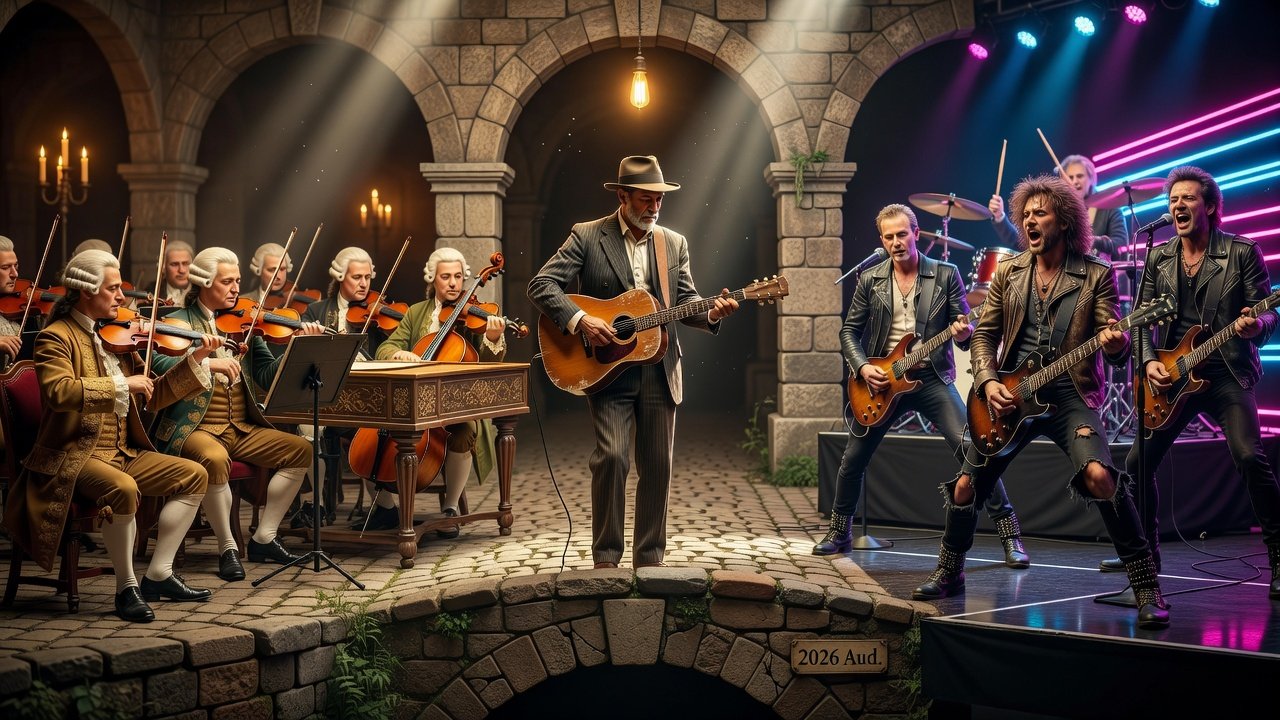
The evolution of music rarely follows a straight line. Classical techniques from the Baroque and Romantic eras found their way into the raw expressions of early blues, which in turn fueled the electric energy of 1980s rock. This article examines those direct connections through harmonic structures, improvisation methods, and rhythmic patterns, using specific examples from composers like Bach, Beethoven, and Mozart alongside artists such as Robert Johnson, Muddy Waters, Eddie Van Halen, and Stevie Ray Vaughan. Music history enthusiasts searching for deeper connections will find detailed comparisons between eras, step-by-step breakdowns of iconic tracks, and practical guidance for recognizing these influences in everyday listening.
Understanding these bridges enriches appreciation far beyond surface-level genre labels. We compare how tension-and-release principles traveled from European concert halls to American juke joints and then to arena stages. Along the way, readers gain concrete tools for analyzing songs and building personal playlists that highlight the lineage. The journey begins in the 18th century and lands firmly in the 1980s, revealing why certain riffs and solos still resonate today.
Harmonic Structures: From Baroque Progressions to Blues and Rock
Classical composers such as Johann Sebastian Bach employed complex chord progressions that emphasized tension and resolution. The circle of fifths, a foundational tool in Baroque music, directly influenced the 12-bar blues form. In blues origins, this manifested in the I-IV-V chord sequence, creating emotional depth that echoed Bach's inventions. Beethoven later expanded chromatic movement in his late sonatas, which found parallels in the bent notes and dominant sevenths of early Delta blues guitarists.
Step-by-step breakdown in "Cross Road Blues" by Robert Johnson: The opening uses a dominant seventh chord resolving to the tonic, mirroring classical cadences. Measure by measure, the progression builds suspense exactly as a Bach fugue does before releasing into the next phrase. This technique carried into 80s rock, as heard in Journey's "Don't Stop Believin'," where extended harmonies and key changes build stadium-sized drama through layered keyboards and guitars.
Comparisons reveal how Romantic-era chromaticism from Chopin added tension in blues guitar bends, later amplified in power chords of 80s anthems by bands such as Queen and Def Leppard. Listeners can practice identifying these structures by slowing down recordings and charting the chords, noting how a single borrowed chord from classical vocabulary transforms a simple blues turnaround into something epic.
Additional Examples Across Eras
Mozart's use of diminished chords for dramatic effect appears in Muddy Waters' electric Chicago blues, where the same harmonic tension drives songs like "Hoochie Coochie Man." By the 1980s, guitarists translated these ideas into extended solos over minor-key progressions, as in Rush's "Tom Sawyer."
Improvisation Methods: Baroque Ornamentation to Blues Solos and Rock Virtuosity
Improvisation in classical music involved ornamentation like trills and runs in Bach's works. These methods transferred to blues through call-and-response patterns in Delta blues, where guitarists like Johnson improvised over basic forms while maintaining melodic coherence. The process mirrors how Baroque performers elaborated on written melodies.
- Identify the motif: Start with a short classical phrase or blues lick drawn from the pentatonic scale.
- Embellish with bends: Adapt trills to string bends and vibrato in blues, adding emotional inflection absent in strict notation.
- Expand into rock solos: Layer distortion, speed picking, and tapping, as Eddie Van Halen did in "Eruption," creating neoclassical lines that echo Bach inventions at double tempo.
- Resolve with authority: Return to the root or tonic chord, a technique shared by all three eras for satisfying listener expectations.
In 80s rock, this evolved into neoclassical shredding, blending Bach-like sequences with pentatonic blues scales. Stevie Ray Vaughan's cover of "Voodoo Child" demonstrates the full arc from classical phrasing through blues fire to rock intensity.
Rhythmic Patterns: Baroque Precision Meets Blues Swing and Rock Drive
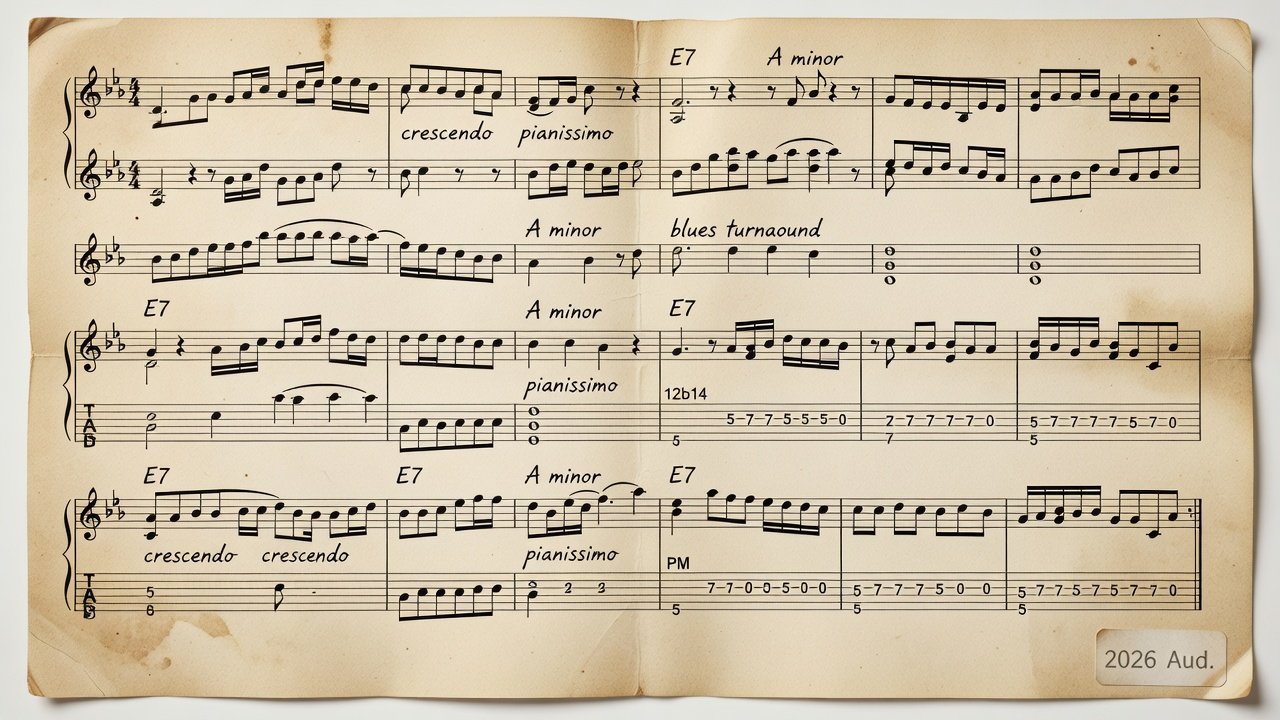
Classical rhythms featured precise counterpoint and polyrhythms. Early blues incorporated swung eighth notes derived from African traditions filtered through classical phrasing. By the 80s, rock bands like AC/DC used straight rhythms with classical-inspired builds for anthemic effect, while artists such as Van Halen mixed swing and straight feels within single tracks.
Practical comparison: Listen to Bach's "Air on the G String" for its flowing lines, then Johnson's "Sweet Home Chicago" for swung adaptation, and finally Def Leppard's "Pour Some Sugar on Me" for polished 80s execution that combines both approaches. Modern listeners can use free metronome apps to toggle between swung and straight feels to train the ear.
Iconic Track Analysis and Era Comparisons
Key examples highlight the lineage. Mozart's dramatic contrasts appear in blues dynamics, while 80s production polished them with studio effects. Avoid common mistakes like ignoring microtonal blues inflections when recreating classical influences on guitar. Another frequent error is overlooking how 12-bar forms were compressed or extended in rock arrangements for radio pacing.
Further track breakdowns include Cream's "Crossroads" (a direct Johnson reinterpretation with classical-style solo development) and Whitesnake's 1980s ballad "Is This Love," which employs Romantic-era suspended chords for emotional lift. Comparing these reveals consistent principles of tension, release, and motif development across centuries.
Mistakes to Avoid When Tracing These Influences
Many enthusiasts overstate direct quotes while missing subtler borrowings such as phrasing and dynamics. Always verify chord charts against original recordings rather than simplified online tabs. Additionally, consider cultural context: European classical music reached blues through printed scores and traveling musicians, not solely through abstract theory.
FAQ: Common Questions on These Musical Connections
How did classical music reach blues origins? Through European settlers, church music, and printed sheet music influencing early American musicians in the 19th century.
What 80s tracks best showcase these techniques? Van Halen's instrumental works, Journey's arena ballads, and Rush's progressive compositions.
Can modern guitarists replicate these connections? Yes, by studying classical pieces alongside blues scales and applying ornamentation techniques in solos.
Are there modern ways to explore this in 2026? Stream curated playlists on major platforms featuring remastered tracks, or attend live performances that blend genres.
Which composers appear most frequently in analyses? Bach for counterpoint and Bach-like sequences, Beethoven for dramatic dynamics, and Chopin for chromatic color.
Listening Recommendations for 2026 Audiences
Start with Britannica's classical archives for foundational listening. Follow with Smithsonian Folkways blues collections, then transition to 80s rock via official artist remasters. Create playlists alternating eras to hear the evolution clearly. For deeper study, reference Library of Congress recordings of early blues. Supplement with articles from Smithsonian Magazine that contextualize American music history. These connections continue to inspire new music today, rewarding attentive listeners with layers of meaning.

No comments yet. Be the first!