 Instrumentiverse

Guitar Guide 2026: Fingerpicking Patterns Basics
Discover how fingerpicking can transform your acoustic guitar playing from basic strumming into expressive, melodic performances. This guide focuses on simple techniques perfect for beginners and singer-songwriters aiming for quick progress in 2026.
Fingerpicking adds flair and versatility that strumming alone cannot match, allowing independent melody, bass, and rhythm lines. Whether you're covering folk classics or writing originals, these patterns build a strong foundation.
Foundational Right-Hand Position
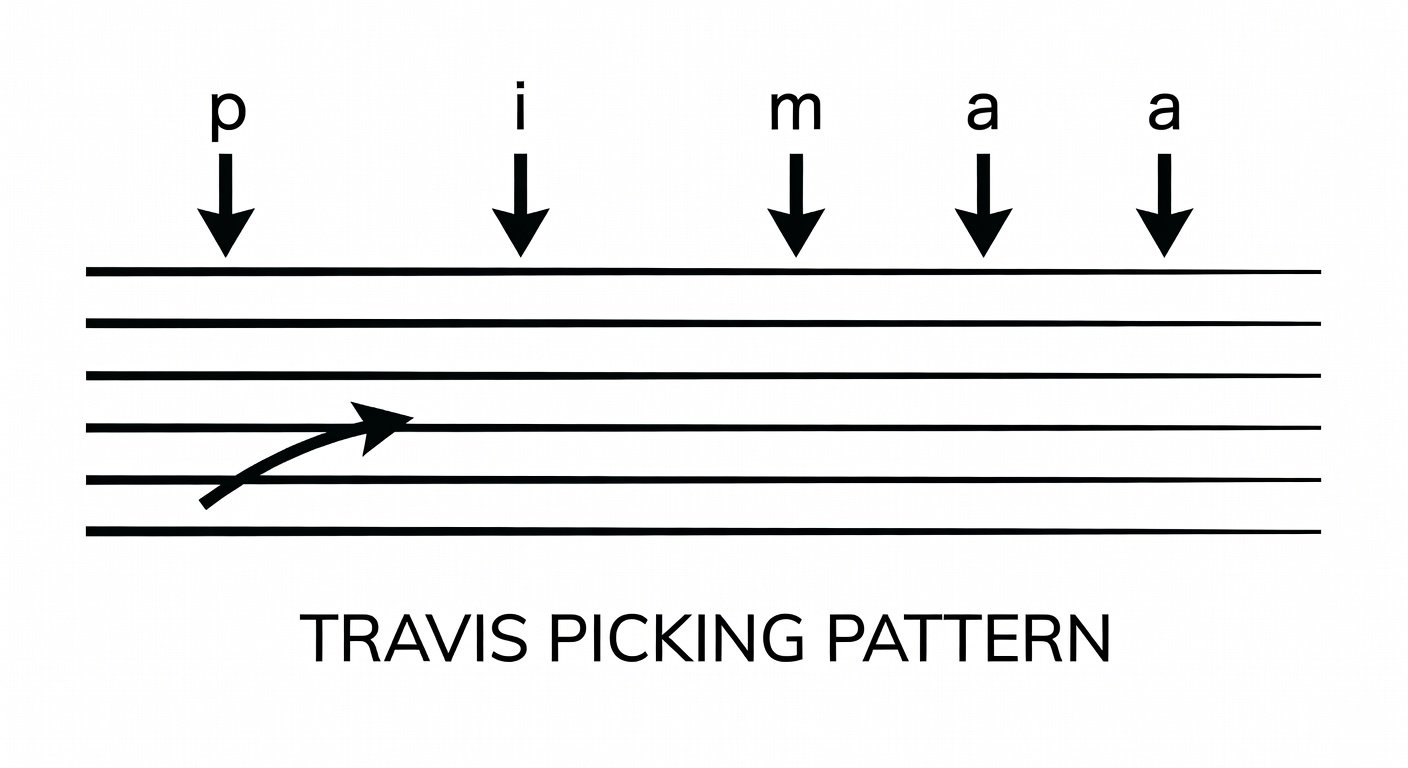
Start with proper posture for control and to prevent tension. Rest your right forearm lightly on the guitar's upper body. Curve your fingers so the fingertips approach the strings at a slight angle. Use the thumb (p) for bass strings and index (i), middle (m), and ring (a) fingers for higher strings. Keep the wrist relaxed and slightly arched.
Five Essential Fingerpicking Patterns
1. Travis Picking
Travis picking alternates a steady bass line with syncopated treble notes. Thumb plays bass notes on beats 1 and 3 while fingers pluck on the off-beats. Example tablature for a simple C chord:
   e|-----0-------0----|
   B|-------1-------1--|
   G|---------0--------|
   D|------------------|
   A|-3----------------|
   E|------------------|
Practice slowly, emphasizing the alternating thumb.
2. Alternating Bass Pattern
This foundational pattern switches between two bass strings. For G chord: thumb alternates between 6th and 4th strings while fingers fill treble.
3. Arpeggio Pattern
Play strings sequentially: p-i-m-a-m-i. Ideal for ballads.
4. Syncopated Pattern
Emphasize off-beats for rhythmic interest similar to folk strumming variations.
5. Rolling Pattern
Quick successive plucks across strings for a cascading effect, useful in intros.
Practice each with a metronome starting at 60 BPM and gradually increasing.
Practice Exercises and Common Pitfalls
Begin with open chords like G, C, and D. Focus on even volume and clean attacks. Avoid these mistakes: excessive finger tension, which causes fatigue; muting strings accidentally with the palm; and uneven timing. Record yourself to identify issues.
Fingerpicking vs Strumming: Versatility Comparison
Strumming provides rhythmic drive for energetic songs, while fingerpicking excels in intimate settings and intricate arrangements. Many players combine both for dynamic performances. Fingerpicking offers more tonal control and is especially rewarding for singer-songwriters crafting nuanced accompaniments.
5-Song Practice Playlist
- "Dust in the Wind" by Kansas – Travis picking focus
- "Blackbird" by The Beatles – Arpeggio and melody integration
- "Horse with No Name" by America – Alternating bass
- "Hallelujah" by Leonard Cohen – Syncopated patterns
- "Landslide" by Fleetwood Mac – Rolling elements
Frequently Asked Questions
How long should my nails be?
Keep fingernails on the picking hand at a moderate length (1-2mm beyond fingertip) for better attack and tone. File smooth to avoid catching strings.
What string gauge is best?
Light gauge strings (around .012-.053) suit beginners for easier playability and brighter tone without excessive finger strain.
With consistent daily practice using these patterns, you'll add professional flair to your playing within weeks.
No comments yet. Be the first!