 Instrumentiverse
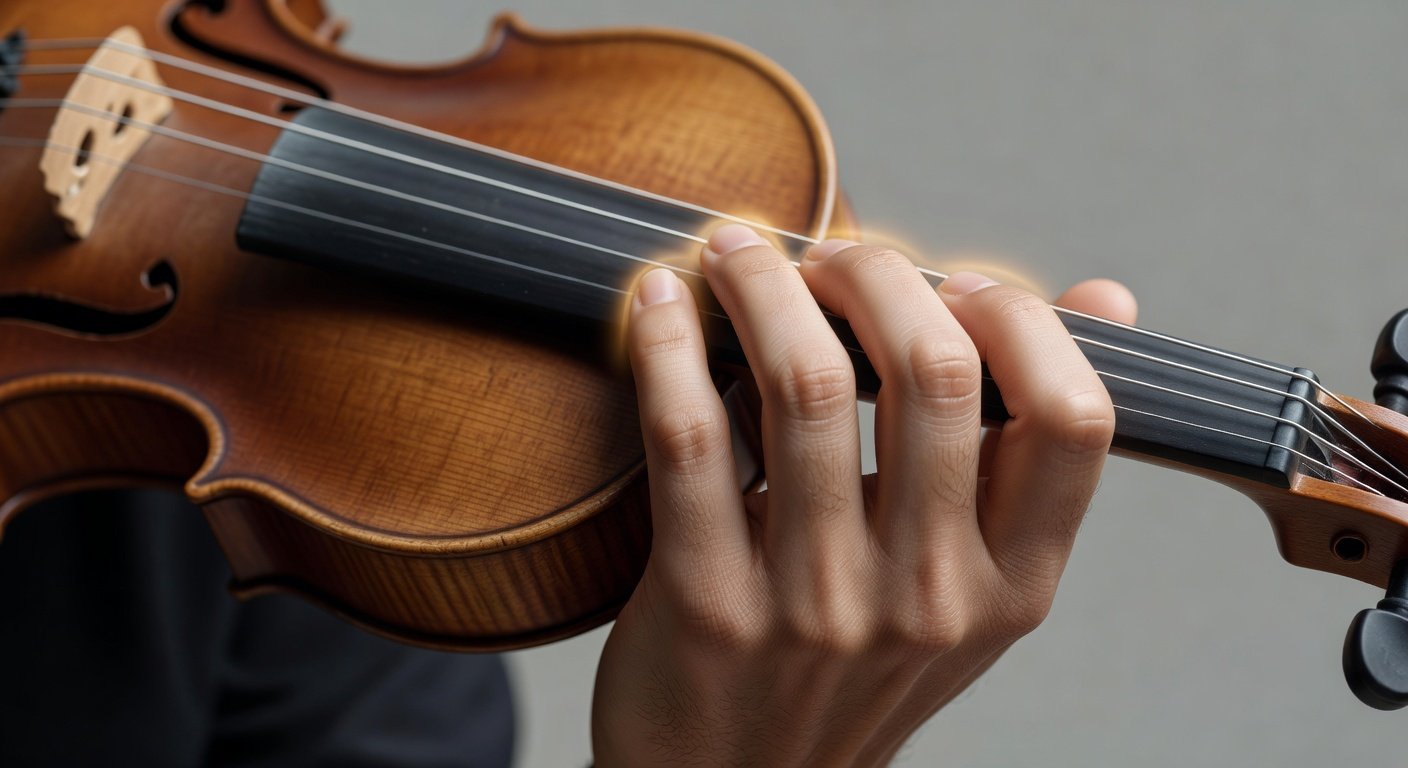
Are you a beginner violinist struggling with intonation? Those sour notes can be frustrating, but mastering finger positions on the left hand is the key to sweet, in-tune playing. In this comprehensive 2026 violin lesson, we'll dive deep into first-position techniques, hand posture fundamentals, detailed fingering charts, step-by-step exercises, common pitfalls, and proven practice routines. Whether you're self-teaching or supplementing lessons, these strategies will transform your playability and build muscle memory for life.
Why Finger Positions Matter for Beginner Violinists
The left hand is your violin's pitch control center. Unlike fretted instruments, the violin's fingerboard demands precise placement to achieve accurate intonation. Poor finger positions lead to buzzing strings, wolf tones, or notes that wander sharp or flat. Mastering first position—the foundational spot covering notes from the open string to third finger on the A string—sets the stage for scales, melodies, and eventually higher positions.
Intonation isn't just about sounding good; it's essential for ensemble playing, where even a quarter-tone off disrupts harmony. Studies from violin pedagogy experts emphasize that consistent left-hand frame (the shape formed by thumb, fingers, and palm) reduces tension and speeds learning. By 2026, with digital tools like apps and tuners, achieving this is easier than ever.
Fundamentals of Left-Hand Posture
Start with posture: your left hand should form a relaxed 'C' shape. Thumb opposite the first finger, lightly touching the neck. Fingers curved like holding a bubble—gentle pressure only. Elbow tucked in, wrist straight, not cocked. Shoulder down, no hunching.
- Thumb Placement: Behind the neck, level with first finger knuckle. Never squeeze.
- Finger Shape: Arched, fingertips perpendicular to strings for clean stops.
- Hand Position: Supinated (palm up slightly), shifting weight from index to pinky.
- Arm Alignment: Forearm parallel to fingerboard, elbow free to move.
A common benchmark: your thumb should align with the first finger when viewed from above. Practice this mirror-side or record yourself. For authoritative guidance, check the Suzuki Association of the Americas resources on basic violin setup.
First-Position Fingering Charts for Major Scales
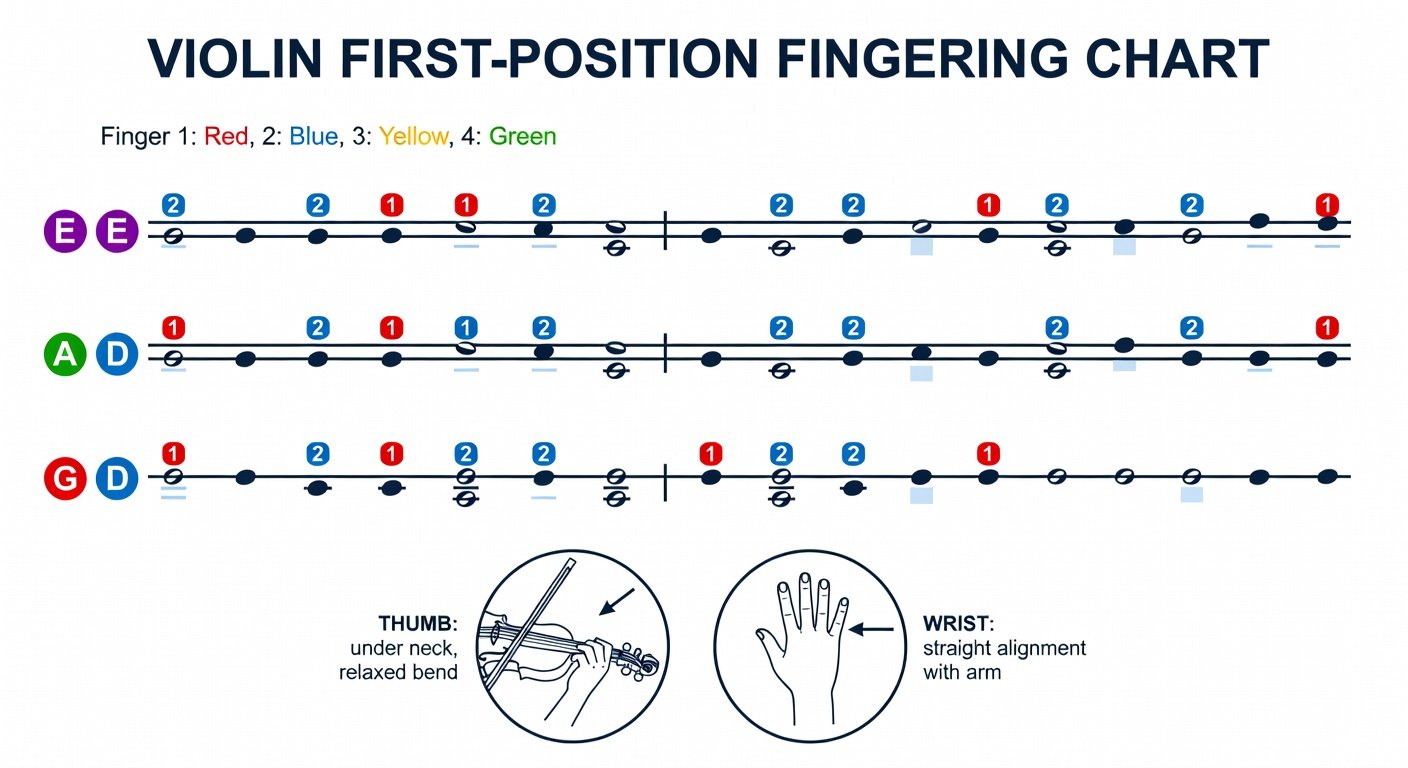
First position spans one octave on most strings. Here's a handy chart for G, D, A, and E major scales (1=index, 2=middle, 3=ring, 4=pinky; 0=open).
| String | G Major Ascending | D Major Ascending | A Major Ascending | E Major Ascending |
|---|---|---|---|---|
| G | 0-1-2-3 / 0-2-3-4 | 0-2-3-4 / 0-1-3-4 | 0-1-2-3 / 0-2-3-4 | 0-1-2-3 / 0-2-3-4 |
| D | 0-1-2-3 / 0-2-3-4 | 0-1-2-3 / 0-2-3-4 | 0-2-3-4 / 0-1-3-4 | 0-1-2-3 / 0-2-3-4 |
| A | 0-1-2-3 / 0-1-3-4 | 0-1-2-3 / 0-1-3-4 | 0-1-2-3 / 0-1-3-4 | 0-2-3-4 / 0-1-3-4 |
| E | 0-1-2-3 | 0-1-2-3 | 0-1-2-3 | 0-1-2-3 |
Use this as a reference. Print it out or bookmark for daily scales. Note the half-step shifts: pinky stretches for B on G string, etc.
Step-by-Step Exercises for Each Finger
Build dexterity finger by finger. Use a tuner or drone note for feedback. Start slow, no bow—pluck (pizzicato) first.
Index Finger (1st Finger) Exercises
- Pluck open A, then 1st finger B. Hold 5 seconds, check tuner.
- Slide up/down minimally—feel the 'slot'.
- Scale snippet: A-B-C#-D on A string, metronome at 60 bpm.
- Daily: 5 mins, repeat 10x per note.
Middle Finger (2nd Finger) Exercises
- A string: Open A to C# (2nd). Anchor index on B.
- 1-2 pairs: B-C# across strings.
- Twinkle Variation: Use 1-2 on D and A strings.
- Tip: Keep fingers down after playing—no 'flying'.
Ring Finger (3rd Finger) Exercises
- D string: Open D to F# (3rd).
- 1-3 skips: B-D on A string.
- Trill prep: 2-3 on each string, 4x fast.
- Strengthen with hold: 10 seconds per note.
Pinky (4th Finger) Exercises
- Toughest! G string open to C (4th)—big stretch.
- 3-4 pairs: D-E on D string.
- Scale peaks: Climb to high notes slowly.
- Pro tip: Tilt hand slightly right for pinky reach.
Progress to bowing: Long bows (whole bow, 4 beats) for even tone. Before: wobbly pitch; after: pure tone. Apps like Violin Tuner simulate audio feedback.
Common Pitfalls and How to Avoid Them
Tension kills progress. Watch for:
- Collapsing Wrist: Causes flat notes. Fix: Tennis ball under wrist during practice.
- Thumb Squeeze: Leads to stiff shifts. Relax: Thumb floats.
- Sliding Fingers: Scoops intonation. Solution: Plant and pivot.
- Uneven Pressure: Buzzing. Use mirror for symmetry.
- Ignoring Pinky: Weakest—dedicate sessions.
Avoid overpractice: 20 mins focused beats hours scattered. For more on technique pitfalls, explore Wikipedia's Violin Technique page.
Practice Routines with Metronome Tips
Structure your 30-min session:
- Warm-up (5 mins): Open strings, finger taps.
- Finger Drills (10 mins): One finger per day, scales at 60-120 bpm. Metronome: Start quarter notes, advance to eighths.
- Scales (10 mins): G major full, bow variations (slurs, detaché).
- Song Apply (5 mins): Twinkle, Ode to Joy—check intonation live.
Metronome hacks: Free apps like Pro Metronome. Record sessions; compare week 1 vs. 4 audio—night and day improvement.
Comparing Finger Positions to Bow Techniques
Left hand sets pitch; right bow creates tone. Balance both:
| Aspect | Left Hand (Fingers) | Right Hand (Bow) |
|---|---|---|
| Precision | Finger slots | Bow speed/pressure |
| Tension | Relaxed frame | Grip like bird perch |
| Practice | Pizz scales | Long tones |
| Feedback | Tuner drone | Resonance ear |
Integrate: Finger scales with bow for full effect. See ASTA-String Teachers Association for bow parallels.
Conclusion: Your Path to Violin Mastery
Consistent first-position work builds unshakable intonation. Practice daily, stay patient—results compound. By end of 2026, you'll play confidently. Ready for more? Transition next.
FAQs
How do I transition to third position?
Master first, then 'secure' first finger as pivot. Shift on long bow, land thumb/neck angle change. Exercises: 1st to 3rd on A string D.
What's a good daily warm-up for muscle memory?
5 mins: Finger patterns (1-2-3-4 per string), spider exercise (1-2-3-4 across), slow scales. No bow first.
Best tuner for intonation practice?
Clefable or TonalEnergy—visual chromatic display beats needle tuners.
How long until finger positions feel natural?
4-6 weeks daily practice. Muscle memory solidifies at 21 days per skill.


No comments yet. Be the first!