 Instrumentiverse
Why a Structured 2026 Weekly Practice Plan Matters for Beginners
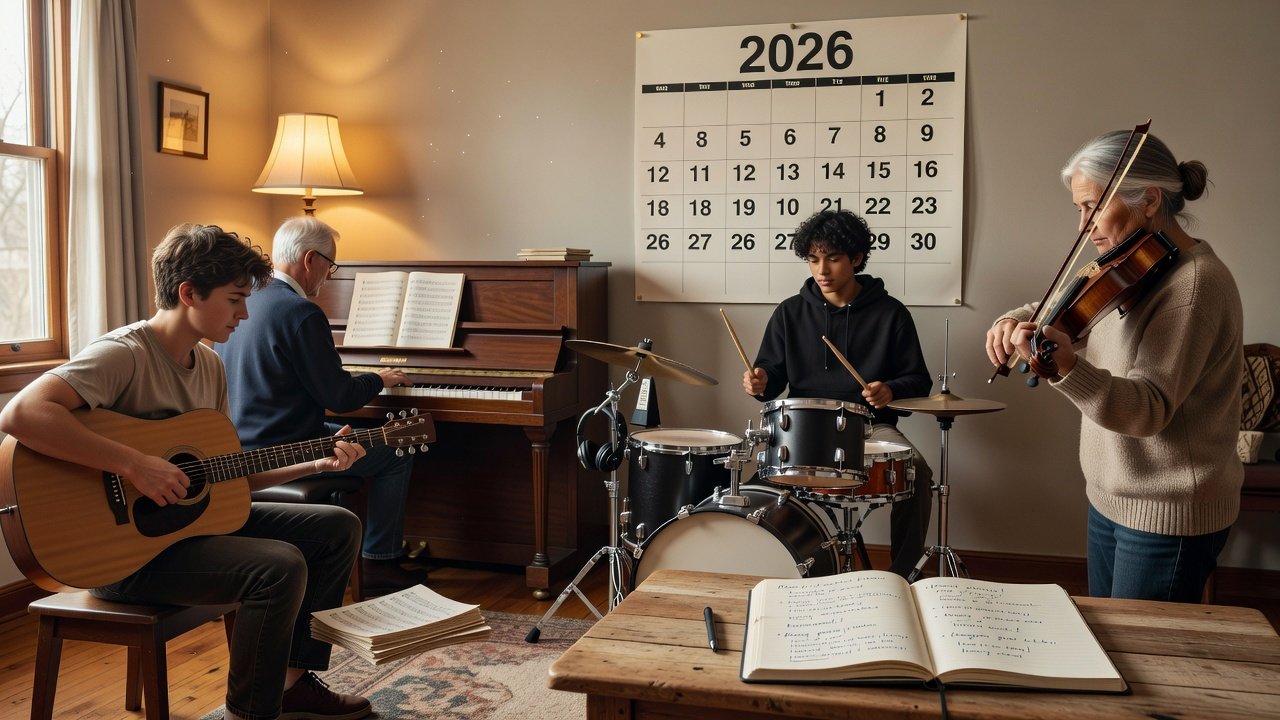
Learning an instrument as a beginner on guitar, piano, drums, or violin demands more than random sessions. A structured weekly plan builds muscle memory, improves focus, and prevents the common issue of burnout that causes many newcomers to quit within the first three months. This comprehensive guide explains time-blocking techniques, how to balance technical drills with enjoyable repertoire, and ways to track progress across multiple instruments while maintaining motivation throughout 2026.
Core Principles Behind Effective Time-Blocking
Time-blocking breaks practice into short, intentional segments rather than one long unstructured block. For beginners, start with 45 to 60 minutes total per day divided into three or four focused blocks. The first block covers warm-ups and basic technique, the middle blocks address specific skills, and the final block involves playing real music. This method keeps the brain engaged and reduces fatigue. Balancing technique with fun repertoire is essential because pure drills can feel repetitive, while constant song playing may leave gaps in foundational skills. Aim for a 60/40 split favoring technique early in the week and repertoire toward the weekend.
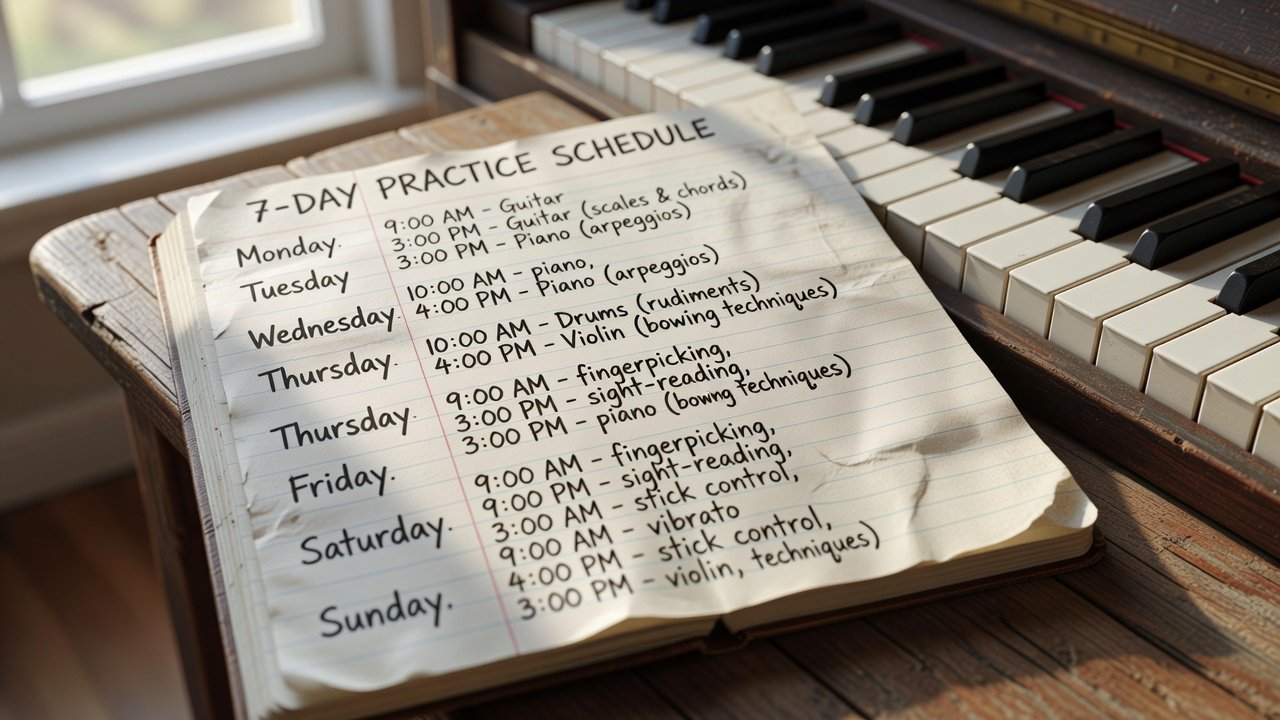
Sample 7-Day Beginner Schedule with Daily Allocations
The following schedule serves as a flexible template. Adjust times based on your energy levels and available space. Each instrument follows the same overall structure but substitutes instrument-specific exercises.
- Monday: 10-minute warm-up, 20-minute technique block, 15-minute song work, 5-minute cool-down reflection
- Tuesday: 15-minute scales or rudiments, 20-minute chord or pattern practice, 15-minute repertoire, 10-minute listening session
- Wednesday: 10-minute review of previous day, 25-minute focused drill on weak spots, 15-minute new piece introduction, 10-minute improvisation or free play
- Thursday: Active rest day with optional 30-minute light play-through of favorite songs only
- Friday: 15-minute technique review, 20-minute recording or self-assessment, 20-minute ensemble-style play with backing tracks
- Saturday: 45-minute deeper session targeting one challenging section from the week
- Sunday: 30-minute fun jam session followed by 15-minute progress logging and goal setting for the next week
Instrument-Specific Exercises and Examples
Guitar Practice Drills
Guitar beginners should dedicate time to open chord transitions. Practice moving smoothly between C, G, Am, and F for eight minutes daily. Follow with strumming pattern variations on a single chord for five minutes. A real-world example involves a student who spent the first two weeks only on chord changes before adding simple folk songs like "Horse with No Name." This approach built clean transitions without rushing into complex fingerings.
Piano Technique and Repertoire
Piano players benefit from five-finger patterns across all major keys for the first ten minutes. Add basic chord inversions and Hanon exercises for coordination. Pair this with short classical pieces such as a simplified minuet. One beginner adapted the plan by repeating the same two pieces for three weeks until both hands moved independently, then introduced a modern pop arrangement to stay motivated.
Drums Rudiment Variations
Drummers focus on single-stroke rolls, double-stroke rolls, and paradiddles at 60 beats per minute for the first fifteen minutes. Progress to basic rock beats using hi-hat, snare, and bass drum coordination. A practical example shows a new drummer who recorded each rudiment variation weekly and noticed measurable speed improvements after four consistent sessions, helping maintain momentum through slower periods.
Violin Bowing and Intonation Work
Violinists start with open-string bowing exercises to develop even tone for eight minutes. Follow with first-position scales and simple folk melodies. One student adapted the schedule by extending bowing drills to twelve minutes after noticing shaky tone on longer notes, resulting in steadier sound within two weeks.
Comparing Different Practice Intensity Levels
Low-intensity days involve 30 minutes of relaxed play with minimal focus on perfection. Medium intensity adds deliberate drills and self-recording. High intensity includes performance preparation and detailed error analysis. Beginners should spend the first month at low to medium intensity before attempting high-intensity sessions. Comparing these levels helps avoid overtraining, especially when learning multiple instruments.
Adapting the Plan for Different Skill Paces and Schedules
Fast learners can insert 10-minute extension blocks on technique or add a second short song each week. Slower paces benefit from repeating the same exercises across two days before advancing. A working parent adjusted the plan to two 25-minute sessions on weekdays instead of one longer block, maintaining consistency without exhaustion. Another example involves a college student who combined violin and piano on alternating days to fit a heavy exam schedule while still hitting weekly milestones.
Tools and Methods for Tracking Progress
Use a simple notebook or free digital apps to log daily completion and weekly milestones. Measurable goals might include "play all open guitar chords at 80 beats per minute" or "perform a 16-bar piano piece from memory without errors." Review logs every Sunday to identify patterns and celebrate small wins. This data-driven approach keeps readers engaged and provides clear evidence of improvement over the full year.
Common Mistakes Beginners Should Avoid
Many beginners skip warm-ups, leading to tension and slower progress. Others focus only on songs and neglect technique, creating uneven skill development. Over-scheduling without rest days often causes burnout. Avoid comparing your pace to online videos; instead, measure against your own previous week’s performance.
Short FAQ on Handling Plateaus and Motivation
How do I push through a practice plateau?
Change one element such as tempo, exercise order, or add a new song. Deliberate slow practice followed by a short break often restarts stalled progress. Reviewing earlier recordings can also reveal hidden improvements.
What if daily motivation drops suddenly?
Return to favorite pieces for an entire session and temporarily reduce total practice time. Joining an online forum or planning a casual performance for friends can reignite interest quickly.
Can I practice more than one instrument on the same day?
Yes, but keep sessions short and separate them by at least two hours. Alternate focus days to prevent cognitive overload.
How often should I update my practice plan?
Review and adjust the plan every four weeks based on logged progress and life changes. Small tweaks keep the routine sustainable long term.
Conclusion
A thoughtful 2026 weekly practice plan transforms beginners into confident musicians on guitar, piano, drums, or violin. By combining time-blocking with instrument-specific drills, fun repertoire, measurable milestones, and built-in rest, you build lasting skills without burnout. Start implementing this schedule this week, track your results, and adjust as needed for continued growth throughout the year. For additional guidance on music education best practices, visit Berklee College of Music and NAMM Foundation resources.


No comments yet. Be the first!