 Instrumentiverse

Introduction to Sight-Reading in 2026
Sight-reading is the essential skill of performing music accurately from sheet notation on the first encounter. In 2026, musicians across all levels recognize its value for building versatility, reducing performance anxiety, and enabling spontaneous collaboration in ensembles. This comprehensive guide extends core music theory principles by focusing on practical fundamentals tailored for beginners on guitar, piano, drums, and violin. It covers note recognition, rhythm counting, key signatures, and includes multi-instrument examples with detailed step-by-step exercises.
Beyond basics, you will find a structured 4-week progressive practice plan, analysis of common pitfalls with targeted fixes, genre-specific applications, and an FAQ addressing tempo management and ensemble playing. Clear diagrams and references to audio examples enhance engagement. By dedicating consistent time, beginners can achieve measurable progress, turning unfamiliar scores into playable music with growing fluency.
Note Recognition Across Instruments
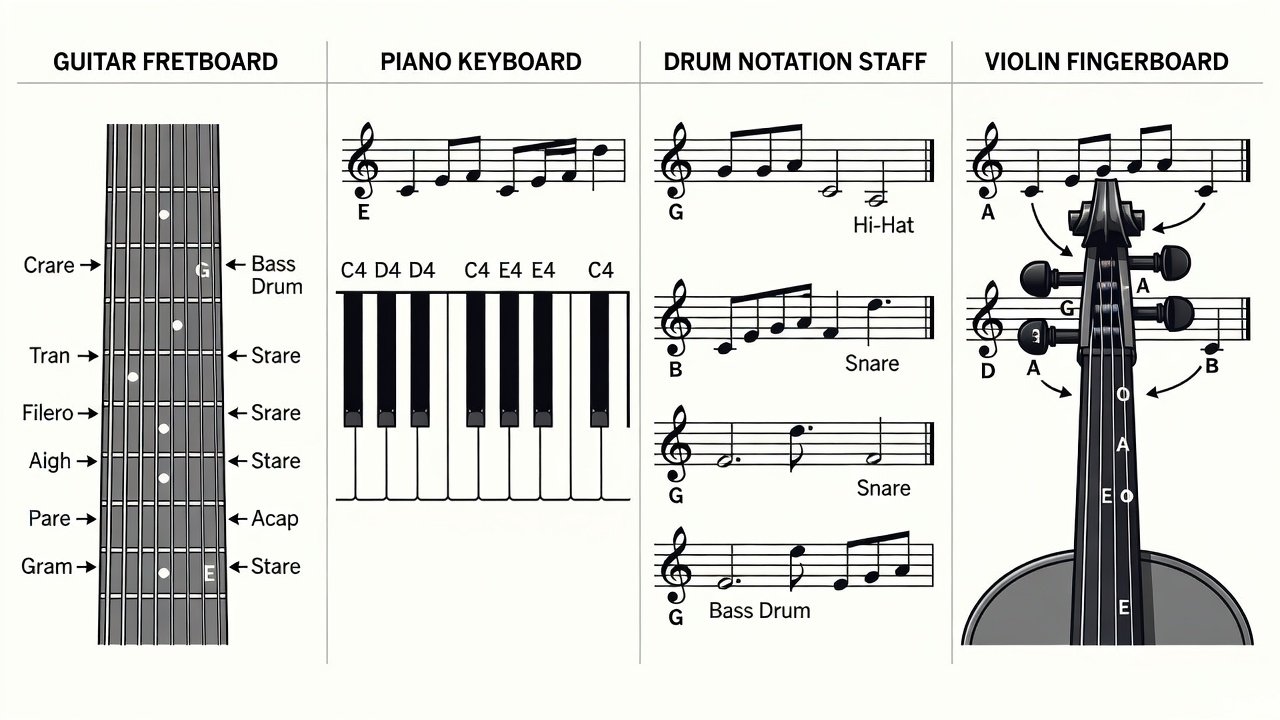
Accurate note recognition forms the foundation of sight-reading. Begin by associating staff positions with instrument-specific locations. On piano, middle C appears on the ledger line below the treble clef and corresponds to the key directly left of the two-black-key group in the middle register. Guitarists find middle C at the fifth fret of the third string, requiring awareness of string tuning and fretboard layout. Violinists locate it using the third finger on the D string or open A string references, emphasizing left-hand positioning and intonation. Drummers interpret note heads on varying staff lines or spaces to represent bass drum, snare, hi-hat, and cymbals, prioritizing placement over pitch.
Expand practice by transcribing short melodies onto staff paper and locating each note methodically. Common errors include confusing ledger lines with staff lines or misidentifying enharmonic equivalents such as F-sharp and G-flat. Daily flashcard drills accelerate automatic recognition. For reinforcement, cross-reference with instrument diagrams showing multiple octaves and alternate fingerings or positions.
Rhythm Counting Basics
Rhythm provides the temporal framework that brings notation to life. Master subdivision counting using the system of 1-e-&-a for sixteenth notes within a 4/4 measure. Start with whole, half, and quarter notes before layering eighth notes and rests. Clapping isolated rhythms while maintaining a steady pulse builds internal timing independent of technical demands.
Instrument-specific nuances matter greatly. Pianists coordinate two hands with independent rhythms, such as a melody in eighths against quarter-note bass. Guitarists maintain even strumming or picking patterns aligned to counted beats. Drummers synchronize limbs to notated patterns, often handling multiple simultaneous rhythms. Violinists match bow strokes to rhythmic values while preserving tone quality. Practice examples include a four-bar phrase mixing dotted quarters and eighth rests, counted aloud before playing.
Understanding Key Signatures
Key signatures establish the tonal center and required accidentals. The sharp order follows F-C-G-D-A-E-B, while flats reverse as B-E-A-D-G-C-F. D major, for instance, places sharps on F and C, altering scale degrees accordingly. Scan the signature first, then check for temporary accidentals within the score.
Progress through common keys: C major with no accidentals, G major with one sharp, F major with one flat. Apply the circle of fifths mentally to predict signatures quickly. This prevents hesitation during performance and supports transposition awareness when needed.
MusicTheory.net provides interactive exercises for drilling signatures in context.
Step-by-Step Exercises for All Four Instruments
Structured exercises bridge theory to application. Exercise 1 involves playing a C major scale in whole notes while naming each pitch aloud. Exercise 2 requires clapping then performing a rhythm-only etude in 3/4 time. Exercise 3 combines both by sight-reading a short duet excerpt, maintaining eye contact with the score rather than hands.
Additional variations include transposing a simple melody up a perfect fifth, incorporating dynamics markings, and practicing with a metronome at gradually increasing speeds. Record sessions to identify areas needing refinement, such as missed accidentals or uneven timing.
4-Week Progressive Practice Plan
Week 1 emphasizes note identification and basic quarter-note rhythms exclusively in C major. Dedicate ten to fifteen minutes daily, alternating instruments to prevent fatigue. Focus on accuracy over speed.
Week 2 introduces G major and F major signatures alongside eighth-note patterns. Incorporate two-octave scales and simple melodies from public domain sources. Review previous material at the start of each session.
Week 3 adds mixed time signatures such as 6/8 and dotted rhythms. Practice coordination challenges like piano hand independence or drum limb independence. Introduce short ensemble excerpts played along with recordings.
Week 4 integrates all prior elements with full short pieces spanning classical, folk, and contemporary styles. Perform daily mock readings under timed conditions and self-assess using a checklist covering notes, rhythm, and expression. Adjust tempo only after consistent accuracy at slower speeds.
Common Pitfalls and How to Fix Them
Pitfall one involves skipping rhythm counting in favor of guessing notes. Remedy by always vocalizing subdivisions before playing. Pitfall two centers on overlooking key signature accidentals throughout the piece. Solution requires circling all affected notes during initial scan. Pitfall three manifests as physical tension disrupting flow. Counter this with brief posture resets every four measures.
Further pitfalls include losing place on the page during page turns or complex passages; mark cues with pencil. Another arises from ignoring rests, leading to rushed entries; count them explicitly. Finally, over-focusing on one hand or voice neglects others; practice isolated parts then combine gradually.
Genre-Specific Applications
Classical music demands precise adherence to notation, including articulations and dynamic contrasts. Jazz sight-reading often features chord symbols alongside melodies, requiring quick harmonic interpretation and swing interpretation. Rock and pop prioritize groove and feel, where slight rhythmic liberties enhance the performance. Folk traditions may present irregular meters or modal scales that test counting and intonation skills developed earlier.
Adapt approaches accordingly: classical players emphasize even tone, while jazz musicians internalize swing subdivisions. Cross-genre practice broadens adaptability for professional opportunities.
Frequently Asked Questions
How do I manage tempo when sight-reading?
Select an initial tempo slow enough for complete accuracy. Increase only after multiple error-free repetitions. Employ metronome apps featuring subdivision clicks and visual cues to anchor pulse reliably.
What helps with ensemble playing?
Listen actively to surrounding parts rather than isolating your own line. Pre-mark breathing spots, dynamic changes, and cue points. Rehearse alongside reference recordings before live group sessions to anticipate interactions.
Are printable cheat sheets useful?
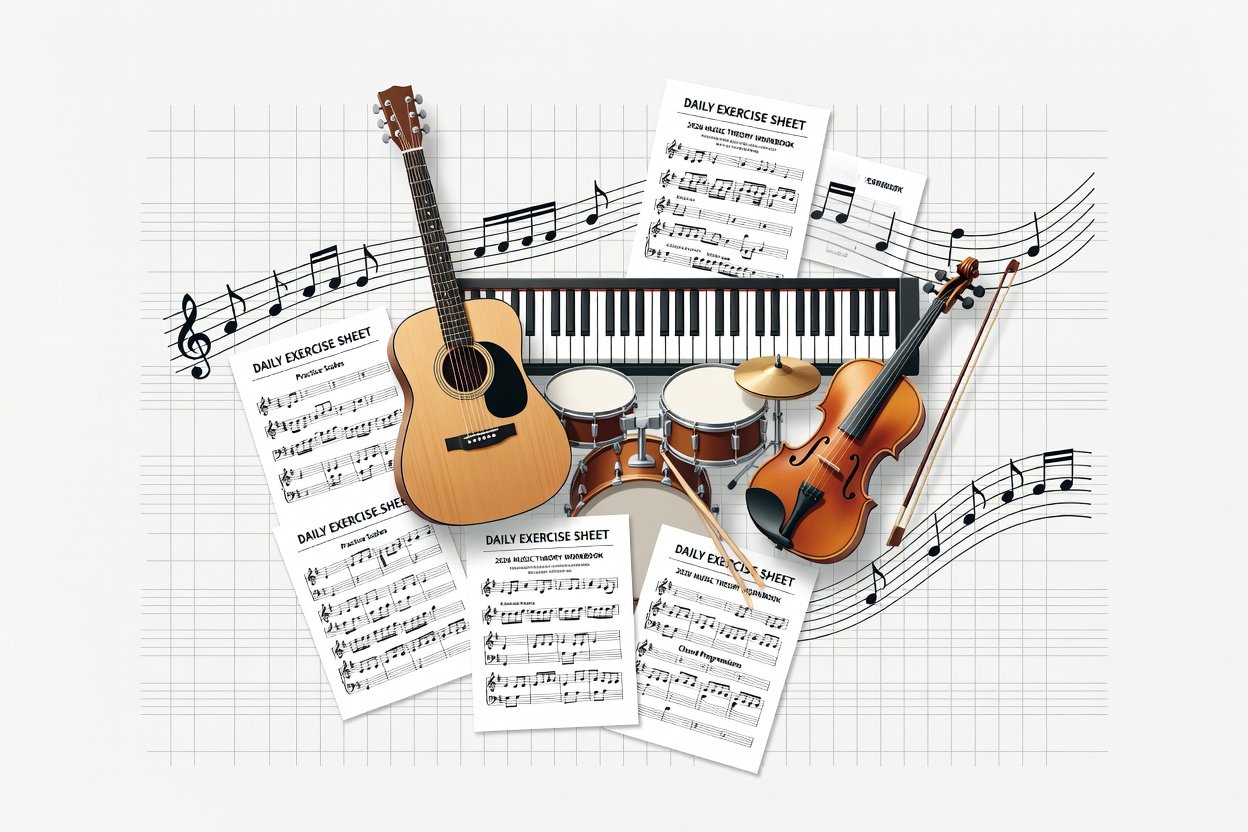
Yes, concise reference sheets listing note positions, common rhythms, and key signature mnemonics support quick reviews during practice. Create personalized versions highlighting instrument-specific patterns.
Additional resources for scores appear at IMSLP, offering extensive public domain options suitable for ongoing sight-reading development.
Consistent application of these methods yields steady improvement. Revisit foundational exercises as new repertoire introduces greater complexity, ensuring long-term growth in musical fluency and confidence.
No comments yet. Be the first!