 Instrumentiverse

Introduction to Singing While Playing an Instrument
Learning to sing and play an instrument at the same time is a transformative skill for absolute beginners in 2026. It combines vocal expression with rhythmic and harmonic support, creating complete musical performances from the start. Whether you pick up an acoustic guitar or sit at a piano, integrating vocals with basic chords or melodies builds coordination, ear training, and overall musicianship. This approach keeps learning engaging and prevents the frustration that comes from practicing isolated skills.
Many new learners struggle with the mental load of managing two activities, but low-pressure exercises make the process approachable. The benefits extend beyond music itself, improving focus, memory, and self-expression. This comprehensive guide covers everything from foundational warm-ups to a structured four-week progression, ensuring steady improvement without overwhelm.
Simple Vocal Warm-Ups for Beginners
Effective vocal preparation prevents strain and enhances pitch accuracy. Begin each session with five to ten minutes of gentle exercises. Lip trills involve blowing air through relaxed lips while humming a scale, which relaxes the facial muscles and engages the breath. Humming scales on an "mm" sound builds resonance in the mask area of the face.
Next, perform vocal sirens by gliding from low to high notes on an "oo" vowel. This stretches the vocal range safely. Add tongue trills or gentle yawns to release tension in the jaw and throat. Repeat these daily, always starting softly and increasing volume gradually. For guitarists, practice these while holding the instrument lightly to simulate the full setup. Pianists can rest hands on the keys during warm-ups to maintain posture awareness.
Matching Pitch to Chords on Guitar or Piano
Pitch matching forms the core of successful integration. Start with open chords on guitar such as G, C, and D, or simple triads on piano like C major and F major. Play the chord once, then sing the root note, followed by the third and fifth. Use a free tuner app to verify each note until your ear develops naturally.
Break it down further with call-and-response drills: play a single note, sing it back, then add the full chord underneath. Practice in short bursts of ten minutes to avoid fatigue. Examples include matching the note E above a C chord on piano or singing the open G string while strumming a G chord on guitar. Over time, transition to singing full phrases over sustained chords, adjusting volume and tone to blend smoothly.
Easy Song Examples to Layer Singing Over Basics
Select songs with repetitive structures and limited chord changes. "Happy Birthday" works well on both instruments using just three chords on guitar or basic triads on piano. Start by playing the accompaniment alone, then hum the melody, and finally add lyrics. Another strong choice is "Amazing Grace," which features slow tempos ideal for coordination practice.
For variety, try "Row Row Row Your Boat" or "Twinkle Twinkle Little Star" with simplified strumming patterns of downstrokes on beats one and three. On piano, play the melody in the right hand while holding chords in the left. Record yourself weekly to hear progress in timing and intonation. These examples build muscle memory quickly because the melodies are familiar and forgiving.
4-Week Progression Plan
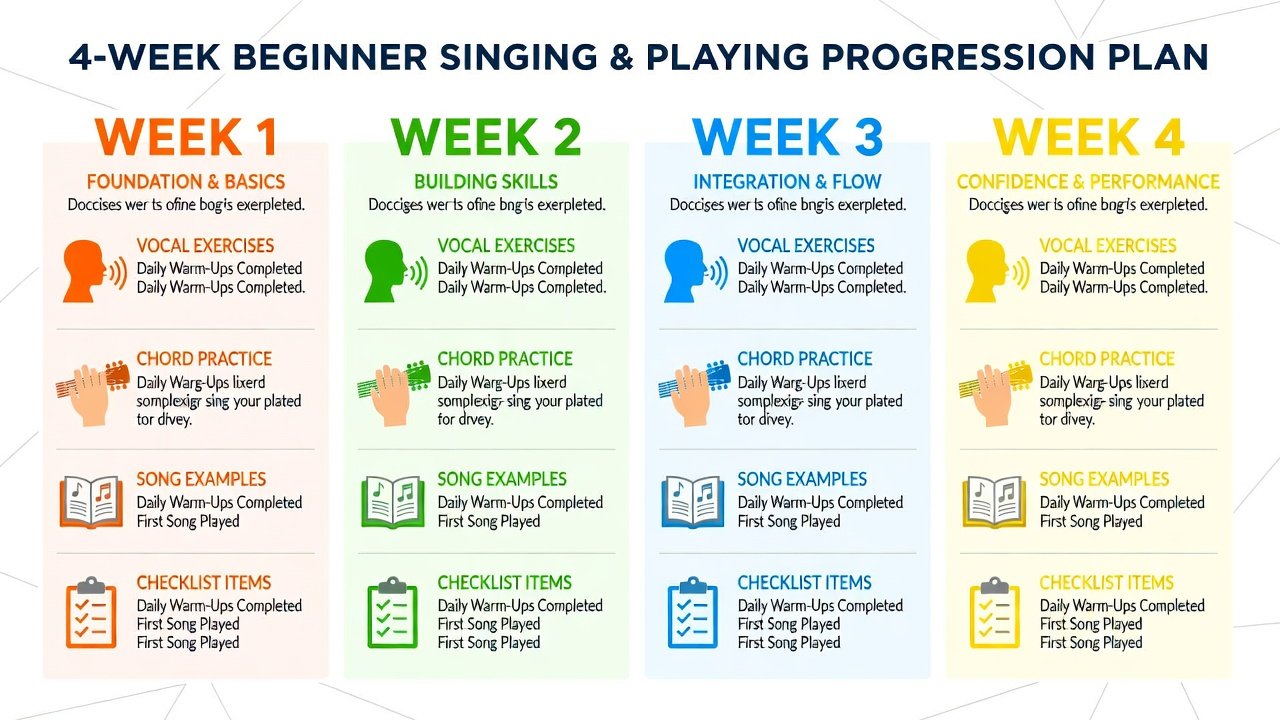
A structured timeline keeps motivation high. Week one emphasizes isolated skills: daily vocal warm-ups for ten minutes, followed by ten minutes of pitch matching to single chords. Focus on posture and relaxed breathing.
Week two combines humming with basic accompaniment. Spend fifteen minutes strumming or playing chord progressions while humming simple scales. Introduce one easy song per session, repeating it five times.
Week three layers in full lyrics and dynamics. Practice two songs, alternating between guitar and piano if both are available. Add light variations like changing strum patterns or adding piano arpeggios.
Week four incorporates performance elements such as playing through without stopping and experimenting with tempo. Include a short recording review at the end of each week. Adjust the plan based on personal pace, adding extra days for challenging sections.
Common Coordination Challenges and Fixes
Coordination issues are normal and solvable with targeted practice. Challenge one is losing the beat while singing; fix this by clapping or tapping the rhythm separately before adding voice, then use a metronome set at 60 beats per minute. Challenge two involves forgetting lyrics mid-performance; solve it by memorizing verses without the instrument first, then layering accompaniment slowly.
Challenge three is throat tension from divided attention; address it with frequent posture checks and shoulder rolls between repetitions. Additional challenges include uneven volume between voice and instrument or rushing through difficult chords. Fixes include practicing at half speed and using mirrors to monitor hand and mouth positions. Consistent short sessions outperform long, frustrating ones.
Building Long-Term Retention and Engagement
To maintain progress beyond the initial weeks, schedule practice at the same time daily and track sessions in a simple notebook. Join online communities for accountability or find a practice partner for duets on easy songs. Experiment with different genres once basics feel comfortable, such as folk or pop tunes that use similar chord sets. This variety prevents boredom and reinforces skills through repetition in new contexts.
Downloadable Practice Checklists
Develop personalized checklists that include boxes for warm-up completion, chord accuracy, song repetitions, and self-assessment notes. Include sections for noting specific challenges encountered each day. These tools turn abstract goals into measurable actions and provide motivation through visible completion streaks.
FAQs on Building Confidence
How can beginners overcome nervousness when first combining skills? Begin with private, short sessions and gradually increase length while celebrating small wins like completing one verse cleanly. What if progress feels slow after two weeks? Revisit foundational warm-ups and reduce song complexity temporarily. Recording early attempts reveals hidden improvements that daily practice obscures. Is it better to focus on one instrument? Yes, master coordination on your primary choice before adding the second to avoid splitting attention.
FAQs on Choosing Beginner-Friendly Songs
Prioritize tracks with three to four chords maximum and repetitive choruses. Official resources such as Berklee College of Music provide free song libraries and analysis. Government-supported arts sites like National Endowment for the Arts offer educational song collections suitable for learners. Avoid fast tempos or wide vocal ranges until coordination solidifies. Test songs by playing the accompaniment first; if it feels manageable alone, it will integrate well with vocals.
Conclusion
Combining singing with guitar or piano creates fulfilling musical experiences for beginners. Through consistent warm-ups, deliberate pitch practice, carefully chosen songs, and the four-week progression outlined here, learners develop reliable coordination. Addressing challenges directly and using checklists ensures sustainable growth. The result is greater confidence, creativity, and enjoyment that lasts well beyond 2026. Start today with just ten minutes and build from there.
No comments yet. Be the first!