 Instrumentiverse
Introduction to Ear Training for Absolute Beginners
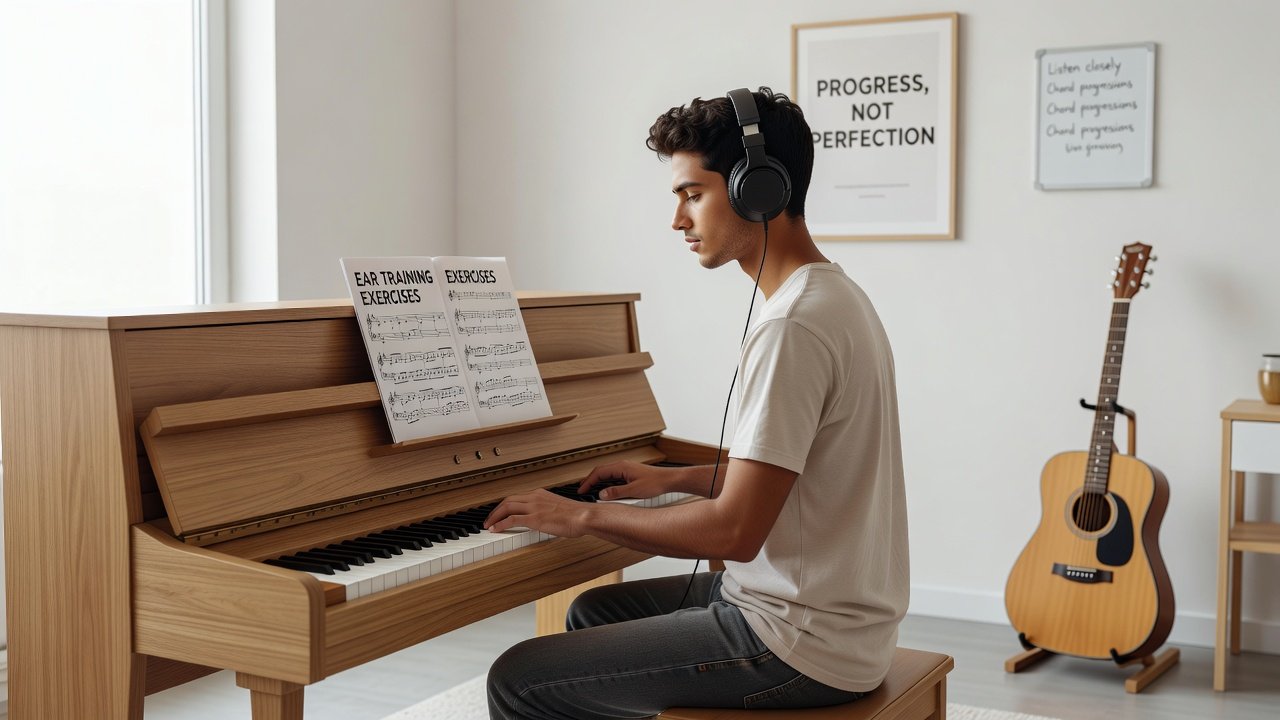
Developing strong listening skills is one of the most valuable steps for anyone starting out with beginner music and music tutorials. Ear training helps you recognize notes, intervals, and rhythms by sound alone, making practice sessions more effective whether you play guitar or piano. This guide focuses on hands-on drills that build these abilities alongside your instrument practice, emphasizing real-world application rather than abstract theory. Absolute beginners often struggle to connect what they hear with what they play. By incorporating simple daily exercises, you can improve quickly. These drills target interval recognition, melody replication, and rhythm matching while comparing approaches for guitar versus piano. The benefits extend beyond playing ability, helping you appreciate music more deeply during listening sessions and live performances.
Many new musicians focus solely on reading tabs or sheet music, but ear training creates independence. You will learn to play songs by hearing them first, which opens up improvisation and collaboration opportunities. Start slow and build consistency to see steady progress over weeks and months.
Core Concepts: Interval Recognition
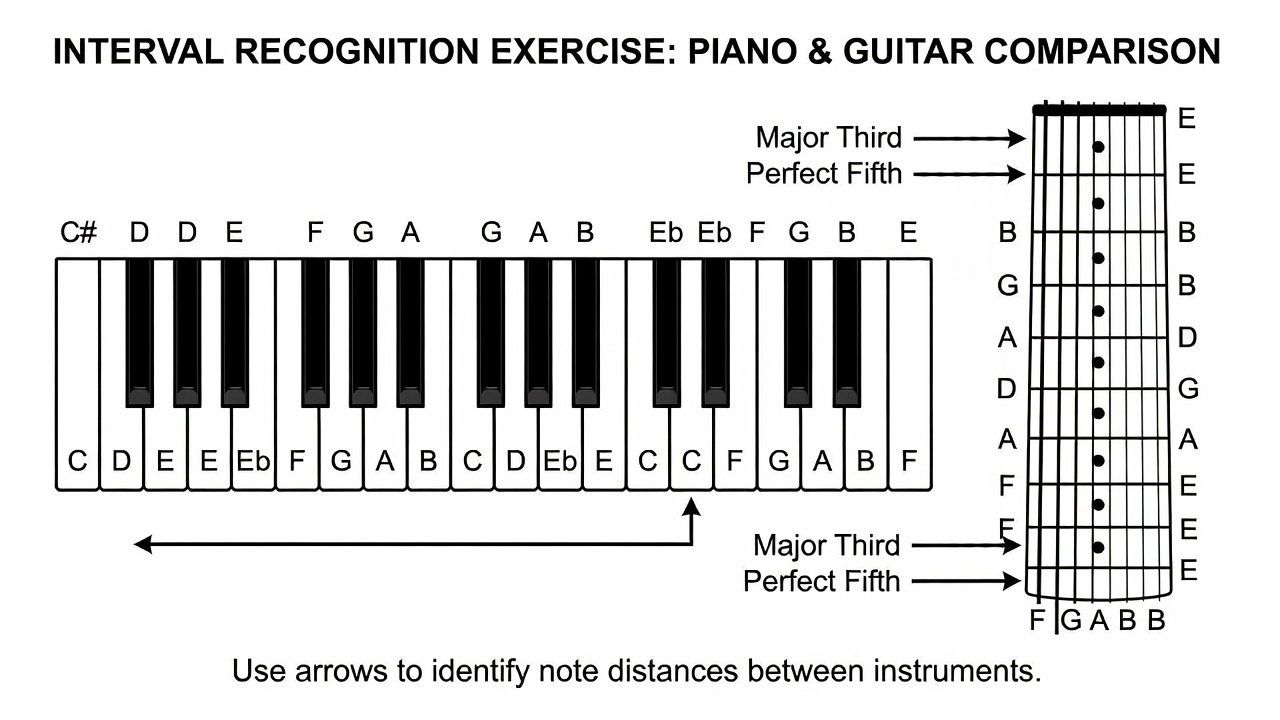
Intervals form the building blocks of music. Start by learning to identify the distance between two notes. Play a root note on your instrument, then a second note a major third or perfect fifth away. Sing the notes back to reinforce the sound. On piano, use adjacent keys for close intervals; on guitar, move along one string for the same effect. Repeat this for 10 minutes daily to train your ear. For example, the interval from C to E on piano is a major third with a bright, happy quality. On guitar, the same interval spans four frets on the same string. Practice ascending and descending versions to build versatility. Record the pairs and quiz yourself later without looking at your hands.
Simple Melody Replication Drills
Pick short, familiar tunes like "Mary Had a Little Lamb." Play the melody on piano using single notes, then try replicating it by ear on guitar. Record yourself and compare. This builds accuracy in hearing pitch relationships without relying on sheet music. Expand to "Happy Birthday" by breaking it into short phrases of three or four notes. Sing the phrase first, then match it on your instrument. Guitarists can use open strings for reference points while pianists rely on the visual layout of white and black keys. Repeat each melody five times in different keys to strengthen relative pitch skills.
Rhythm Matching Exercises
Clap or tap basic rhythms while listening to a metronome set at 60 BPM. Match the pattern on your guitar strings muted or piano keys. Progress to playing along with simple backing tracks. Guitarists can focus on strumming patterns, while pianists emphasize steady left-hand beats. Try quarter notes first, then introduce eighth notes and rests. A common starting rhythm is four beats followed by two rests. Practice syncing your playing exactly to the click to develop internal timing. Over time, reduce the metronome volume to test your independence.
Guitar vs Piano Approaches to Ear Training
Guitar players benefit from fretboard visualization during drills, sliding fingers to match heard pitches. Piano offers clear visual mapping of the keyboard, making scale degrees easier to track. Both instruments support the same core drills, but guitar requires more attention to tuning accuracy. Experiment with both to see which feels more intuitive for your learning style. Piano allows simultaneous chord and melody practice, which can accelerate harmony recognition. Guitar encourages single-note focus initially due to its linear string layout. Try switching instruments mid-session to compare how each highlights different aspects of the same interval or melody. This cross-training builds well-rounded listening abilities.
Easy Song Examples for Practice
Use nursery rhymes and pop hits like "Happy Birthday" or "Twinkle Twinkle Little Star." Replicate the main melody daily. These songs contain clear intervals and steady rhythms ideal for beginners. Expand to simple folk tunes as confidence grows. Another excellent choice is "Row Row Row Your Boat," which features repeating patterns perfect for rhythm work. On guitar, start with the melody on the high E string. On piano, use the right hand only at first. Once comfortable, add a simple bass note accompaniment on the left hand or lower guitar strings. Listening to original recordings multiple times before attempting replication helps internalize the phrasing and dynamics.
Weekly Practice Schedule
- Monday: Interval recognition (15 minutes) – Focus on major and minor seconds and thirds with singing.
- Tuesday: Melody replication (20 minutes) – Work on two short songs phrase by phrase.
- Wednesday: Rhythm matching (15 minutes) – Use metronome and clapping before instrument play.
- Thursday: Combine intervals and melody (25 minutes) – Apply intervals to build simple tunes.
- Friday: Free play with focus on listening (30 minutes) – Improvise short lines by ear.
- Saturday: Review and record progress – Compare recordings from previous weeks.
- Sunday: Rest or light listening – Play along with favorite tracks without pressure.
Adjust durations based on your energy levels, but maintain daily consistency for best results.
Common Pitfalls and Fixes
Many beginners rush through drills without singing along—fix this by vocalizing every note. Another issue is inconsistent timing; use a metronome app to stay on track. Avoid comparing progress too early; track improvements weekly instead. Some players skip warm-up listening, leading to frustration. Always spend two minutes humming a reference note before starting. Over-reliance on visual cues can hinder pure ear development, so occasionally practice in a dimly lit room. For guitarists, poor intonation from old strings distorts results—change strings regularly. Pianists should ensure their instrument is tuned if using an acoustic model.
Progress Tracking Methods
Keep a simple journal noting which intervals you identify correctly each day. Record short audio clips weekly and listen back to measure improvement. Set small goals like mastering five intervals within two weeks. Create a checklist of 10 common melodies and rate your replication accuracy from one to ten. Share recordings with a practice partner for external feedback. Digital apps can log session times and accuracy scores automatically if you prefer data-driven tracking.
Frequently Asked Questions
How long until I notice improvement?
Most beginners see results within four to six weeks of consistent practice. Daily short sessions outperform occasional long ones.
Do I need perfect pitch?
No, relative pitch is sufficient and more practical for most musicians. Focus on relationships between notes rather than absolute identification.
Can I train without an instrument?
Yes, singing and clapping drills work anywhere, but pairing with guitar or piano accelerates learning. Use your voice as the primary tool initially.
What if I have trouble staying motivated?
Pair drills with favorite songs and celebrate small wins like correctly identifying a new interval. Join online beginner music communities for accountability.
Are there specific tools recommended?
A basic metronome and recording device suffice. Many free online resources from established sites like Music Theory provide interval trainers to supplement your instrument work.
Conclusion
Consistent ear training transforms how you experience music. Integrate these drills into your routine for lasting results on guitar and piano. Explore further resources at Music Theory and BBC Bitesize Music to complement your practice. With patience and regular effort, your listening skills will support creative playing for years to come.


No comments yet. Be the first!