 Instrumentiverse
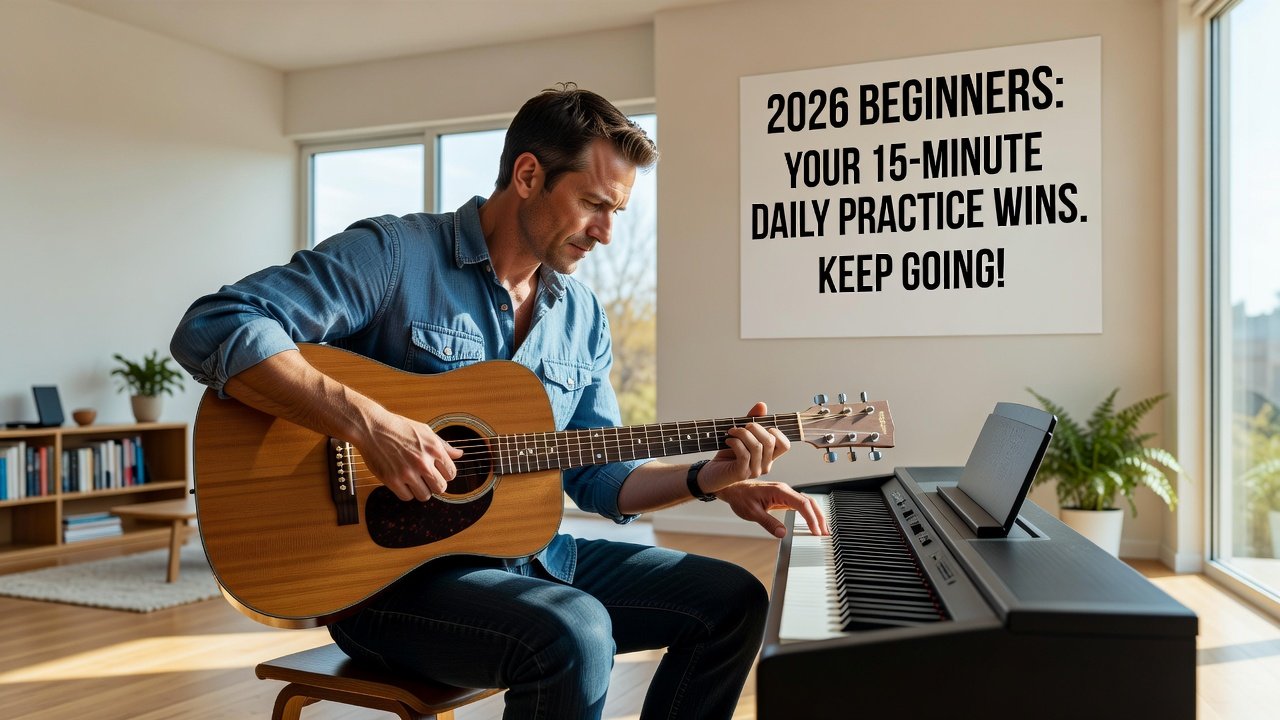
Why 15-Minute Daily Routines Work for Busy Beginners
Busy adults often struggle to find time for music lessons, but short, consistent sessions can lead to steady progress on guitar or piano. These routines focus on targeted practice that fits into hectic schedules, helping beginners build muscle memory and confidence without burnout. Research from music education experts shows that daily micro-practices outperform sporadic longer sessions for skill retention. In 2026, with increasing demands on time from work and family, these bite-sized approaches remain effective because they reduce the intimidation factor of long practice blocks. They blend warm-ups, simple drills, and song snippets using core keywords like beginner guitar routines and piano practice for adults, making learning accessible even on the busiest days.
Many people abandon music goals because they believe they need hours each day. In reality, 15 minutes of focused effort compounds over weeks and months. This method aligns with habit formation principles, where small daily actions create lasting change. For those new to instruments, starting small prevents overwhelm and builds the foundation needed for more advanced techniques later.
Core Elements of an Effective 15-Minute Session
Every routine should include three parts: a quick warm-up, focused drills on chords or scales, and a fun song snippet. This structure keeps engagement high while targeting fundamentals. Warm-ups prepare hands and mind, drills build technique, and snippets apply skills immediately. Breaking the session this way ensures balanced development rather than rushing through one area.
- Warm-up (3 minutes): Gentle finger stretches and breathing exercises to increase blood flow and reduce tension.
- Drills (7 minutes): Repeat basic patterns slowly then build speed, focusing on clean execution.
- Song snippet (5 minutes): Play a short section of a favorite tune to connect practice with enjoyment.
These elements can be adjusted slightly based on whether you focus on guitar or piano that day, but maintaining the three-part flow is key to consistency.
Understanding the Science Behind Short Practice Sessions
Studies on deliberate practice indicate that short, high-quality sessions enhance neuroplasticity better than long, unfocused ones. By limiting time, you train concentration and avoid diminishing returns from fatigue. In 2026, apps and timers make it easy to stick to 15 minutes precisely. This approach also supports mental health by providing a quick creative outlet without adding stress to an already packed schedule.
Detailed Warm-up Techniques for Guitar and Piano
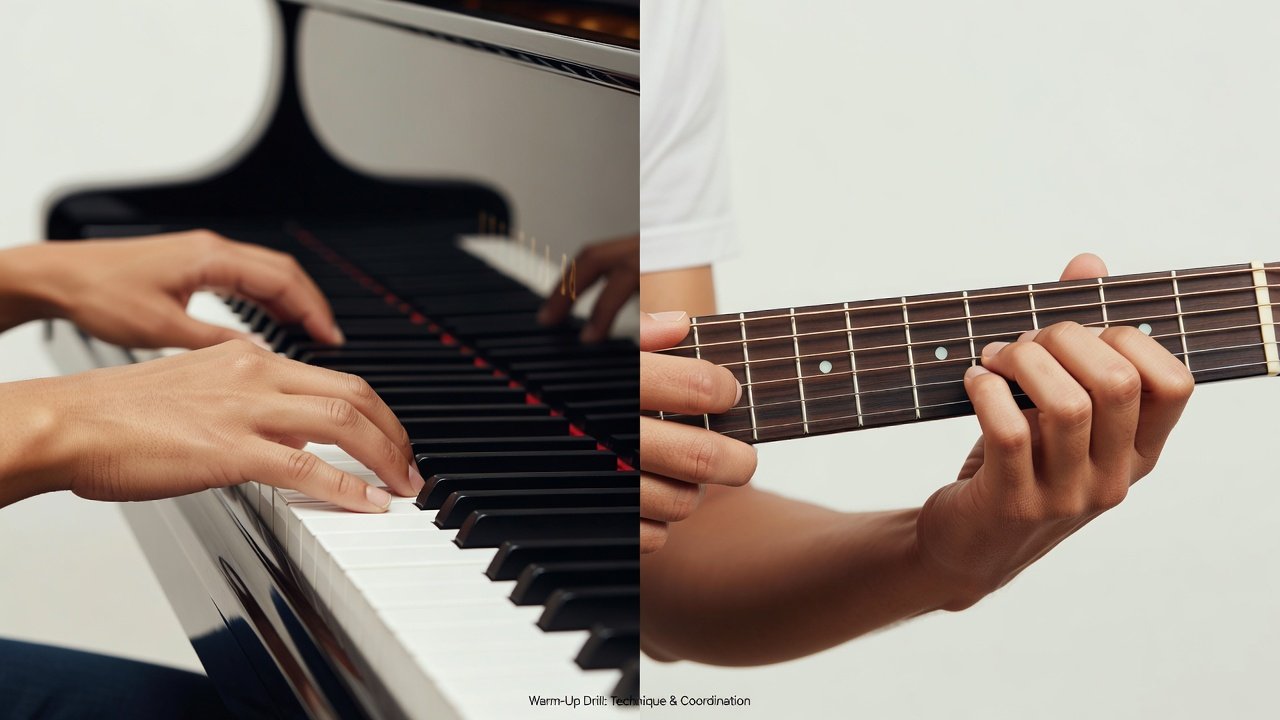
Begin with hand stretches: extend fingers wide, then clench gently into fists, repeating five times. For guitar players, lightly run fingers along the fretboard without pressing strings hard. Piano players can press keys softly in a five-note pattern. Add deep breathing to center your focus. These two to three minutes prevent injury and prepare your body for accurate playing.
Sample Routine 1: Guitar Focus with Piano Crossover
This routine suits guitar beginners who want occasional piano exposure. Start with open chords on guitar, then switch to simple piano melodies for variety. Minutes 0-3: Finger warm-up on guitar neck and light piano key presses. Minutes 3-10: Practice G, C, and D chords on guitar, strumming each four times before switching; transition to matching notes on piano using one finger at a time. Minutes 10-15: Play the first verse of "Happy Birthday" alternating instruments to reinforce ear training.
Sample Routine 2: Piano Focus with Guitar Integration
Ideal for piano starters, this mixes scales with guitar strumming patterns to reinforce rhythm. Minutes 0-3: Hand stretches and five-finger piano warm-up moving up and down the keys. Minutes 3-10: C major scale drills on piano, ascending and descending twice slowly, then replicate the rhythm on guitar open strings with a pick. Minutes 10-15: Snippet from "Twinkle Twinkle Little Star" on both instruments, focusing on steady tempo.
Sample Routine 3: Balanced Guitar and Piano Mix
For those wanting equal time, alternate instruments daily or within the session. Minutes 0-3: Shared warm-up using both instruments lightly. Minutes 3-10: Chord drills on guitar paired with scale work on piano, spending equal time on each. Minutes 10-15: Short duet-style snippet like a simple folk melody played first on one instrument then the other.
Sample Day Schedule for Busy Adults
Integrate the routine into real life: wake at 7:00 AM, enjoy coffee, then complete the 15-minute session before commuting. Track via a phone note app with a simple checkbox. If mornings are rushed, shift to a 9:00 PM wind-down slot after dinner. Weekends allow for an optional review day where you combine two routines for a longer 30-minute session to accelerate growth.
Progress Tracking Methods
Use a simple journal or app to log daily completion and note improvements in speed or accuracy. Record the date, which routine you used, and one observation such as "G chord sounded cleaner today." Weekly reviews help adjust routines when you notice plateaus. Printable checklists can include boxes for each section of the routine plus space for mood or energy level. Over four weeks, compare entries to see tangible gains like faster chord changes or smoother scale runs.
Common Pitfalls to Avoid
Skipping warm-ups leads to tension and potential strain in wrists or fingers. Rushing drills sacrifices accuracy and slows long-term progress. Ignoring consistency causes plateaus where motivation drops. Another frequent mistake is comparing your pace to others instead of focusing on personal improvement. Stay motivated by celebrating small wins like mastering one chord or completing seven straight days. Avoid poor posture by sitting with back straight and instrument at proper height.
Motivation Tips and Building to Longer Sessions
Pair practice with rewards like listening to favorite songs afterward. Join online communities for accountability without pressure. Over time in 2026, these 15-minute habits naturally extend to 20 or 30 minutes as skills grow and confidence rises. National Endowment for the Arts resources highlight the benefits of consistent creative practice for adults. Berklee College of Music offers free introductory materials that complement these routines. Additionally, National Institutes of Health notes music engagement supports cognitive health, reinforcing why daily micro-sessions matter.
Printable Checklist Ideas
Create a weekly tracker with columns for date, routine completed, and notes. Include reminders for hydration, posture checks, and tuning your instrument beforehand. Laminate the checklist or use a digital version on a tablet for easy reuse each week.
Short FAQ on Consistency
How do I stay consistent? Set a fixed time daily and treat it like an appointment on your calendar. Visual cues such as leaving your instrument in a visible spot help trigger the habit.
What if I miss a day? Resume the next without guilt to maintain momentum and avoid all-or-nothing thinking.
Can these routines replace lessons? They complement formal instruction from sources like Berklee College of Music and work best alongside occasional guidance.
How long until I see results? Most beginners notice improved coordination within two to three weeks of daily 15-minute practice.
Start today and watch your skills grow steadily through 2026 and beyond.


No comments yet. Be the first!