 Instrumentiverse

Introduction to Beginner Improvisation
Improvisation is the art of creating music spontaneously, and it is more accessible than many absolute beginners realize. You do not need years of music theory to start soloing on guitar or piano. This guide focuses on practical, approachable methods using just a handful of notes so you can begin creating your own melodies immediately. Whether you are learning guitar for beginners or exploring piano basics, the key is starting small. By limiting yourself to three to five notes, you remove overwhelm and build confidence quickly. Many successful musicians began exactly this way, discovering that improvisation rewards curiosity more than perfection. The process encourages active listening and personal expression from day one, turning practice into creative play rather than rote repetition.
Beginners often search for ways to learn guitar and piano without feeling intimidated by complex scales or chord progressions. This article delivers exactly that by focusing on minimal note sets that sound pleasing together. You will find concrete exercises, comparisons between instruments, a structured daily routine, and answers to common concerns. The goal is to help you feel comfortable experimenting within minutes of picking up your instrument.
Understanding Improvisation Without Theory Overload
At its core, improvisation means making musical choices in the moment. Think of it as having a short conversation with your instrument. You play a note, listen, then respond with another. This approach works beautifully for both guitar and piano because the physical layout of each instrument encourages exploration. Guitar strings offer tactile feedback through frets, while piano keys provide clear visual and tactile separation between pitches. Neither requires prior knowledge of modes or harmony to produce satisfying results.
Many new players worry about hitting incorrect notes, yet the solution lies in choosing a tiny set of notes that naturally sound good together. This creates a safe playground where every combination works. For example, selecting notes from a simple pentatonic fragment removes dissonance concerns entirely. Over time, this builds ear training naturally as you begin to recognize what feels right without naming intervals or chords.
Simple 3-Note Guitar Exercises
Start on guitar using the notes E, G, and A on the low E string. These three notes form a friendly minor sound that works over many backing tracks. Follow these six progressive steps for steady improvement.
- Play each note slowly, holding for four counts while focusing on clean tone and relaxed posture.
- Try short rhythms: two quick notes followed by a long one, then reverse the pattern.
- Move between notes using only downstrokes at first to develop control before introducing upstrokes.
- Add variety by changing the order, such as G-E-A or A-G-E, repeating each sequence four times.
- Introduce slight dynamics by playing some notes louder and others softer to add expression.
- Finally, combine two patterns into a short eight-note phrase and repeat it with small variations each time.
Once comfortable, include the open B string for a fourth note. Practice these patterns over a simple backing track or metronome set at 60 beats per minute. Record short clips on your phone to hear progress clearly.
Simple 3-Note Piano Exercises
On piano, use the notes C, D, and E in the right hand. These form a bright major sound ideal for beginners. Use the following six steps to develop fluency.
- Play single notes with your thumb, index, and middle fingers, lifting each finger fully between strikes.
- Create short phrases by repeating C then moving to D and E in ascending and descending order.
- Experiment with rhythm: hold C for two beats, then play quick D-E pairs to explore contrast.
- Try different orders such as E-D-C to hear the emotional shift from bright to resolved.
- Add gentle dynamics by varying touch pressure on the keys for smoother phrasing.
- Extend to four notes by including the G above E once the core three feel automatic.
Add the left hand playing a low C octave for simple harmony once the right-hand melody feels natural. Focus on even timing and relaxed wrists to avoid tension during longer sessions.
Side-by-Side Guitar Riffs vs Piano Melodies
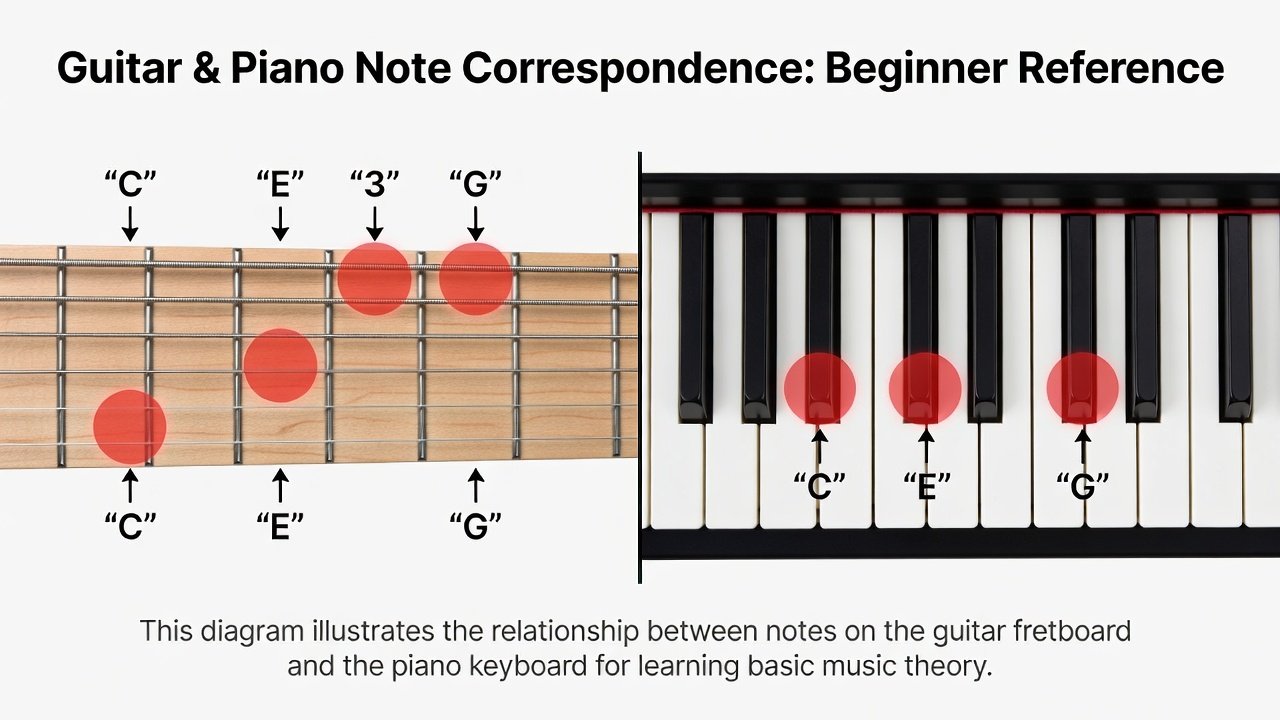
Guitar example: Low E string – E (open), G (3rd fret), A (5th fret). A basic riff could be: E – G – A – G – E, played with a steady downstroke pulse. This creates a driving, repetitive groove that feels energetic even at slow tempos.
Piano example: Right hand – C (thumb), D (index), E (middle). A matching melody could be: C – D – E – D – C, using connected finger movements for a flowing, lyrical quality. The same three-note idea produces a completely different emotional result because of the instrument’s sustain and range.
Notice how both use only three notes yet produce completely different emotional results. Guitar tends to feel rhythmic and percussive, while piano allows smoother, sustained lines. Try playing the guitar riff first, then immediately replicate the same rhythm on piano to internalize the contrast. This comparison highlights how instrument design shapes improvisational style.
10-Minute Daily Practice Template
Consistency matters more than long sessions. Use this simple routine and adjust as needed. Minutes 1-2: Warm up by playing your chosen 3-5 notes slowly, focusing on tone and relaxation. Minutes 3-5: Run through two exercises from the guitar or piano sections above, repeating each pattern four times. Minutes 6-8: Improvise freely for 60 seconds, then rest and repeat with a new starting note or rhythm. Minutes 9-10: Record yourself and listen back once, noting what felt good and what to adjust tomorrow. Alternate between guitar and piano on different days to compare how each instrument feels. Over two weeks this template builds both technical comfort and creative confidence without burnout.
Guitar vs Piano Improvisation: Key Differences
Guitar improvisation often feels more physical because you must press strings and control pick or fingers. The limited range per position encourages repeating short motifs and developing rhythmic drive. Piano offers immediate access to a wide range of notes and easy sustain, making longer, flowing melodies simpler to create. Many beginners find guitar more forgiving for rhythmic ideas and piano better for melodic exploration. Both instruments reward patience and attentive listening, yet each develops distinct strengths in your playing.
Common Mistakes to Avoid
New improvisers often rush through notes without listening. Slow down and leave space between phrases. Another frequent issue is staying in one position or octave too long; shift slightly after a few repetitions to keep ideas fresh. Finally, avoid comparing your first attempts to professional recordings. Focus instead on personal enjoyment and gradual improvement.
Frequently Asked Questions
What if I play a note that sounds bad?
With only three to five carefully chosen notes, every combination sounds musical. If something feels off, simply return to your starting note and begin again.
Do I need expensive equipment?
No. A basic acoustic guitar or digital keyboard is enough. Focus on the notes rather than gear. Authoritative resources such as Berklee College of Music emphasize fundamentals over expensive tools for beginners.
How long until I sound good?
Most beginners notice improvement within two weeks of daily 10-minute practice. Celebrate small wins like smoother transitions or more confident phrasing.
Should I use a metronome?
Yes. A steady pulse helps develop timing, but start at a comfortable speed and increase gradually as control improves.
Real Beginner Success Stories
Emma, a 34-year-old office worker, started with three piano notes during lunch breaks. After six weeks she recorded her first short solo and shared it with friends, who encouraged her to continue. Jake, a high-school student, used the same guitar exercises and now plays short improvised intros before songs at open-mic nights. Both credit the limited note sets for removing fear and allowing creativity to emerge naturally.
Printable Note Chart Reference
Create a simple chart with the note names E-G-A for guitar and C-D-E for piano. Print it and place it on your music stand for quick reference during practice sessions. Add finger numbers or string indications if desired. This visual aid speeds up recall and keeps sessions focused on playing rather than searching for notes.
Ready to begin? Pick up your instrument, choose three notes, and start playing. The journey of improvisation begins with that first spontaneous sound. For additional guidance on music fundamentals, explore resources from The Juilliard School or similar institutions that support lifelong learning. Keep returning to these exercises and watch your personal musical voice develop over time.


No comments yet. Be the first!