 Instrumentiverse

Introduction to Rhythm Basics
Rhythm forms the heartbeat of all music, providing structure and groove that brings melodies to life. For beginners learning guitar and piano simultaneously, developing strong rhythm skills creates a solid foundation that benefits both instruments. This guide explores essential concepts like beat counting, tempo awareness, and syncopation with practical examples designed for dual-instrument practice in 2026. Whether you are strumming open strings on guitar or playing basic notes on piano, understanding rhythm helps you play in time with others and tackle more complex pieces confidently. Many new musicians struggle with timing, but consistent daily drills can resolve these issues quickly. By integrating practice across instruments, you develop transferable skills that accelerate overall musical growth and make playing more enjoyable from the very first sessions.
The Importance of Rhythm Across Instruments
Rhythm is not just about keeping time; it defines the emotional character of a performance. On guitar, rhythmic accuracy determines how effectively strumming patterns drive a song forward. On piano, steady left-hand patterns anchor harmonies while the right hand explores melody. Beginners who master rhythm early avoid common pitfalls like uneven playing that frustrate listeners and fellow musicians. Integrated learning between guitar and piano reveals how the same rhythmic idea feels different due to each instrument's mechanics, building deeper musical intuition.
Understanding Beat, Tempo, and Pulse
Every piece of music revolves around a steady pulse called the beat. Think of it as a ticking clock that keeps everything aligned. Tempo refers to the speed of these beats, typically measured in beats per minute (BPM). Beginners should start at slower tempos around 60-80 BPM to build accuracy before increasing speed. On guitar, feel the beat through steady strumming motions. On piano, maintain even spacing between notes in your left hand. Both instruments benefit from internalizing the pulse before adding melody or harmony. Practice sitting or standing with relaxed posture to allow natural movement that follows the pulse without tension.
Counting Beats for Guitar and Piano
Counting aloud or in your head is the simplest way to master rhythm. Use numbers like "1 and 2 and 3 and 4 and" to subdivide beats. For guitar, practice counting while strumming down on the numbered beats and up on the "ands." Piano players can count while alternating left-hand bass notes on beats 1 and 3 with right-hand chords on 2 and 4. Try this exercise: set a slow tempo and count four beats repeatedly. Guitarists play open E string on each beat. Pianists play middle C in the right hand on every beat. Gradually add variety by accenting beat 1. Extend this by counting in 3/4 time signatures to prepare for waltzes and other styles.
Developing Tempo Awareness
Tempo awareness prevents rushing or dragging during play. Start with a metronome app or device to lock in consistent timing. Practice scales or simple patterns at a fixed BPM, then vary the tempo slightly each session to train adaptability. Guitar strumming patterns often feel different from piano left-hand patterns because of the physical motions involved. Compare them by playing the same rhythm on both instruments back to back. Record short clips of yourself at different tempos to hear where your internal clock needs adjustment.
Introducing Syncopation
Syncopation shifts emphasis to the off-beats, creating a lively feel. Begin with simple examples like clapping on the "ands" only. Guitarists can strum muted strings on off-beats, while pianists play chords between main beats. This technique appears in many popular songs across genres. Once comfortable, combine syncopated rhythms with basic chords on guitar and simple melodies on piano for integrated practice. Explore examples such as playing a syncopated rhythm in 4/4 where the piano right hand hits on the "and" of 2 while the guitar strums on the "and" of 4.
Daily Rhythm Drills and Exercises
Build a 15-minute daily routine. Warm up with four-beat counting, then progress to eighth-note patterns. Guitar exercise: strum open strings in a down-up motion following the count. Piano exercise: play quarter notes in the left hand against eighth notes in the right hand. Advanced beginners can try alternating patterns between instruments in one session. Add a third drill where you play the same four-bar rhythm first on guitar then immediately on piano without stopping to reinforce muscle memory across both.
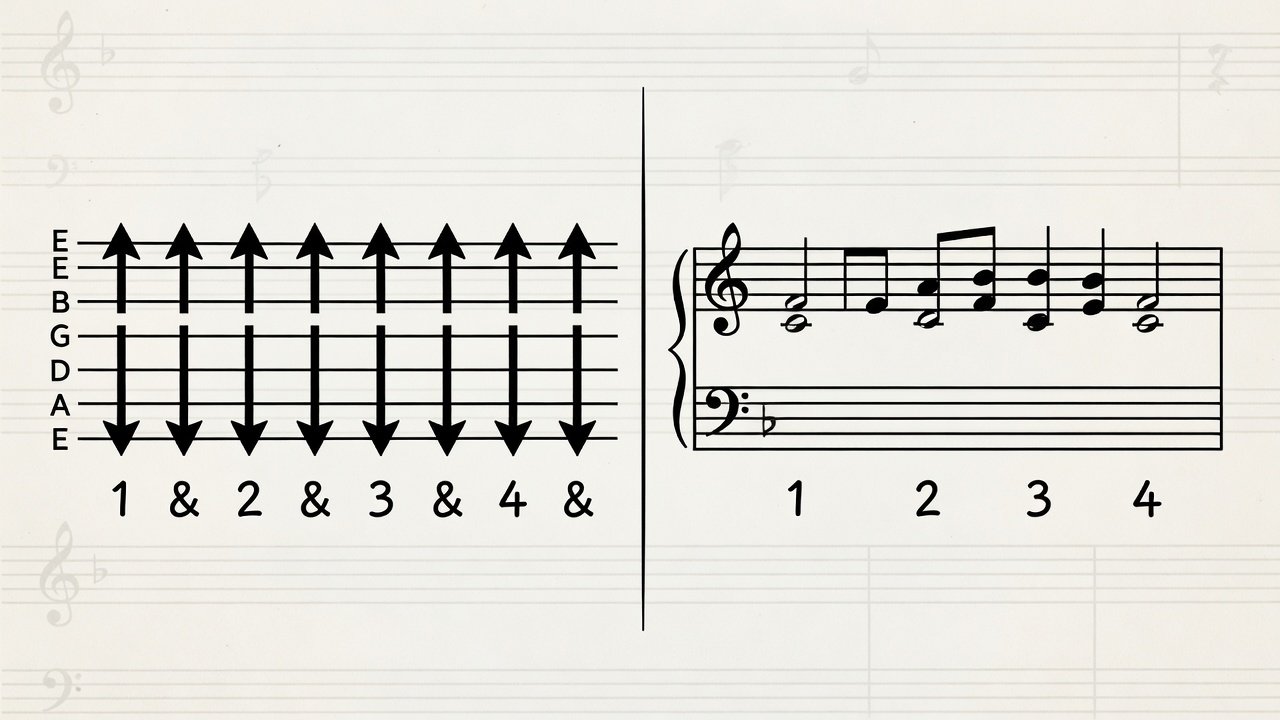
Comparing Guitar Strumming and Piano Left-Hand Patterns
Guitar strumming relies on wrist motion for consistent downstrokes and upstrokes. Piano left-hand patterns often involve sustained bass notes or simple chord inversions. Both require relaxed posture and even pressure to maintain steady rhythm. Experiment by matching a basic 4/4 strumming pattern on guitar with a matching left-hand quarter-note pattern on piano. Notice how guitar allows quicker rhythmic changes through picking while piano benefits from finger independence for layered rhythms.
Building Muscle Memory Through Repetition
Repetition is key to making rhythm second nature. Dedicate time each week to isolated rhythm exercises without melody or harmony. Guitarists can mute strings and focus solely on strumming accuracy. Pianists can play single notes or octaves in the left hand to emphasize timing. Over time, this builds automatic responses that free mental energy for expression and dynamics.
Step-by-Step Practice Routines
- Warm up with 5 minutes of metronome work at 70 BPM.
- Practice open-string strums or single notes for 5 minutes.
- Combine instruments for 5 minutes of call-and-response playing.
- Apply the rhythm to a short phrase from a familiar song.
- Cool down by playing along to a backing track at varying volumes.
Real-World Song Applications
Apply these skills to simple tunes like "Happy Birthday" or "Twinkle Twinkle Little Star." Guitarists strum once per beat while singing. Pianists play bass notes in the left hand and melody in the right. This builds practical timing that transfers to more advanced repertoire. Try applying the same rhythms to folk songs or pop ballads to see how they adapt across genres.
Troubleshooting Common Timing Issues
- Rushing: Slow the metronome and focus on relaxed breathing.
- Dragging: Count subdivisions aloud during practice.
- Inconsistent strumming: Practice muted strings first to isolate rhythm.
- Left-hand stiffness on piano: Loosen shoulders and practice single notes slowly.
- Difficulty with syncopation: Break patterns into two-beat segments before combining.
Progress Tracking and Recording Yourself
Keep a practice journal noting tempo achieved and any struggles. Weekly recordings reveal improvements invisible during live play. Compare early and recent takes to stay motivated and identify lingering issues.
Frequently Asked Questions
Can I practice rhythm without a metronome?
Yes. Clap along to songs, tap your foot, or use a free online click track from Music Theory. Consistent body movement helps internalize the beat.
How long until I see improvement?
Most beginners notice better timing within two weeks of daily 15-minute sessions. Record yourself weekly to track progress.
Should I learn guitar or piano rhythm first?
Practice both simultaneously using the same exercises. The shared concepts reinforce learning across instruments.
What if my hands move at different speeds?
Slow everything down and practice hands separately before combining. Focus on matching the metronome click exactly on each instrument individually first.
Conclusion
Strong rhythm skills unlock musical enjoyment on guitar and piano. By focusing on beat counting, tempo, syncopation, and consistent drills, beginners build confidence that lasts. Incorporate these routines into your 2026 practice schedule and explore further resources at Berklee College of Music and Juilliard for continued growth.


No comments yet. Be the first!