 Instrumentiverse
Introduction: Adding Variety to Your Beginner Music Journey
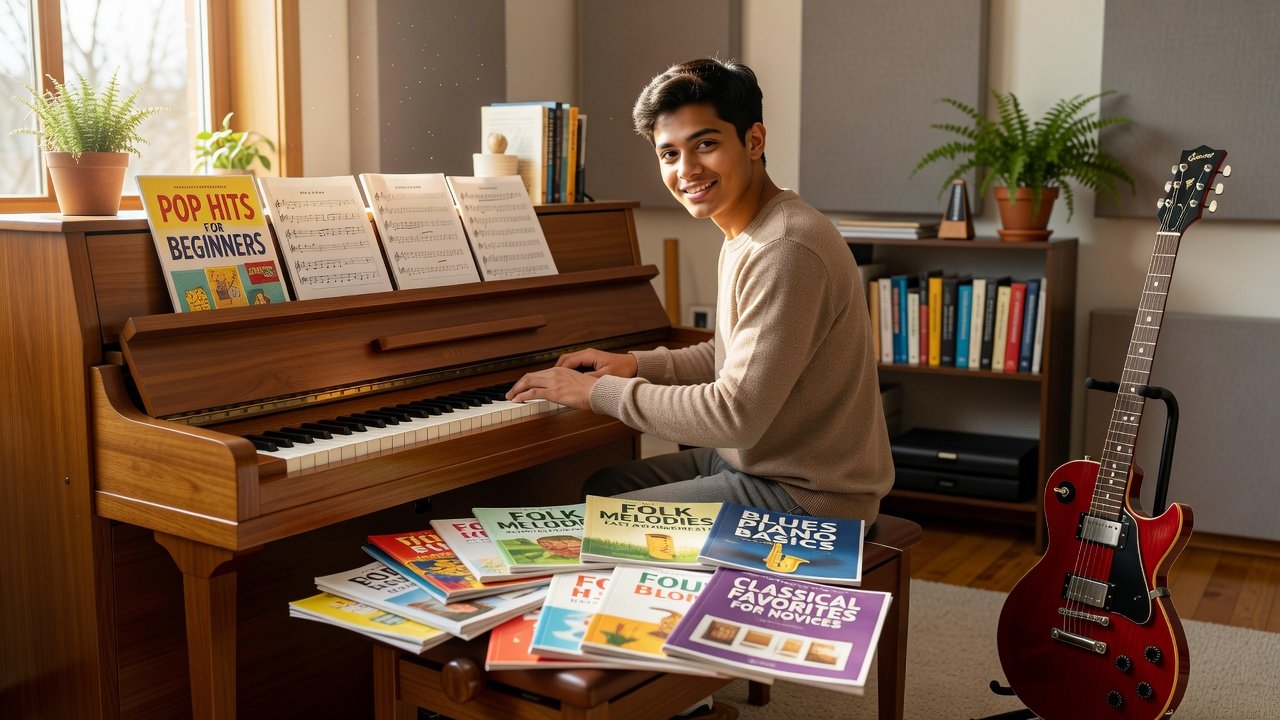
Exploring different music genres early on guitar and piano helps build strong foundational skills while keeping practice engaging. This 2026 guide shows beginners how pop, folk, blues, and classical each develop rhythm, melody, and expression in unique ways. By adapting simple songs across both instruments, you gain flexibility and motivation that basic technique drills alone cannot provide. Many new players start with scales and chords but quickly feel stuck repeating the same exercises. Introducing genre variety transforms routine sessions into creative exploration, helping you understand how music works across styles.
Whether you are switching between guitar and piano or focusing on one, genre diversity prevents plateaus. You will find concrete examples, practice routines, and a sample weekly plan designed for consistent progress. This approach also improves ear training and adaptability, skills that transfer to any future musical project.
Why Genre Exploration Strengthens Beginner Skills
Each genre emphasizes different elements. Pop teaches catchy melodies and chord progressions that stick in your head. Folk builds fingerpicking and storytelling phrasing that connects emotionally with listeners. Blues introduces bends, slides, and improvisation that encourage personal expression. Classical develops precise reading and dynamic control for technical accuracy. Together they create well-rounded players who can handle real-world music situations such as jamming with friends or performing at open mics.
Studies from music educators show that variety improves retention and enjoyment. Beginners who rotate genres report practicing longer without boredom. This method also reduces the risk of repetitive strain by varying hand movements between strumming, picking, and keyboard work.
Pop Music: Simple Chords and Catchy Rhythms
Pop relies on repetitive I-V-vi-IV progressions that translate easily between guitar and piano. Start with basic open chords on guitar or triads on piano. Focus first on steady timing before adding embellishments like hammer-ons or piano fills.
Step-by-Step Adaptation
- Choose a four-chord song in C major such as a simplified version of a current hit.
- Play the progression slowly on piano with right-hand melody while counting aloud.
- Transfer the same chords to guitar using consistent down-strums at 70 beats per minute.
- Add a simple bass note on piano left hand or guitar low E string to create depth.
- Record a short verse and chorus to check balance between instruments.
Easy tracks to start: "Someone Like You" by Adele (simplified) and "Perfect" by Ed Sheeran. Practice each for ten minutes daily, alternating instruments every other day.
Folk Music: Fingerstyle and Storytelling
Folk emphasizes acoustic tone and narrative delivery. Guitar players learn Travis picking while pianists focus on arpeggiated left-hand patterns that mimic guitar bass lines. Pay attention to dynamics to convey the emotional story behind the lyrics.
Genre-Specific Tips
- Practice alternating bass notes with melody lines using a metronome.
- Use open tunings on guitar for drone effects that add richness.
- Keep dynamics soft on piano to mimic intimate acoustic settings.
- Experiment with capo placement on guitar to match vocal range when singing along.
Begin with "Blowin’ in the Wind" by Bob Dylan or "The House of the Rising Sun." Try playing the melody on piano first, then replicate it on guitar using fingerstyle.
Blues Music: Expression Through Bends and Swings
Blues introduces 12-bar structures and blue notes that add soulful flavor. On guitar, master string bends of a half or whole step; on piano, practice swung eighths and grace notes for authentic swing feel. Start with the basic blues scale in A and apply it over a I-IV-V progression. Record yourself to hear phrasing improvements and identify where to add space between notes.
Classical Music: Precision and Dynamics
Classical builds reading fluency and control through structured pieces. Begin with short works using one hand at a time before combining both hands. Focus on even tone and clear articulation across the keyboard or fretboard. Transfer simple melodies from piano sheet music to guitar tablature for cross-instrument insight that strengthens music reading skills overall.
Recommended starters: "Ode to Joy" and "Minuet in G." Spend extra time on articulation markings such as staccato and legato to develop expressive control.
Comparing Playing Styles Across Instruments
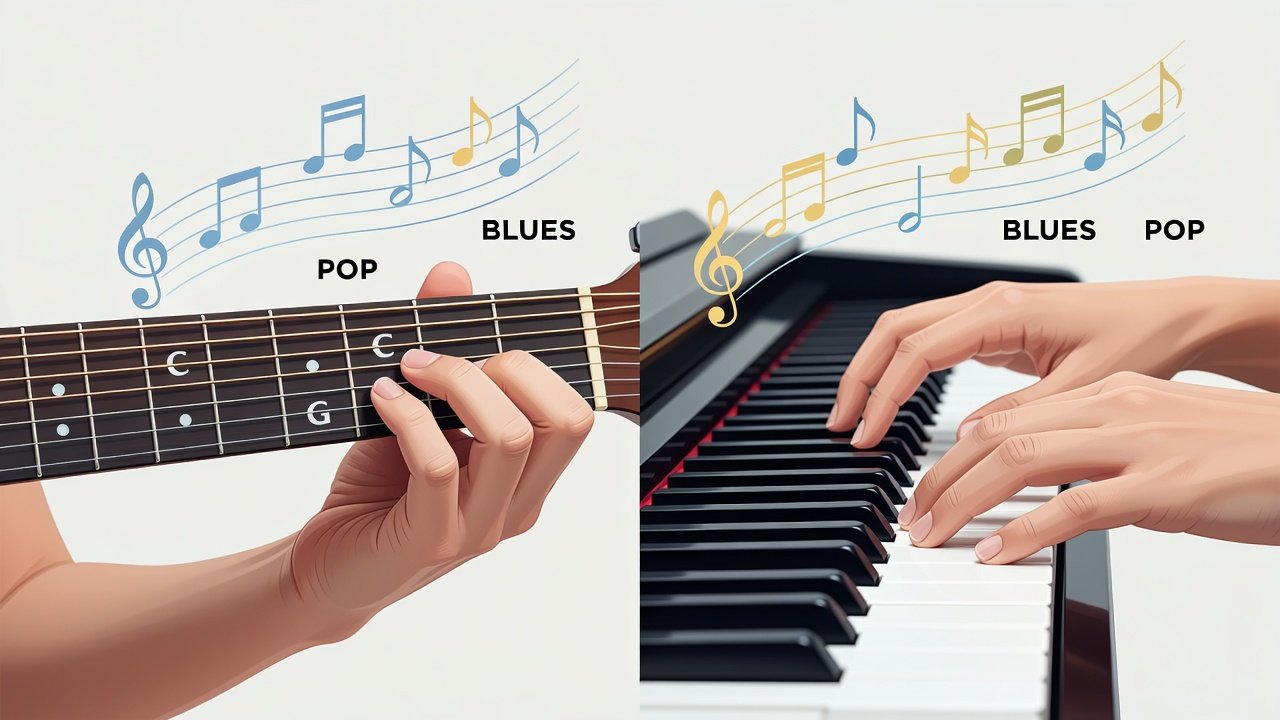
Guitar offers immediate tactile feedback through string vibration while piano provides visual clarity of notes laid out linearly. When moving a pop melody from piano to guitar, simplify complex voicings to open chords first. For blues on piano, emphasize left-hand walking bass lines that echo guitar bass strings. These comparisons help you choose which instrument suits each genre best during practice.
Easy Tracks Comparison and Practical Examples
Use this quick reference when choosing your first song in each genre. Each example includes a simple starting key and one adaptation tip:
- Pop: "Happy" by Pharrell Williams – four chords in F major, steady beat with added clap on off-beats
- Folk: "Leaving on a Jet Plane" – fingerpicking friendly in G major, focus on thumb independence
- Blues: "Sweet Home Chicago" – classic 12-bar form in E, practice call-and-response phrasing
- Classical: "Für Elise" simplified version – scale practice in A minor, emphasize right-hand melody clarity
Sample Weekly Exploration Plan
Day 1-2: Pop on piano for 25 minutes focusing on chord changes, then 10 minutes transferring to guitar.
Day 3-4: Folk on guitar for 30 minutes emphasizing picking patterns, followed by 10 minutes playing the melody on piano.
Day 5: Blues scale drills across both instruments for 20 minutes each, ending with a short improvisation.
Day 6: Classical reading on piano for 25 minutes, then transfer the melody to guitar using tablature.
Day 7: Review session and record a short medley of all four genres to track improvement.
Adjust duration based on your schedule while maintaining consistency. Track progress in a simple notebook noting which sections felt easiest.
Mistakes to Avoid When Exploring Genres
Common pitfalls include rushing tempos before accuracy, neglecting posture on either instrument, and ignoring dynamics. Another frequent error is staying too long in one key; transpose simple songs to new keys weekly. Avoid comparing your progress to advanced players and instead celebrate small weekly wins such as clean chord changes.
Switching Between Instruments: Common Hurdles and Solutions
Many beginners struggle with hand coordination differences. Guitar requires fretting pressure while piano demands independent finger movement. Practice scales in both keys slowly, then increase speed gradually. Use a metronome set at 60 BPM to align timing across instruments.
Frequently Asked Questions
How long before I see progress across genres?
Most beginners notice improved coordination within four to six weeks of structured practice. Consistent short daily sessions outperform occasional long ones.
Should I learn music theory first?
Basic chord and scale knowledge helps, but you can start exploring genres immediately and fill theory gaps as needed. Resources like MusicTheory.net offer free interactive lessons.
Is it better to master one instrument before adding the second?
Parallel learning works well for beginners if sessions stay short and focused on transferable skills such as rhythm and ear training. Many successful musicians learn both simultaneously from the start.
What if I hit a plateau?
Change genres temporarily or slow the tempo. Recording weekly check-ins reveals subtle improvements you might miss during daily practice. Consider joining a free online forum for feedback.
How do I choose which genre to try next?
Listen to short clips of each style and pick the one that makes you want to play immediately. Personal enjoyment drives long-term consistency more than any prescribed order.
Conclusion: Stay Motivated Through Diversity
Exploring pop, folk, blues, and classical on guitar and piano gives beginners a richer musical foundation. Follow the step-by-step methods, use the weekly plan, and revisit the FAQ whenever challenges arise. Consistent variety keeps learning enjoyable and builds skills that last a lifetime. Start today with one simple song from your favorite genre and expand from there. Over time you will discover new favorite artists and techniques that keep your musical journey fresh and rewarding.
No comments yet. Be the first!