 Instrumentiverse
Why Metronome Practice Matters for New Guitarists and Pianists
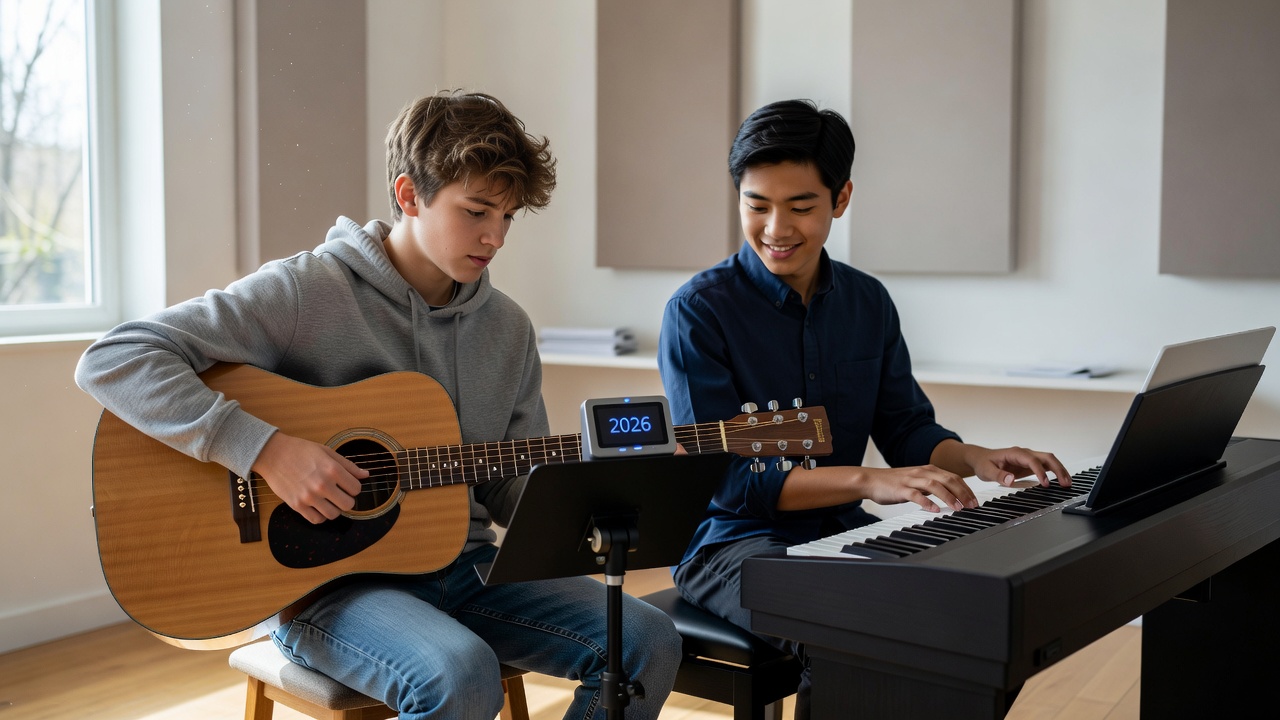
Developing solid timing is one of the most important skills any beginner musician can build. A metronome provides a steady pulse that trains your internal clock, helping you play guitar strums or piano scales evenly. In 2026, consistent metronome use remains the foundation of reliable rhythm across both instruments. Without it, many players develop uneven playing that becomes difficult to correct later. The device acts as an objective teacher, highlighting exactly where your timing falters during chord transitions or scale runs.
Many new players rush or drag without realizing it. Using a metronome reveals these habits early and replaces them with precision. Whether you are strumming open chords on guitar or practicing C-major scales on piano, the click keeps every note in its proper place. This practice also builds confidence for playing with other musicians, as steady timing is essential in group settings or recordings. Over time, the metronome helps internalize rhythm so you no longer need it constantly but can return to it for refinement.
Choosing the Right Metronome Tool in 2026
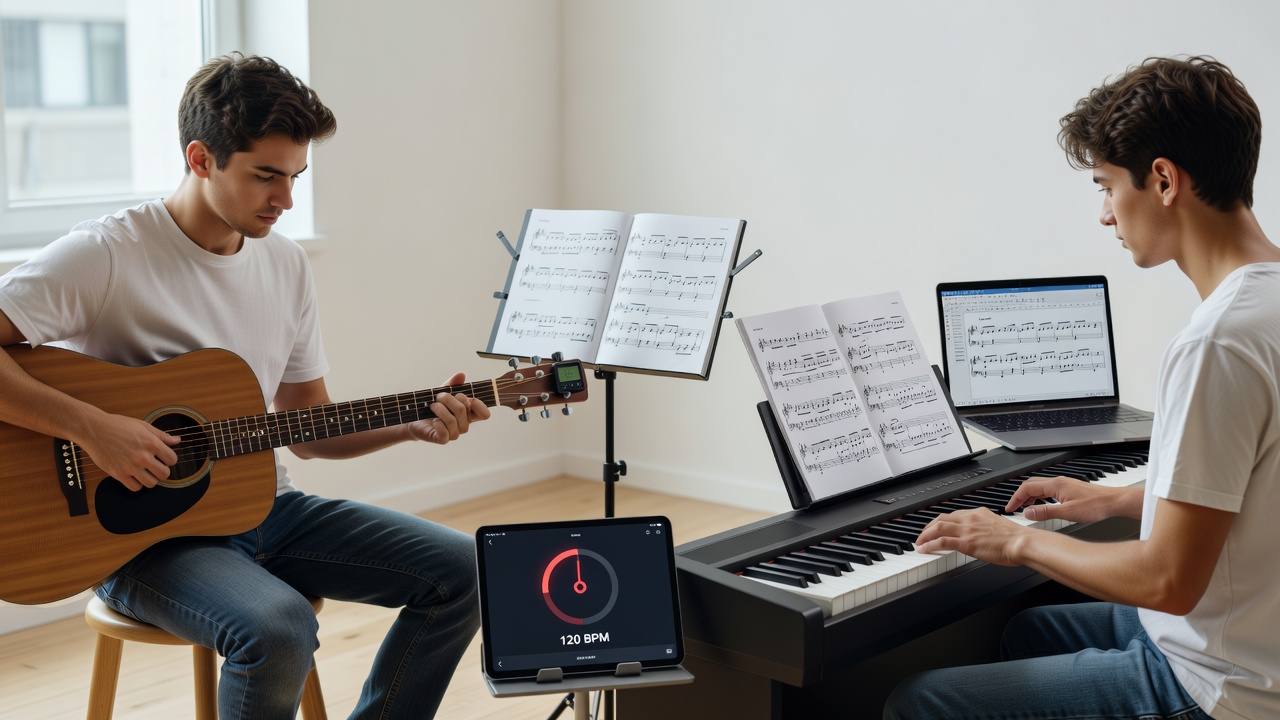
Beginners have excellent options ranging from free apps to dedicated hardware. Popular free choices include mobile metronome apps with basic click sounds and visual beat indicators. Paid versions often add subdivisions, practice modes, and customizable sounds. Hardware metronomes offer tactile feedback and never rely on battery life of a phone. Consider your practice environment when deciding. Apps work well for portability and quick sessions on the go, while a physical device suits dedicated home setups where you want reliable volume without screen distractions.
When selecting a tool, prioritize clear sound, easy tempo adjustment from 40 to 208 BPM, and the ability to accent beats. Test a few apps on your device before committing. Authoritative references like Wikipedia’s metronome entry explain the history and mechanics behind these devices. Another helpful resource is the BBC’s music education section which discusses rhythm fundamentals that pair well with metronome training. Experiment with different click tones, as some players respond better to woodblock sounds while others prefer electronic beeps.
Starting at Slow Tempos and Building Speed
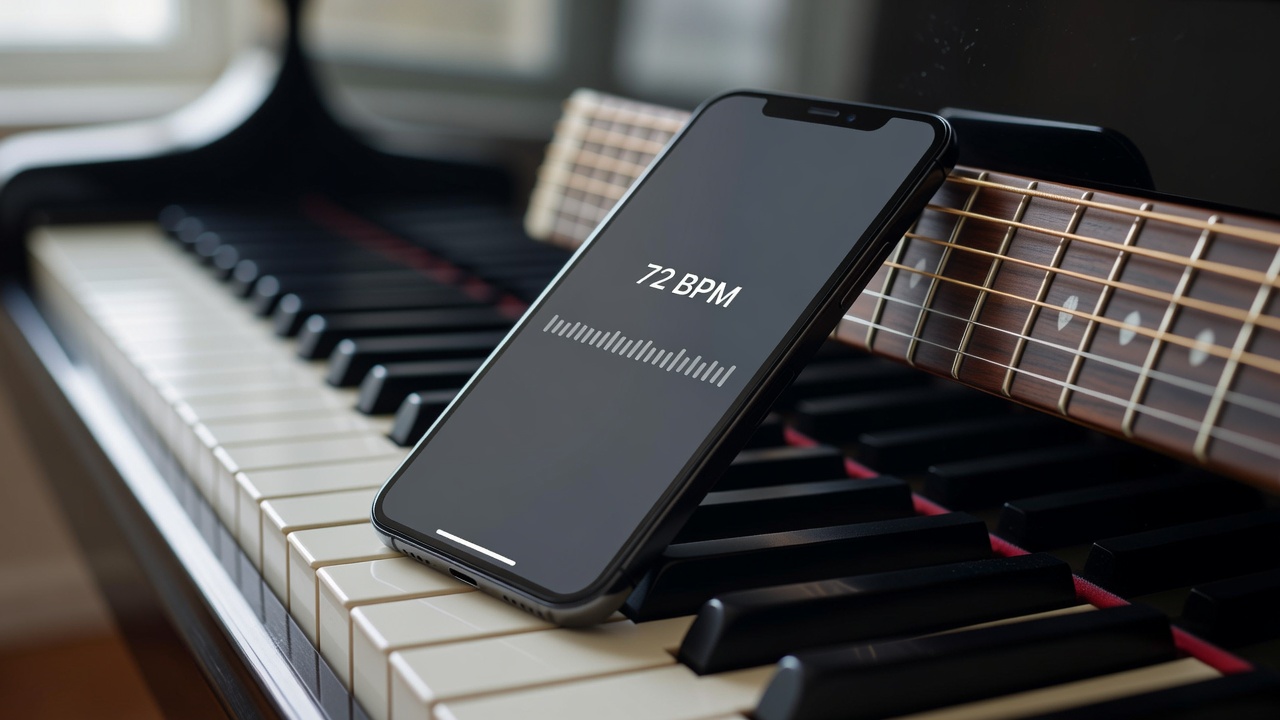
Always begin well below your comfortable speed. Set the metronome to 60 BPM and play quarter notes or simple strums. Focus on landing exactly on each click. Once you can play cleanly for two minutes without mistakes, raise the tempo by 4–8 BPM. This incremental approach prevents the development of tension in your hands and arms. It also allows your brain to process the pulse accurately before adding complexity like eighth notes or syncopation.
Gradual increases prevent tension and build muscle memory. This method works equally well for guitar chord changes and piano finger patterns. Patience at slow speeds pays off faster than forcing high tempos too soon. For example, spend an entire week at 50 BPM mastering basic patterns before moving up. Many beginners notice that after consistent slow practice, faster tempos feel surprisingly manageable because the foundation is solid.
Common Timing Mistakes Beginners Make
Rushing the upbeat or pushing ahead of the click is a frequent issue that creates a hurried feel in performances. Dragging after difficult chord changes or scale passages often happens when concentration breaks. Ignoring subdivisions and playing only on the main beats limits rhythmic depth. Tensing shoulders or wrists when the tempo feels fast leads to fatigue and inconsistent playing. Practicing too long at one speed without variation causes plateaus in improvement.
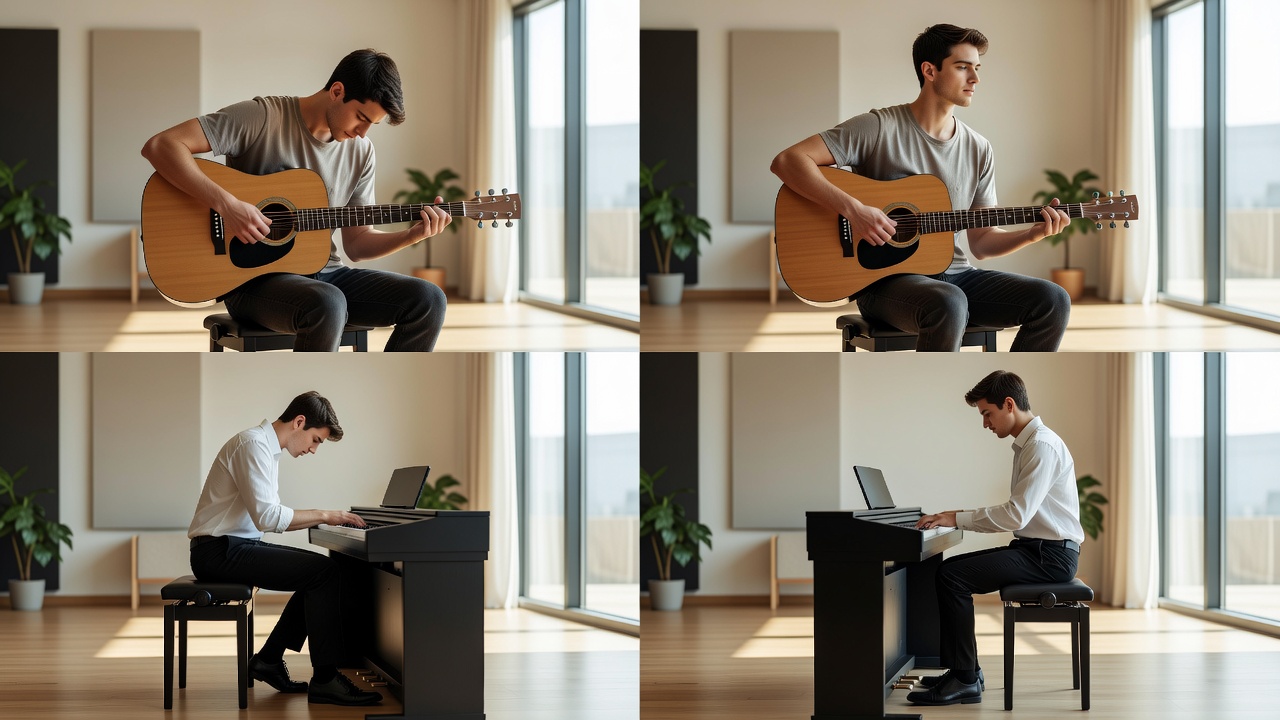
Record yourself weekly to hear these issues objectively. Correcting them early saves months of frustration later. Use a mirror during practice to check posture and release unnecessary tension. Another tip is to count out loud along with the metronome for the first few minutes of each session to reinforce awareness of every beat.
Daily Exercise Examples for Guitar
Try this 15-minute guitar routine: Start with down-strums on an open E minor chord at 50 BPM. After four minutes, switch to alternate strumming (down-up) at the same tempo. Finish with a simple chord progression (Em–G–D–C) using quarter-note strums, increasing to 70 BPM only when accuracy holds. Add a variation by incorporating palm muting on alternate strums to develop control over dynamics while maintaining timing.
For more challenge, practice fingerpicking patterns on the same progression, ensuring each note aligns precisely with the click. Focus on keeping your picking hand relaxed. These drills translate directly to songs and help with real-world playing situations like accompanying vocals.
Daily Exercise Examples for Piano
For piano, begin with the C-major scale in quarter notes at 60 BPM using both hands separately. Once comfortable, play hands together. Next, practice eighth-note patterns on the same scale, keeping each note aligned with the metronome. End with a short Hanon exercise or simple melody, raising the tempo only after clean execution at the current setting. Introduce contrary motion scales to further test coordination between hands.
Another useful drill involves playing blocked chords in time, such as C major and G major triads, alternating every four beats. This builds accuracy in chord changes similar to guitar strumming exercises. Always warm up with five minutes of slow scales before attempting faster material.
Tracking Progress Over Several Weeks
Keep a simple practice log noting the date, tempo achieved, and any sticking points. After two weeks you should notice steadier quarter notes. By week four many beginners comfortably reach 80–90 BPM on basic patterns. Celebrate small wins such as completing a full minute without errors. Include notes on how relaxed you felt during the session, as physical ease often correlates with better timing.
Compare your current recordings with earlier ones to hear improvement clearly. Consistent short sessions outperform occasional long ones. Set monthly goals like mastering a new subdivision or playing a full song at a target tempo. Share progress with a teacher or online community for accountability and feedback.
Free Versus Paid Metronome Tools
Free apps deliver the essential click and basic visual cues sufficient for most beginners. Paid apps add advanced features like polyrhythms and practice loops that become useful after the first month. Choose based on your budget and whether you need extra practice structures. Many musicians start free and upgrade only if they outgrow the basic version. Hardware options provide distraction-free use but may require carrying an extra device.
Evaluate tools by trying them during actual practice sessions rather than just reading descriptions. Look for options that allow easy tempo changes mid-exercise and clear visual feedback for silent practice in shared spaces.
Overcoming Frustration: Short FAQ
How do I stop getting angry when I miss the click?
Lower the tempo immediately and focus on relaxed breathing. Treat each click as helpful feedback rather than criticism. Remind yourself that even professional musicians use metronomes daily to maintain precision.
Should I practice with a metronome every day?
Yes. Even five to ten focused minutes daily builds stronger timing than longer but infrequent sessions. Consistency compounds over time, turning rhythmic awareness into second nature.
Can I use a song’s drum track instead?
Drum tracks help, but a pure metronome click isolates timing without melodic distraction. Use both for well-rounded practice. Reference materials from Sound on Sound magazine often highlight the value of pure click training alongside full tracks.
Conclusion
Metronome mastery transforms beginner guitar and piano playing from hesitant to confident. By selecting the right tool, starting slow, correcting common mistakes, and tracking weekly gains, you create a sustainable practice habit. Return to these drills regularly and your rhythm will steadily improve throughout 2026 and beyond. Keep the click steady and enjoy the musical journey. Remember that every expert player began with these same foundational exercises.
No comments yet. Be the first!