 Instrumentiverse
Introduction
Starting guitar or piano is exciting, but many beginners encounter the same hurdles that slow progress and create frustration. In 2026, with abundant online resources available, addressing these early mistakes can accelerate learning dramatically. This guide explores frequent errors like poor posture, inconsistent rhythm, and neglecting ear training for both instruments. It also compares guitar-specific challenges such as fretting too hard with piano issues like uneven key pressure, offering actionable correction techniques and real-world examples. By recognizing signs of bad habits early, you can build a solid foundation. Whether you are self-taught or taking lessons, these insights apply universally and help prevent long-term setbacks that derail many aspiring musicians.
Learning an instrument requires patience and deliberate practice. Beginners often rush into songs without mastering fundamentals, leading to discouragement. Understanding how guitar and piano differ in physical demands allows for smarter cross-training. For instance, the fretting pressure needed on guitar contrasts sharply with the touch sensitivity required on piano keys. This article dives deep into identification, correction, and prevention strategies to keep your journey enjoyable and effective.
Identifying Signs of Bad Habits
Bad habits often manifest as tension, inconsistent sound, or stalled progress. On guitar, watch for sore fingertips after short sessions or muted notes caused by improper finger placement. On piano, listen for uneven volume between hands or aching wrists from collapsed fingers. Both instruments suffer when rhythm falters—players may rush through scales or lose timing in simple pieces. Ear training neglect shows up when learners struggle to match pitches or play by ear, relying solely on sheet music or tabs. Additional signs include avoiding certain keys or chords due to discomfort and failing to notice dynamic variations in performances. Tracking these indicators weekly helps catch issues before they become ingrained.
Common Posture Mistakes and Fixes
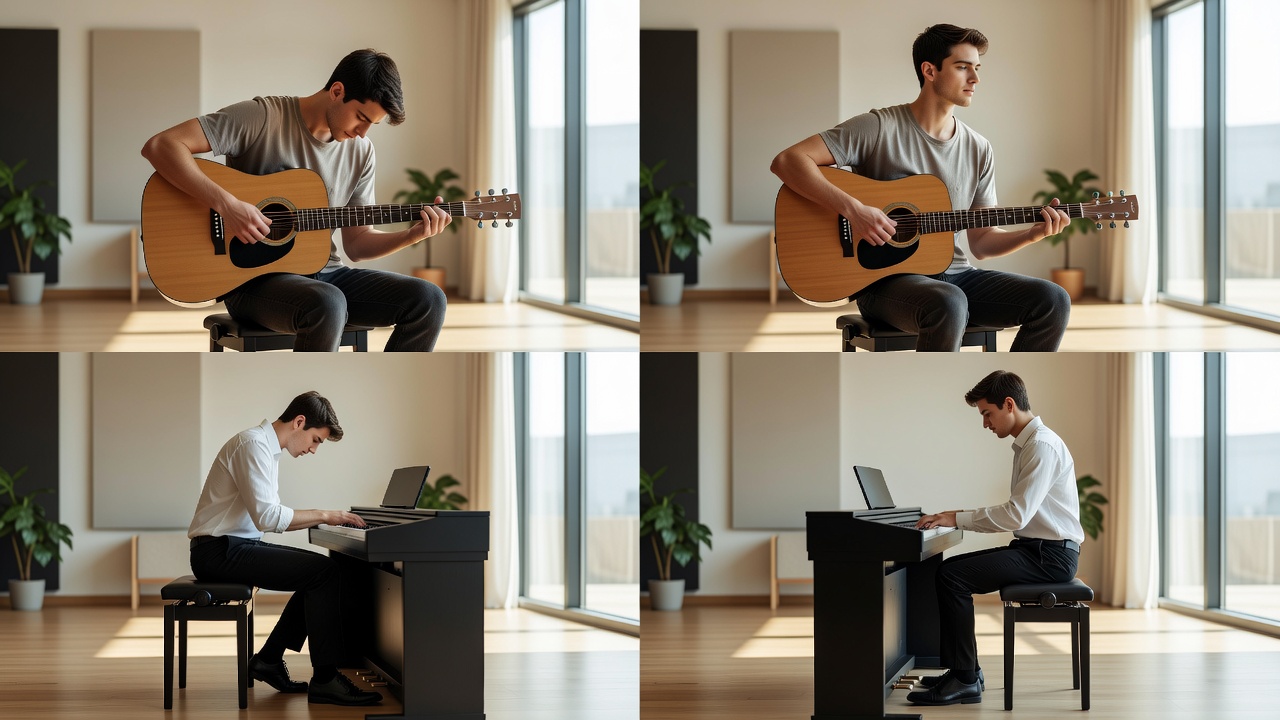
Poor posture leads to fatigue and injury risk. Guitarists often hunch over the instrument or hold it too high, straining the back and shoulders. Pianists may sit too low or curve their wrists excessively, causing carpal tunnel-like symptoms over time. Step-by-step fix for guitar: Adjust strap so the guitar sits at waist level with the neck angled slightly upward. Keep your back straight and elbows relaxed at your sides. Practice in front of a mirror for 10 minutes daily while playing basic chords. For piano: Sit at a height where forearms are parallel to the floor and feet flat. Use a bench adjustment and maintain a slight arch in the wrists. Try the piano posture checklist exercise: align shoulders over hips, relax fingers over keys, and take deep breaths before starting scales. Consistent posture checks reduce tension and improve tone quality noticeably within weeks.
Rhythm and Timing Issues
Inconsistent rhythm affects both instruments equally. Beginners often ignore metronomes or play at uneven tempos, resulting in sloppy performances. Correction technique: Start with a metronome at 60 BPM. Play simple quarter-note exercises for five minutes, gradually increasing speed by 4 BPM increments. On guitar, practice open-string strumming patterns like down-up strokes on an E minor chord. On piano, focus on single-hand scales with even timing. Real-world example: Play Happy Birthday slowly with a click track to internalize steady beats, then add left-hand chords on piano or fingerpicking on guitar. Record sessions to review timing accuracy and repeat the exercise daily for measurable improvement.
Neglecting Ear Training
Many skip ear training, limiting musical intuition. Guitarists miss pitch accuracy when bending strings, while pianists struggle with chord recognition and interval identification. Practical steps: Use apps for interval training 15 minutes daily. Sing notes before playing them to connect hearing with muscle memory. Real-world example: Transcribe a simple melody from a recording by ear, then verify on your instrument. Berklee College of Music offers free ear training resources to support this habit. Incorporate singing scales aloud and matching pitches from everyday sounds like doorbells to build relative pitch skills faster.
Guitar-Specific Challenges: Fretting Too Hard
Pressing strings too firmly causes buzzing, pain, and inaccurate intonation. Compare this to piano's uneven key pressure, which produces inconsistent dynamics and weak melodies. Fix for guitar: Use just enough pressure for clean tone—test by releasing slightly until the note rings true without effort. Practice scales with a light touch for 15 minutes, focusing on minimal force. Avoid common pitfalls like gripping the neck tightly; instead, support the instrument with your body and let fingers rest naturally on frets.
Piano Challenges: Uneven Key Pressure
Uneven pressure leads to muddy chords or weak melodies. Address by practicing with a focus on finger independence exercises, such as adapted Hanon routines for beginners. Play C major scale emphasizing consistent volume per note while keeping wrists relaxed. Example: Spend 10 minutes alternating hands with gradual crescendos to develop control and even touch across all fingers.
Additional Common Mistakes to Avoid
Beyond the main issues, beginners often over-rely on tabs without learning music theory, skip warm-ups leading to stiffness, or neglect dynamics and expression. On guitar, rushing chord transitions creates sloppy changes; on piano, ignoring finger crossover in scales causes hesitation. To fix, dedicate time to slow practice with a metronome and focus on smooth shifts. Incorporate theory basics like major scales on both instruments to connect patterns across guitar frets and piano keys.
Actionable Tips and Detailed Practice Examples
Combine daily warm-ups with targeted drills for best results. Example session: 5 minutes posture check and stretches, 10 minutes rhythm work with metronome, 10 minutes ear training through singing and matching, then apply to a song like a simple folk tune on guitar or a beginner sonatina on piano. A sample weekly plan includes Monday focusing on posture, Wednesday on rhythm, and Friday on ear training with recordings. Track progress in a journal noting what felt tense or uneven. Cross-train by playing the same melody on both instruments to highlight differences in technique.
Quick Checklist for Beginners
- Check posture before every session and adjust as needed
- Use a metronome for all rhythm-based practice
- Practice ear training 10-15 minutes daily with intervals and melodies
- Record yourself weekly to spot issues like tension or uneven dynamics
- Take breaks every 20 minutes to avoid tension buildup
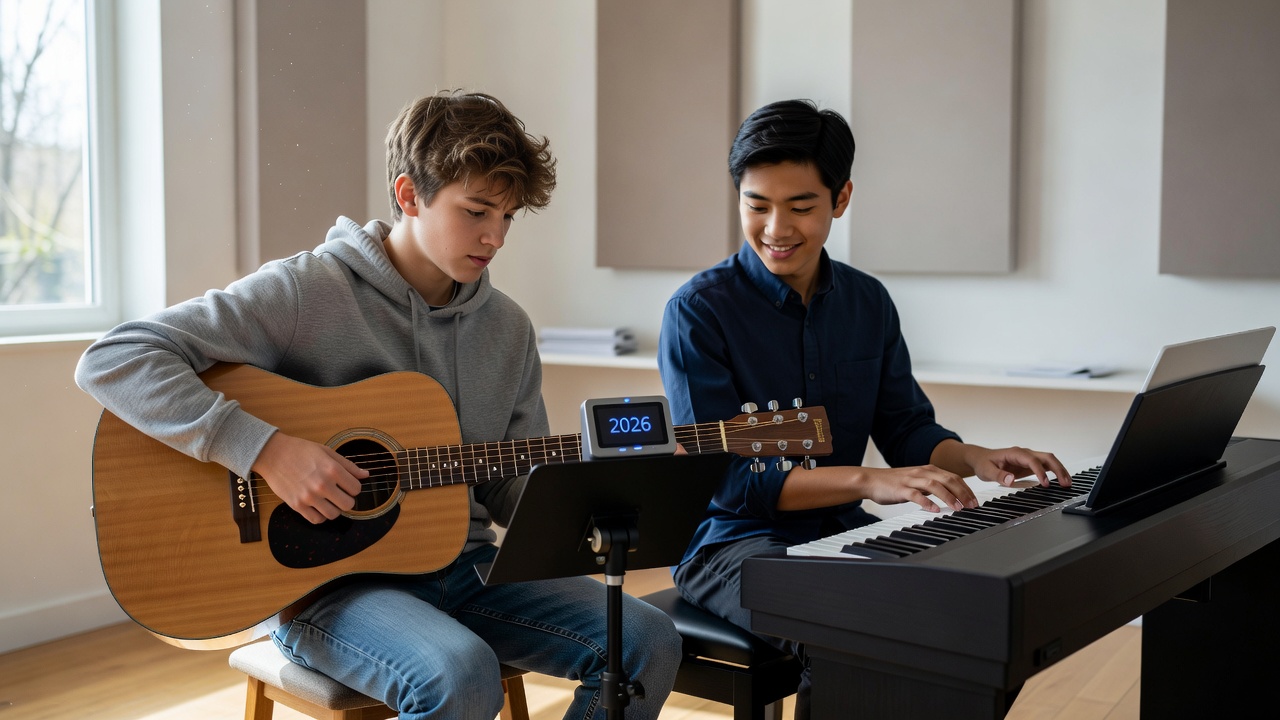
- Compare guitar and piano techniques side-by-side for cross-learning benefits
- Warm up fingers with gentle stretches before playing
- Focus on light pressure and even touch during scales

Overcoming Progress Plateaus
Plateaus occur when habits solidify without variation. Break through by changing routines, such as learning a new genre piece or joining online forums for feedback. Seek input from teachers or communities when stuck on a particular skill. Resources like Juilliard provide inspiration through masterclasses and tips for sustained motivation.
FAQ
How long until I see improvement?
With consistent daily practice of 30-45 minutes, most beginners notice better posture and rhythm within 2-4 weeks, with ear training benefits appearing around 6 weeks.
Should I learn both instruments at once?
Focus on one first to build fundamentals, then add the second for comparison benefits that enhance overall musicianship.
What if I develop pain?
Stop immediately, review posture, and consult a professional if discomfort persists. Resources from NAMM Foundation emphasize healthy playing techniques to prevent injury.
Are online tutorials enough?
They help greatly when paired with deliberate practice and ear training, but live feedback accelerates results and corrects subtle form issues.
How do I stay motivated during slow periods?
Set small weekly goals like mastering one new chord or scale, and celebrate milestones with favorite songs to maintain enthusiasm.
Conclusion
Avoiding these common mistakes sets you up for enjoyable, sustainable progress on guitar and piano. Apply the fixes consistently, use the checklist, and revisit ear training regularly. Your musical journey in 2026 will be smoother and more rewarding with these foundations in place. Start today and enjoy the process of steady improvement.

No comments yet. Be the first!