 Instrumentiverse
Introduction
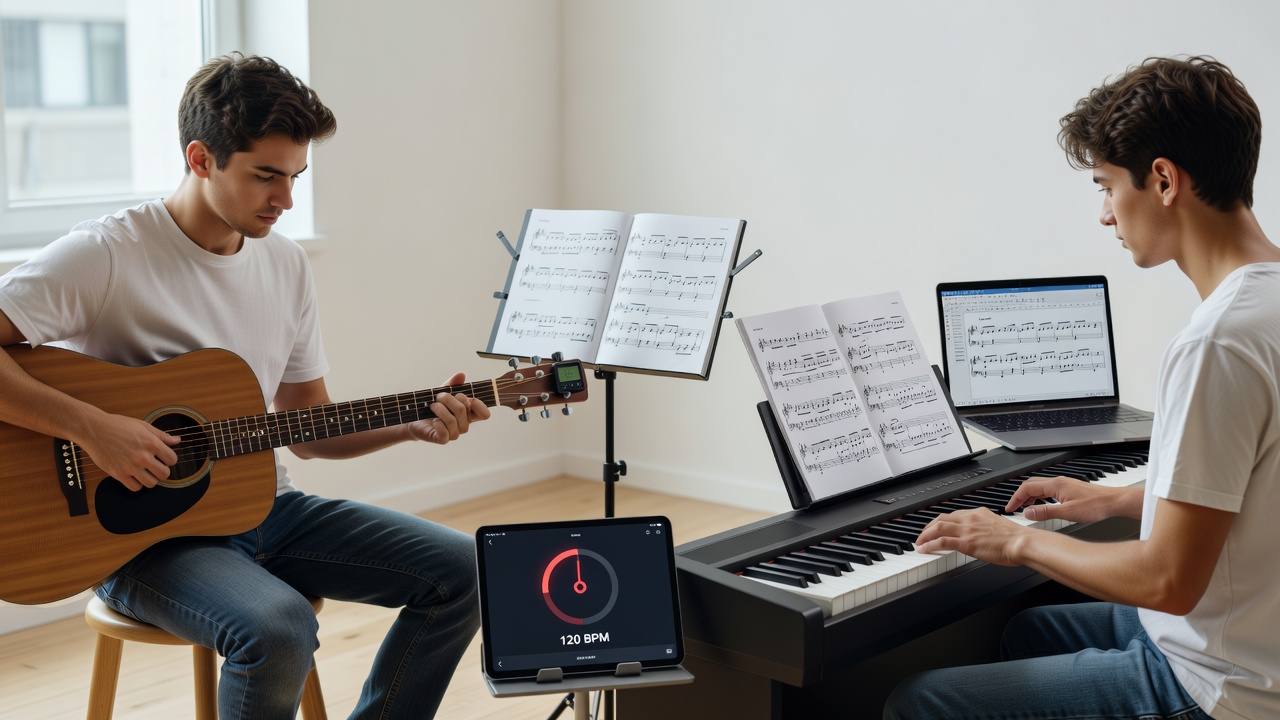
Starting your journey as a beginner guitar or piano player in 2026 means building a solid foundation with the right supportive tools. This comprehensive guide highlights five essential, affordable options designed specifically to enhance practice sessions. These recommendations focus on practical gear like apps, software, and accessories that complement daily routines, offering step-by-step guidance without repeating basic habit advice. Readers will find detailed comparisons of leading 2026 options, real-world usage examples, and decision-making frameworks to choose items that fit home setups and skill levels. Whether you are strumming chords on an acoustic guitar or mastering scales on a digital piano, these tools help track progress, maintain accuracy, and create an efficient learning environment from day one.
1. Choosing the Right Metronome App
Timing is everything for beginners, and a quality metronome app provides the steady beat needed to develop rhythm across both instruments. Top 2026 contenders include apps with visual pulse indicators, programmable subdivisions, and practice session trackers that log daily minutes played. When comparing options, prioritize those with offline functionality and customizable sound profiles to match guitar strumming or piano arpeggios. A step-by-step buying guide starts with downloading free trials, testing beat accuracy at various tempos, and reading recent user reviews for device compatibility. For instance, a beginner guitarist might use the app to practice alternating bass notes at 70 beats per minute while gradually increasing speed, while a piano player could apply it to hand coordination exercises. Real-world daily use involves setting short 10-minute focused drills before moving to songs, which builds muscle memory and prevents rushing through pieces. Advanced features like tap tempo detection allow quick adjustments during live practice, and integration with Bluetooth speakers ensures clear audio in any room. Avoid apps overloaded with ads by checking subscription models early, ensuring the tool remains a reliable partner rather than a distraction.
2. Free Notation Software for Music Reading
Understanding sheet music accelerates learning, and free notation software empowers beginners to explore scores without ongoing expenses. Programs such as MuseScore offer intuitive interfaces for viewing, editing, and creating music notation, complete with MIDI playback and PDF export options. In 2026 these tools include enhanced mobile compatibility and community-shared libraries of beginner-friendly arrangements for guitar tabs and piano lead sheets. A practical buying guide involves confirming the latest version supports your operating system, exploring tutorial videos on the official site, and joining forums to access user templates. Real-world example: a new piano student imports a simple melody, slows it down for practice, then prints copies for annotation during lessons. Guitarists benefit similarly by transcribing chord charts and practicing sight-reading during short sessions. This software also supports importing files from other apps, allowing seamless workflow between practice tools and notation study. Over time, users develop stronger reading skills that transfer directly to performing full pieces with greater confidence.
3. Portable Music Stands for Home Setups
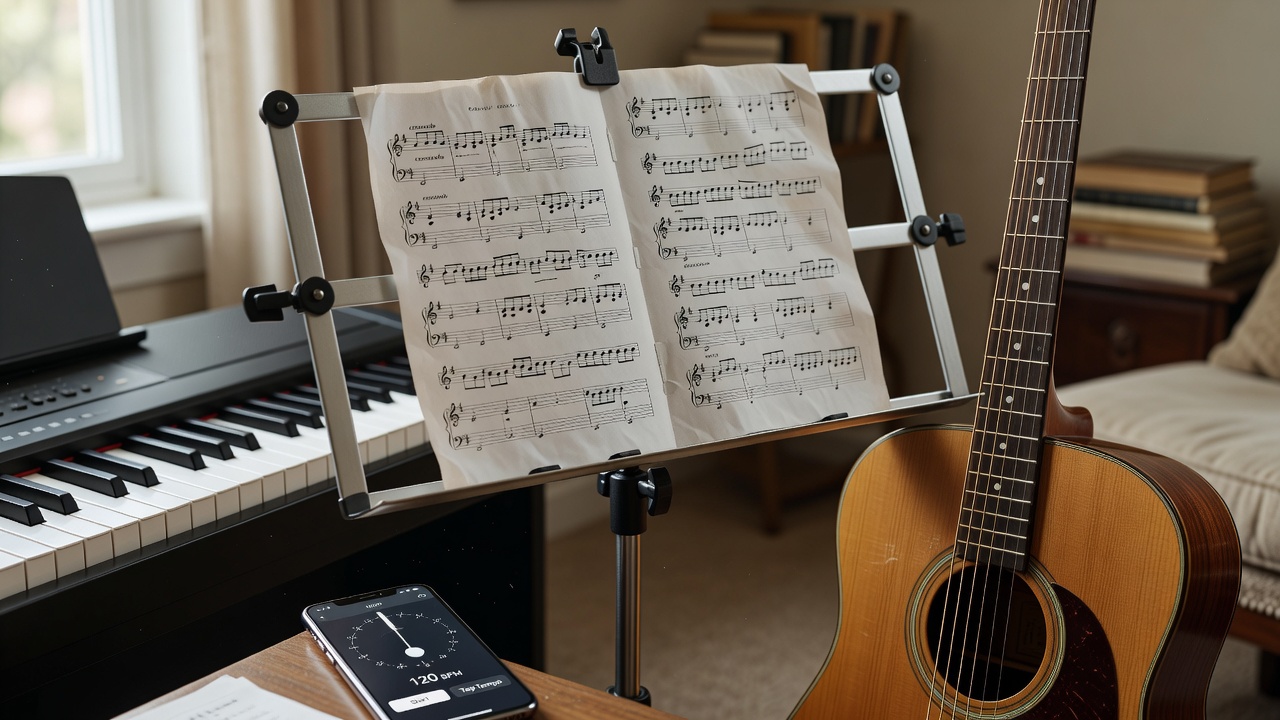
Ergonomic support keeps materials visible and accessible during extended practice, making portable music stands a must-have for both guitar and piano players. Look for models with adjustable height, wide bases for stability, and quick-fold designs ideal for small apartments or shared spaces. Comparisons of 2026 options highlight lightweight materials that withstand daily use while accommodating tablets or traditional books. Step-by-step selection starts by measuring your practice area, testing weight capacity for multiple sheets, and verifying non-slip grips on various floor types. In daily routines, position the stand at eye level next to your instrument so you can reference notation while playing scales or chord progressions without straining posture. For guitarists, pair it with a clip-on holder for lyrics during strumming practice; piano players often use it to hold exercise books open at specific pages. A common real-world scenario involves a beginner setting up a 20-minute rotation between reading exercises and playing along, which improves focus and reduces errors from memory lapses. Consider stands with built-in tablet mounts for hybrid digital-paper use, ensuring versatility as skills advance.
4. Digital Tuners for Accurate Pitch
Staying in tune builds ear training and prevents frustration from the start. Digital tuners, whether clip-on or microphone-based, provide instant feedback for guitar strings and piano keys alike. Leading 2026 models feature chromatic detection, multiple calibration modes, and color-coded displays for quick visual confirmation. Practical advice includes calibrating the device to standard pitch each session, using it before and after practice to catch drift, and practicing with alternate tunings once basic accuracy is achieved. Real-world examples show guitar beginners tuning before every scale run to reinforce pitch memory, while piano players verify individual notes during warm-up drills. These tools often pair with apps for logging tuning history, helping track instrument maintenance needs over months. When selecting a tuner, test response time in noisy environments and ensure battery life supports several weeks of regular sessions. This simple accessory dramatically improves sound quality and encourages consistent listening habits.
5. All-in-One Practice Companion Apps
Comprehensive apps that combine lessons, recording capabilities, and instant feedback create an integrated practice ecosystem. Evaluate 2026 releases for guitar and piano modules featuring slow-down playback, loop sections, and pitch analysis. A step-by-step approach starts with matching the app to your primary instrument, trying demo lessons, and checking community ratings for update frequency. Daily use example: record a short piano etude, receive automated suggestions on timing, then replay the slowed version to refine technique before attempting full speed. Guitarists similarly benefit from chord recognition features that verify accuracy during chord changes. These apps often include progress dashboards that visualize weekly improvements, motivating continued effort. When comparing platforms, focus on cross-device syncing so practice continues seamlessly from home to travel. This holistic toolset turns isolated exercises into structured learning paths that yield measurable results over time.
Comparison of Key Features Across Tools
- Metronome apps excel in rhythm precision and session tracking.
- Notation software supports visual learning and customization.
- Portable stands improve ergonomics and organization.
- Digital tuners deliver immediate pitch accuracy.
- Companion apps integrate multiple functions for efficiency.
FAQ
- How do I start with these tools? Begin with one app and add accessories as needed based on weekly practice observations.
- Are free versions sufficient? Yes, many offer robust features for beginners, with paid upgrades available later for advanced analytics.
- What setup works best for small spaces? Portable stands and wireless tuners maximize flexibility without cluttering limited areas.
- Can these tools work together? Absolutely, linking a metronome app with notation software creates a complete practice station.
- How often should I update my gear? Review options annually as new 2026 features emerge, but quality basics last years with proper care.
Conclusion
Equipping yourself with these five tools accelerates meaningful progress for beginner guitar and piano players throughout 2026. Apply the detailed guides, comparisons, and examples to select items that match your space and goals. Consistent use transforms practice from trial-and-error into a rewarding, structured experience that builds lasting skills and enjoyment.
No comments yet. Be the first!