 Instrumentiverse
Who Is Nile Rodgers? The Funk Maestro Behind Disco and Beyond
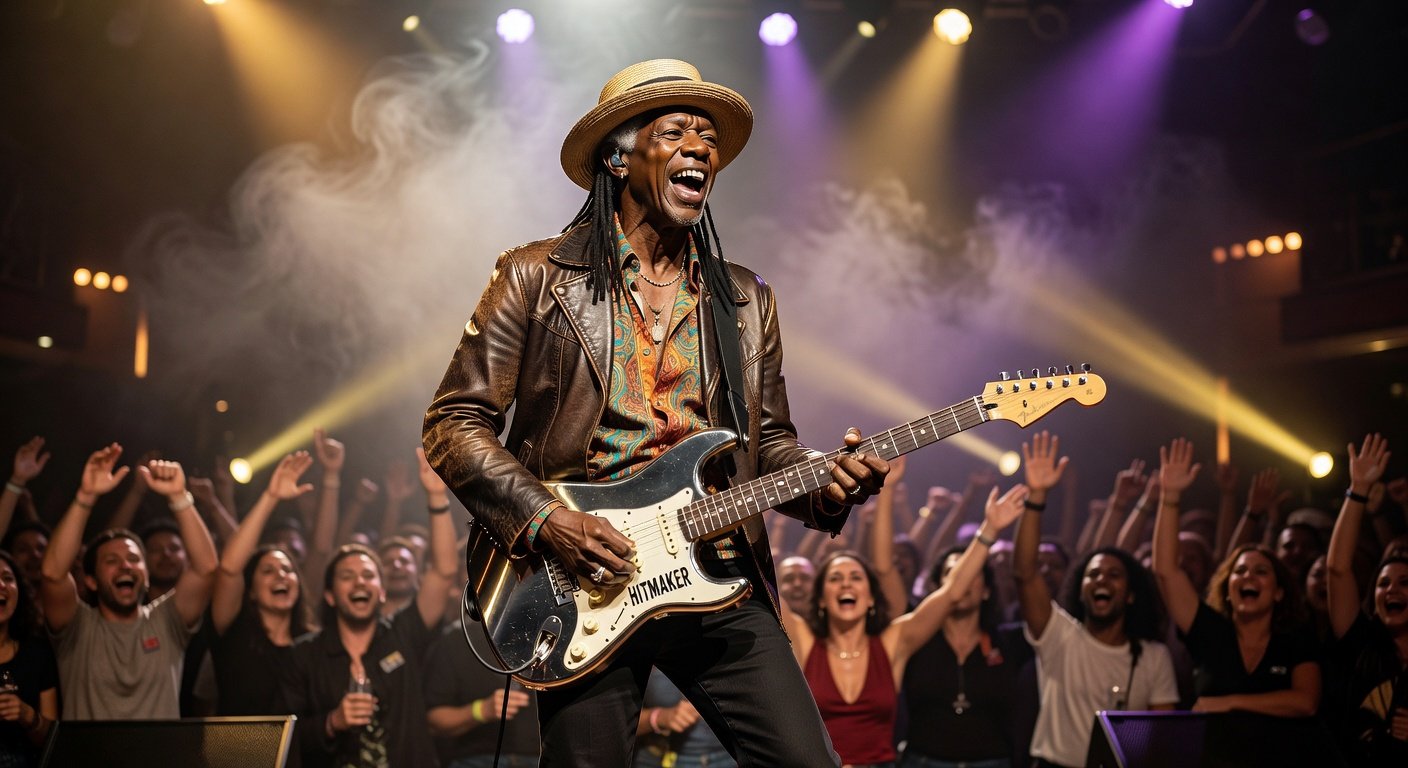
Nile Rodgers stands as one of the most influential guitarists and producers in modern music history. Born on September 3, 1952, in New York City, Rodgers pioneered the crisp, percussive 'chick' guitar riff that defined 1970s disco and permeated pop, funk, rock, and hip-hop for decades. As co-founder of the band Chic, he crafted timeless anthems like 'Le Freak' and 'Good Times,' while his production credits include era-defining albums for David Bowie, Madonna, and Daft Punk. This bio dives deep into his journey, techniques, gear, and lasting impact, perfect for guitarists, producers, and music fans seeking inspiration from a true crossover icon.
Rodgers' career spans over 50 years, with more than 300 production credits and hits that have sold hundreds of millions of copies. His signature sound—tight, rhythmic guitar scratches paired with lush strings and groove-locked basslines—bridges disco's heyday to today's EDM and pop collabs. Whether you're an aspiring funk player breaking down his riffs or a producer studying his studio magic, Rodgers' story offers actionable insights.
Early Influences: Jazz, Funk, and the Roots of the 'Chick' Sound
Rodgers grew up immersed in New York's vibrant jazz scene. His mother was a bohemian who exposed him to artists like Miles Davis and Thelonious Monk. By age 7, he was taking classical guitar lessons, but it was the funk explosion of the late 1960s—James Brown, Sly Stone, and Jimi Hendrix—that shaped his style. He briefly attended the Juilliard School for music theory, blending classical precision with street funk grit.
In the early 1970s, Rodgers played session guitar for acts like Bob Dylan and joined the Big Apple Band, backing soul singer Lonette McKee. These gigs honed his minimalist approach: fewer notes, maximum groove. His 'chick' technique—sharp, muted strums on the higher strings—emerged here, mimicking hi-hat scratches for an irresistible pocket.
Forming Chic: The Birth of Disco-Funk Royalty
In 1976, Rodgers teamed with bassist Bernard Edwards to form Chic. Their debut album, C'est Chic (1978), exploded with 'Dance, Dance, Dance (Yowsah, Yowsah, Yowsah)' and 'Le Freak,' the latter becoming the best-selling single in Atlantic Records history at the time. 'Le Freak' exemplifies Rodgers' riff: a staccato E minor pattern (Em - D - C) played with thumb muting on a Stratocaster.
- Key Chic Hits: 'Le Freak' (9 weeks at #1), 'Good Times' (the bassline sampled in countless rap tracks like 'Rapper's Delight'), 'I Want Your Love.'
- Chic's formula: Rodgers' guitar + Edwards' melodic bass + Alfa Anderson/Nile's vocals + orchestral strings.
Despite disco's backlash, Chic's influence endured. Edwards and Rodgers were peers in the funk pantheon—Edwards' fluid bass lines perfectly complemented Rodgers' angular guitar, creating a symbiotic sound unmatched in the genre.
Production Legend: Hits for Bowie, Madonna, Daft Punk, and More
Beyond Chic, Rodgers became a go-to producer. His work on David Bowie's Let's Dance (1983) fused funk with art-rock, yielding hits like 'Modern Love' and the title track. Rodgers stripped Bowie's sound to essentials: punchy guitar hooks over Chic-style grooves.
Madonna's Like a Virgin (1984) showcased his pop polish—'Material Girl' features his trademark scratches. In 2013, Daft Punk recruited him for Random Access Memories, with 'Get Lucky' reviving disco for millennials. The riff? A breezy, wah-infused major pentatonic lick over Pharrell's falsetto.
Other notables: Duran Duran's Rio, Sister Sledge's We Are Family, and recent collabs with Beyoncé, Sam Smith, and Kendrick Lamar. For production secrets, visit the Grammy Awards site for his masterclass insights.
Nile Rodgers' Guitar Techniques: Breaking Down the Riffs
Rodgers' style is deceptively simple: economy of motion, palm muting, and string bends for funk snap. Essential techniques include:
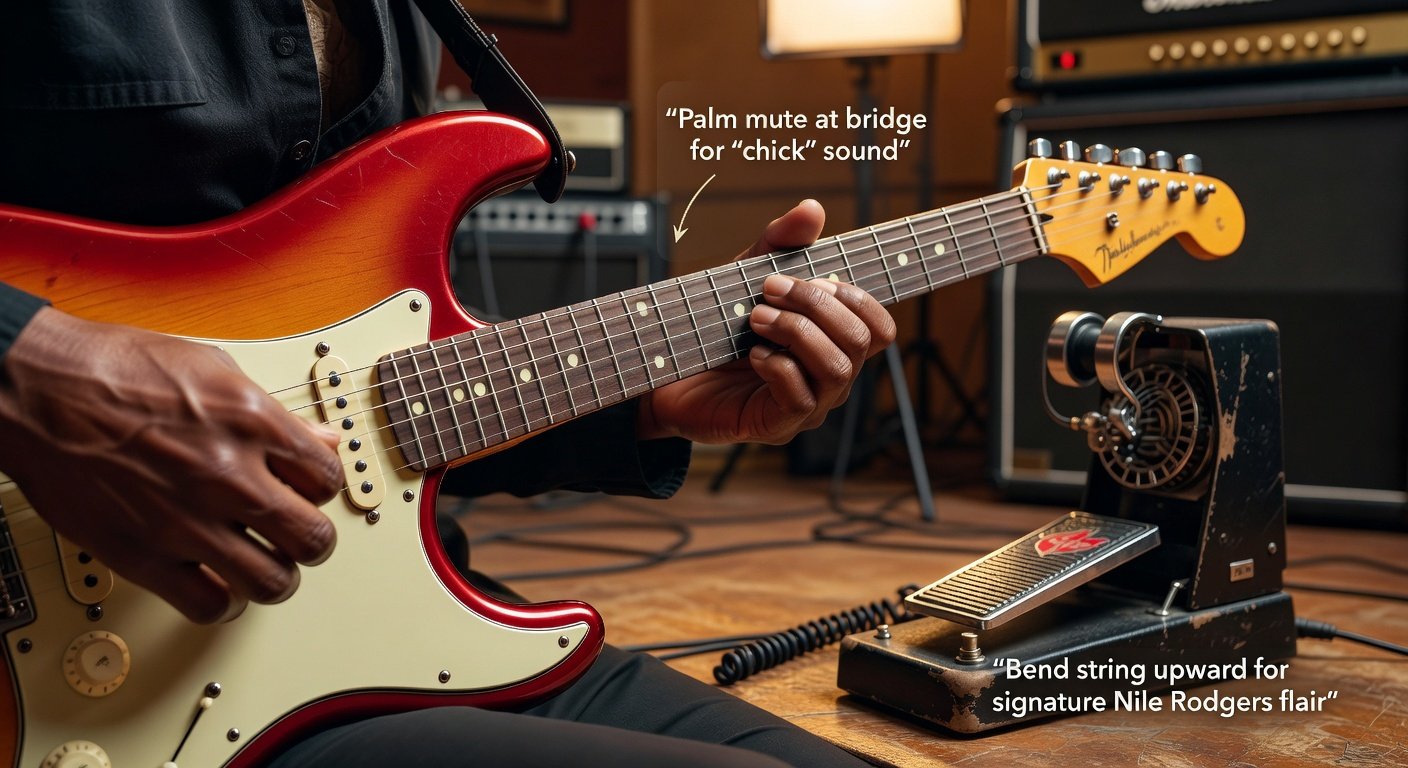
- Palm Muting: Rest palm on bridge pickup for 'chick' percussiveness. Example: 'Le Freak' intro—downstrokes on beats 2 and 4.
- Thumb Technique: Use thumb for bass notes, fingers for treble scratches. Seen in 'Good Times.'
- Wah-Wah and Volume Swells: Cry Baby pedal for expression in 'Get Lucky.'
Practical Riff Breakdown: 'Le Freak'
Tuning: Standard E. Key: Em.
- Fret 12 (high E) with palm mute, slide to 10.
- Quick hammer-on/pull-off: 7-5 on B string.
- Practice at 110 BPM with metronome—focus on ghost notes.
For 'Get Lucky': Gypsy-jazz inspired picking, using hybrid picking (pick + fingers). Aspiring players: Start slow, record yourself against the track. Rodgers emphasizes feel over speed—"play the space between notes."
Signature Gear: Custom Stratocasters and Beyond
Rodgers is synonymous with Fender Stratocasters. His first was a '62 sunburst; now he plays custom Gitdler Strats with .009-.042 strings, tuned to E standard. Key mods:
- High action for thumb style.
- DiMarzio pickups for clarity.
- Cry Baby wah, Boss DD-3 delay.
He also favors Gibson Les Pauls for warmer tones. Check his official site at nilerodgers.com for gear updates. Compared to Edwards' Music Man basses, Rodgers' minimalist setup prioritizes live reliability.
Awards, Legacy, and 2026 Tour Buzz
Rodgers boasts 7 Grammy wins, including Producer of the Year (2014). He's in the Rock & Roll Hall of Fame (inducted 2017 with Chic) and Songwriters Hall of Fame. His crossover impact? From disco haters to EDM lovers, his grooves underpin modern hits.
Looking ahead, Rodgers announced a 2026 world tour, including Chic reunion dates and solo shows. Expect setlists heavy on classics plus 'Get Lucky' encores. Tickets via his site—don't miss the funk master live.
Common Mistakes Aspiring Funk Guitarists Make (and How to Avoid Them)
1. Overplaying: Less is more—edit riffs ruthlessly.
2. Ignoring dynamics: Vary volume for breath.
3. Poor muting: Practice with a towel over strings.
4. Neglecting bass sync: Lock with the low end first.
FAQs: Nile Rodgers Production Secrets and More
Q: What's Nile Rodgers' best production tip?
A: "Make the song undeniable before adding polish." He layers simply: rhythm section first, then hooks.
Q: How does he compare to Bernard Edwards?
A: Edwards was the melodic heart; Rodgers the rhythmic spark—together, funk perfection.
Q: Gear for beginners mimicking his sound?
A: Squier Strat, free amp sims like Amplitube. Focus on technique over tone.
Q: Upcoming projects?
A: 2026 tour plus new music—follow BBC Music for updates.
Conclusion: Why Nile Rodgers Still Rules
From Harlem jazz kid to global hitmaker, Nile Rodgers redefined groove. His 'chick' riffs aren't just notes—they're invitations to dance. Grab your Strat, dissect 'Le Freak,' and channel the funk. In a sample-saturated era, Rodgers proves originals endure.

No comments yet. Be the first!