 Instrumentiverse

Introduction to David Gilmour in 2026
David Gilmour stands as one of the most revered guitarists in modern music history. His emotive, atmospheric approach has shaped progressive rock for decades. In 2026, his legacy endures through reissues, archival releases, and continued influence on players seeking expressive lead tones. This comprehensive guide delves into his biography, tone-shaping methods, Pink Floyd innovations, solo career milestones, and actionable insights for replicating his style.
Early Influences and Formative Years
Gilmour was born in Cambridge, England, in 1946. He absorbed influences from blues legends like B.B. King and jazz figures such as Miles Davis, alongside folk artists including John Fahey. These elements combined to create his signature melodic phrasing. Early experiments with a homemade guitar and local bands honed his ear for dynamics before he joined Pink Floyd in late 1967, replacing Syd Barrett as the primary guitarist by 1968.
Pink Floyd Breakthroughs and Album-by-Album Evolution
The transition to Gilmour's leadership marked a pivotal shift for Pink Floyd. On Meddle (1971), tracks like Echoes demonstrated his ability to build vast sonic landscapes through sustained notes and layered effects. The Dark Side of the Moon (1973) elevated his profile with solos that balanced technical precision and raw emotion, particularly on Money and Time. Wish You Were Here (1975) further refined this with the title track's haunting bends and Shine On You Crazy Diamond's multi-part epic structure. Animals (1977) and The Wall (1979) showcased his rhythm work alongside leads, using the guitar to convey narrative tension. These breakthroughs established progressive rock's emphasis on atmosphere over speed.
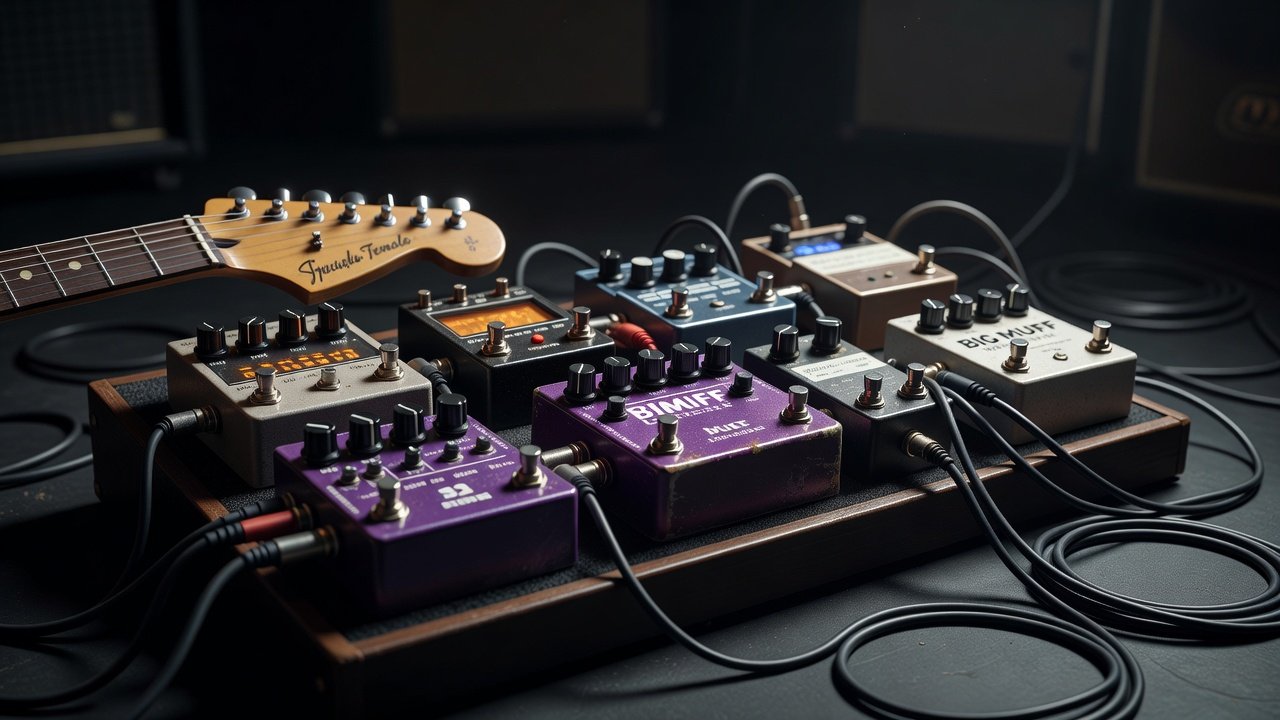
Signature Gear: Stratocaster Setup and Effects Chain
Gilmour's primary instrument remains the Fender Stratocaster, often a 1950s or 1960s model modified with Seymour Duncan pickups and a custom tremolo system. His black Stratocaster, famously used on The Wall tour, features a maple neck for brighter attack. Effects include the Electro-Harmonix Big Muff for sustain, MXR Phase 90, and multiple delays such as the TC Electronic 2290 for precise repeats. Amplifiers like the Hiwatt DR103 provide the clean headroom essential to his tone. Over decades, his rig evolved from analog pedals to digital modeling, yet the core remains touch-sensitive dynamics rather than high gain.
Vocal-Guitar Interplay and Melodic Phrasing
A defining trait is Gilmour's seamless integration of guitar lines with vocals. In Comfortably Numb, the soaring solo answers the lyrics' despair with hopeful resolution through wide bends and vibrato. This interplay appears across The Division Bell (1994), where guitar melodies often complete vocal phrases. His phrasing favors space, allowing notes to breathe, which creates the emotional depth listeners associate with progressive rock ballads.
Atmospheric Playing Style: Techniques and Examples
Gilmour's style prioritizes tone and feel over flashy technique. He employs string bending with controlled release, often adding subtle whammy bar dips for vocal-like inflection. Delay settings around 380-450 milliseconds create cascading echoes without clutter. On songs like High Hopes, volume swells and reverse delays build introspective moods. These methods transform simple pentatonic scales into expansive statements, influencing countless atmospheric guitarists.
Live Performances: Comparisons Across Decades
1970s tours featured exploratory improvisations with longer solos and raw energy, as heard in bootlegs from the Dark Side era. By the 1980s and 1990s, performances became more polished, incorporating lighting and precise cueing, evident in the Pulse live album. In recent 2024-2026 shows, Gilmour maintains core tones while adapting to modern venues with refined dynamics and guest musicians. Audiences note the consistent emotional delivery despite technological upgrades in monitoring and effects.
Solo Career and Key Album Milestones
Gilmour's solo output expands on Pink Floyd foundations. On an Island (2006) offers intimate arrangements with orchestral touches and guest appearances. Rattle That Lock (2015) incorporates world rhythms and electronic elements while retaining melodic leads. These releases highlight his growth as a composer, blending personal themes with progressive structures. Collaborations with artists like David Bowie and later family projects further enriched his catalog.
Collaborations Defining Progressive Rock
Partnerships with Roy Harper on Have a Cigar and later work with Pink Floyd members solidified Gilmour's influence. These alliances introduced new textures, such as saxophone integrations and choral arrangements, that broadened progressive rock's palette without sacrificing his restrained approach.
2026 Projects, Reissues, and Current Relevance
Recent years have seen anniversary editions of classic albums alongside new archival material. These efforts introduce Gilmour's sound to younger audiences while providing collectors with remastered audio. His official channels detail ongoing archival work that keeps the progressive rock conversation alive in 2026. Pink Floyd's official site and David Gilmour's official website offer the latest updates.
Practical Takeaways for Emotive Lead Phrasing
Guitarists aiming to capture Gilmour's essence should follow these expanded steps:
- Start with a Stratocaster-style guitar and focus on clean amp settings with moderate reverb and delay.
- Practice slow bends across the neck, emphasizing the release and adding light vibrato for singing quality.
- Experiment with delay feedback at 30-40% to create layered echoes that enhance melody without overwhelming it.
- Study call-and-response patterns in tracks like Shine On You Crazy Diamond, alternating between single notes and chords.
- Incorporate volume pedal swells to build tension gradually before resolving into leads.
- Record yourself playing over Pink Floyd backing tracks to refine dynamics and space.
These exercises develop the touch sensitivity central to his playing.
Mistakes to Avoid When Emulating the Sound
Common pitfalls include overusing distortion, which muddies the clarity Gilmour favors. Avoid excessive speed; his leads prioritize phrasing. Neglecting proper delay timing can result in chaotic repeats rather than atmospheric depth. Finally, skipping dynamics training leads to flat performances lacking emotional range.
FAQ: Replicating David Gilmour's Sound
What amp settings work best?
Begin with clean channels on a Hiwatt-style amp, rolling off treble slightly while boosting mids for warmth and presence.
Which pedals form the essential chain?
Prioritize a compressor, Big Muff-style fuzz, phase shifter, and analog or digital delay units with tap tempo.
How important is the Stratocaster specifically?
Its single-coil pickups and tremolo provide irreplaceable clarity and expressiveness, though humbuckers can approximate with EQ tweaks.
Can digital modelers replicate the tone accurately?
Modern units like the Line 6 Helix or Kemper capture much of the sound when loaded with accurate profiles of his rigs.
What scales and modes does he favor?
Primarily minor pentatonic with occasional major scale infusions and chromatic passing tones for tension.
Conclusion
David Gilmour's 2026 profile reinforces his status as a master of atmospheric guitar. Through detailed study of his gear, techniques, and evolution, players can cultivate their own emotive voices. His work continues to define progressive rock's expressive potential.
No comments yet. Be the first!