 Instrumentiverse

Introduction to Polychords
Modern songwriters constantly seek ways to move beyond basic triads and seventh chords to create more evocative textures. Polychords offer an accessible yet powerful technique by layering two or more chords simultaneously. This approach draws directly from scales and modes, allowing composers to build harmonic complexity while maintaining emotional clarity. In today’s music landscape, where listeners crave depth in everything from indie folk to electronic productions, polychords provide a practical path to richer arrangements without requiring years of advanced conservatory training.
Unlike simple chord extensions, polychords create distinct vertical layers that can evoke tension, color, and resolution in fresh ways. Whether you're writing indie ballads or cinematic scores, understanding polychords expands your palette significantly. The technique has roots in jazz and classical traditions but has found new life in contemporary songwriting thanks to artists who blend genres fluidly.
What Are Polychords?
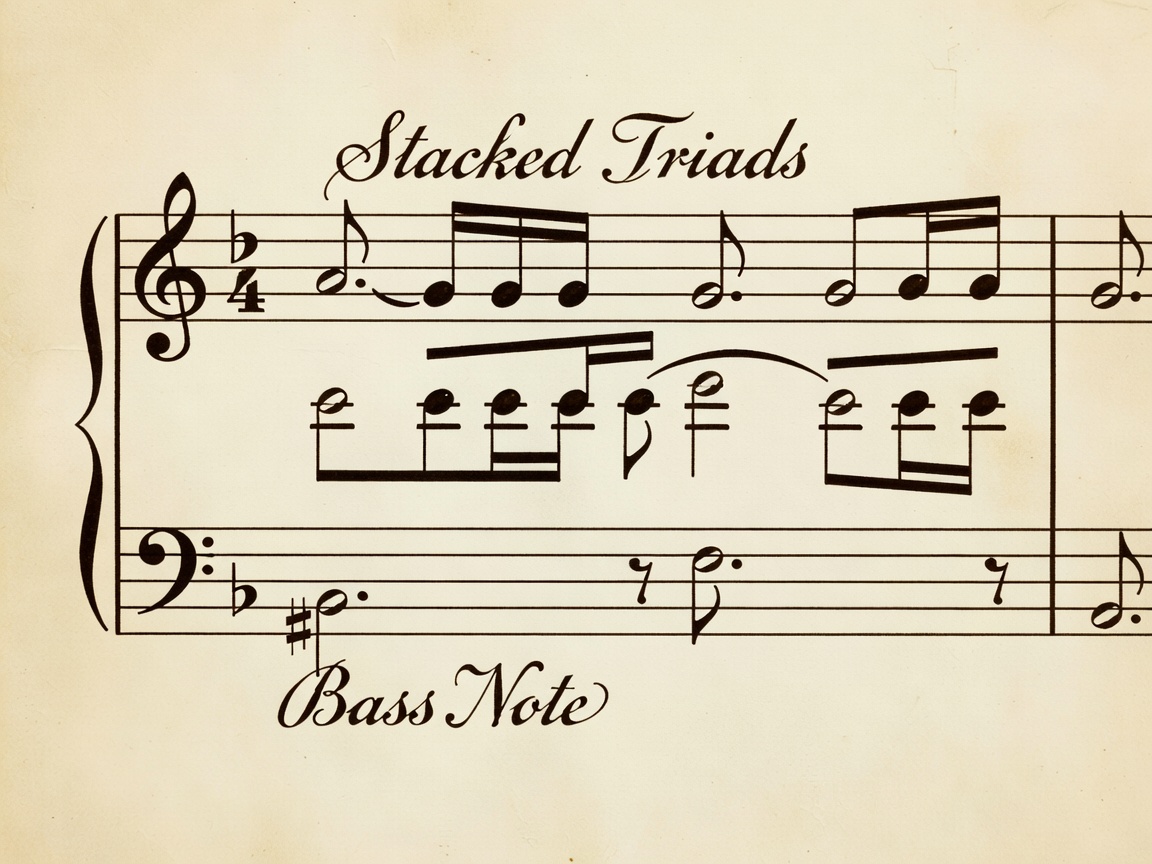
A polychord consists of two or more independent chords played together, typically a triad or seventh chord superimposed over a different bass note or chord. The result is a richer sonority that suggests multiple harmonic centers at once. For example, stacking a C major triad over an E-flat bass note produces a lush, ambiguous sound often heard in jazz and film music. This creates a sense of suspended harmony that feels both grounded and floating.
This technique ties closely to modal interchange and extended harmony, but keeps the layers distinct rather than blending them into one extended chord. The separation allows each layer to retain its own identity, giving songwriters precise control over emotional shading.
Why Songwriters Benefit from Polychords
Polychords enhance emotional depth by introducing controlled dissonance and unexpected color. They work especially well in verses that need subtle tension or choruses that demand a sense of lift. Many modern producers use them to differentiate sections within a single track, creating dynamic contrast that keeps listeners engaged from start to finish.
Step-by-Step Construction Methods
Building polychords begins with understanding root relationships. Start by selecting a bass note from your chosen scale. Then layer a triad or seventh chord whose root is a third, fourth, or fifth away. Common constructions include major triad over minor bass, minor seventh over major triad, and diminished chord over dominant bass for tension. Always check compatibility with the underlying mode to ensure the polychord supports the melody.
Beginners should start with simple two-layer setups before adding a third chord. Practice in all twelve keys to internalize the sounds. Use a piano or guitar to test voicings slowly, paying attention to how the upper chord interacts with the bass.
Connecting Polychords to Scales and Modes
Polychords gain their power when derived from scales like the Lydian or Mixolydian modes. For instance, in C Lydian, layering an E major triad over a C bass note highlights the #4 interval beautifully. Experiment by taking each mode's characteristic notes and forming upper structures that emphasize them. Dorian mode pairs well with minor seventh upper structures, while Phrygian offers opportunities for minor-second tensions.
This method ensures your polychords feel intentional rather than random. For deeper foundational study, explore resources at MusicTheory.net.
Real Song Examples Across Genres
Polychords appear in diverse music. In Radiohead's work, layered harmonies create atmospheric tension. Jazz standards often use polychordal voicings for sophisticated progressions. Film composers like Hans Zimmer employ them for epic builds. Listen to tracks from artists such as Snarky Puppy or Jacob Collier to hear modern applications. In pop, subtle polychord use appears in tracks by artists like Bon Iver, where upper structures add haunting beauty without overwhelming the vocal line.
Polychords vs Extended Chords
While extended chords add notes within a single harmonic framework, polychords maintain separate identities for each layer. This distinction allows greater emotional contrast and smoother voice leading in many cases. Extended chords can blur into polychords when the upper structure feels autonomous. The key difference lies in perception: listeners hear extended chords as one unified sonority, whereas polychords register as stacked, independent entities.
Voice Leading Tips for Smooth Transitions
To keep polychords flowing naturally, move common tones by step or sustain them, resolve outer voices in contrary motion, avoid parallel fifths between layers when possible, and use inversions in the upper chord to minimize leaps. These practices maintain smoothness while preserving the layered effect. Always listen for clashes between the bass and the highest note of the upper chord.
Common Mistakes to Avoid
Many beginners overload every chord with polychordal layers, which can muddy the arrangement. Another frequent error is ignoring the melody when choosing upper structures. Always ensure the top note of the polychord supports or enhances the vocal line rather than fighting it. Finally, avoid random stacking; every layer should have a clear relationship to the scale or mode in use.
Notation Examples in Detail
In standard notation, write the bass note on the lower staff and the upper chord on the treble staff with clear stems or brackets indicating the two layers. Software such as MuseScore makes it easy to color-code each layer for rehearsal purposes. When sharing charts with band members, include chord symbols above the staff for quick reference.
Simple Exercise for Beginners
Try this: Choose a C major scale. Play a C major triad in your left hand and experiment with D minor, E minor, and F major triads in your right hand over the same bass. Notate the results and sing a melody over each. Record and compare emotional qualities. Repeat the exercise in G major and F major to build familiarity across keys.
Frequently Asked Questions
How do polychords resolve effectively?
Resolve by moving one layer to a chord tone of the target harmony while sustaining or adjusting the other. Test common resolutions like V to I with polychordal coloring. Gradual release of tension across layers creates satisfying arrivals.
Do polychords work in all genres?
They suit most styles but shine in jazz, progressive rock, and ambient music. In pop, use them sparingly for climactic moments to avoid overwhelming listeners. Country and folk writers can incorporate them in bridges for unexpected emotional shifts.
What notation challenges arise?
Standard staff notation shows both chords stacked with clear voicing. Software like MuseScore or Sibelius helps visualize layers accurately. When writing for guitar, consider tablature alongside chord diagrams to show fingerings for each layer.
How can I practice polychords without a full band?
Use a looper pedal or DAW to record the bass line first, then layer upper chords on top. This isolates the harmonic effect and lets you focus on voice leading before adding melody or lyrics.
Conclusion
Polychords provide songwriters with an innovative tool for emotional depth. By mastering construction, scale connections, and voice leading, you can elevate compositions beyond conventional harmony. Start simple, experiment daily, and listen widely to internalize these textures. Over time, polychords become second nature, opening doors to more expressive and memorable songs. For additional structured learning, consider courses from institutions like Berklee College of Music.


No comments yet. Be the first!