 Instrumentiverse
Introduction to Non-Chord Tones
Non-chord tones are essential tools for songwriters looking to move beyond basic chord-based melodies. These melodic decorations create tension and resolution, making simple progressions feel more emotional and dynamic. Rooted in diatonic scales and harmony basics, they allow beginners and intermediate musicians to enrich their writing without needing advanced techniques. In songwriting, a melody that only uses chord tones can quickly feel predictable and flat. Non-chord tones solve this problem by introducing brief moments of dissonance that resolve satisfyingly back to the harmony.
Understanding non-chord tones starts with recognizing which notes belong to the current chord and which do not. By learning how to identify and apply them in major and minor scales, you can transform static lines into expressive melodies. This guide covers the core concepts, multiple worked examples, genre comparisons, and practical exercises so you can immediately apply these ideas to your own songs.
What Are Non-Chord Tones?
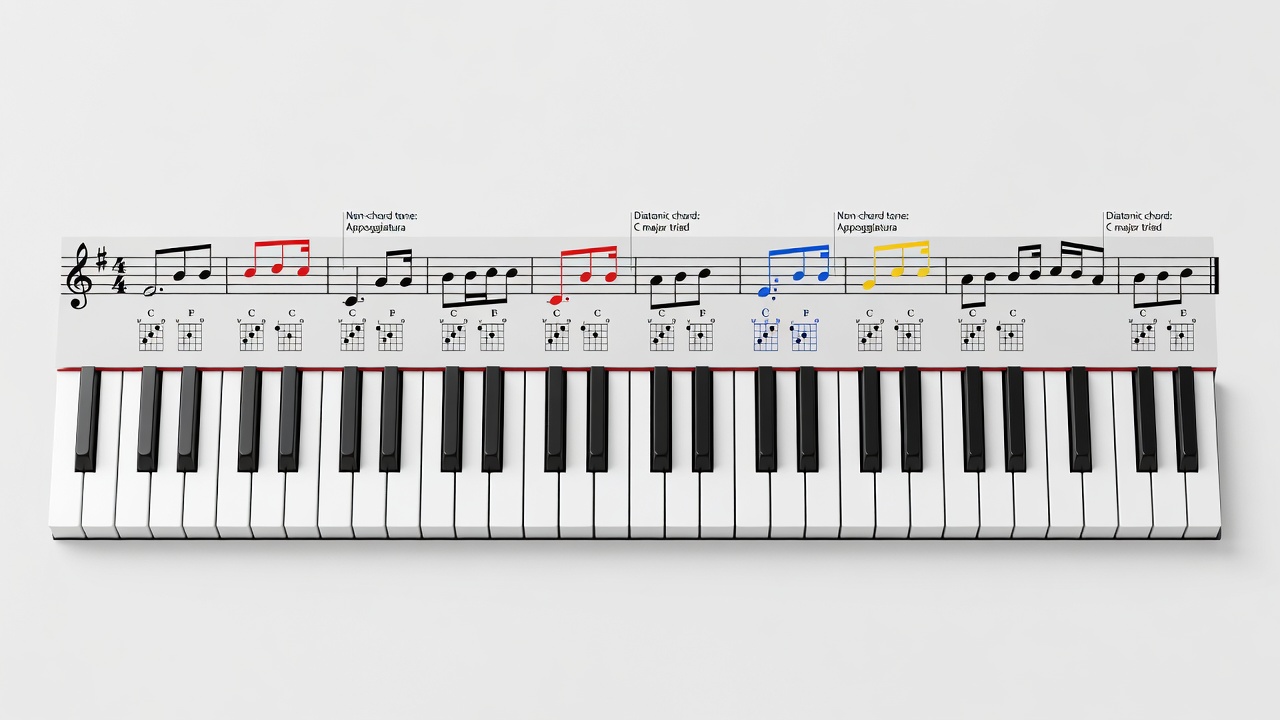
Non-chord tones, also called nonharmonic tones, are pitches that do not belong to the underlying chord at a given moment. They appear in melodies to connect chord tones smoothly or to heighten emotional impact. Common examples include passing tones, neighbor tones, appoggiaturas, and suspensions. Each type follows specific rules of approach and resolution that keep the music grounded in tonal harmony. These devices work because they create brief dissonance that resolves back to consonance. This tension-release cycle is what gives melodies their storytelling power across genres. Historically, composers from Bach to modern pop producers have relied on the same core set of non-chord tones to shape phrases and build listener engagement.
When used thoughtfully, non-chord tones add color without derailing the harmonic foundation. The key is to treat them as temporary visitors that must resolve logically back to chord tones.
Identifying Non-Chord Tones in Major and Minor Scales
In C major, the diatonic chords are built from the scale C-D-E-F-G-A-B. For a C major chord (C-E-G), any other scale degree like D, F, A, or B functions as a non-chord tone when used melodically over that chord. The same principle applies in G major, where the scale is G-A-B-C-D-E-F#; over a G major chord the notes A, C, E, and F# become available non-chord tones.
Minor scales add complexity with their raised leading tones. In A minor, the natural form uses A-B-C-D-E-F-G, while the harmonic form raises G to G-sharp. This affects which notes feel like non-chord tones over chords such as the dominant E major (E-G#-B). Step-by-step identification: First name the chord tones. Next, check the melody note against the scale. Finally, observe its rhythmic placement and direction of movement to classify the tone type. Practice this process on a simple progression in both major and minor keys before moving to more complex examples.
Types of Non-Chord Tones and Their Uses
- Passing Tones: Connect two chord tones by step, usually on weak beats. Example: Over C major, moving from E to G via F creates a smooth line. They can be diatonic or chromatic, though diatonic passing tones remain most common in beginner writing.
- Neighbor Tones: Move away from a chord tone by step and return immediately. They add gentle ornamentation without changing direction drastically and work especially well on repeated chord tones.
- Appoggiaturas: Approached by leap and resolved by step, often on strong beats for dramatic effect. The leap creates surprise while the step resolution provides relief.
- Suspensions: Hold a note from the previous chord into the new one, then resolve downward by step. The classic 4-3 suspension remains a favorite in many styles and can be prepared, suspended, and resolved in a clear three-stage process.
Each type produces distinct emotional colors. Passing tones feel flowing, while appoggiaturas sound yearning or pleading. Experiment with combining two types in a single phrase for richer results.
Step-by-Step Examples Adding Non-Chord Tones to Common Progressions
Start with the I-V-vi-IV progression in C major: C - G - Am - F. Basic melody: C-E-G-A. To add expression, insert a passing tone between E and G on the G chord, creating C-E-F-G. Over the Am chord, a neighbor tone around A (A-B-A) adds warmth before moving to F.
Before-and-after rewrite: Original melody stays on chord roots and feels flat. Revised version uses a suspension on the G chord (holding the C from the previous measure) that resolves to B, instantly increasing emotional depth. Try the same process on a ii-V-I progression in G major: Am7-D7-G. Add an appoggiatura on the D7 chord by leaping to E and resolving to D. Record both the plain and decorated versions to hear how the non-chord tones change the emotional arc.
Another useful exercise is to take a four-bar phrase and rewrite it three different ways, each emphasizing a different non-chord tone type. This builds flexibility and helps you choose the right device for the desired mood.
Comparing Emotional Effects Across Genres
In pop ballads, suspensions create longing and are common in vocal lines. Rock often favors passing tones for driving energy during guitar solos. Jazz musicians lean heavily on appoggiaturas and chromatic neighbors for sophisticated tension. Classical composers use all types systematically to shape phrases. Country songs frequently employ neighbor tones to give melodies a conversational feel, while electronic music producers sometimes layer appoggiaturas over synth pads to add human-like expression. Try applying the same progression in different styles: a simple neighbor tone over the vi chord sounds tender in folk but edgy when combined with syncopation in R&B. Listening to reference tracks in your target genre and marking the non-chord tones helps internalize these stylistic differences.
Practical Notation Examples and Songwriting Tips
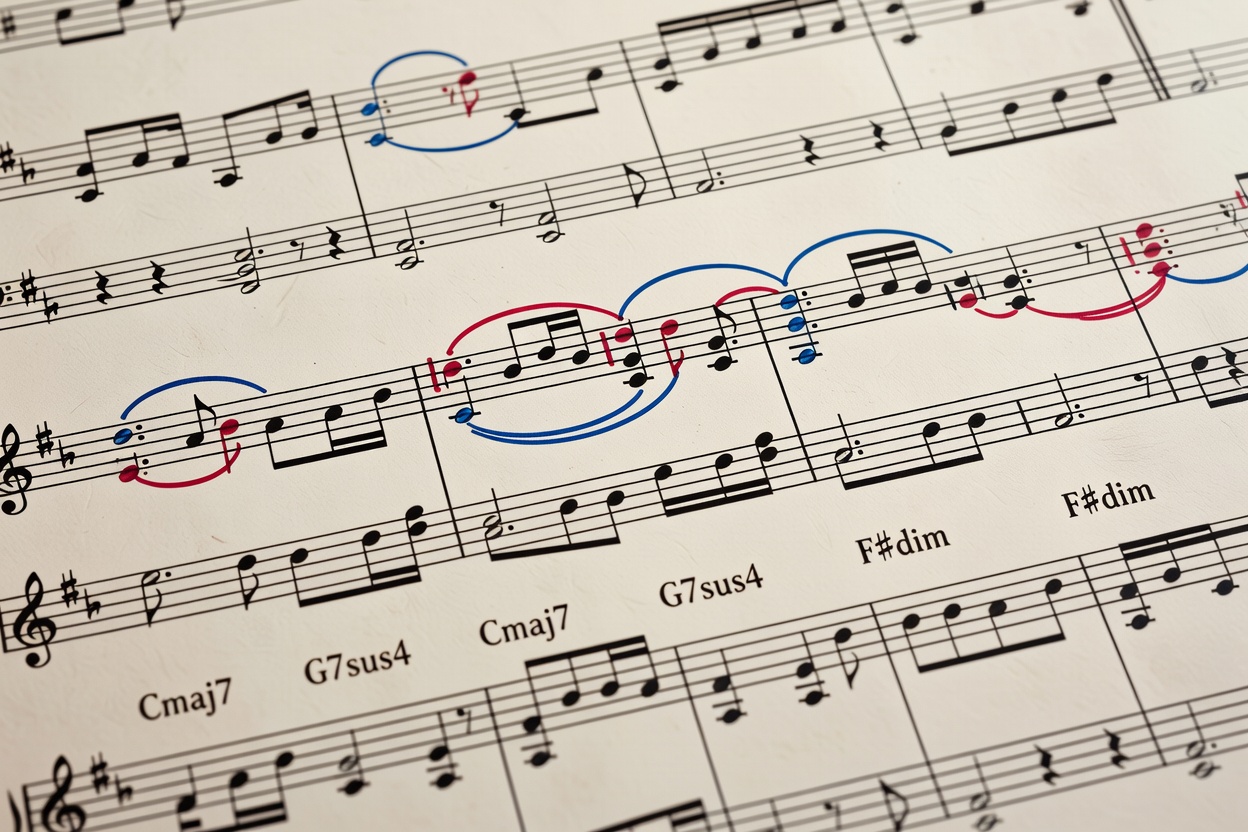
Write melodies on staff paper or in notation software. Circle every non-chord tone and label its type. This visual check reveals whether your line maintains clear harmonic support. Start slow: write the chord tones first, then insert one non-chord tone per measure. Gradually increase density as your ear becomes more confident. Always sing or play the line back to ensure the resolution feels natural rather than forced.
Common Pitfalls and How to Avoid Them
Overusing non-chord tones until the harmony becomes unclear is a frequent mistake. Limit yourself to two or three per phrase when first practicing. Placing strong dissonances on weak beats can also weaken impact; move them to strong beats for greater drama. Forgetting to resolve properly leaves the melody feeling unfinished, so always plan the resolution note before writing the non-chord tone itself. Another pitfall is ignoring the key signature when working in minor keys; double-check the raised leading tone before labeling any note as a non-chord tone.
Frequently Asked Questions
How many non-chord tones should I use per phrase? One or two per bar keeps the melody clear while adding interest. More than that risks obscuring the harmony.
Can non-chord tones work in minor keys? Yes, but account for the raised leading tone in harmonic minor when forming dominant chords.
Do I need to notate them differently? No special notation is required, though some composers use small notes for appoggiaturas or grace notes.
Should I resolve every non-chord tone downward? Most traditional resolutions move by step, but modern styles sometimes leave them unresolved for effect.
Are non-chord tones only for melody? They can also appear in inner voices or bass lines, though melodic use remains the most common starting point for songwriters.
Conclusion
Non-chord tones offer songwriters a practical way to elevate simple chord progressions into memorable melodies. By mastering passing tones, neighbor tones, appoggiaturas, and suspensions within major and minor scales, you gain precise control over tension and resolution. Apply the step-by-step examples in your next writing session, compare results across genres, and refine through the FAQ guidance. The result is expressive music that stays rooted in solid harmonic foundations while sounding fresh and personal. Continue exploring with trusted resources at musictheory.net, teoria.com, and simplifyingtheory.com.

No comments yet. Be the first!