 Instrumentiverse

Introduction to Layering Harmonies in Songwriting
Creating emotionally resonant songs often comes down to how you build harmony beneath a melody. Layering harmonies draws from core music theory principles like triads, extended chords, and polychords to add richness without cluttering the arrangement. This guide walks through practical methods for stacking these elements while preserving smooth voice leading, helping beginners and intermediate writers move beyond basic progressions. Modern songwriters use these techniques in genres from pop to indie, turning simple melodies into textured experiences. By understanding how chords interact with scales, you can craft progressions that feel both familiar and surprising. The goal is to create depth that supports the emotional arc of your lyrics and melody rather than competing with them.
Many hit songs rely on subtle harmonic layers that listeners feel more than they consciously notice. Whether you are working in a DAW or on paper, these methods scale from acoustic singer-songwriter tracks to full band productions.
Core Principles: Chords, Scales, and Voice Leading
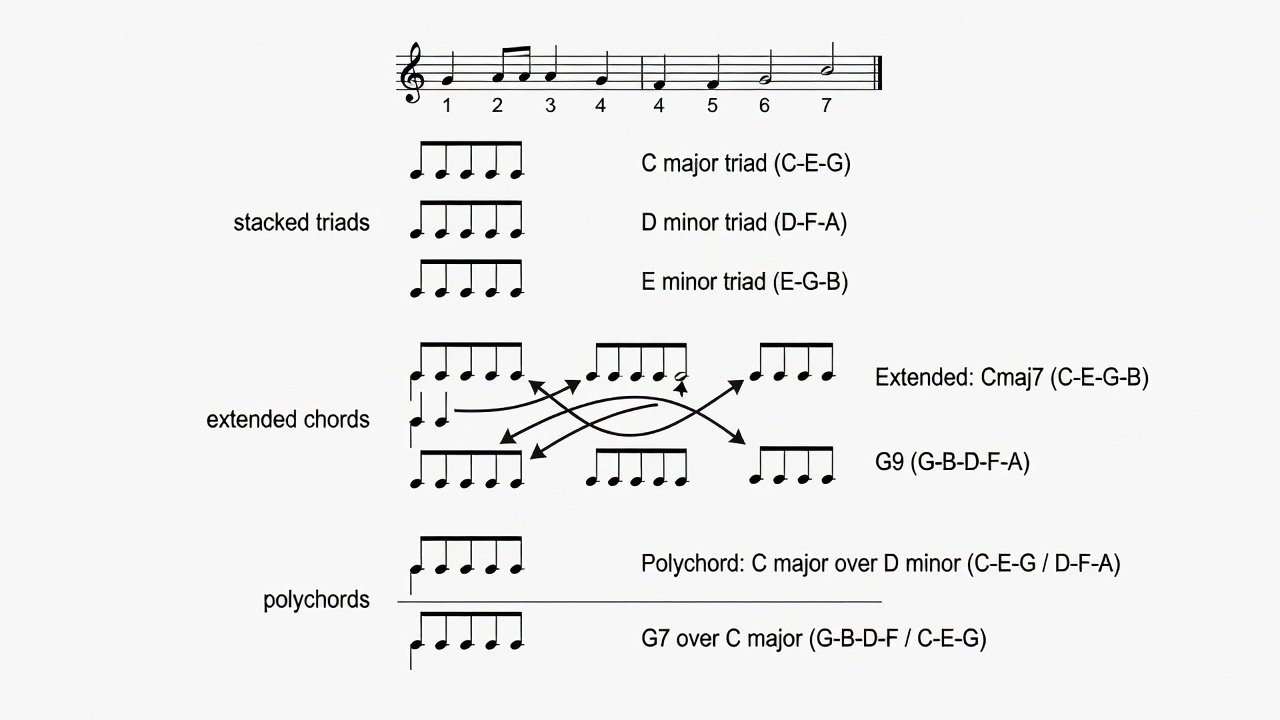
Start with major and minor scales as your foundation. These provide the notes for building chords. A triad consists of three notes: root, third, and fifth. For example, in C major, the C major triad uses C, E, and G. Modes such as Dorian or Mixolydian offer alternative colors while staying within the same key signature, allowing you to shift the emotional tone without changing the root note.
Voice leading ensures each note moves smoothly to the next chord, typically by step or common tones rather than large leaps. This principle prevents clashes and maintains flow. Good voice leading keeps the individual lines singable and logical. Music theory resources emphasize practicing voice leading in four-part writing before applying it to songs. Consider the range of each voice: soprano, alto, tenor, and bass should rarely cross, and contrary motion between outer voices creates pleasing independence.
Step-by-Step: Stacking Triads Over a Melody
1. Write your melody first using notes from a chosen scale. 2. Identify the root notes that support the melody tones, usually on strong beats. 3. Build triads below, ensuring the melody note sits on top as the highest voice. 4. Adjust inversions to keep voice leading tight, moving inner voices by no more than a third. 5. Listen for any parallel fifths or octaves and correct them by changing one inner note.
This method works well for verses where you want subtle support rather than dense textures. Try it first in a major key, then repeat the same melody in the relative minor to hear how the harmonic color changes dramatically.
Extending to Seventh and Ninth Chords
Once triads feel comfortable, add extensions. A dominant seventh chord adds the minor seventh, creating tension that resolves nicely. In songwriting, try replacing a simple V chord with V7 for more pull toward the tonic. Ninth chords introduce even more color by stacking another third above the seventh. For instance, layering a Cmaj9 over a melody can evoke warmth and sophistication, common in contemporary ballads.
Compare a basic C-F-G progression with a layered version: Cmaj7 - Fmaj9 - G13. The extended version feels fuller while still supporting the same melody line. Experiment with suspended chords and add9 voicings to create movement without changing the root progression.
Polychords for Advanced Depth
Polychords involve playing two distinct chords simultaneously, often in different registers. A common approach stacks a triad in the right hand over a different triad in the left. For example, an E minor triad over a C major triad creates a lush Cmaj9 sound without traditional extensions. This technique appears in modern tracks for cinematic effects. Maintain voice leading by aligning common tones between the two chords and resolving any dissonant intervals through careful inversion choices.
Further variations include quartal polychords built from stacked fourths or bitonal layers that deliberately clash for dramatic tension before resolving. Always test the combined sonority against your melody to ensure the top note remains clear.
Real Song Examples and Scale-Based Construction
Listen to how artists like The Beatles used layered harmonies in "Because," stacking vocal lines derived from the same scale. In modern pop, songs often employ polychord-like voicings for emotional peaks, as heard in certain tracks by artists such as Bon Iver or Radiohead. Construction tip: Choose a scale such as Dorian for a slightly darker feel, then build chords from each degree. Test different inversions to see how they color the melody. Another useful scale is the harmonic minor, which introduces a raised seventh that creates strong leading tones when layered over minor triads.
Simple vs. Layered Progressions: A Comparison
- Simple: I - IV - V (clear but basic emotional range, suitable for folk or children's songs)
- Layered: Imaj7 - IVadd9 - V7sus4 (richer timbre and tension, ideal for adult contemporary or cinematic music)
- Hybrid: I - IVadd9 - V with a brief polychord on the final beat (balances accessibility with sophistication)
The layered version sustains listener interest longer and supports more expressive melodies. Use the hybrid approach when writing for commercial formats where you need both familiarity and freshness.
Practical Exercises for Beginners
- Take a four-bar melody in C major and harmonize it first with triads, then with seventh chords. Record both versions and compare emotional impact.
- Experiment with voice leading by rewriting the inner voices to move stepwise while keeping the melody and bass fixed.
- Record a simple chord loop and layer a polychord on the final bar, noting how it changes the resolution.
- Analyze one of your favorite songs by identifying the scale and chord layers used; transcribe the top three voices for one verse.
- Transpose the same layered progression to three different keys and observe how register affects perceived warmth or brightness.
Common Mistakes to Avoid When Layering
One frequent error is overcrowding the mid-range, which muddies the mix. Leave space between chord tones and consider octave displacement. Another mistake is ignoring the melody's contour when choosing inversions; always prioritize the highest voice. Finally, avoid unresolved dissonances unless they serve a clear dramatic purpose.
FAQ: Avoiding Common Harmony Clashes
How do I prevent dissonant clashes when layering? Always check for voice leading issues and avoid stacking notes that form minor seconds unless intentional tension is desired.
Can I use these techniques in any genre? Yes, but adapt density—sparser layers suit folk while denser ones fit electronic or orchestral music.
What if my melody clashes with extended chords? Simplify the upper extensions or shift the melody note slightly within the scale to a more consonant tone.
How many layers are too many? Start with three voices and add a fourth only if each line remains independent and the texture stays transparent.
Should I layer everything or leave sections simple? Contrast is key; use dense layers only at emotional peaks and keep verses relatively sparse.
Conclusion
Mastering harmony layering transforms basic song ideas into compelling, emotionally deep tracks. Practice these techniques consistently, starting with triads and advancing to polychords, and your songwriting will gain professional polish and lasting impact. Return to your earlier exercises after a few weeks to hear how your ear has developed.


No comments yet. Be the first!