 Instrumentiverse

Introduction to Scale-Based Chord Harmonization
Harmonizing melodies transforms simple tunes into rich, emotional songs. By using scale degrees to build chords, songwriters create cohesive progressions that support the melody naturally. This approach draws from music theory principles and works across genres, helping intermediate creators move beyond basic triads.
Start with a short melodic phrase in a chosen key. Identify the root, third, and fifth notes from the scale to form each chord. This method ensures harmonies remain diatonic while allowing room for colorful extensions.
Selecting Scale Degrees for Root, Third, and Fifth
Every melody note can serve as a chord tone. Assign the root to the strongest beat, then layer the third and fifth above or below it. In C major, for example, a melody note on E becomes the third of a C major chord when paired with C and G.
- Root position: Place the melody note as the bass for stability.
- First inversion: Move the root up an octave to highlight the third in the melody.
- Second inversion: Use the fifth in the bass for a floating feel.
Practice by writing a four-bar phrase and testing each note against the scale’s triads.
Creating Diatonic Harmonies from Major and Minor Scales
Major scales produce bright, uplifting progressions using I, IV, and V chords. Minor scales offer darker tones through i, iv, and v. Extend these with seventh chords for added depth, such as adding the seventh scale degree to create dominant sevenths.
Experiment with borrowed chords from the parallel minor for subtle color shifts without leaving the key.
Step-by-Step Exercises for Beginners
- Choose a key and write a two-bar melody using only scale tones.
- Label each melody note with its scale degree.
- Build a triad under each note using the appropriate root, third, and fifth.
- Play the progression on piano or guitar and adjust inversions for smooth voice leading.
Repeat daily to internalize the process.
Real-World Examples from 2026 Pop Hits
Tracks like Nova Star’s “Echoes in the Rain” use I–vi–IV–V progressions to support soaring melodies. The verse melody emphasizes the third scale degree, which resolves beautifully over the vi chord. Similarly, the bridge in Luna Wave’s “Midnight Drift” borrows the flat-seventh chord for emotional lift.
Study these by transcribing short sections and rebuilding the chords yourself.
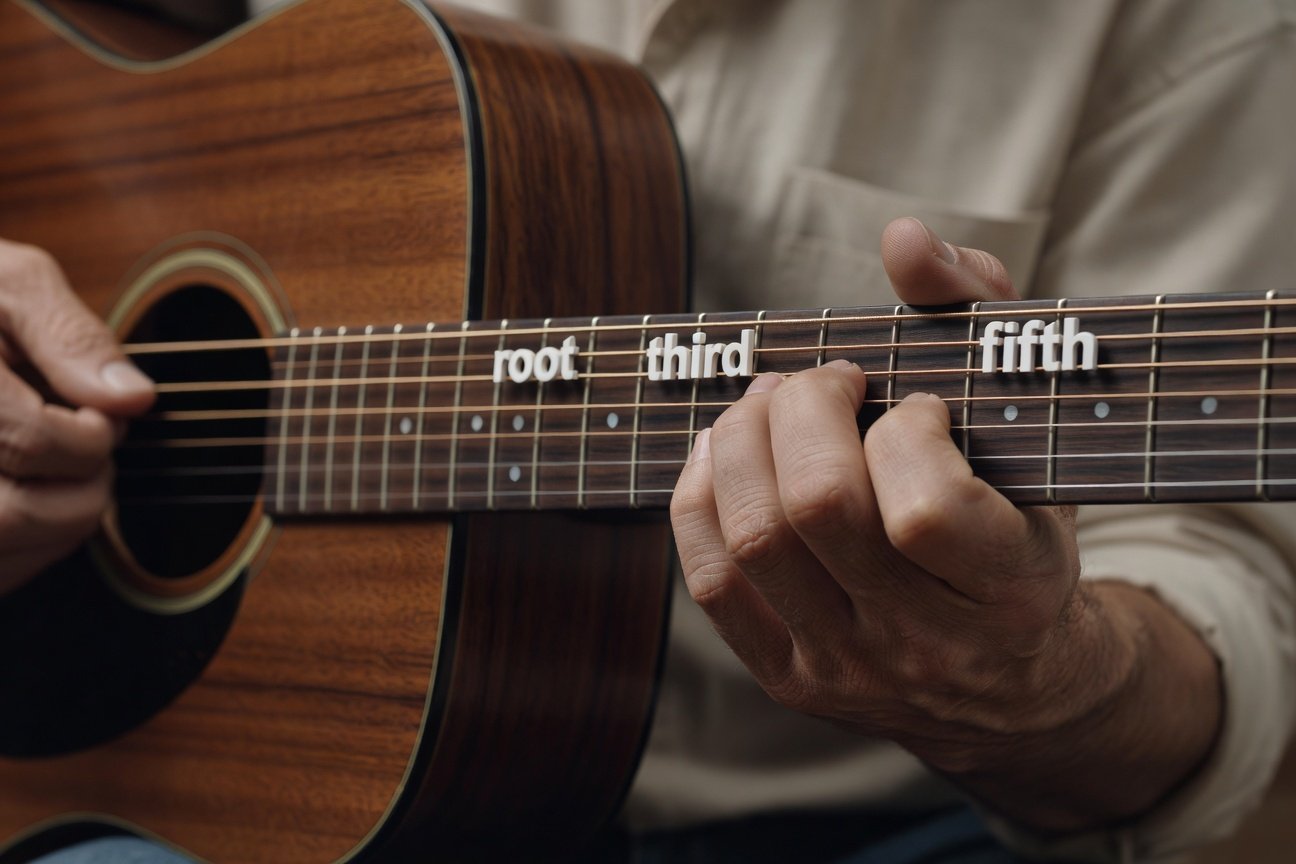
Guitar and Piano Voicings Compared
On guitar, open voicings spread notes across strings for resonance. Piano allows tighter clusters and easy inversion changes. Try playing the same progression in both block chords and broken arpeggios to hear the textural difference.
Block Chords vs. Arpeggios in Composition
Block chords deliver punchy rhythms ideal for choruses. Arpeggios create flowing movement suited to verses. Alternate between them to build dynamic contrast in your arrangements.
Practical Ear-Training Tips
Sing the root of each chord while the melody plays. Use apps to quiz scale-degree recognition. Record yourself playing progressions and identify which notes feel resolved or tense.
Conclusion
Scale-based chord harmonization gives songwriters reliable tools for crafting memorable music. Apply these techniques consistently and your compositions will gain professional polish and emotional depth.
FAQs
How do I avoid parallel fifths when harmonizing?
Move voices in contrary or oblique motion instead of parallel. Check intervals between the outer voices and adjust one note by a step.
What if my melody includes non-diatonic notes?
Treat chromatic tones as passing notes or use secondary dominants to resolve them smoothly back into the key.
Explore more in our beginner tutorials.


No comments yet. Be the first!