 Instrumentiverse
Introduction to Diminished Chords in Songwriting
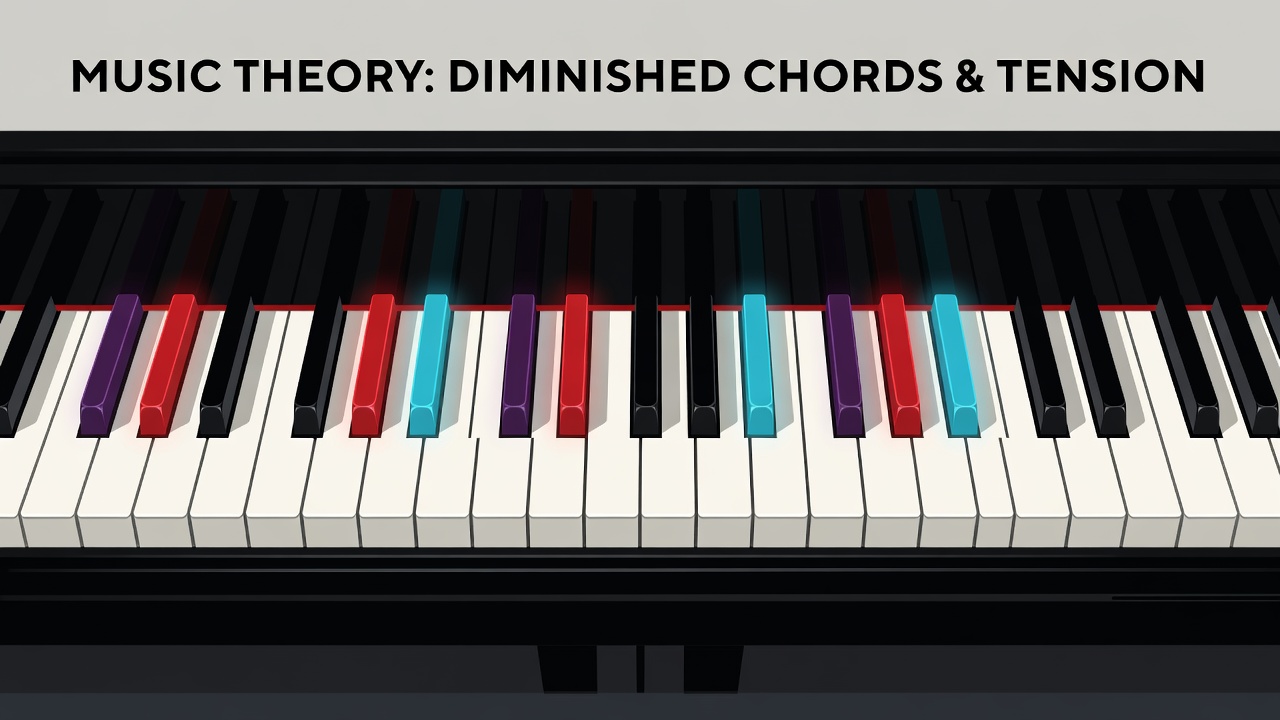
Diminished chords stand out as essential harmony tools for creating emotional tension and dramatic resolution in songwriting. Unlike the stable major and minor triads that form the backbone of most progressions, diminished chords introduce dissonance through their stacked minor thirds, producing an unstable sound that demands movement. This quality makes them invaluable for songwriters aiming to heighten suspense, underscore emotional peaks, or signal transitions between sections. Whether you are a beginner exploring beyond basic triads or an intermediate musician refining your harmonic vocabulary, understanding diminished chords opens new pathways for expressive compositions across genres like pop, jazz, classical, and rock.
In songwriting theory, these chords function primarily as passing or dominant substitutes, guiding the listener's ear toward resolution. Their tension arises from the tritone interval, often called the devil's interval in music history, which creates a strong pull toward consonance. By mastering their construction, placement, and voice leading, you can integrate them purposefully rather than randomly, resulting in more compelling song structures that feel both surprising and inevitable.
Constructing Diminished Chords from Scales
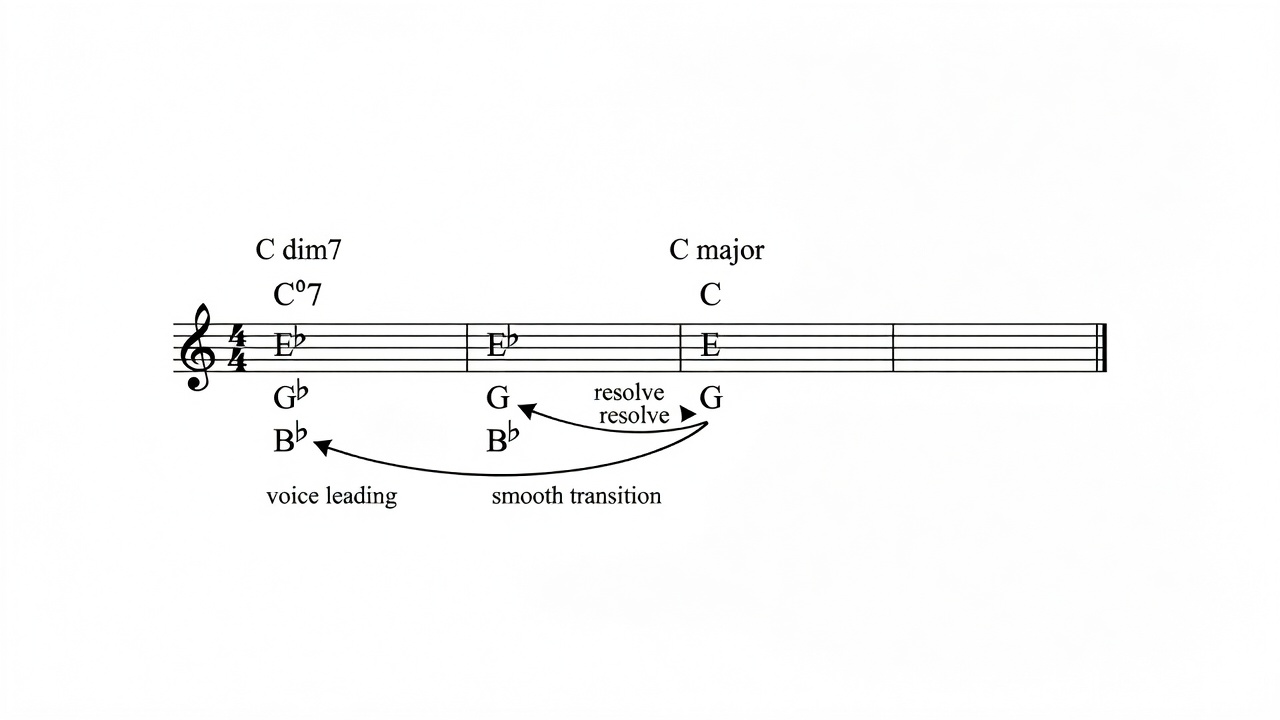
Building diminished chords begins with the simple interval of the minor third, repeated to form the chord. Start with a root note and add successive notes three semitones apart. For a C diminished triad, the notes are C, Eb, and Gb. Extending this to a seventh chord adds another minor third, yielding C, Eb, Gb, and Bbb (enharmonically A). This pattern derives naturally from scales, particularly the harmonic minor scale where the seventh degree produces a diminished triad or seventh chord.
Consider multiple keys for clarity. In G major, the F# diminished chord uses F#, A, and C. In A minor, the G# diminished triad is G#, B, and D. Songwriters benefit from practicing these constructions on the piano or guitar to internalize the symmetric structure. Fully diminished chords maintain equal minor third spacing throughout, allowing inversions to sound similar, while half-diminished versions introduce a minor seventh that softens the dissonance slightly. Experimenting with different roots helps reveal how these chords fit within diatonic harmony and chromatic alterations.
Expanded Comparison of Diminished Chord Types
- Diminished triad: Root plus two minor thirds (example: C-Eb-Gb) for basic tension in simple arrangements.
- Fully diminished seventh: Four notes with consistent minor thirds (example: C-Eb-Gb-Bbb) ideal for dramatic modulations.
- Half-diminished seventh: Includes a minor seventh (example: C-Eb-Gb-Bb) suited for jazz-infused ballads and smoother resolutions.
- Common inversions: First inversion places the third in the bass, altering the chord's color while preserving function.
Fully Diminished vs. Half-Diminished Variations
The distinction between fully diminished and half-diminished chords influences their emotional weight in songwriting. Fully diminished seventh chords feature two interlocking tritones, generating maximum instability and multiple resolution options due to their symmetry. They often appear in classical and cinematic contexts for intense builds. Half-diminished chords, by contrast, replace the diminished seventh with a minor seventh, creating a more melancholic or ambiguous tension frequently heard in jazz standards and modern indie tracks. Choosing between them depends on the desired intensity: use fully diminished for abrupt shifts and half-diminished for lingering unease that resolves gradually.
Common Placements in Chord Progressions
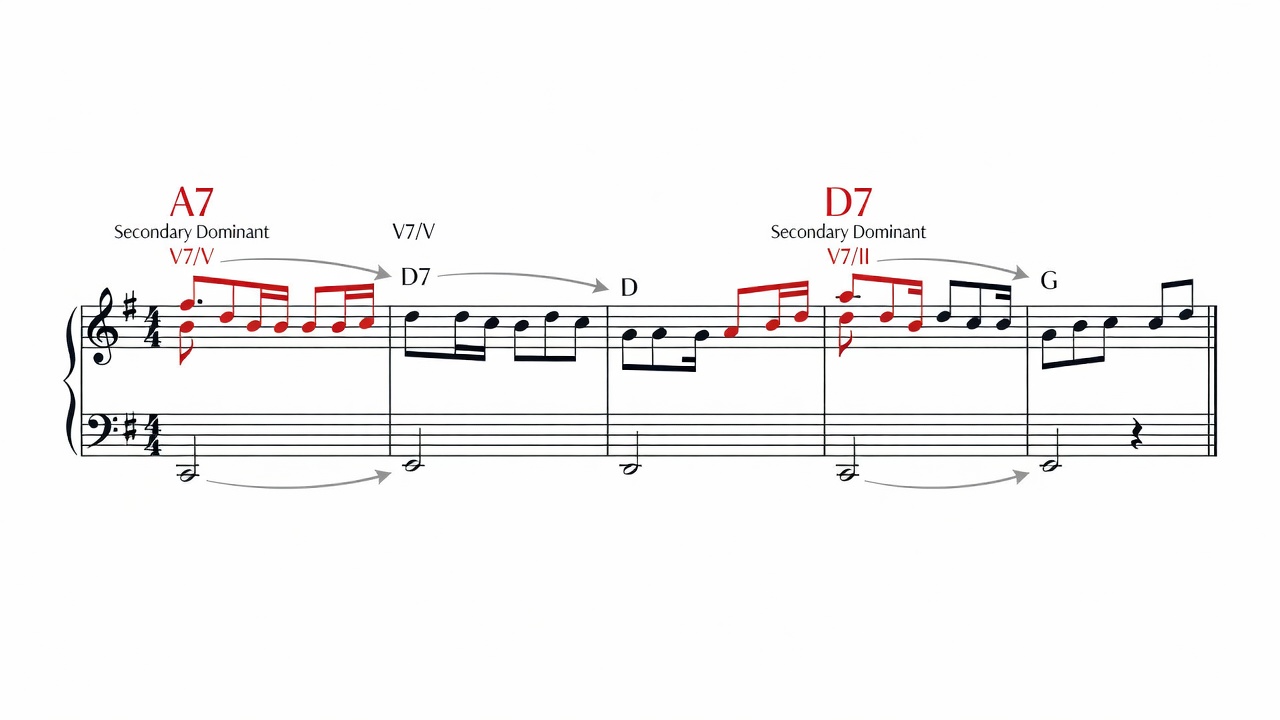
Diminished chords excel in predictable yet effective positions within progressions. The most straightforward application is the leading-tone diminished chord (vii° or vii°7) resolving directly to the tonic (I). In C major, B diminished moves to C major, with the leading tone B rising to C. They also substitute for dominant seventh chords, such as replacing A7 with C# diminished in a turnaround progression. Additional placements include chromatic passing chords between diatonic harmonies or as pivot points during key changes. For instance, a progression like C - C#dim - Dm - G7 - C demonstrates smooth voice leading while adding forward momentum. Songwriters should map these placements in their own work to avoid abrupt harmonic jumps.
Voice Leading Tips with Chord Examples
Strong voice leading ensures diminished chords enhance rather than disrupt the musical flow. Keep common tones when possible and resolve the leading tone upward by a semitone while moving other voices by step. In the example of Bdim7 resolving to Cmaj7, the voices move as follows: B to C, D to E, F to G, and Ab to G. Another practical example appears in a ii-V-I in C: insert D#dim7 between Dm7 and G7 for added pull before resolving to C. Practice contrary motion between outer voices to maintain clarity, and experiment with inversions to find the smoothest bass lines. Recording these examples on a digital audio workstation reveals how small adjustments dramatically affect perceived tension.
Real Song Case Studies
Analyzing existing songs provides concrete models for integration. "My Funny Valentine" employs half-diminished chords to evoke longing and vulnerability through subtle harmonic shifts. The Beatles used diminished chords in "Michelle" for transitional drama that heightens the verse's emotional arc. In film scoring, composers like John Williams frequently deploy fully diminished chords during suspenseful moments to signal impending resolution. Modern examples appear in tracks by artists such as Radiohead, where these chords underscore themes of uncertainty. Studying these cases teaches how diminished chords serve narrative purposes without overwhelming the melody.
Step-by-Step Integration Exercises
- Identify the seventh scale degree in your chosen key and construct both triad and seventh versions of the diminished chord.
- Insert the chord before the tonic in a basic four-chord loop and perform it repeatedly to hear the tension-release effect.
- Apply voice leading rules across multiple inversions and compare the results in different octaves.
- Substitute a diminished chord for a dominant in a standard blues progression and note the change in feel.
- Write a short eight-bar verse incorporating one diminished chord and refine based on playback feedback.
Common Mistakes to Avoid
Many songwriters overuse diminished chords, leading to listener fatigue or harmonic confusion. Place them only at moments of genuine emotional shift rather than every transition. Another pitfall involves poor voice leading that creates parallel fifths or awkward leaps; always check resolutions carefully. Beginners sometimes confuse diminished chords with minor chords, missing the crucial flattened fifth. Finally, neglecting inversions limits options for smooth bass movement, so practice all positions equally.
Frequently Asked Questions
How do I avoid overusing diminished chords?
Reserve them for one or two strategic moments per section, focusing on builds or modulations rather than filler.
Can diminished chords work in any genre?
They adapt across styles but shine most in jazz, classical, and cinematic music; use sparingly in straightforward pop or folk for maximum impact.
What instruments best demonstrate diminished chord tension?
Piano and guitar allow clear voicing practice, while strings or brass sections amplify the dramatic dissonance in arrangements.
Conclusion
Diminished chords transform songwriting by introducing deliberate tension that resolves with satisfying release. Through detailed study of their construction from scales, strategic placements, and refined voice leading techniques, you gain practical skills for richer harmonic palettes. Apply the exercises and case studies here to your own compositions, then explore further with authoritative resources from musictheory.net and BBC Bitesize music theory. Consistent practice will make these chords a natural part of your creative toolkit.

No comments yet. Be the first!