 Instrumentiverse
Introduction to Chord Functions in Music Theory
Understanding chord functions is one of the most practical ways for songwriters to move beyond random chord strumming and create progressions that feel intentional and emotionally resonant. In both major and minor keys, every chord serves a specific role that drives harmonic movement. This guide breaks down the core functions—tonic, dominant, and subdominant—with step-by-step examples drawn from classic and modern tracks, helping you build better songs without needing advanced theory degrees.
Chord functions describe how chords relate to the tonal center of a key. Rather than memorizing endless progressions, focusing on function lets you predict what sounds right and why certain changes evoke tension or resolution. Whether you are writing pop, rock, folk, or indie, these concepts apply universally.
The Three Primary Chord Functions
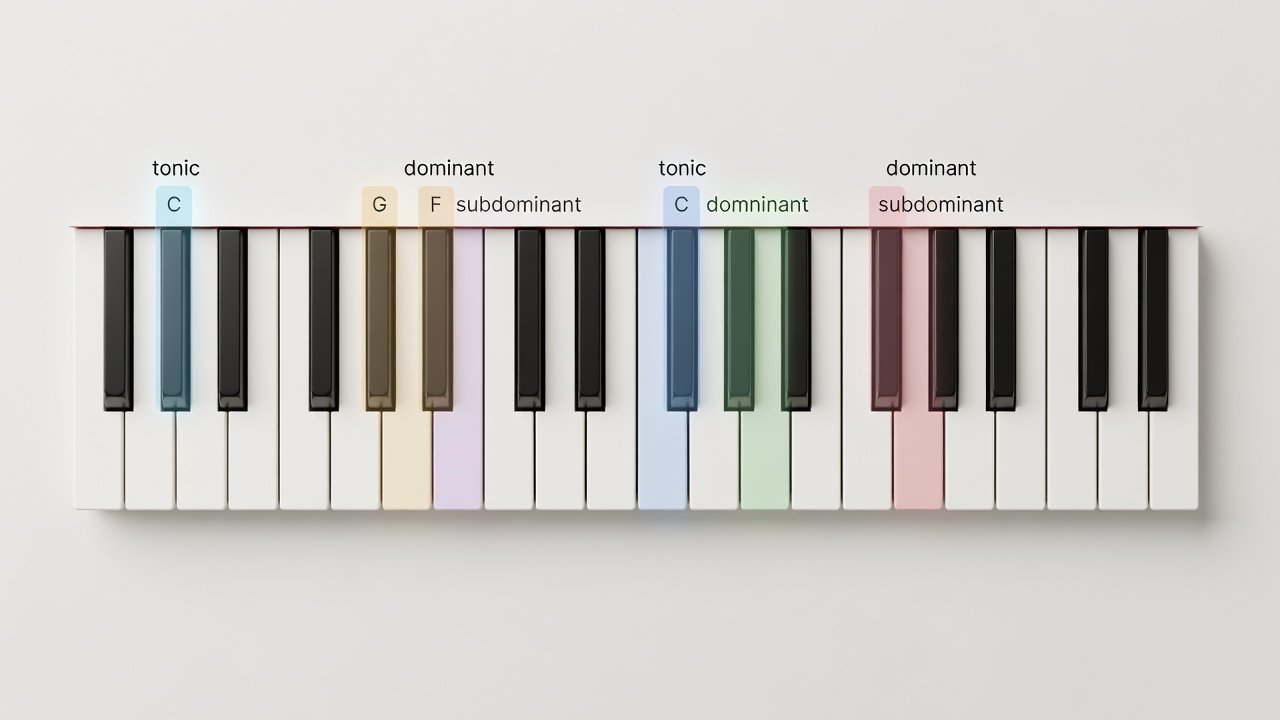
Every diatonic chord falls into one of three functional categories. The tonic provides stability and home base. The dominant creates tension that wants to resolve. The subdominant acts as a bridge, adding movement without full tension.
- Tonic (I or i): The most stable chord, built on the first scale degree. It feels like arrival or rest.
- Dominant (V or V7): Built on the fifth scale degree, it generates strong pull back to the tonic.
- Subdominant (IV or iv): Built on the fourth scale degree, it offers contrast and forward momentum.
In major keys these are typically I, IV, and V. In minor keys the functions remain similar but the quality changes—i, iv, and V (often with a raised leading tone).
Identifying Functions Within Scales
Start by writing out the scale for your chosen key. For C major the notes are C D E F G A B. The diatonic triads are C (I tonic), Dm (ii), Em (iii), F (IV subdominant), G (V dominant), Am (vi), and B diminished (vii°).
Notice how the ii, iii, and vi chords can substitute for primary functions. The vi often acts as a tonic substitute, while ii can function like a subdominant. This flexibility is key for songwriters seeking variety.
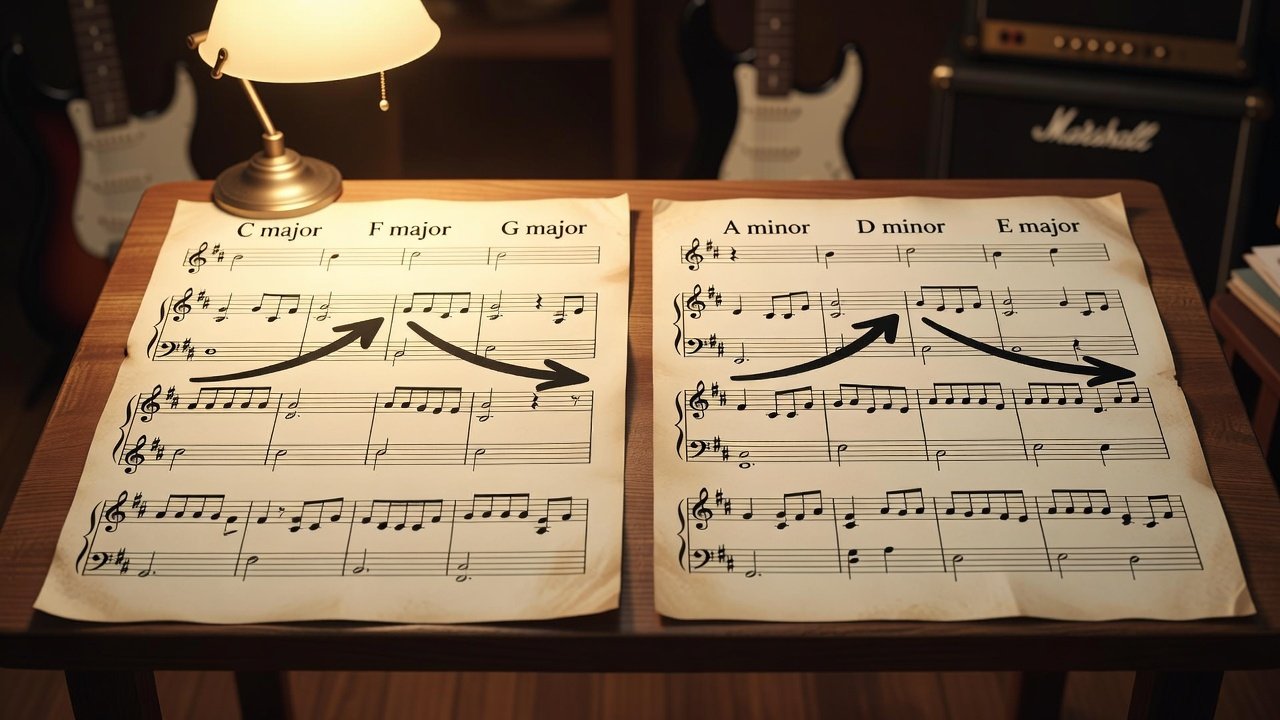
In A minor the natural minor scale gives Am (i tonic), B diminished (ii°), C (III), Dm (iv subdominant), Em (v), F (VI), and G (VII). However, the harmonic minor version raises the seventh to create a stronger dominant: E major or E7.
How Functions Drive Harmonic Movement
Progressions work because of the gravitational pull between functions. A typical cycle moves from tonic to subdominant to dominant and back to tonic. This creates a satisfying arc of departure and return.
Classic examples include the I–IV–V–I progression heard in countless blues and rock songs. The dominant V chord builds anticipation before resolving to I. Modern tracks often extend this with substitutions, such as replacing IV with ii for a smoother sound.
Practical Examples from Classic and Modern Tracks
The Beatles’ “Let It Be” uses a I–V–vi–IV progression in C major: C–G–Am–F. Here the vi acts as a tonic substitute while the IV provides subdominant color before returning home. The emotional lift comes from the movement between stable and contrasting functions.
In a minor key, Adele’s “Someone Like You” leans on i–III–VII–VI. The VII chord functions similarly to a dominant, creating longing before resolution. These patterns show how function, not just specific chords, shapes listener experience.
Chord Substitution Tips for Songwriters
Once you understand functions, substitutions become intuitive. Replace the tonic I with vi for a softer landing. Swap the subdominant IV for ii to add a jazzy flavor. Use the dominant V7 instead of V for extra tension.
Try these swaps in your next progression: start with I–IV–V–I, then experiment with vi–ii–V–I. The core functional movement stays intact while the surface changes dramatically. Always test by ear—functions guide you, but musical feel confirms the choice.
Common Pitfalls to Avoid
Many beginners overuse the dominant without enough contrast from subdominant chords, resulting in predictable or restless progressions. Another mistake is ignoring minor-key variations and forcing major-scale patterns onto minor songs. Finally, avoid jumping between unrelated keys without establishing a clear tonal center first.
Side-by-Side Comparison of Progressions
Basic major: I–IV–V–I (stable, uplifting)
Substituted major: I–ii–V–vi (smoother, slightly melancholic)
Basic minor: i–iv–V–i (dramatic tension and release)
Extended minor: i–VI–III–VII (epic, cinematic feel)
Compare these in the same key to hear how function choices alter mood.
Frequently Asked Questions
How do chord functions help when I’m stuck writing a progression?
Focus on function instead of specific chords. If your verse feels too static, insert a subdominant before the dominant to add movement.
Can I use these ideas in genres outside pop and rock?
Absolutely. Jazz, country, electronic, and even metal rely on the same functional relationships, though the voicings and rhythms differ.
Do I need to know every mode to use chord functions?
No. Start with major and minor keys. Modes become useful later when you want to color the same functions differently.
Conclusion
Mastering chord functions gives songwriters a reliable framework for creating progressions that connect emotionally with listeners. By recognizing the roles of tonic, dominant, and subdominant, you can compose with greater intention and fewer dead ends. Practice identifying functions in your favorite songs, then apply substitutions in your own writing. The result will be more cohesive, memorable music that resonates on a deeper level. For further reading, explore resources at musictheory.net and Wikipedia’s music theory overview.

No comments yet. Be the first!