 Instrumentiverse

Why Music Theory Transforms Beat Making in 2026
Many producers rely on intuition alone, but applying core music theory principles inside your DAW unlocks originality and emotional depth without slowing workflow. This guide shows exactly how to use piano rolls and MIDI editors to implement scales, progressions, and rhythmic structures in popular DAWs like Ableton Live, FL Studio, and Logic Pro. By the end you will understand modal interchange for tension, interval patterns for memorable hooks, and how to avoid harmonic pitfalls common in electronic genres. In 2026, with advanced MIDI tools and real-time visualization features available in most major DAWs, producers who blend theory with digital workflows consistently create more professional and emotionally resonant tracks than those who skip these foundations.
Whether you are a beginner looking to move past random note placement or an experienced beat maker seeking fresh inspiration, theory provides a reliable framework. It helps you make intentional choices about melody, harmony, and rhythm that translate directly into better listener engagement and commercial viability. The following sections break down each concept with concrete DAW examples you can apply immediately.
Choosing the Right Scale for Your Beat
Start every session by selecting a scale that matches the desired mood. Minor scales suit dark trap vibes while Dorian or Mixolydian modes add color to house tracks. In the piano roll, load a scale highlighting tool or manually draw notes from the chosen scale across two octaves. For instance, natural minor works well for introspective lo-fi, but switching to harmonic minor introduces a raised seventh that creates stronger resolution points ideal for climactic drops.
Practical example: For a lo-fi beat, select C minor. Draw a simple melody using only C, D, Eb, F, G, Ab, and Bb. This restriction instantly creates cohesion. Experiment by testing the same melody in C Dorian by raising the sixth degree to A natural; the brighter feel can transform a sleepy loop into something more upbeat for daytime house sets. Always audition your scale choice against reference tracks in the same genre to ensure cultural fit.
Building Chord Progressions That Hit Emotionally
Chord progressions form the backbone of any beat. Use the circle of fifths mentally or reference a quick chart while working in MIDI. A classic i–VI–III–VII progression in minor works across trap and lo-fi. To add variety, try substituting the III chord with a secondary dominant that leads back to the tonic for added pull.
Step-by-step in your DAW: 1) Create a four-bar loop. 2) Place root notes on beats 1 and 3. 3) Add thirds and fifths above each root. 4) Invert the second chord for smoother voice leading. Before-and-after: The raw loop feels static; after adding inversions and slight rhythmic offsets the progression breathes and supports vocal chops better. Compare this to a basic triadic approach by duplicating the loop and stripping inversions—the difference in perceived professionalism is immediate and often cited by mixing engineers as a key factor in radio-ready productions.
Using Modal Interchange for Tension and Release
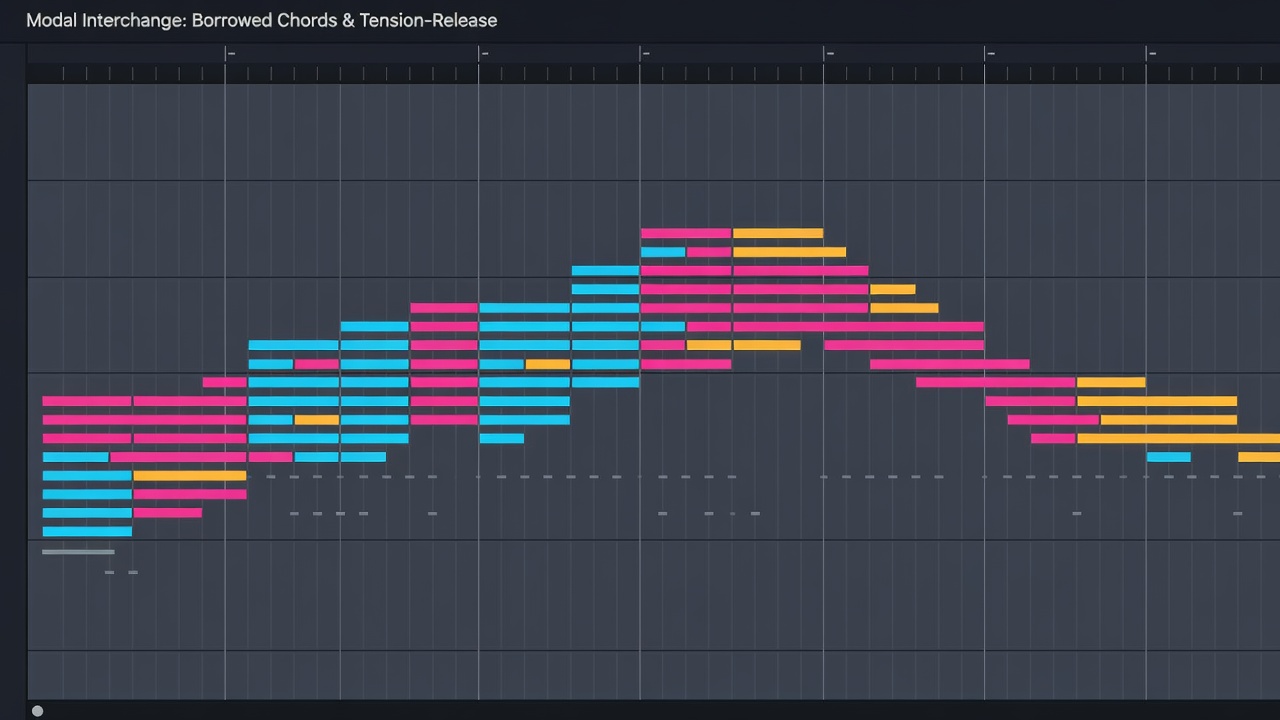
Modal interchange borrows chords from parallel modes to create surprise. Borrow the major IV chord from the parallel major while staying in minor for an uplifting lift. This technique appears in countless modern electronic hits because it introduces unexpected color without leaving the tonal center.
In the piano roll, duplicate your minor progression, change the fourth chord to major, and listen. The sudden brightness adds emotional contrast perfect for breakdowns in house tracks. Extend this idea by borrowing the bVI chord from the parallel Phrygian mode for darker, more exotic flavors suitable for trap intros. Practice identifying these borrowed chords by ear first, then notate them to reinforce the concept. Over time this becomes second nature and dramatically expands your harmonic vocabulary.
Creating Memorable Hooks with Interval Patterns
Hooks stick because of repeated interval shapes rather than random notes. Try the minor third followed by major second pattern heard in countless hits. Another effective pattern is the perfect fourth leap followed by a descending minor second, which creates both tension and immediate resolution.
Implementation tip: Draw the interval shape once, then transpose it across the scale using your DAW’s transpose function. This keeps the motif recognizable while staying diatonic. Layer a counter-melody that uses wider intervals such as the major sixth to add depth. Test your hook at different octaves and velocities; higher placements often cut through dense mixes better while lower versions provide warmth in breakdowns.
Rhythmic Structures That Support Theory
Rhythm and harmony work together. Layer syncopated hi-hats on off-beats to emphasize chord changes. Use triplet grids in the MIDI editor for lo-fi swing without losing harmonic clarity. Place snare rolls on the last two beats of a phrase to resolve tension built by borrowed chords. Consider adding ghost notes on the snare that follow the same scale degrees as your chord tones for subtle reinforcement.
Advanced tip: Program your kick pattern to land on chord roots during the first half of a phrase and then shift to fifths in the second half. This creates a sense of harmonic movement even when the actual chords remain static. Always reference the grid divisions available in your specific DAW to maintain precision while introducing human feel through slight timing offsets.
Avoiding Common Harmonic Pitfalls in Electronic Music
Overusing the same four chords leads to generic results. Instead, experiment with secondary dominants or substitute chords. Keep bass notes moving in contrary motion to the melody to maintain interest. Another frequent mistake is ignoring voice leading, which results in muddy low-end frequencies when multiple notes occupy the same register. Always check your arrangement in mono to catch these issues early.
Common pitfall: stacking too many extensions like ninths and elevenths without considering register. Start with triads and sevenths, then add color tones sparingly. Compare your progressions against reference tracks from established artists to calibrate what works in current market trends.
DAW-Specific Walkthroughs
Ableton Live
Use the Scale MIDI effect on a track, choose the mode, then draw chords in the piano roll. Record automation on the “Base” parameter for live modal shifts during arrangement. Combine this with the Chord MIDI effect to generate instant inversions and extensions. Export individual MIDI clips for each variation so you can quickly A/B test different harmonic choices in the session view.
FL Studio
Enable the scale snap in the piano roll, build progressions with the chord tool, then use the stamp tool to audition inversions quickly. The graph editor allows precise velocity and timing adjustments that reinforce theoretical decisions, such as emphasizing chord tones on strong beats. Save custom scale templates for frequent genres to speed up future sessions.
Logic Pro
Load the Alchemy synth with a scale-quantized arpeggiator and experiment with different modes while the project plays back. Use the Smart Tempo features to lock rhythmic patterns to your harmonic changes automatically. The Drummer track can be programmed to follow chord changes, providing instant rhythmic ideas that complement your theory choices.
Adapting Theory for Specific Genres: FAQ
How do I adapt these ideas for trap beats?
Focus on minor scales with flattened fifths for tension. Use short, punchy chord stabs on the off-beat and let 808 slides handle the bass movement. Incorporate diminished chords sparingly to heighten drama before a drop. Layer rapid hi-hat rolls that outline the scale degrees of your current chord to add rhythmic interest without clashing harmonically.
What works best in house music?
Extended progressions with seventh chords and modal interchange between major and minor keep dance floors engaged. Keep rhythmic complexity in the percussion rather than the harmony. Introduce suspended chords during build-ups to delay resolution until the main drop. Reference classic house tracks to see how simple diatonic movement still drives energy when paired with strong groove.
Can lo-fi benefit from strict theory rules?
Yes. Apply jazz-inspired ii–V–I turnarounds but quantize them loosely and add vinyl crackle. The theory gives the chords purpose while the lo-fi aesthetic softens any rigidity. Use added sixth chords and minor-major seventh voicings for nostalgic warmth. Limit chord durations to two beats each to maintain the characteristic laid-back flow.
Conclusion
Integrating music theory into your DAW workflow does not require slowing down. With piano-roll scale tools, quick chord inversions, and targeted modal borrowing, your beats gain emotional impact and originality. Start with one scale and one borrowed chord in your next session and build from there. The results will speak for themselves in both listener engagement and your own creative satisfaction. For deeper study, visit authoritative resources such as musictheory.net and soundonsound.com. Additional production insights are available at ableton.com.
No comments yet. Be the first!