 Instrumentiverse
Introduction: Untangling Oversimplified Music Narratives
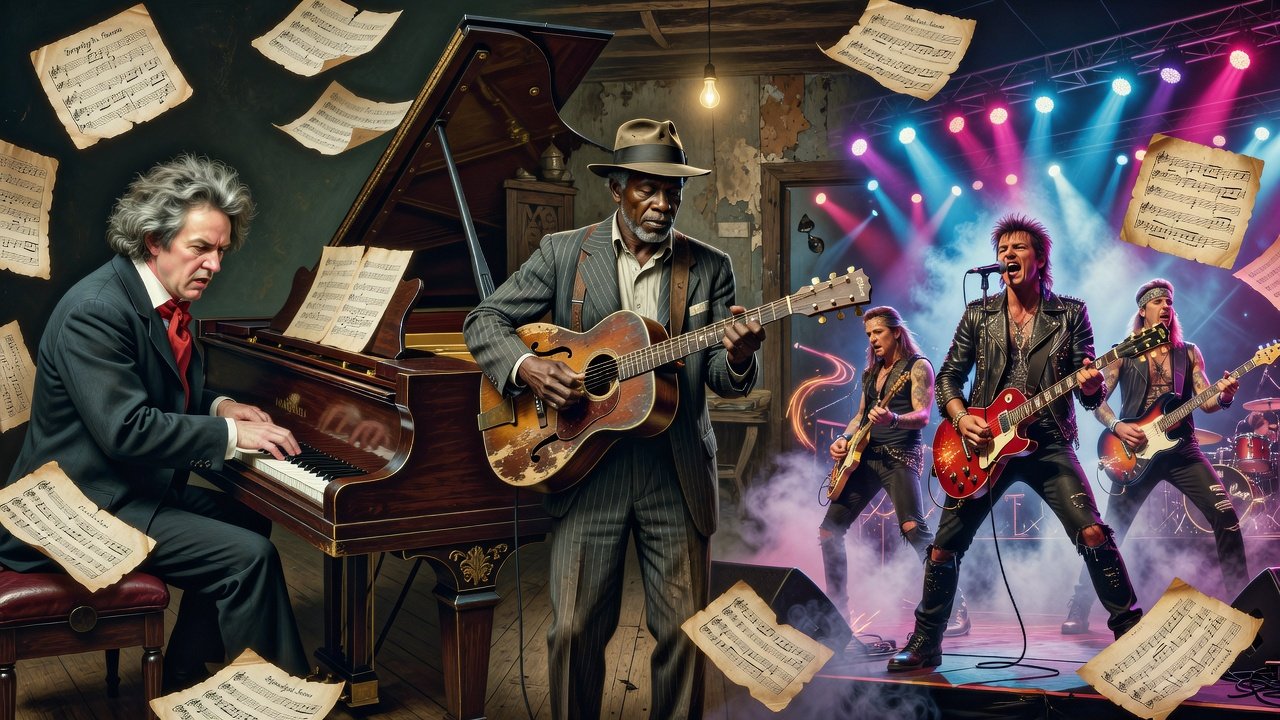
Music history is frequently packaged into tidy linear stories that suggest classical composers directly inspired blues musicians who in turn birthed rock and roll, which then evolved seamlessly into the electrifying sounds of the 1980s. These narratives provide comforting simplicity yet often crumble when examined against primary evidence. They overlook rich cultural exchanges, independent parallel developments, and significant timeline distortions that shaped actual musical evolution. This article systematically examines three persistent misconceptions: the myth that improvisation originated solely as a blues invention, the tendency to overstate classical borrowings in rock music, and the compression of historical timelines into misleading chains of influence. Concrete examples from composers such as Beethoven, Mozart, and Haydn are placed alongside 80s figures including Eddie Van Halen, Freddie Mercury, and Alex Lifeson to demonstrate how oversimplified accounts ignore nuance. Readers seeking clarity beyond basic overviews will find side-by-side track comparisons, verification methods using primary sources, and expanded context on how 80s music both referenced and diverged from earlier traditions.
The Myth of Improvisation as Solely a Blues Invention
A widespread claim asserts that improvisation entered popular music exclusively through blues and African American musical traditions of the early twentieth century. Historical records demonstrate otherwise. European classical musicians engaged in sophisticated improvisation long before blues emerged as a recognized genre. During the Baroque period, performers routinely added ornaments and altered melodic lines in real time according to established conventions. In the Classical era proper, soloists in concertos were expected to create their own cadenzas, often extending or reinterpreting the written material on the spot.
Mozart provides a clear illustration. His piano concertos contain numerous contemporary accounts of performances in which he spontaneously varied passages, added runs, or extended developments beyond the notated score. Letters from his father Leopold and reviews in Viennese newspapers from the 1780s describe audiences responding enthusiastically to these improvisatory displays. Beethoven’s early reputation rested partly on his legendary improvisations at the keyboard; accounts from the 1790s note that he could develop a simple theme into extended fantasies lasting many minutes. These documented practices predate the crystallization of blues by more than a century.
Blues musicians undeniably developed distinctive improvisatory techniques, including microtonal bends, call-and-response phrasing, and emotional intensity derived from specific social contexts. Yet framing improvisation as an isolated blues invention erases the earlier classical precedent. Active listening reveals structural parallels: Mozart’s spontaneous cadenzas share logical phrasing patterns with B.B. King’s guitar lines, even though the cultural frameworks and harmonic languages differ. Expanding the lens further, Romantic-era pianists such as Liszt continued the tradition of public improvisation well into the nineteenth century, overlapping with the earliest documented blues expressions in the American South.
Overstated Classical Borrowings in Rock Music
Rock historiography frequently spotlights supposed direct quotations from classical repertoire, especially when discussing technically demanding 80s guitar work. While isolated borrowings occurred, they are routinely exaggerated or misattributed. Queen’s “Bohemian Rhapsody,” released in 1975 but remaining a touchstone throughout the 1980s, incorporates operatic textures and multi-sectional form. Freddie Mercury’s primary influences, however, stemmed from music-hall traditions, his own vocal training, and eclectic pop listening rather than sustained classical study. The operatic section draws more from theatrical presentation than from specific symphonic models.
Eddie Van Halen’s two-handed tapping technique, showcased in “Eruption” from the 1978 album Van Halen, is sometimes traced to classical violin exercises or piano études. Van Halen himself repeatedly cited blues-rock players such as Eric Clapton and Jimmy Page as formative influences, alongside exposure to jazz fusion. A direct comparison of “Eruption” with any Bach partita reveals surface similarities in rapid scalar motion but fundamental differences in articulation, rhythm, and intent. The rock track prioritizes aggressive tone and showmanship over contrapuntal clarity.
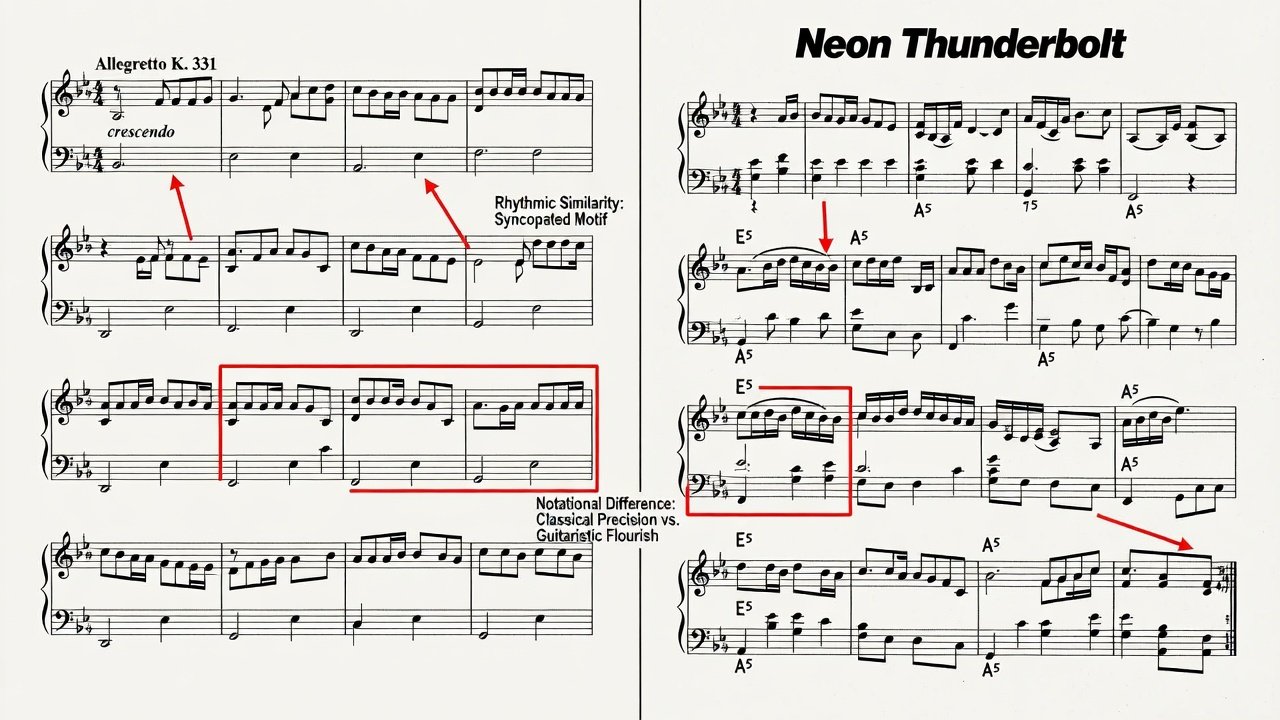
Another instructive case is Rush’s “La Villa Strangiato” from 1978, which incorporates classical-inspired motifs and changes of meter. Guitarist Alex Lifeson studied formal music theory later in his career, yet the piece’s core language remains progressive rock built upon blues foundations. Side-by-side listening of the track against a Mozart string quartet highlights how shared elements of thematic development are transformed by electric instrumentation, amplification, and improvisatory solo sections. Such comparisons demonstrate that classical influence often arrived indirectly through music education or film scores rather than through deliberate quotation.
Timeline Distortions in Classical-to-Rock Evolution
Popular accounts frequently compress centuries into a single causal chain: Classical era leads to Romantic composers, who influence blues, which produces rock, which culminates in 80s excess. This compression distorts chronology and erases independent technological and cultural factors. The electric guitar’s widespread adoption in the 1950s resulted primarily from advances in amplification technology developed for jazz and country musicians, not from any classical lineage. Similarly, the rhythmic emphasis of early rock and roll drew heavily from rhythm-and-blues and gospel traditions that evolved separately from European art music.
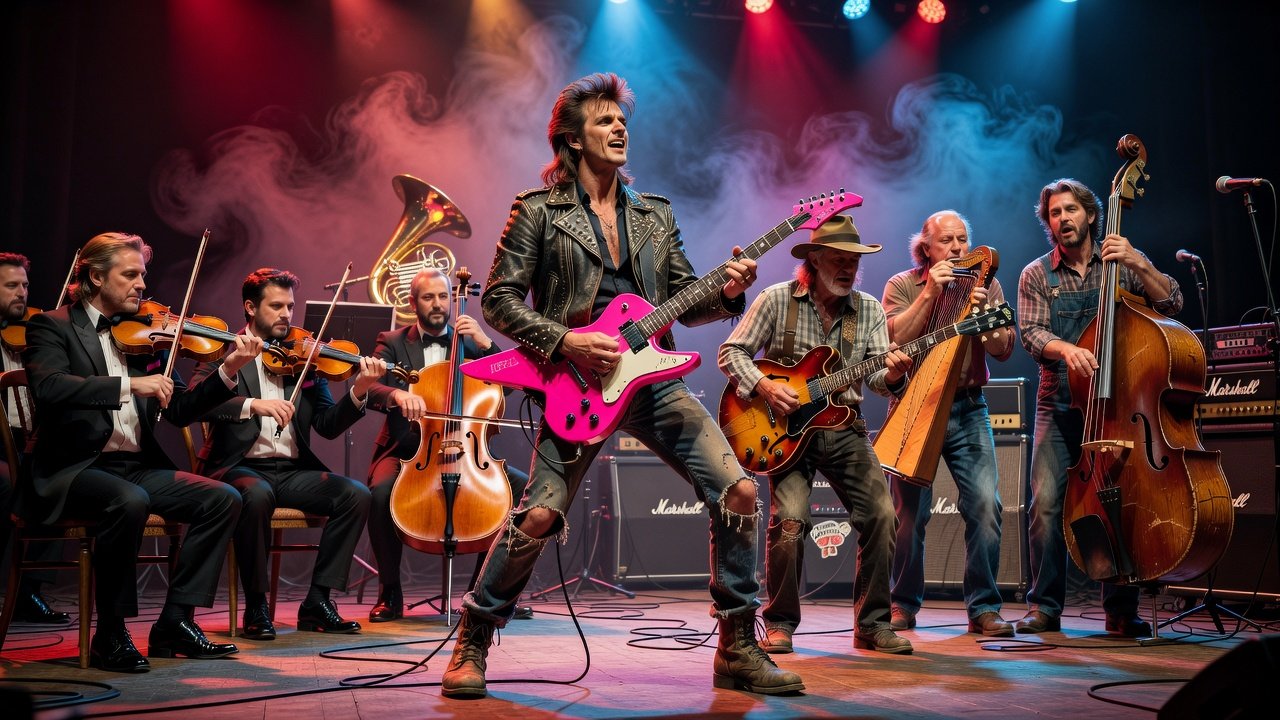
By the 1980s, bands referencing classical forms did so selectively. Iron Maiden incorporated minor-key melodies reminiscent of Baroque counterpoint in tracks such as “Phantom of the Opera,” yet these gestures arrived through the filter of progressive rock and heavy metal rather than direct study of Bach manuscripts. Timeline distortions become evident when writers assert that 80s shred guitarists routinely studied Beethoven; archival interviews show most developed technique through repeated listening to records and peer mentorship. Correcting these distortions requires aligning release dates of influential recordings with documented statements from the musicians themselves.
Practical Tips for Verifying Music History Claims
Listeners can apply straightforward verification methods to separate documented influence from myth:
- Consult original album liner notes and contemporary magazine interviews rather than later documentaries that may impose retrospective narratives.
- Compare published scores or reliable transcriptions of both classical and rock pieces, noting exact melodic or harmonic overlap versus coincidental resemblance.
- Listen to period-appropriate recordings; modern remasters sometimes alter timbre and balance in ways that obscure original context.
- Cross-reference multiple scholarly sources. Authoritative references such as Britannica supply balanced historical framing, while the Library of Congress offers digitized primary documents including sheet music and oral histories.
- Map timelines explicitly by listing release years of key works alongside the birth and active periods of claimed influences.
- Attend live performances or watch archival footage to observe how improvisation actually functions in different genres.
These steps quickly expose when a supposed direct lineage is in fact a loose cultural parallel shaped by multiple intermediaries.
Conclusion
Musical evolution proceeds through intricate webs of influence, technological change, and cultural exchange rather than tidy linear progressions. Recognizing where common myths oversimplify reality deepens appreciation for both the disciplined structures of Classical-era composition and the innovative energy of 80s rock. Applying the verification techniques outlined above equips curious listeners to construct a more accurate and rewarding understanding of music history.
FAQ
How can I determine whether a rock song genuinely borrows from classical music?
Begin with published scores or authoritative transcriptions, then listen for shared melodic contour, harmonic progression, or formal structure while noting differences in rhythm, timbre, and performance practice that indicate transformation rather than direct quotation.
Were most 80s guitarists formally trained in classical technique?
The majority developed their skills through blues, rock, and self-directed practice; a smaller number pursued later theory study, but few maintained active classical performance careers before entering rock.
Why do simplified historical timelines remain popular?
They create compelling narratives for articles, videos, and educational materials, even when primary sources reveal messier, more interesting patterns of influence and independent innovation.
No comments yet. Be the first!