 Instrumentiverse
Introduction to the Musical Timeline
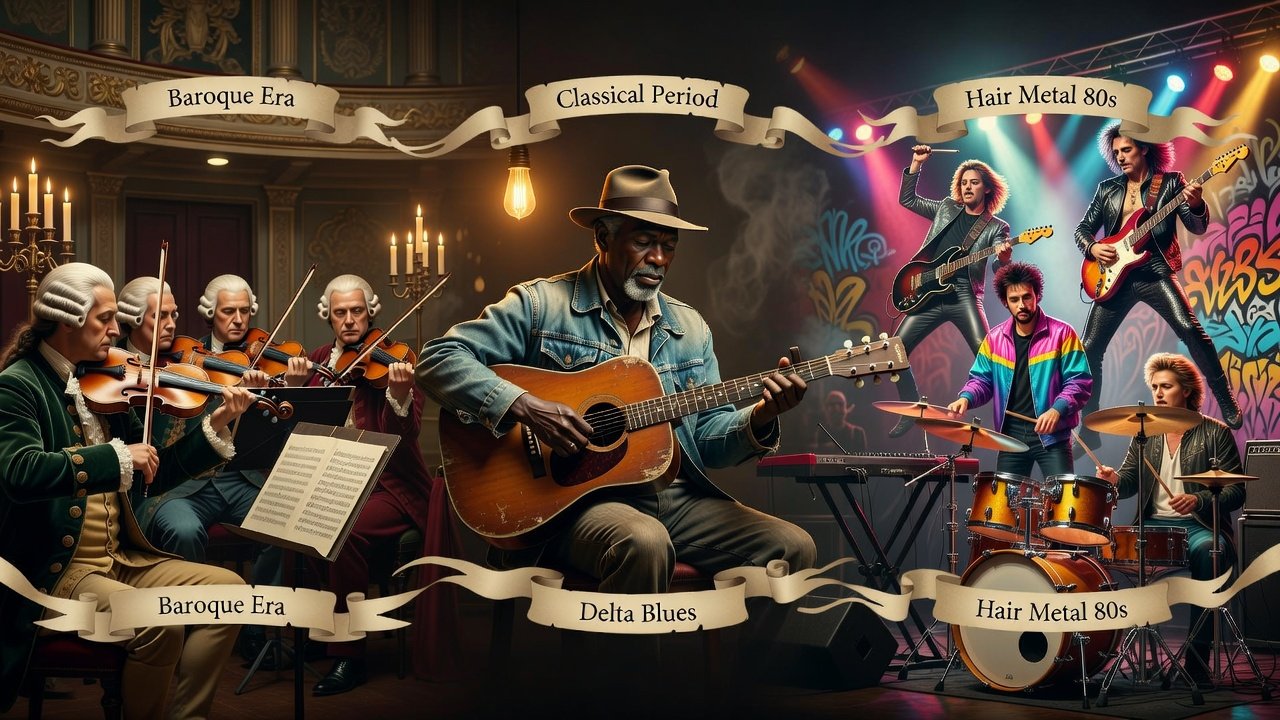
The evolution of rock music is not a straight line but a rich tapestry woven from centuries of innovation. Classical compositions from the 18th and 19th centuries laid foundational structures that influenced blues guitarists in the early 20th century, which in turn shaped the explosive sound of 80s rock. This article traces those links with concrete examples, technique comparisons, and practical listening guides to help enthusiasts understand music history timelines and how they continue to influence contemporary artists. By examining specific compositions and artist journeys, readers can gain a deeper appreciation for the cross-era influences that define rock's dynamic sound.
The Classical Era: Foundations of Structure and Emotion
The Classical Era (roughly 1750–1820) emphasized balance, clarity, and emotional expression through forms like sonatas and symphonies. Composers such as Mozart and Haydn developed harmonic progressions and thematic development that later genres adapted. These elements provided a blueprint for storytelling through melody and tension-release cycles that would later echo in blues and rock. For instance, the use of sonata form—with its exposition, development, and recapitulation—created narrative arcs in music that parallel the emotional journeys in blues songs. Key techniques included arpeggiated chords and contrapuntal lines, which emphasized individual voices within a larger whole. Government archives like the Library of Congress preserve early manuscripts showing how these structures influenced later popular forms. Expanding on this, the era's focus on diatonic scales and clear cadences offered a harmonic language that blues musicians would borrow and bend to fit their expressive needs.
Blues Origins and Borrowed Classical Elements
Blues emerged in the American South around the late 19th century, blending African rhythms with European harmonic ideas. Guitarists like Robert Johnson incorporated classical-inspired fingerpicking patterns and chord voicings derived from European traditions. The 12-bar blues form echoes classical phrasing with its call-and-response structure, where a musical phrase is stated and then answered, much like the dialogue in a classical concerto. Additional influences appear in the use of passing tones and chromatic approaches that classical composers employed for tension. Practical examples include how Delta blues players adapted classical guitar methods to steel-string acoustics, creating the raw yet structured sound that defined early recordings. This period also saw the integration of European instruments like the guitar itself, which carried over fingering techniques from classical training.
Technique Transitions: Classical to Blues Guitar
Classical guitar techniques such as tremolo picking and precise articulation directly informed blues players. B.B. King adapted these for expressive single-note lines, while later rockers amplified them with distortion. This evolution allowed for greater emotional intensity on electric instruments. To practice these transitions, begin by learning a simple classical arpeggio exercise from a piece like Fernando Sor's studies, then apply the same right-hand patterns to a blues shuffle in E. Comparisons show that classical vibrato—achieved through finger pressure—evolved into the wider bends and slides characteristic of blues guitar. Avoid common mistakes like overusing distortion early; instead, focus on clean tone to master the foundational articulation first.

80s Rock: Synthesizing the Influences
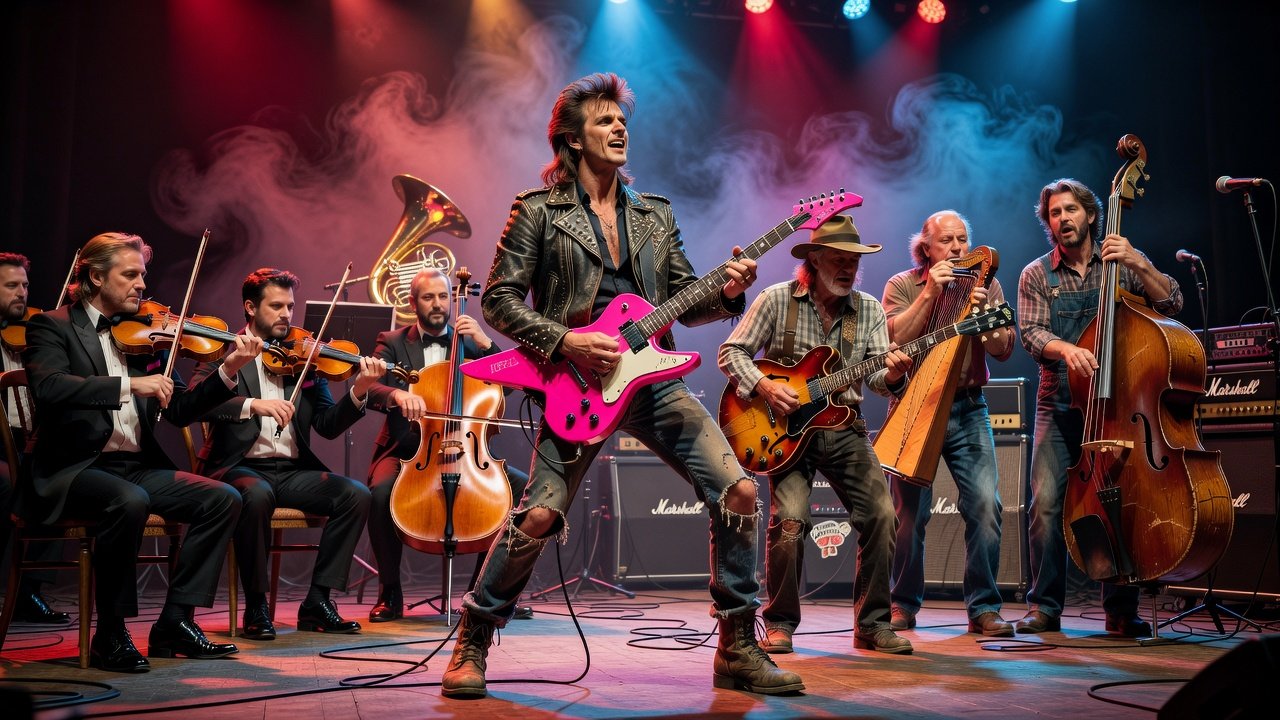
The 1980s saw rock bands revive these threads with virtuoso displays. Eddie Van Halen fused blues bends with classical speed-picking, while Yngwie Malmsteen explicitly channeled Baroque counterpoint into neoclassical metal. Bands like Guns N' Roses blended raw blues energy with structured arrangements reminiscent of classical dynamics. Case study one: Van Halen's "Eruption" showcases classical arpeggios layered over blues foundations, creating the era's signature sound. Case study two: Malmsteen's album "Rising Force" draws directly from Paganini violin caprices, translating violin techniques to guitar with lightning-fast scalar runs. Case study three: Stevie Ray Vaughan's blues revival in the 80s incorporated classical phrasing in tracks like "Texas Flood," bridging eras for a new generation. These syntheses helped define modern interpretations of rock guitar by encouraging players to study multiple genres.
How These Eras Shaped Modern Interpretations
Today, musicians continue to draw from this lineage in fusion genres and educational curricula. For example, contemporary guitarists often cite classical training as essential for developing speed and accuracy before exploring blues improvisation. This cross-pollination has led to practical advice such as dedicating practice time to scales from all three eras—major/minor from classical, pentatonic from blues, and extended modes from 80s rock. Comparisons of gear also reveal evolutions, though technique remains the core connector across timelines.
Listening Recommendations
- Classical: Mozart's Piano Sonata No. 11 for thematic development and clear harmonic resolution.
- Blues: Robert Johnson's "Cross Road Blues" to hear early adaptations of classical chord structures.
- 80s Rock: Van Halen's "1984" album for technique fusion examples including tapping and arpeggios.
- Cross-era comparison: Listen to B.B. King's "The Thrill Is Gone" alongside a Haydn string quartet to identify shared phrasing.
- Additional: Explore Malmsteen's "Trilogy" suite for direct classical-rock links and compare with original Baroque sources.
These recommendations are available on major streaming services and provide a structured path to auditory learning.
Common Misconceptions: FAQ
Did blues directly copy classical music?
No. Blues adapted select harmonic and structural ideas while prioritizing African rhythmic roots and improvisation, resulting in a unique hybrid rather than direct replication.
Was 80s rock purely blues-based?
While heavily influenced by blues, it also incorporated classical virtuosity and new wave experimentation for a distinct hybrid that pushed boundaries further.
How can I trace these influences today?
Study timelines from authoritative sources such as Britannica's music history entries and practice technique crossovers on your instrument through daily exercises.
Are there specific compositions that best illustrate the links?
Yes, pieces like Bach's inventions for counterpoint, Blind Lemon Jefferson's blues recordings for adaptation, and Iron Maiden's 80s tracks for rock synthesis provide clear auditory evidence.
Conclusion
Understanding these connections enriches appreciation of rock's depth. From classical forms to blues expression and 80s innovation, the lineage continues to inspire modern music across genres and generations.
No comments yet. Be the first!