 Instrumentiverse
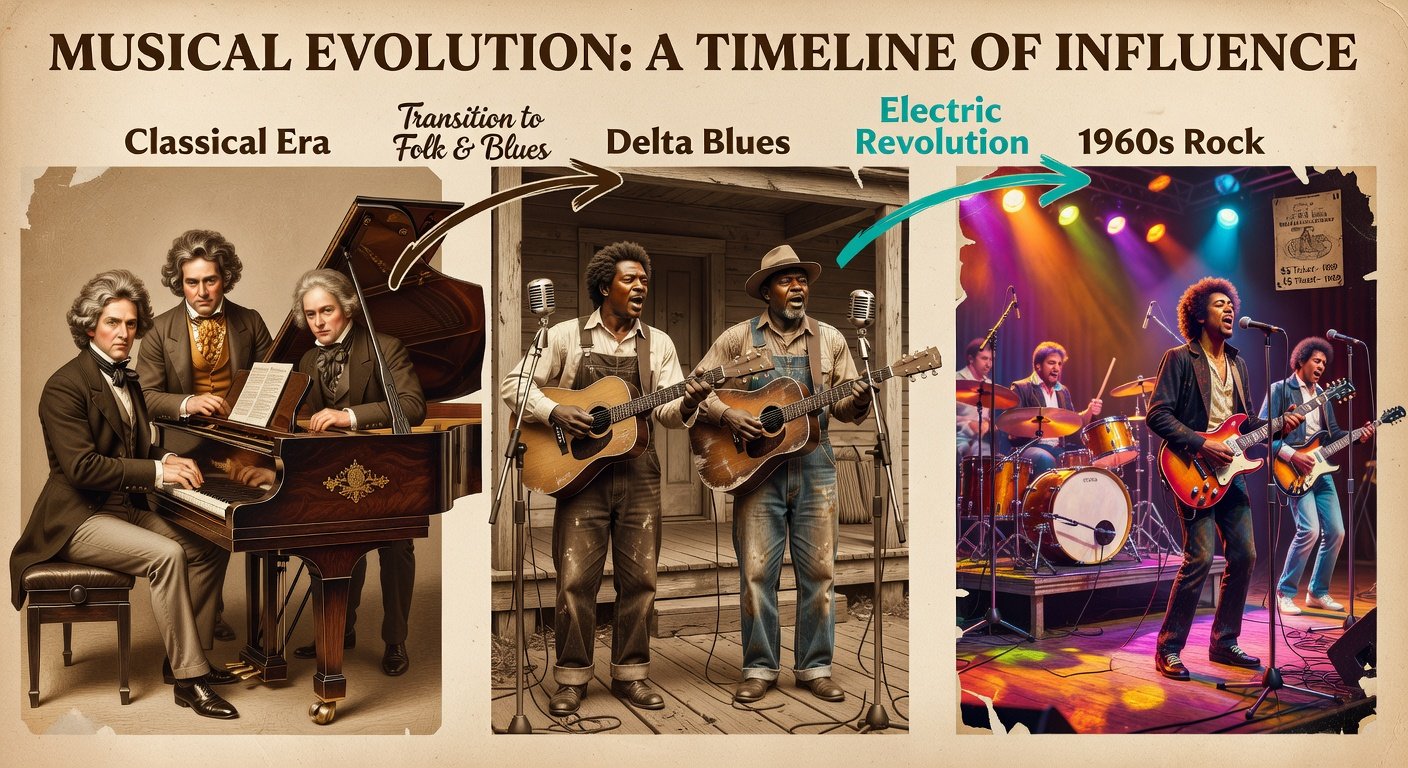
Introduction to Tracing Music History Influences
Understanding the evolution of music from the Classical era to rock requires systematic research methods rather than surface-level listening. In 2026, enthusiasts can leverage digitized archives and analytical frameworks to map influences across centuries. This guide delivers actionable steps for sourcing materials, dissecting compositional techniques, and comparing audio examples from pivotal tracks. Serious researchers move beyond basic timelines to examine how harmonic ideas, rhythmic patterns, and performance practices migrate between genres and continents.
The Classical era established foundational structures like sonata form and balanced orchestration that later resurfaced in unexpected ways within blues progressions and rock arrangements. Blues, rooted in African American work songs and spirituals, introduced call-and-response patterns and expressive pitch bending that became central to rock guitar techniques. By tracing these threads methodically, researchers uncover direct lineages rather than vague similarities.
Step-by-Step Process for Music History Research
Follow this numbered sequence to build a rigorous research project. Each step includes practical implementation details and examples to avoid common dead ends.
- Define your research scope by selecting specific eras and genres, such as the Classical period (1750-1820), early blues (late 1800s), and rock evolution (1950s onward). Narrow further by choosing one composer or artist per era to keep the project manageable while still revealing cross-influences.
- Identify key composers and artists: Bach and Mozart for Classical foundations, Robert Johnson for blues, and Chuck Berry or The Beatles for rock transitions. Create a master list of 8-12 representative works across eras before diving into recordings.
- Gather primary sources before secondary interpretations. Locate original manuscripts, field recordings, and contemporaneous reviews rather than relying on modern textbooks that may simplify complex developments.
- Analyze harmonic structures, rhythmic patterns, and melodic motifs in scores and recordings. Use software to slow down tracks and isolate instrumental lines for closer inspection.
- Map influences through timelines and cross-genre comparisons. Build visual diagrams showing how a single motif travels from a symphony to a blues standard and then into a rock hit.
- Document findings with audio annotations and citation tools for ongoing study. Maintain a digital notebook that links directly to archive files and timestamped audio clips.
Sourcing Primary Archives and Historical Documents
Primary sources form the backbone of credible research. Start with institutional repositories that offer free or low-barrier access to manuscripts, recordings, and correspondence. The Library of Congress maintains extensive collections of early American blues field recordings and Classical scores. Supplement these with university libraries and national archives for European Classical manuscripts.
Researchers should prioritize items such as original 78 rpm discs from the 1920s blues era and handwritten orchestral parts from the Classical period. Cross-reference physical collections with digital platforms like IMSLP for public-domain scores. Always verify provenance to avoid modern alterations in editions. Additional strong starting points include the Smithsonian collections for American music artifacts and the British Library for European manuscripts that document the transition from court music to public concert traditions.
Practical tip: Create a research log that records the exact shelf mark or digital identifier for every source consulted. This prevents wasted time retracing steps when expanding the project later. When visiting physical archives, request high-resolution scans of fragile documents to study at home.
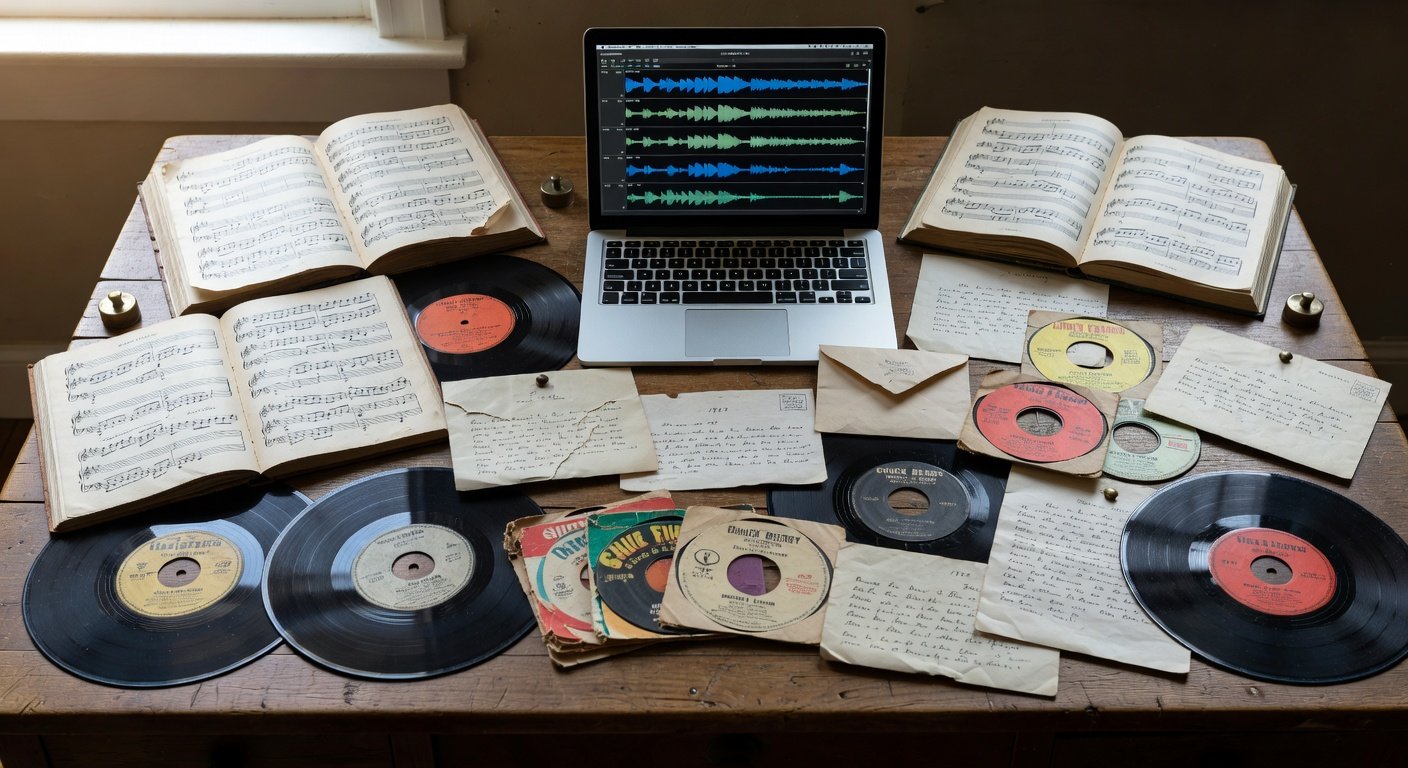
Analyzing Compositional Techniques Across Eras
Break down techniques by examining form, harmony, and orchestration. Classical works often feature sonata form and balanced phrases, while blues relies on 12-bar structures and blue notes. Rock evolution incorporates these elements with amplified distortion and backbeat rhythms. Use spectrogram tools to visualize frequency ranges in recordings of Mozart symphonies versus Muddy Waters tracks.
For deeper insight, compare the use of chromatic passing tones in a Haydn quartet with their appearance as bent guitar notes in early rock and roll. Listen repeatedly to isolated sections: focus first on bass lines, then inner voices, and finally the melodic surface. Note how Classical development sections that explore keys reappear as extended guitar solos built on the same harmonic movement in 1960s rock.
Real-World Case Studies of Influence Mapping
Consider the path from Classical counterpoint to rock guitar solos. Beethoven’s motivic development directly informs riff construction in Led Zeppelin songs, where short repeated phrases undergo variation much like the Eroica Symphony. Researchers can map specific intervals and their transformations across both works.
Another case traces African American work songs through Delta blues into Chuck Berry’s guitar techniques, which shaped early rock and roll. The call-and-response pattern in “Rollin’ and Tumblin’” echoes directly in Berry’s “Johnny B. Goode” introduction. A third example links Mozart’s use of the Mannheim rocket theme to the ascending guitar figures in The Beatles’ “A Hard Day’s Night,” demonstrating how orchestral gestures survived into popular music through recorded media.
Comparison Table of Musical Eras
| Era | Key Characteristics | Signature Techniques | Example Tracks |
|---|---|---|---|
| Classical | Structured forms, orchestral balance | Sonata-allegro, counterpoint | Mozart Symphony No. 40 |
| Blues Origins | Call-and-response, improvisation | 12-bar blues, bent notes | Robert Johnson “Cross Road Blues” |
| Rock Evolution | Amplification, verse-chorus | Power chords, backbeats | The Beatles “Johnny B. Goode” cover |
Conclusion
Effective music history research combines rigorous sourcing with analytical depth. By following these methods, researchers build lasting connections between eras and genres that withstand scholarly scrutiny.
FAQ: Common Research Pitfalls and Digital Tools
What are frequent mistakes when starting research? Relying solely on Wikipedia or modern covers instead of primary recordings leads to distorted influence chains. Always begin with contemporaneous sources.
Which digital tools support ongoing study? Audacity for waveform analysis, MuseScore for score annotation, and Discogs for release metadata provide robust support. The Britannica Music portal offers reliable era overviews as a secondary reference.
How can researchers avoid copyright issues with audio examples? Stick to public-domain recordings or obtain permissions for any material still under protection. Many archives now provide Creative Commons licensed excerpts specifically for educational use.
What is the best way to organize large amounts of audio data? Use tagging systems in media players and maintain a spreadsheet linking timestamps to specific analytical observations for quick retrieval during writing.
No comments yet. Be the first!