 Instrumentiverse
Introduction to Classical Influences on Early Blues
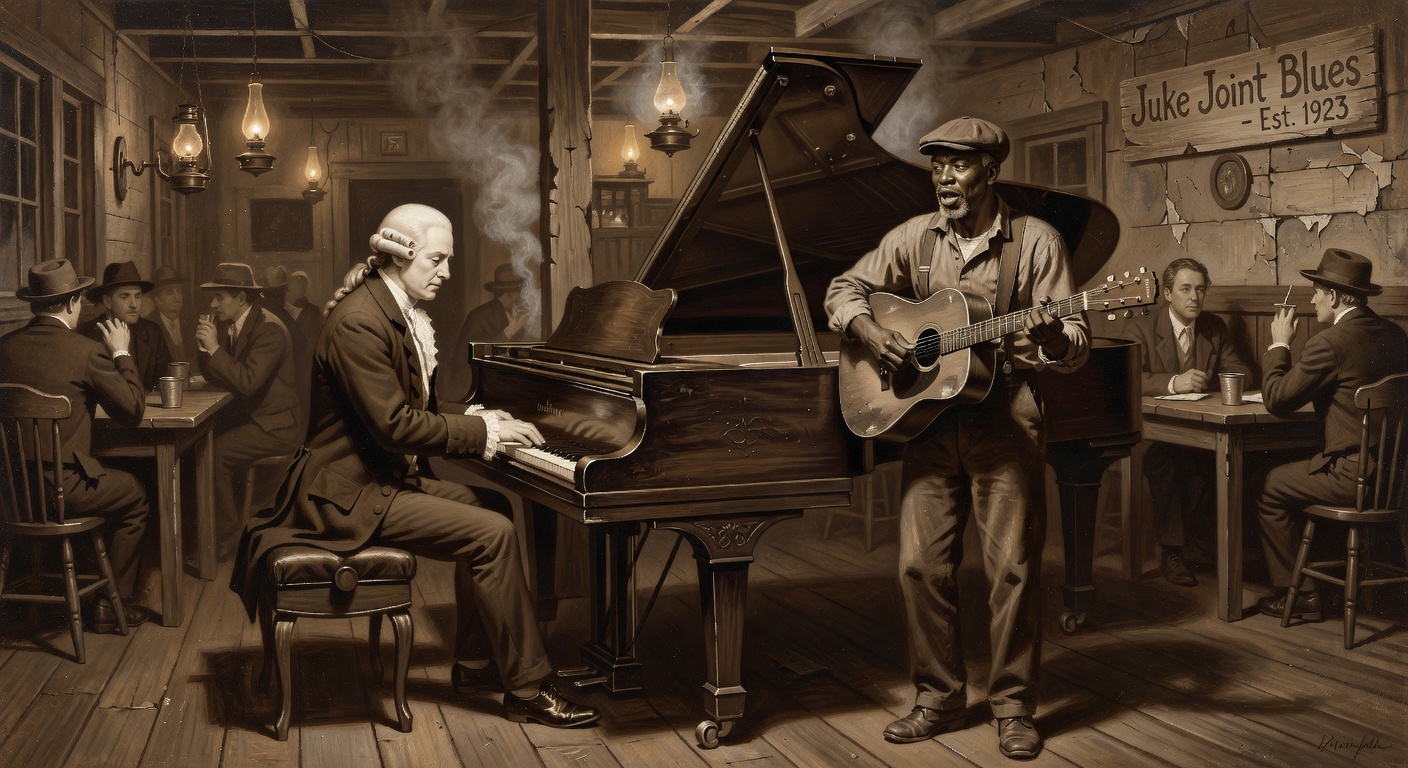
Early blues music, emerging in the late 19th and early 20th centuries in the American South, carries subtle yet profound connections to classical music traditions from Europe. While blues is often celebrated for its African American roots, certain compositional methods from the classical era found their way into these foundational sounds through cultural exchanges, printed sheet music, and traveling performers. This case study examines three specific classical works and their direct parallels in early blues compositions, focusing on harmonic structures, phrasing methods, and instrumentation examples. The goal is to provide music historians, students, and players with concrete examples that illuminate these overlooked bridges between traditions.
Understanding these links helps appreciate the cross-cultural exchanges that defined blues origins. Audio references and side-by-side comparisons will illustrate these techniques clearly, allowing readers to apply insights in practice or study.
Historical Context of Classical and Blues Interactions
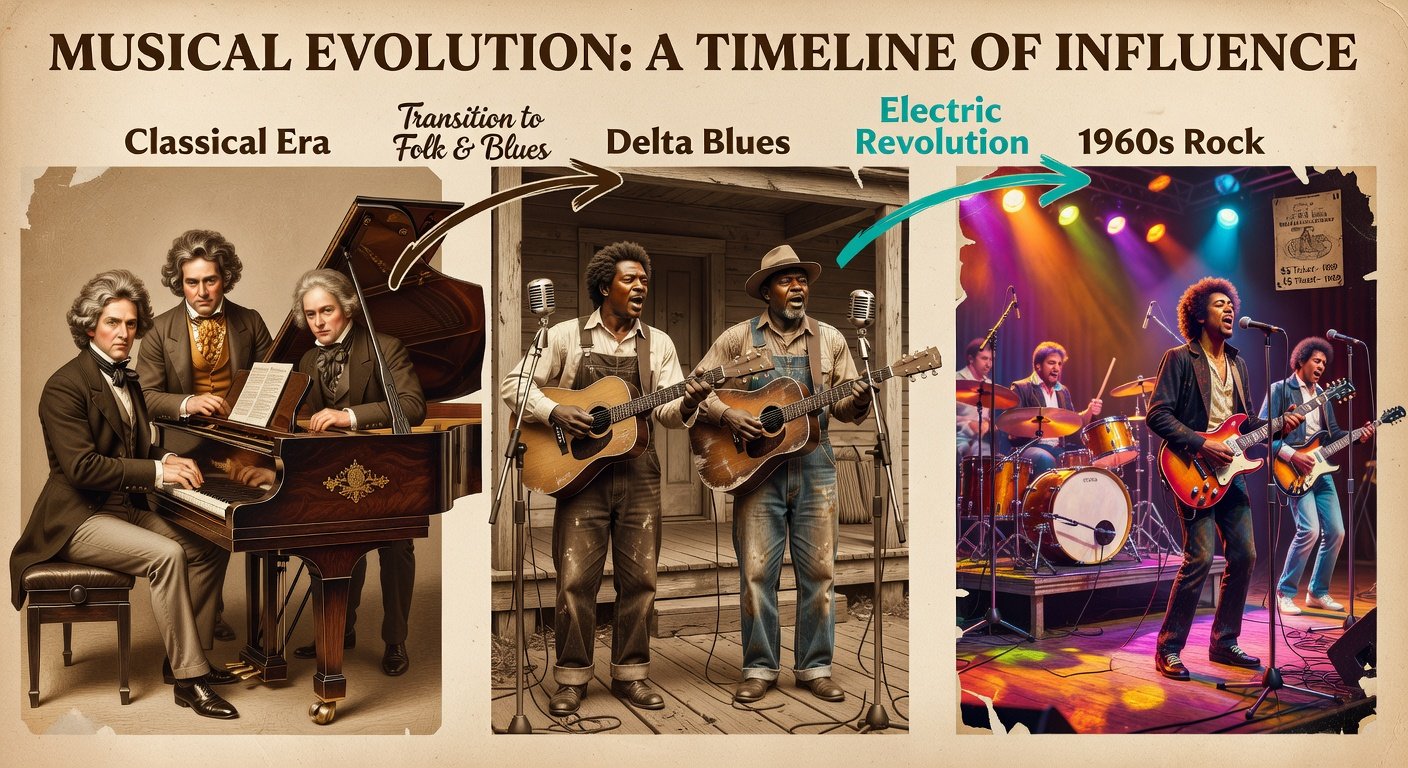
During the period when blues was forming, many African American musicians encountered European classical music through church hymnals, minstrel shows, and formal education opportunities in urban centers. Composers like Bach, Mozart, and Beethoven were staples in printed collections that circulated widely. These encounters allowed for the adaptation of techniques such as structured chord progressions and dynamic phrasing into vernacular forms. Rather than direct imitation, the process involved selective borrowing that enriched the emotional expressiveness of blues while maintaining its distinctive rhythmic drive.
Primary sources from the era, including oral histories preserved by institutions like the Library of Congress, document how musicians integrated these elements. This context sets the stage for examining specific case studies without overstating influence.
Case Study 1: Bach and Harmonic Structures
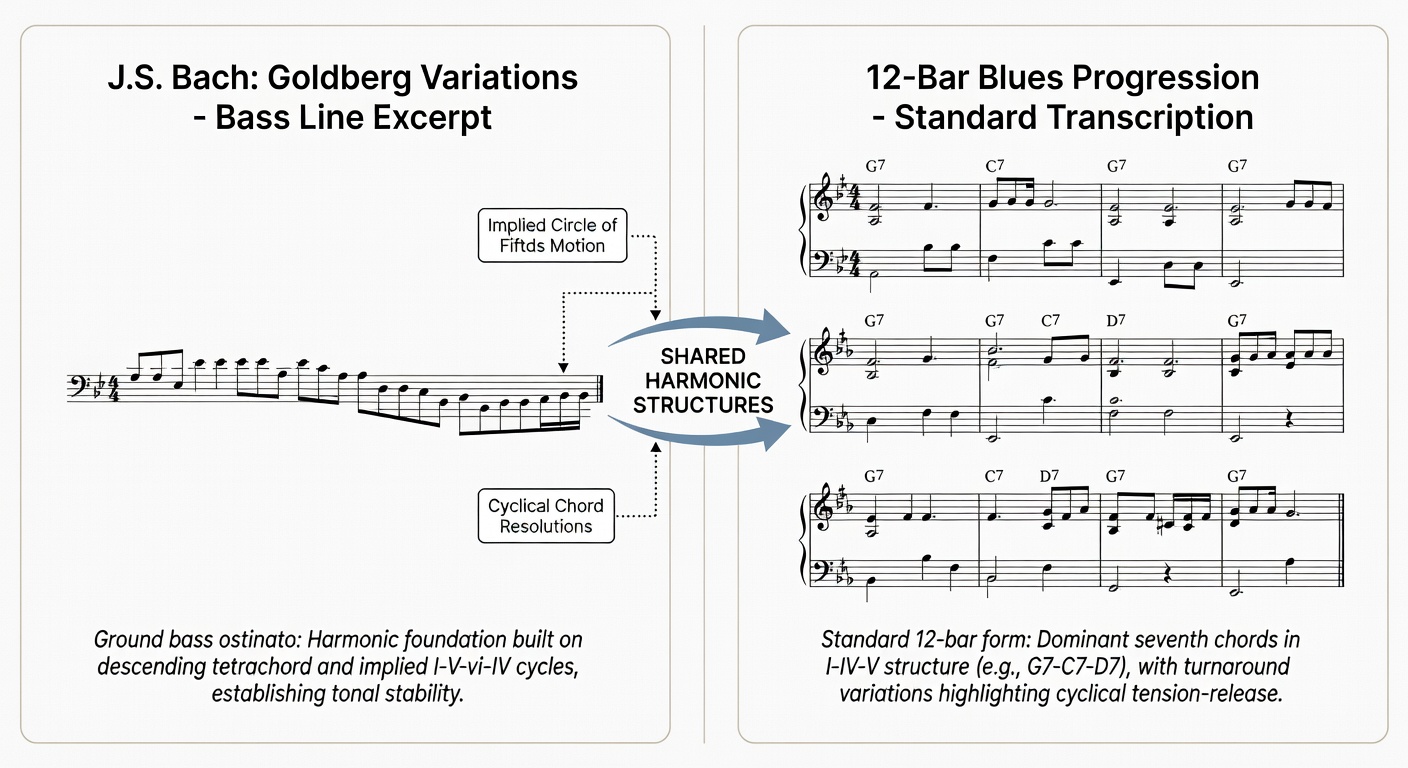
One prominent example comes from Johann Sebastian Bach's Goldberg Variations (1741). The variations employ intricate chord progressions and bass lines that echo in the 12-bar blues form. Early blues artists adapted similar descending bass patterns and tension-release cycles, particularly in the I-IV-V chord framework common to blues. In Bach's work, the ground bass provides a repeating foundation that allows melodic variation above it, a principle mirrored in blues where guitarists maintain a steady bass while improvising upper lines.
Compare this to W.C. Handy's "St. Louis Blues" (1914). The harmonic movement in the song's verse mirrors Bach's use of sustained tensions resolved through dominant chords. Side-by-side listening reveals how blues guitarists like Blind Lemon Jefferson replicated these bass walks using open tunings. Practical detail includes tuning the guitar to open G and practicing the descending bass run from the tonic through the subdominant, which creates the same sense of forward motion found in Baroque continuo parts.
Expanding on Harmonic Borrowing
Further analysis shows that the use of secondary dominants in Bach appears in modified form in early blues turnarounds. Musicians would resolve phrases with a quick V-I movement that echoes classical cadences. This technique helped define the emotional arc of verses dealing with hardship and resilience.
Case Study 2: Mozart and Phrasing Methods
Phrasing in classical music often involves call-and-response patterns, a technique refined in the works of Wolfgang Amadeus Mozart. In Mozart's Piano Concerto No. 21 (1785), the dialogue between soloist and orchestra creates dynamic exchanges that build narrative tension. This directly parallels the vocal-instrumental interplay in early blues recordings by artists such as Ma Rainey.
Blues singers employed elongated phrases with bends and slides, adapting Mozart's rhythmic variations to express emotional depth. Practical steps for modern learners include breaking down a Mozart phrase into short motifs, then replicating the pattern on harmonica or guitar by alternating between sung lines and instrumental answers. This method trains timing and space, essential for authentic blues delivery.
Examples from Rainey's "See See Rider Blues" demonstrate how the vocal line poses a question answered by the band, much like Mozart's thematic development. Listeners can practice by recording themselves and analyzing the balance of call and response.
Case Study 3: Beethoven and Instrumentation
The third case draws from Ludwig van Beethoven's Pathétique Sonata (1798), where dynamic contrasts and arpeggiated figures influenced slide guitar techniques in Delta blues. Musicians like Robert Johnson incorporated similar dramatic builds and releases using bottleneck slides on acoustic guitars. The sonata's opening movement features sudden shifts from soft to loud, which translate to the volume swells and muted notes common in early blues performances.
Instrumentation parallels extend to the use of piano in barrelhouse blues, echoing Beethoven's left-hand bass lines. These elements created the rich textures heard in 1920s recordings. To apply this, players can experiment with slide positioning to mimic arpeggios while maintaining a steady bass drone.
Detailed Side-by-Side Comparisons
These comparisons highlight how classical methods were localized to fit blues storytelling. Consider the following structured examples:
- Bach and Handy: Shared use of walking bass lines for forward momentum; Bach's ground bass becomes the blues shuffle rhythm.
- Mozart and Rainey: Call-response phrasing for narrative tension; Mozart's orchestral replies become horn or guitar fills.
- Beethoven and Johnson: Arpeggios and dynamics for emotional peaks; Beethoven's dramatic pauses inform the stop-time breaks in blues.
Additional depth comes from examining how each pair handles resolution. In all cases, the classical source provides a scaffold that blues artists filled with personal expression and regional flavor.
Audio References and Listening Guide
To fully grasp these connections, seek out recordings from the 1920s and 1930s alongside classical performances. For Bach parallels, listen to Glenn Gould's interpretation of the Goldberg Variations followed immediately by Blind Lemon Jefferson's "Match Box Blues." Note the shared bass motion. Mozart's concerto can be paired with Ma Rainey's complete discography to observe phrasing overlaps. Beethoven's sonata recordings by Artur Schnabel offer clear dynamic contrasts that align with Robert Johnson's "Cross Road Blues."
Practical advice: Use a metronome to align tempos during practice sessions, starting slow to internalize the structures before adding blues-specific ornaments like slides and bends.
Common Myths Addressed: FAQ
Q: Did classical music directly inspire blues? A: Indirectly through cultural exchanges, not direct copying, as African rhythms fused with European forms in organic ways documented in historical accounts.
Q: Are blue notes purely classical? A: No, they stem from African scales but were framed by classical harmonic rules in early compositions, creating the distinctive sound.
Q: Can modern players learn these techniques? A: Yes, by studying scores from Library of Congress archives alongside blues transcriptions available through educational resources.
Q: Were these borrowings intentional? A: Often unconscious, arising from exposure rather than formal study, though some musicians like Handy had classical training.
Practical Applications for Modern Musicians
Musicians today can incorporate these insights by transcribing short classical passages and adapting them to blues contexts. Start with simple bass lines from Bach, then layer blues rhythms. For phrasing, rehearse call-and-response duets with another player. Instrumentation experiments involve trying slide techniques inspired by Beethoven on both acoustic and electric setups. This approach deepens technical skill while honoring historical roots.
Mistakes to Avoid When Exploring These Connections
One common error is overemphasizing European influence at the expense of African elements. Always balance analysis with recognition of primary blues sources. Another pitfall involves forcing exact matches; instead, focus on conceptual parallels. Finally, avoid neglecting audio comparison, as written analysis alone misses the sonic essence that makes these links meaningful.
Conclusion
The classical techniques embedded in blues origins reveal a rich tapestry of musical evolution. By examining these specific parallels in harmonic structures, phrasing methods, and instrumentation, we gain deeper insight into how harmony, phrasing, and instrumentation bridged eras. Further exploration through primary sources such as those at Britannica enriches appreciation of this heritage and encourages continued study of music's interconnected history.

No comments yet. Be the first!