 Instrumentiverse
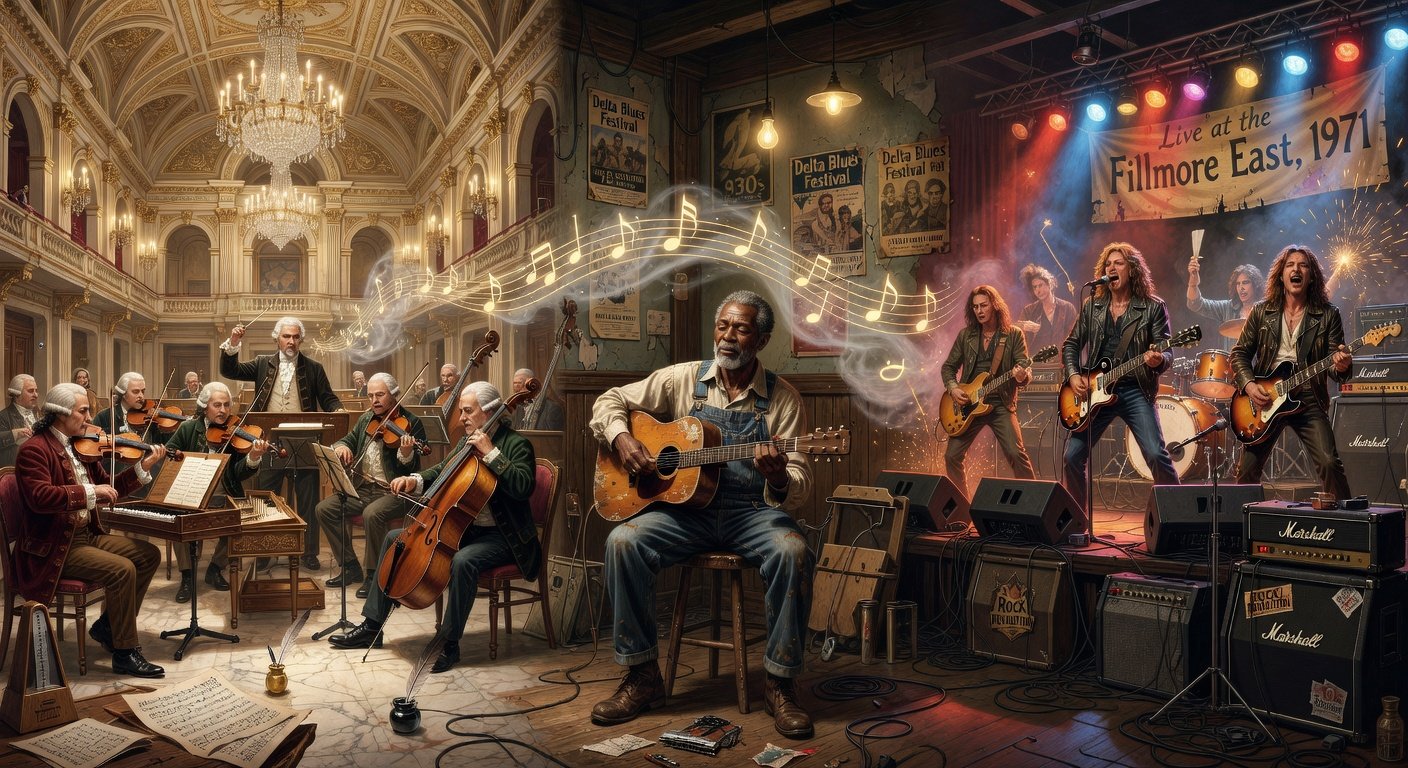
Music history reveals how human expression evolves through sound, culture, and innovation. This comprehensive beginner guide examines three foundational eras—classical, blues, and rock—detailing their defining traits, major figures, structural elements, and cross-genre connections that continue to influence modern music.
The Classical Era: Foundations of Form and Expression
Spanning approximately 1750 to 1820, the classical era emphasized balance, clarity, and emotional restraint within strict musical forms. Composers moved away from the ornate complexity of the Baroque period toward simpler, more elegant melodies supported by clear harmonic progressions. Orchestras standardized around strings, woodwinds, brass, and percussion, allowing for dynamic contrasts and thematic development.
Core Musical Structures and Characteristics
Key forms included the sonata, symphony, and string quartet. A typical sonata movement followed sonata-allegro form: an exposition introducing two contrasting themes, a development section exploring and varying those themes, and a recapitulation restating them in the home key. Dynamics ranged from piano to forte, creating dramatic tension without overwhelming ornamentation. Rhythm stayed steady, often in common time, prioritizing melodic flow over syncopation.
Iconic examples include Mozart's Symphony No. 40, where the first movement builds urgency through its minor key and restless motifs, and Haydn's Surprise Symphony, famous for its sudden dynamic shifts that engage listeners. Beethoven bridged classical and romantic styles with works like his Symphony No. 9, incorporating choral elements that expanded emotional scope.
Standout Composers and Cultural Context
Wolfgang Amadeus Mozart composed over 600 works by age 35, showcasing prodigious talent in operas and concertos. Joseph Haydn, known as the father of the symphony, wrote 104 symphonies that refined orchestral writing. Ludwig van Beethoven's late works pushed boundaries with increased dissonance and length. This era coincided with the Enlightenment, reflecting ideals of order and reason. For authoritative historical overviews, consult Britannica.
Blues Origins: Emotional Depth and Rhythmic Foundations
Blues developed in the late 1800s among African American communities in the Mississippi Delta and spread northward. It fused spirituals, work songs, and African rhythmic traditions into a genre centered on personal storytelling and catharsis. The music's raw power lay in its simplicity and flexibility for improvisation.
Defining Structures and Key Figures
The 12-bar blues progression remains the genre's backbone: a repeating I-IV-V chord pattern over 12 measures, often in 4/4 time with swung eighth notes. Blue notes—flattened thirds, fifths, and sevenths—create the signature melancholic sound. Call-and-response patterns between singer and guitar or harmonica add conversational intimacy.
Robert Johnson's haunting recordings like "Cross Road Blues" exemplify Delta blues guitar techniques with fingerpicking and slide. Bessie Smith brought vocal power to classic blues in the 1920s, while Muddy Waters electrified the style in Chicago, influencing urban sounds. Lyrics typically addressed love, loss, poverty, and migration, providing social commentary.
Regional variations include acoustic Delta blues versus amplified Chicago blues with fuller band arrangements. These elements laid groundwork for later genres through shared scales and expressive bends. Explore primary sources at Library of Congress.
Rock Evolution: Amplification, Rebellion, and Genre Fusion
Rock and roll exploded in the 1950s, merging blues rhythms, country twang, and R&B energy. It quickly diversified into subgenres, becoming a global youth movement by the 1960s.
Timeline Highlights and Standout Artists
Early pioneers like Chuck Berry delivered witty lyrics over driving guitar riffs in hits such as "Johnny B. Goode." Elvis Presley added charismatic performance to blues-based songs. The British Invasion brought The Beatles, who evolved from simple love songs to complex studio experiments in albums like Sgt. Pepper's Lonely Hearts Club Band. Led Zeppelin fused blues with heavy riffs and extended solos, while punk in the 1970s stripped rock back to raw basics with bands like The Ramones.
Rock structures often expand blues forms into verse-chorus formats with bridges and guitar solos that mirror classical development sections through thematic variation.
Direct Comparisons and Lasting Interconnections
Classical music's emphasis on thematic development appears in rock's extended jams and concept albums. Blues scales underpin rock solos, while call-and-response echoes in guitar-vocal interplay. For instance, The Rolling Stones' "Satisfaction" draws directly from blues riffs, yet incorporates classical-like crescendos in production.
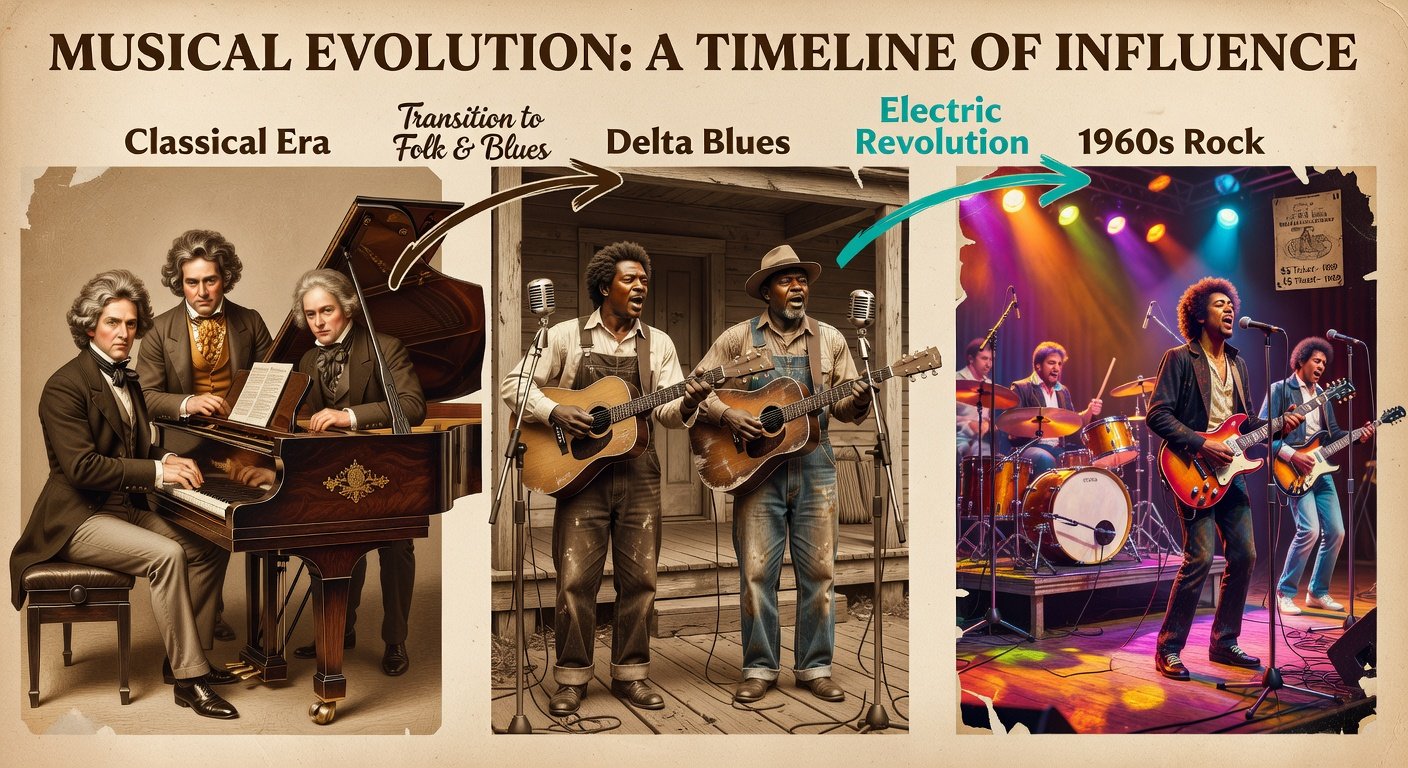
Modern artists blend all three: orchestral rock by bands like Muse echoes symphonic builds, and blues-rock revivalists like Gary Clark Jr. revive 12-bar forms with contemporary production. These links demonstrate music's evolutionary chain rather than isolated styles.
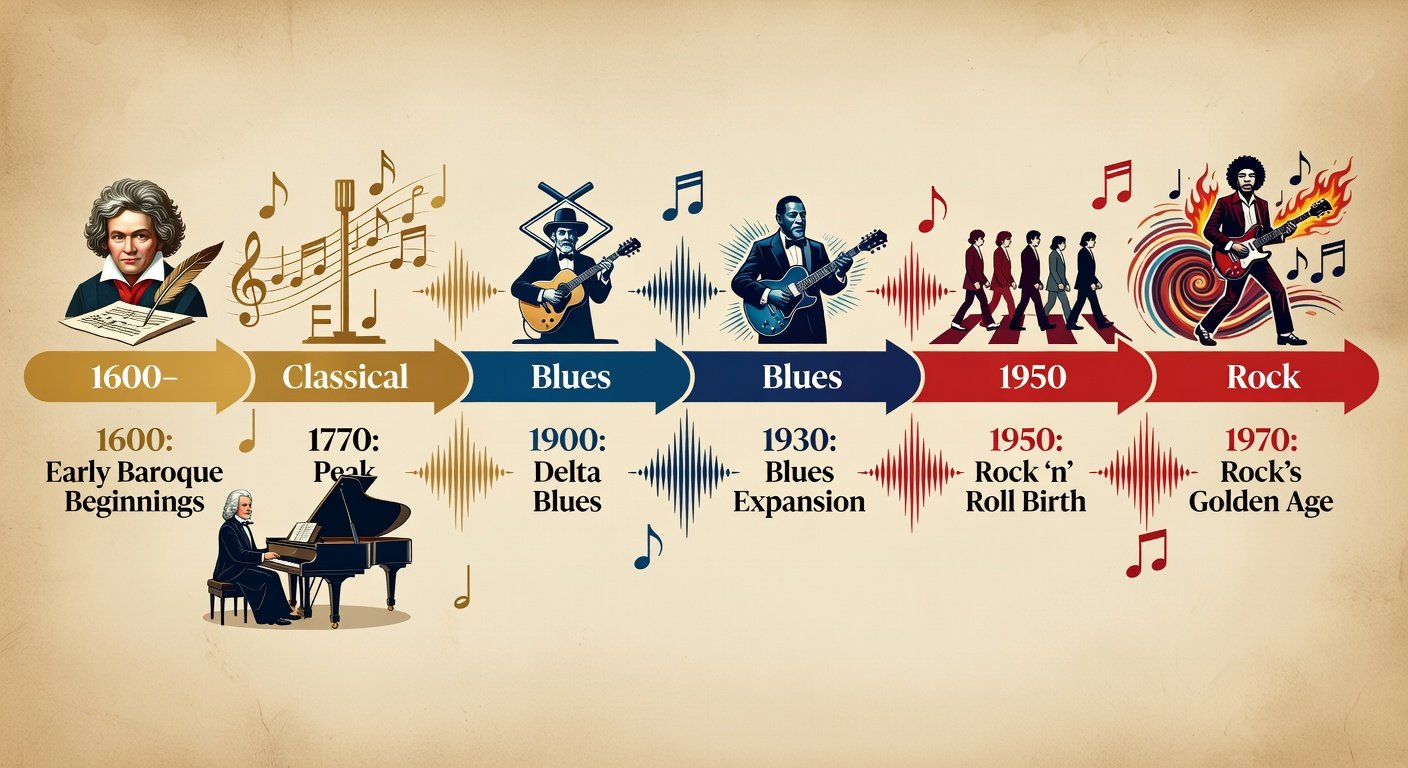
Practical Tools: Curated Playlists and Listening Exercises
Beginner playlist recommendations include Mozart's Eine kleine Nachtmusik for classical clarity, B.B. King's "The Thrill Is Gone" for blues emotion, and Jimi Hendrix's "Purple Haze" for rock innovation. Stream these sequentially to hear progressions.
Step-by-Step Listening Exercises
- Select one piece per era and listen without distractions, noting tempo and mood.
- Map the 12-bar blues chord changes in a track using a simple chart.
- Identify sonata-form sections in a classical symphony movement.
- Compare a blues song and its rock cover, listing shared and new elements.
- Build your own 10-track playlist mixing eras and journal personal connections.
- Repeat exercises monthly to track growing analytical skills.
These methods foster active listening and appreciation. Additional genre references appear at AllMusic.
Frequently Asked Questions
What separates classical rhythm from blues? Classical uses steady, even pulses; blues incorporates swung rhythms and syncopation for groove.
How did blues directly shape rock? Through chord progressions, guitar techniques, and lyrical themes of rebellion.
Are there recommended recordings for each era? Yes—start with Beethoven's Fifth Symphony, Johnson's complete recordings, and The Beatles' Abbey Road.
Can these styles mix in contemporary music? Absolutely; film scores often blend classical orchestration with rock energy and blues phrasing.
How long should beginners spend per exercise? Start with 20-minute focused sessions to avoid fatigue while building habits.
Conclusion
Tracing music from classical structures through blues emotion to rock dynamism provides essential context for today's diverse soundscape. Use the exercises and playlists to begin your exploration, uncovering personal favorites along the evolutionary path.

No comments yet. Be the first!