 Instrumentiverse
Introduction: Tracing Rock's Evolutionary Paths
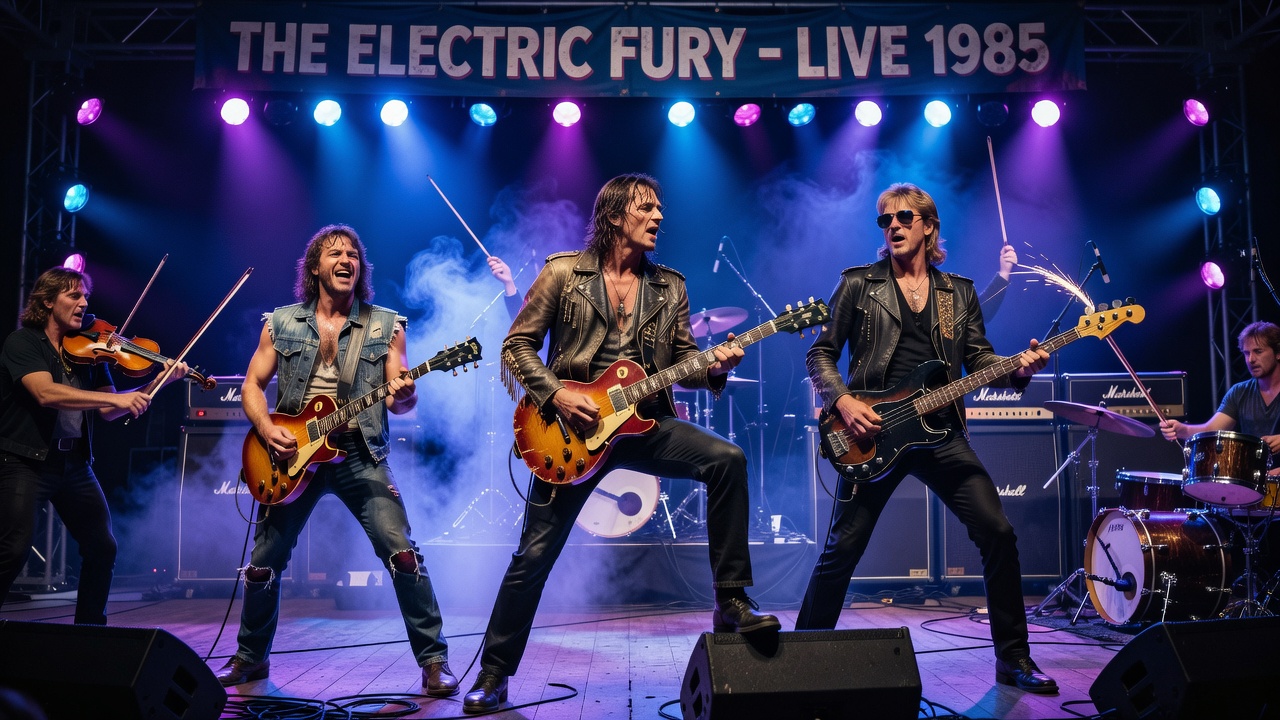
Rock music in the 1980s frequently carried sophisticated layers drawn from centuries-old traditions. This case study examines how classical era techniques, filtered through blues scales and structures, shaped specific tracks and artists. Far from random borrowing, these connections reveal deliberate adaptations that enriched rock's harmonic and compositional depth. Listeners seeking more than surface-level overviews will find concrete examples here, including side-by-side comparisons and practical exercises to train the ear. The 1980s marked a peak period when progressive and hard rock bands pushed boundaries by integrating contrapuntal writing and extended harmonic progressions originally developed in the Baroque and Classical periods.
Classical Techniques Adapted Through Blues
Classical music from the Baroque and Classical periods emphasized counterpoint, where independent melodic lines interweave without clashing. Blues, emerging in the early 20th century, introduced flattened thirds, fifths, and sevenths within 12-bar forms that emphasized emotional expression through repetition and variation. In 1980s rock, guitarists and composers merged these by overlaying contrapuntal lines onto blues-based riffs. Chord progressions like the I-IV-V common in blues were expanded with classical suspensions and resolutions. For instance, a dominant seventh chord might resolve unexpectedly, echoing Bach inventions while retaining the gritty blues feel. Additional classical elements included the use of canon-like imitation between instruments and the incorporation of diminished chords to heighten tension before returning to the blues tonic.
These adaptations allowed rock musicians to expand song lengths and complexity while preserving the raw energy of blues roots. The result was a hybrid style that appealed to both technically minded listeners and those drawn to powerful, riff-driven performances.
Artist Examples and Track Analysis
Consider the work of bands like Rush and Yes, whose 1980s output incorporated these hybrids. In Rush's "Tom Sawyer" (1981), complex bass lines create contrapuntal interplay against guitar riffs rooted in blues pentatonic scales. Geddy Lee's bass often functions as a second melodic voice, moving independently yet supporting the main guitar theme. Similarly, tracks by Van Halen demonstrate rapid scalar runs that blend classical arpeggios with blues bends, as heard in Eddie Van Halen's tapping technique on "Eruption."
Another key example is the use of modal interchange in Journey's ballads, where classical borrowed chords add emotional weight to blues-derived progressions. Yes extended these ideas further in songs like "Owner of a Lonely Heart," where keyboard and guitar lines echo fugal entries while the rhythm section maintains a blues shuffle feel. Iron Maiden also drew from classical phrasing in galloping riffs that mirror the rhythmic drive of Baroque violin lines adapted to electric guitars.
Side-by-Side Composition Comparisons
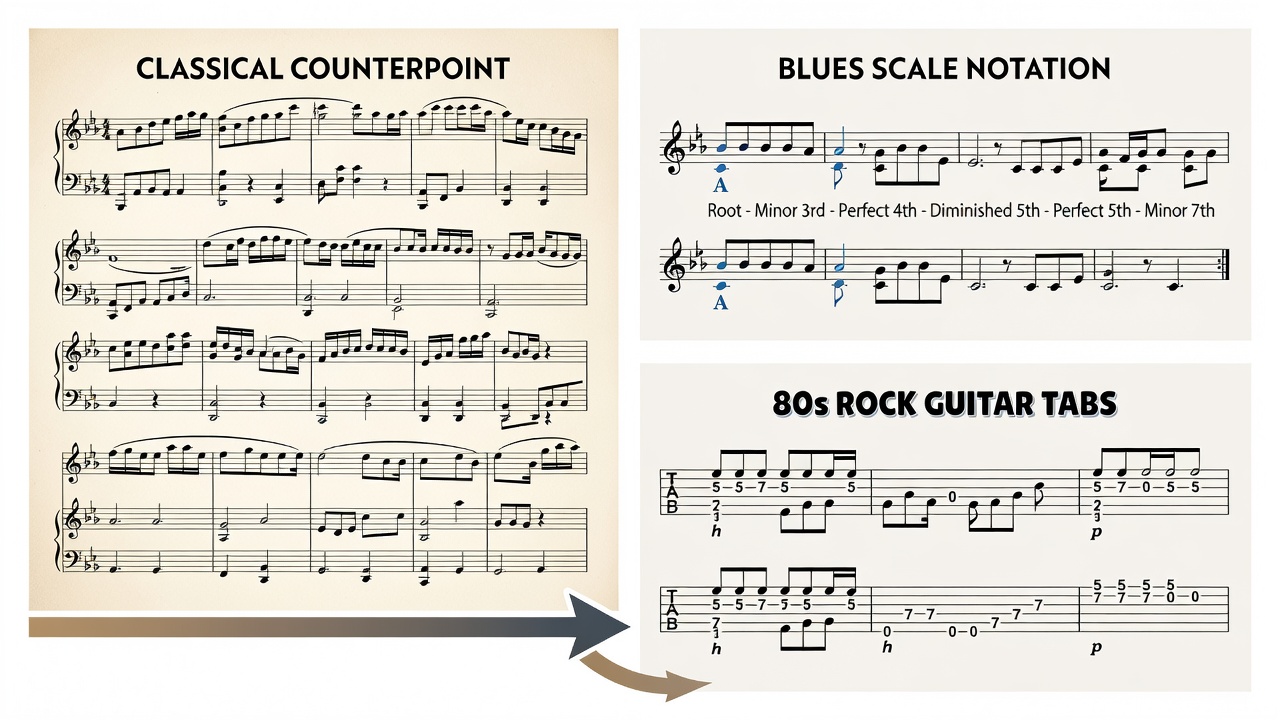
Compare a Bach invention's two-voice counterpoint with an 80s rock guitar solo. In the classical piece, voices move independently yet harmoniously. In rock adaptations, one voice follows blues scale notes while the other introduces passing tones from classical theory. Chord-wise, a standard blues turnaround (I-IV-I-V) gains classical flavor through added ninths or diminished chords borrowed from minor keys. For a practical comparison, examine the verse structure of Rush's "Limelight" against a simple Mozart sonata exposition: both feature clear thematic statements followed by developmental sections that explore harmonic tension before resolution.
These comparisons highlight how 80s artists preserved the emotional core of blues while adding structural sophistication. The blues provided the scale vocabulary and rhythmic foundation, while classical supplied the organizational logic that turned short riffs into extended compositions.
Broader Impact on Music History Narratives
These fusions challenged simplistic views of rock as purely rebellious. Instead, they positioned 1980s artists as continuators of Western music traditions. Britannica notes how cross-genre pollination has always driven innovation. This evolution influenced later genres, from grunge to modern prog metal. The Smithsonian Institution's music archives further document how such borrowings helped legitimize rock within academic discussions of 20th-century music. Smithsonian collections reveal parallel developments in jazz and classical crossover that mirrored rock's path.
Practical Listening Exercises
- Play a 12-bar blues progression on guitar, then layer a simple contrapuntal melody using only scale tones while maintaining rhythmic independence between hands.
- Listen to an 80s track like "Limelight" by Rush and identify moments where guitar lines move independently of the bass, noting any classical-style resolutions.
- Compare recordings: note how blues bends soften classical precision in live performances versus studio versions.
- Transcribe short sections to see the hybrid scales in notation, marking where blues notes meet classical passing tones.
- Experiment with a keyboard to recreate a Bach-style two-part invention, then adapt the second voice to a blues scale for a rock context.
- Analyze chord charts of Yes tracks and mark instances of borrowed chords or suspensions derived from classical harmony.
Mistakes to Avoid When Analyzing These Influences
One common error is attributing every complex riff solely to classical sources while ignoring the blues foundation. Another is overlooking the role of technology, such as guitar effects that made classical arpeggios easier to execute in rock settings. Always verify influences by examining multiple recordings and interviews where possible.
Frequently Asked Questions
How can I identify classical influences in 80s rock?
Listen for independent melodic lines, unexpected chord resolutions, and extended forms beyond standard verse-chorus structures. Pay attention to imitation between instruments and the use of sequences that repeat at different pitch levels.
Did all 80s rock incorporate these elements?
No, but bands with progressive leanings did so more prominently, creating unique evolutionary branches in rock history. Mainstream pop-rock often stayed closer to pure blues or pop forms.
Where can I learn more about these techniques?
Resources from Library of Congress music collections provide historical context on blues and classical intersections. Online theory sites and transcriptions of specific tracks offer additional practice material.
Can these techniques be applied in modern songwriting?
Yes. Start with a blues progression and add a second independent line using classical counterpoint rules, then record and refine the result.
Conclusion
The interplay between classical structures and blues origins in 1980s rock demonstrates music's continuous dialogue across eras. By examining specific tracks and techniques, listeners gain deeper appreciation for rock's sophisticated heritage and its ongoing influence on contemporary music.


No comments yet. Be the first!