 Instrumentiverse

Introduction to Classical Frameworks in Rock Analysis
Advanced music enthusiasts often move beyond surface-level influence spotting to apply rigorous analytical methods drawn from the classical era. These techniques reveal how structural patterns from composers like Bach and Beethoven inform the evolution of rock, particularly in 80s examples where progressive elements flourished. By integrating blues origins as interpretive layers, analysts can uncover deeper connections in harmony, form, and narrative development. This methodology allows listeners to trace the lineage of rock music through centuries of musical thought, identifying how formal structures such as sonata-allegro form, fugal counterpoint, and thematic variation migrated into electric guitar riffs and multi-sectional album tracks. The goal is not merely to label influences but to build interpretive frameworks that explain why certain 80s compositions feel both familiar and revolutionary.
Traditional overviews of rock history tend to emphasize broad cultural exchanges, yet they rarely provide the granular tools needed for precise dissection. This article supplies original analytical processes that treat classical forms as active interpretive scaffolds rather than static historical footnotes. Readers will learn to map entire compositions, compare harmonic syntax across eras, and layer blues-derived expressive devices onto those maps. The result is a richer appreciation of how rock evolved from its blues roots while absorbing the architectural sophistication of the classical tradition.
Step-by-Step Analytical Processes
Begin by identifying the overall form of a rock track. Classical sonata form, with its exposition, development, and recapitulation, provides a template. Map verses to thematic exposition and choruses to contrasting sections. Next, notate key changes and modulations using Roman numeral analysis to highlight classical-style progressions. Proceed to motivic development: trace recurring motifs across sections, noting variations akin to Beethoven's techniques. Finally, layer in blues elements by examining pentatonic scales against diatonic classical harmonies, revealing hybrid interpretive frameworks. Expand the process by creating a timeline of the track that records exact bar numbers for each structural event. This timeline becomes the foundation for subsequent harmonic and motivic layers. Analysts should also transcribe primary melodic lines into staff notation, allowing direct visual comparison with classical scores from the common-practice period. The final step involves documenting expressive deviations, such as rubato or dynamic swells, that echo Romantic-era performance practices while remaining grounded in blues phrasing.
Harmonic Comparisons Across Eras
Compare rock chord progressions directly to classical models. For instance, the I-V-vi-IV sequence common in rock echoes Baroque cadential patterns but gains emotional depth when blues inflections are added. In 80s music, bands employed extended chords reminiscent of Romantic era expansions, creating tension resolved through classical voice leading. These comparisons illuminate evolution: rock adapted classical restraint into explosive dynamics while blues added raw expressivity. To deepen the comparison, examine voice-leading rules from species counterpoint and test whether rock guitar lines observe or deliberately violate them. Consider how 80s keyboardists recreated pipe-organ registrations to evoke Bach while simultaneously incorporating blues pentatonic runs. Such juxtapositions produce the signature hybrid sound of the era and can be quantified by charting chord duration, inversion frequency, and resolution tendencies against a control set of classical excerpts.
Integrating Blues Origins as Interpretive Layers
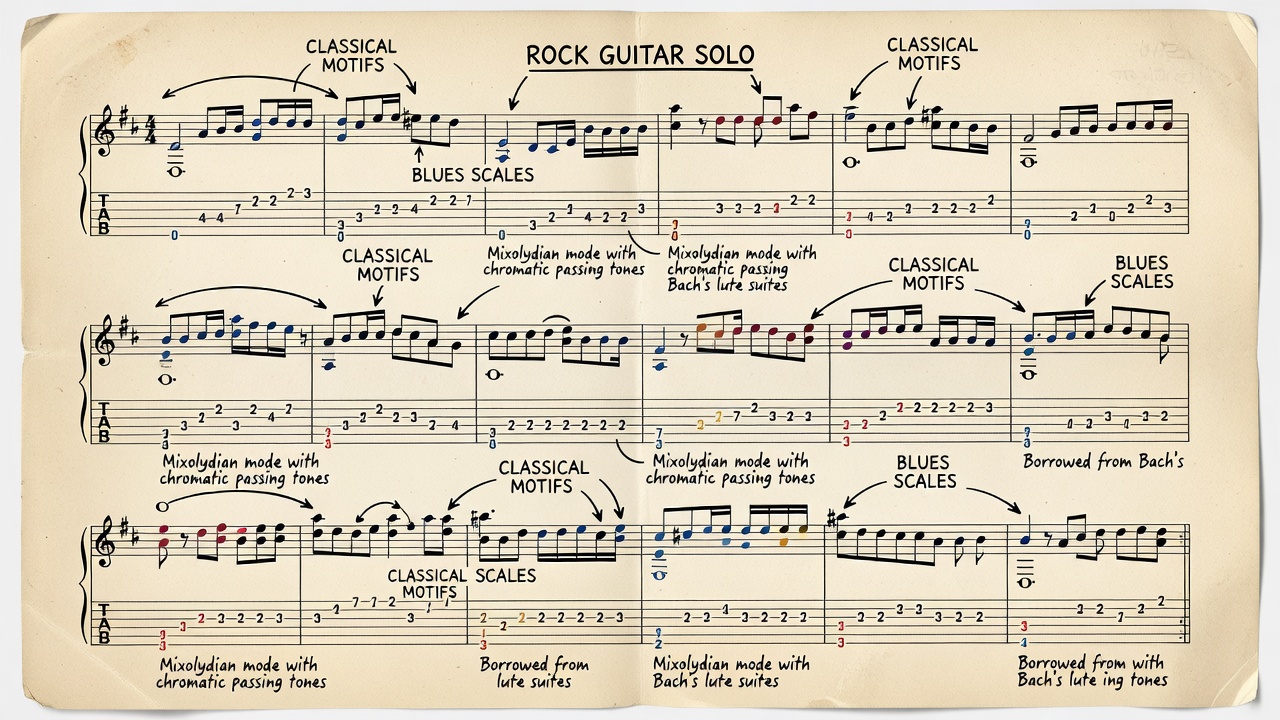
Blues scales serve as overlays on classical structures. Apply this by analyzing how a rock solo deviates from diatonic expectations using blue notes, mirroring how Romantic composers bent rules for expression. This layered method enriches understanding of 80s tracks where fusion occurred naturally. Begin with a diatonic reduction of the harmony, then superimpose the blues scale degrees on top, noting points of friction and resolution. The resulting tension map reveals expressive high points that classical analysis alone would miss. Practitioners can further refine the layer by tracking microtonal inflections captured in live recordings, treating them as analogous to the ornamental appoggiaturas of Baroque performance practice.
Practical Case Breakdowns of Select Tracks
Consider an 80s example like tracks from progressive rock acts. Break down form using classical exposition-development principles, then overlay blues phrasing in guitar lines. Another case examines harmonic shifts that parallel Mozart's modulations, enhanced by blues bends for interpretive richness. A third example might involve multi-movement suites that mirror the cyclic forms of late Beethoven string quartets while embedding 12-bar blues frameworks inside individual movements. Each breakdown should include bar-by-bar annotations, audio timestamp references, and a summary of how the classical and blues layers interact to generate meaning.
Expert Tips for Application
- Use software notation tools to annotate classical parallels in rock MIDI files.
- Compare multiple recordings of the same track to isolate evolutionary traits.
- Build personal databases of motif transformations for repeated practice.
- Consult established music theory references to validate analytical choices.
- Cross-reference findings with historical performance treatises to understand how classical gestures were reinterpreted through amplification and distortion.
- Practice reducing complex 80s arrangements to four-voice textures to expose underlying contrapuntal logic.
Tools and Resources for Deeper Analysis
Analysts benefit from access to public-domain classical scores available at IMSLP for side-by-side comparison. Additional context on period performance practices can be found at Britannica. For interactive harmonic drills, MusicTheory.net provides exercises that translate directly to rock analysis tasks. Maintain a digital notebook that tags each track with classical form labels, blues scale overlays, and voice-leading observations so patterns emerge over time.
Short FAQ on Common Analytical Pitfalls
Q: How do I avoid forcing classical labels onto rock tracks? A: Always prioritize audible evidence over theoretical imposition and test interpretations against multiple listens.
Q: What if blues layers obscure classical forms? A: Prioritize structural analysis first, then add blues as secondary interpretive filters.
Q: Are there risks in applying these methods to non-progressive 80s rock? A: Limit depth to harmonic comparisons to prevent over-analysis in simpler forms.
Q: Should analysts consider recording technology when applying classical tools? A: Yes, because studio effects such as multitrack layering and reverb can mimic classical orchestration techniques and must be accounted for in the structural map.
Conclusion
Mastering these advanced techniques equips enthusiasts with tools to trace rock's classical roots and blues integrations meaningfully. Apply them consistently to deepen appreciation of music evolution and to develop original interpretive insights that distinguish serious analysis from casual listening.


No comments yet. Be the first!