 Instrumentiverse
Introduction: Tracing the Hidden Lineage of Modern Rock
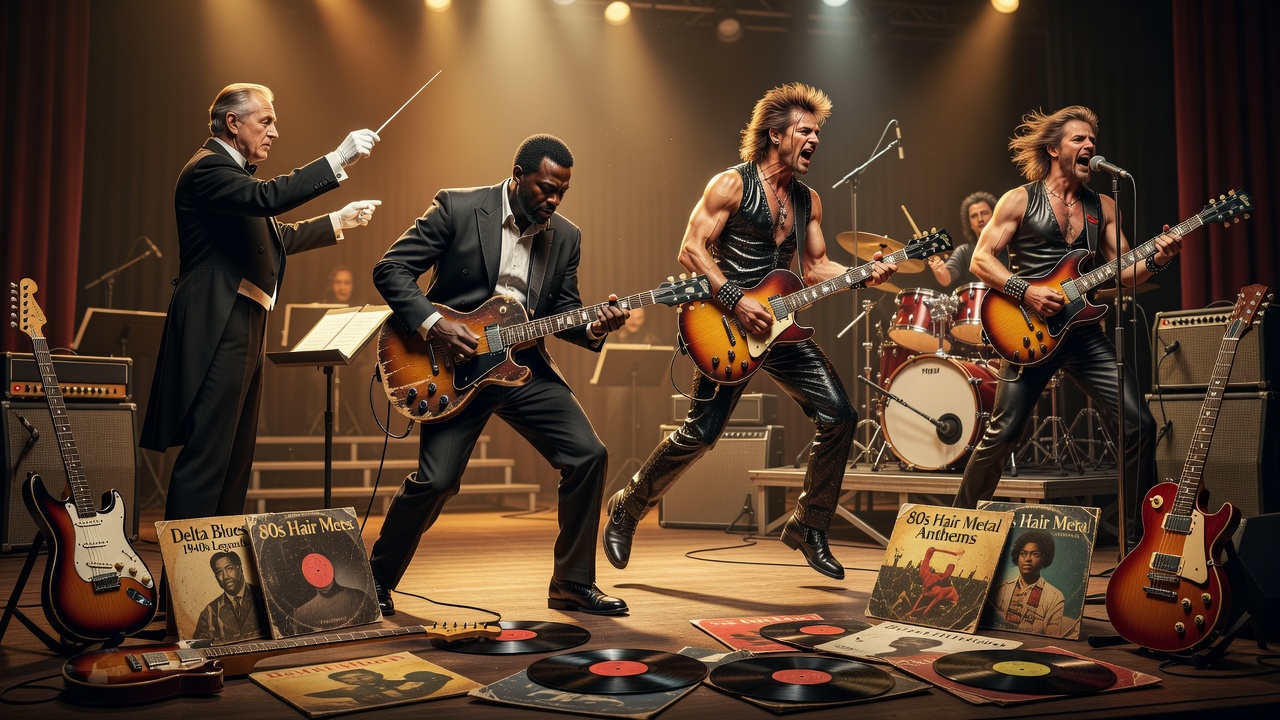
The evolution of rock music rarely follows a straight line. While many trace 80s rock directly to 1960s blues-rock pioneers, deeper roots extend back to classical era compositions. This analysis uncovers how Baroque counterpoint, Romantic harmonic tension, and early 20th-century innovations shaped blues structures that powered anthems by artists like Van Halen, Guns N' Roses, and ZZ Top. Music enthusiasts seeking fresh connections will find concrete examples of shared harmonic frameworks and rhythmic devices that span centuries.
Understanding these pathways requires examining specific musical elements rather than broad timelines. Classical music provided foundational tools in harmony, rhythm, and instrumentation that blues artists adapted in the American South. Those adaptations then fueled the high-energy sounds of 1980s rock, where electric amplification and studio production made the connections more pronounced than ever before.
Classical Foundations in Blues Harmony
Classical composers like Bach and Beethoven established chord progressions and voice-leading principles that blues artists adapted. The 12-bar blues form, often viewed as purely African-American folk invention, incorporates I-IV-V progressions refined through European classical traditions. Dominant seventh chords central to blues draw from Baroque cadences found in works such as Bach's chorales. Side-by-side comparisons show Bach's Prelude in C Major featuring descending bass lines mirrored in early blues like Robert Johnson's "Cross Road Blues."
Further depth emerges when considering how Romantic-era chromaticism influenced blues turnarounds. Chopin's use of altered chords appears in the expressive bends of B.B. King, which later informed the soaring leads of 80s guitarists. Instrumentation parallels also emerge clearly. Classical guitar techniques, including arpeggios and fingerstyle patterns from Spanish composers like Tarrega, influenced fingerpicking styles that defined Delta blues before being electrified in rock contexts. Britannica's overview of blues origins highlights these cross-cultural exchanges in detail.
Rhythmic Innovations from Classical to Blues to Rock
Rhythmically, classical syncopation in works by Stravinsky found echoes in blues shuffles and swung eighth notes. This evolved into the driving backbeats of 80s hard rock. Eddie Van Halen's tapping technique in "Eruption" builds on blues bends but owes structural debt to classical arpeggios practiced in conservatory settings. ZZ Top's "Sharp Dressed Man" employs a riff reminiscent of Beethoven's rhythmic motifs in his Fifth Symphony, transformed through blues repetition into a stadium anthem.
These rhythmic bridges became more sophisticated in the 1980s as drummers combined blues swing with classical precision in odd time signatures. Bands like Rush drew on both sources simultaneously, creating layered grooves that rewarded attentive listening.
Harmonic Structures and Chord Progressions in Depth
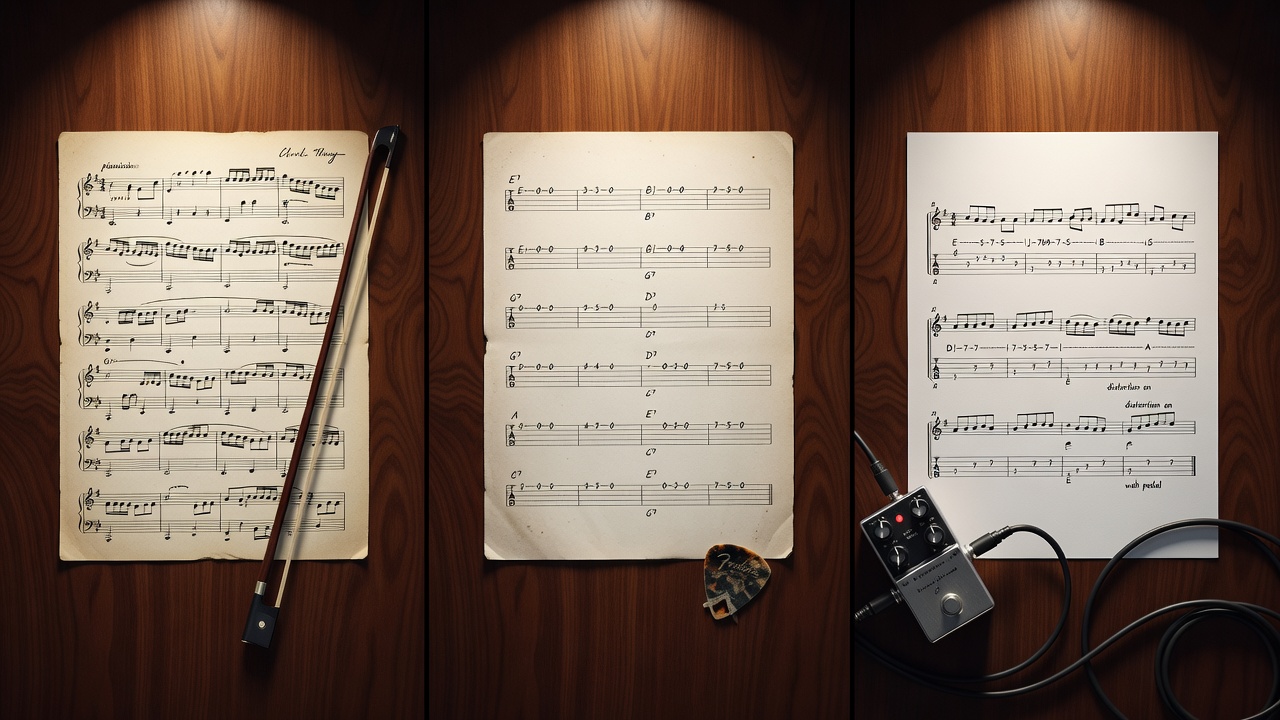
A deeper dive into harmonic structures reveals parallel movement between eras. The circle of fifths, a staple of classical modulation, underpins many blues changes and appears in 80s rock bridges. For example, the modulation in Journey's "Don't Stop Believin'" echoes classical sonata form while rooted in blues turnaround patterns. Listeners can map these by playing the I-IV-V progression on piano then adding sevenths to hear the classical influence emerge.
80s Rock Anthems and Their Blues-Classical DNA
Specific track examples reveal the pathways clearly. Guns N' Roses' "Sweet Child o' Mine" opens with a descending pattern echoing classical minor scales filtered through blues pentatonics. Van Halen's "Jump" keyboard riff parallels organ works by Bach while rooted in blues swing. Def Leppard's "Pour Some Sugar on Me" uses call-and-response vocals derived from blues traditions that trace to classical antiphonal writing. These connections demonstrate how 80s production amplified historical layers rather than inventing new ones from scratch.
Instrumentation Parallels Across Eras
Beyond harmony and rhythm, instrumentation shows striking continuity. The classical violin influenced the expressive slides of slide guitar in blues, which then translated to whammy-bar techniques in 80s rock solos. Piano figures from Beethoven sonatas appear in the boogie-woogie left-hand patterns of early blues pianists and later in the synth bass lines of 80s hits. Amplification simply made these parallels louder and more accessible to mass audiences.
Side-by-Side Comparisons
- Classical: Bach's Fugue in G Minor – contrapuntal lines. Blues parallel: Muddy Waters' "Hoochie Coochie Man" call-and-response. 80s rock: AC/DC's "Back in Black" layered guitars creating similar density.
- Classical: Chopin's Nocturne in E-flat – chromatic runs. Blues: B.B. King's string bends mimicking those runs. 80s rock: Journey's "Don't Stop Believin'" melodic hooks with chromatic passing tones.
- Classical: Beethoven's Fifth Symphony opening motif. Blues: Howlin' Wolf's rhythmic stomps. 80s rock: ZZ Top's "Legs" driving riff that recycles the motif through blues form.
FAQ: Common Misconceptions
Did classical music directly influence blues artists?
Indirectly through European harmonic systems taught in American conservatories and absorbed via recordings and sheet music. Direct exposure was limited for most early blues musicians, yet structural parallels are undeniable when scores are compared.
Are 80s rock sounds purely blues-derived?
No—synthesizers, drum machines, and production techniques added new dimensions, yet core riffs retain blues origins with classical underpinnings that give them lasting appeal.
Can listeners without formal training hear these connections?
Yes. Focused listening exercises reveal the shared DNA quickly, even for casual fans who start with familiar 80s tracks and work backward.
Practical Listening Exercises
- Compare Bach's Air on the G String with Robert Johnson's "Terraplane Blues" for shared phrasing and melodic contour; note how the baroque melody translates into blues vocal lines.
- Listen to Beethoven's Fifth alongside Van Halen's "Ain't Talkin' 'Bout Love" to identify rhythmic echoes in the famous four-note motif adapted to guitar.
- Analyze 80s tracks like "Paradise City" while noting pentatonic scales from classical minor modes and how they sit over blues changes.
- Play along with a recording of Chopin's Prelude in E Minor, then switch to B.B. King's "The Thrill Is Gone" to practice matching expressive bends.
- Create a playlist mixing one classical piece, one pre-war blues track, and one 80s rock song; listen for recurring I-IV-V resolutions across all three.
These exercises reveal the continuum and build deeper appreciation. Library of Congress blues collections offer primary sources for deeper study. Further reading on AllMusic provides track-level discographies that map similar influences across decades.
Conclusion
Understanding these pathways enriches appreciation of 80s rock as part of a centuries-long dialogue between traditions. The overlooked classical ties add nuance to blues origins and their explosive evolution into modern rock, rewarding listeners who explore beyond surface-level genre boundaries.
No comments yet. Be the first!