 Instrumentiverse

Introduction: Tracing Classical Roots Through Blues to Rock
The influence of the Classical era on modern music often hides in plain sight. From the structured harmonies of Mozart and Beethoven to the emotive bends of Delta blues and the anthemic riffs of 1980s rock, these threads weave a surprising lineage that rewards close listening. This article uncovers five key insights that go beyond basic history, offering analytical depth for music enthusiasts seeking fresh perspectives in 2026. We'll compare harmonic progressions in detail, spotlight specific 80s examples with track breakdowns, and provide actionable steps to identify these elements during your own listening sessions. By examining side-by-side audio cues and addressing persistent myths, readers will gain tools to appreciate how European classical traditions quietly shaped American blues and its rock descendants.
Insight 1: Harmonic Progressions from Classical Cadences to Blues Turnarounds
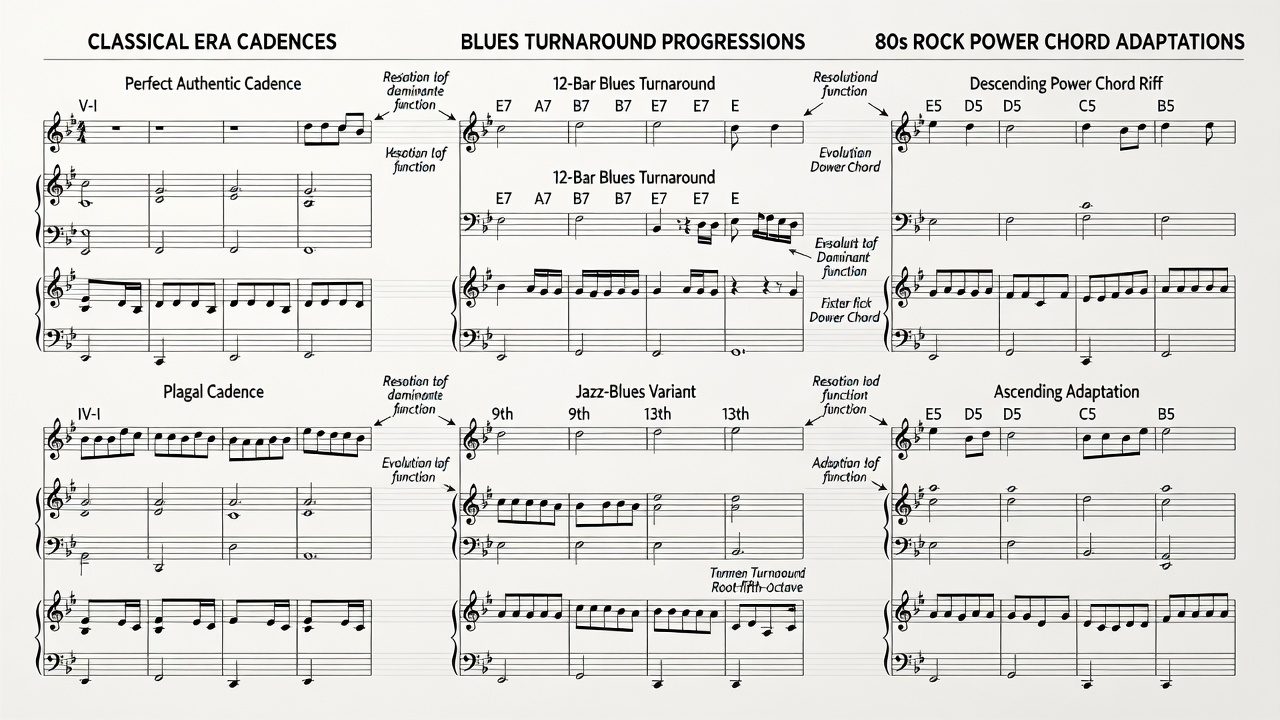
Classical composers relied on perfect authentic cadences for resolution, a concept that migrated into blues through 12-bar structures and later informed rock songwriting. In the Classical era, V-I resolutions created tension and release that drove entire movements in symphonies and sonatas. Blues adapted this into the I-IV-V progression, adding dominant seventh chords for emotional grit and expressive bends that classical instruments could not replicate. Rock evolution amplified this foundation with power chords and distortion while retaining the core tension-release dynamic. Consider how a dominant seventh chord in a Haydn string quartet builds anticipation much like the turnaround in a Robert Johnson recording, where the V chord signals the return to the tonic. In 80s rock, this appears in layered guitar solos that resolve similarly, creating stadium-filling climaxes. To deepen understanding, compare the circle of fifths progressions common in Classical minuets with the blues turnaround's quick V-IV-I descent, which rock bands like AC/DC extended into repetitive hooks. This shared harmonic DNA explains why certain chord sequences feel universally satisfying across centuries.
Insight 2: Structural Comparisons in Form and Phrasing
Classical sonata form influenced blues verse-chorus patterns, which rock bands expanded into extended solos and multi-part arrangements. The ABA structure in classical pieces parallels the call-and-response in blues, evolving into verse-bridge-chorus formats that dominated 80s radio. Phrasing techniques such as motivic development from Beethoven symphonies reappear in blues guitar licks that repeat and vary a single motif before resolving. Rock producers in the 1980s layered these ideas with synthesizers and big drum sounds to heighten drama. Practical listener identification begins with a Classical piece like a Haydn quartet, noting the thematic development and key changes, then comparing to Muddy Waters' phrasing in "Hoochie Coochie Man" and finally to 80s tracks like those by Dire Straits, where Mark Knopfler's fingerpicking echoes both classical articulation and blues swing. Expanding this further, examine how exposition-development-recapitulation in sonata form mirrors the buildup-solo-outro structure in rock ballads, allowing listeners to trace emotional arcs across genres.
Insight 3: 80s Rock Tracks Carrying Classical and Blues Legacies
Tracks such as Journey's "Don't Stop Believin'" echo classical melodic arcs within blues-derived chord changes, using rising piano figures that resolve like a Classical cadence before the chorus explodes. Similarly, Toto's intricate arrangements on "Rosanna" blend these influences through jazz-tinged chords rooted in blues while employing counterpoint reminiscent of Bach. Other examples include Foreigner's power ballads that stretch blues turnarounds into epic builds and Van Halen's tapping techniques that accelerate classical-style scales over blues riffs. These 80s productions polished raw connections into stadium anthems by adding reverb and multi-tracking, yet the underlying structures remain traceable. For audio cue breakdowns, focus on the pre-chorus tension in Journey's hit, which mirrors a Classical development section before the tonic release. Listeners can practice by isolating the guitar solo sections in these songs and noting how they recycle blues phrasing within larger classical-inspired forms. This era represents the peak commercial synthesis of the two traditions before digital production shifted priorities.
Insight 4: Listener Steps to Spot Classical Echoes in Blues and Rock
Here is a detailed four-step process to train your ear for these connections during everyday listening:
- Identify dominant-to-tonic resolutions across genres by pausing tracks at key changes and noting how the V chord pulls back to I, starting with simple Classical piano sonatas before moving to blues standards and 80s rock singles.
- Compare melodic motifs for thematic repetition, listening for short phrases that repeat with variation as in Classical development sections and then in blues guitar solos or rock riffs.
- Analyze rhythm shifts from strict classical meters to swung blues feels, using a metronome app to contrast even eighth notes with the triplet-based swing that defines blues and carries into rock grooves.
- Trace emotional dynamics from orchestral swells to guitar solos by noting volume builds and instrumental layering that serve the same narrative purpose in each style.
Apply these steps first to well-known recordings, then to lesser-known tracks to build pattern recognition. Over time, this method reveals how Classical era effects underpin everything from Delta blues field recordings to polished 80s productions.
Insight 5: Myths Debunked in a Quick FAQ
Does classical music directly create blues scales?
No, but shared European harmonic foundations provided the scaffolding that African American innovators transformed through blue notes and expressive techniques unavailable in strict Classical intonation.
Are 80s rock influences purely blues-based?
They layer classical counterpoint, form, and dynamic contrast onto blues roots for richer textures that appealed to broad audiences during the arena rock boom.
Can modern listeners really hear these connections without formal training?
Yes, with the structured listening exercises above, anyone can develop the ear to recognize them without needing conservatory education.
Conclusion: Listening with New Ears in 2026
These insights reveal music's interconnected evolution from Classical concert halls to juke joints and then to MTV stages. Apply the steps and breakdowns to deepen your appreciation and explore further via authoritative sources like Britannica, Library of Congress, and NPR Music. The connections continue to inspire new artists today, proving that understanding the past enriches every future listen.


No comments yet. Be the first!