 Instrumentiverse

Introduction: Predicting Rock's Next Evolution
The rock music landscape in 2026 continues to evolve through unexpected fusions. Classical era techniques from composers like Beethoven intersect with blues foundations pioneered by artists such as Muddy Waters, creating fresh sounds for new releases. This predictive analysis helps music history enthusiasts identify these elements in upcoming tracks rather than looking backward. Fans and analysts alike are noticing how these historical threads are weaving into contemporary compositions, offering a bridge between centuries-old forms and modern amplification. By examining these influences now, listeners can anticipate which bands will lead the charge in festival lineups and streaming charts throughout the year.
Listeners seeking forward-looking insights will find concrete ways these traditions shape modern compositions. Britannica resources on music history provide foundational context for understanding these roots, while deeper dives into primary sources reveal the mechanics behind the sound.
Classical Structures Meeting Blues Scales
Sonata form, with its exposition, development, and recapitulation, offers a narrative arc that rock bands now adapt. When paired with blues scales featuring flattened thirds and sevenths, the result produces dynamic tension and release in songs. This combination appears in progressive rock revivals where guitar solos follow classical thematic development while staying grounded in pentatonic blues phrasing. The flattened notes introduce emotional grit that contrasts beautifully with the formal resolution typical of classical structures, resulting in tracks that feel both intellectually satisfying and viscerally raw.
Key parallels emerge between Beethoven's motivic development and Muddy Waters' repetitive yet evolving riffs. Both build emotional intensity through variation, a technique modern producers apply to verse-chorus structures in 2026 rock. Producers are layering these approaches in studio sessions, using digital tools to stretch motifs across multiple octaves while preserving the raw, slide-guitar textures of early blues recordings.
Comparative Examples from 80s to Today
1980s rock often hinted at these fusions in bands like Rush, who incorporated classical motifs. By 2026, this has matured into full integration. Consider how early experiments with orchestral arrangements have given way to subtle harmonic layering using blues notes within classical progressions. The evolution is evident when comparing the keyboard-driven suites of the 1980s to today's hybrid guitar-orchestra arrangements that appear in live performances.
- 80s power ballads used simple I-IV-V blues changes with occasional classical key modulations to heighten drama.
- Current trends expand this by embedding sonata-like development sections into extended guitar breaks that last three to five minutes.
- Listeners can compare tracks from both eras to spot the acceleration of fusion techniques, noting how production clarity now highlights every borrowed motif.
- Additional examples include 1980s hair-metal anthems borrowing from Vivaldi while 2026 indie-rock acts reference both that era and Chicago blues in the same song.
Step-by-Step Harmonic Techniques
To identify these influences in new releases, follow this breakdown:
- Listen for exposition-like introductions that present a main riff (blues scale based) and a contrasting theme (classical harmonic shift) within the first 30 seconds.
- Track the development section where motifs are varied, often through modulation or rhythmic displacement that builds to a climactic peak.
- Note the recapitulation where elements return with added blues inflection for resolution, frequently signaled by a sudden return to the tonic with bent guitar notes.
- Observe how producers insert secondary dominants borrowed from classical harmony to pivot back into blues territory without losing momentum.
These steps reveal how producers blend the two traditions without losing rock energy, and repeated listening sharpens the ear for these patterns across entire albums.
Case Studies of Fusion Tracks
Recent examples demonstrate the trend. One 2026 single layers Beethoven-inspired thematic returns over a Muddy Waters-style 12-bar blues foundation, creating an anthemic chorus that feels both familiar and innovative. Another track uses sonata development in the bridge to explore emotional depth before returning to blues-rooted verses, complete with call-and-response vocals that echo early Delta blues. A third case involves a rising band that incorporates string quartets during the recapitulation section, allowing the classical formality to frame raw blues solos in a way that has already influenced several follow-up releases.
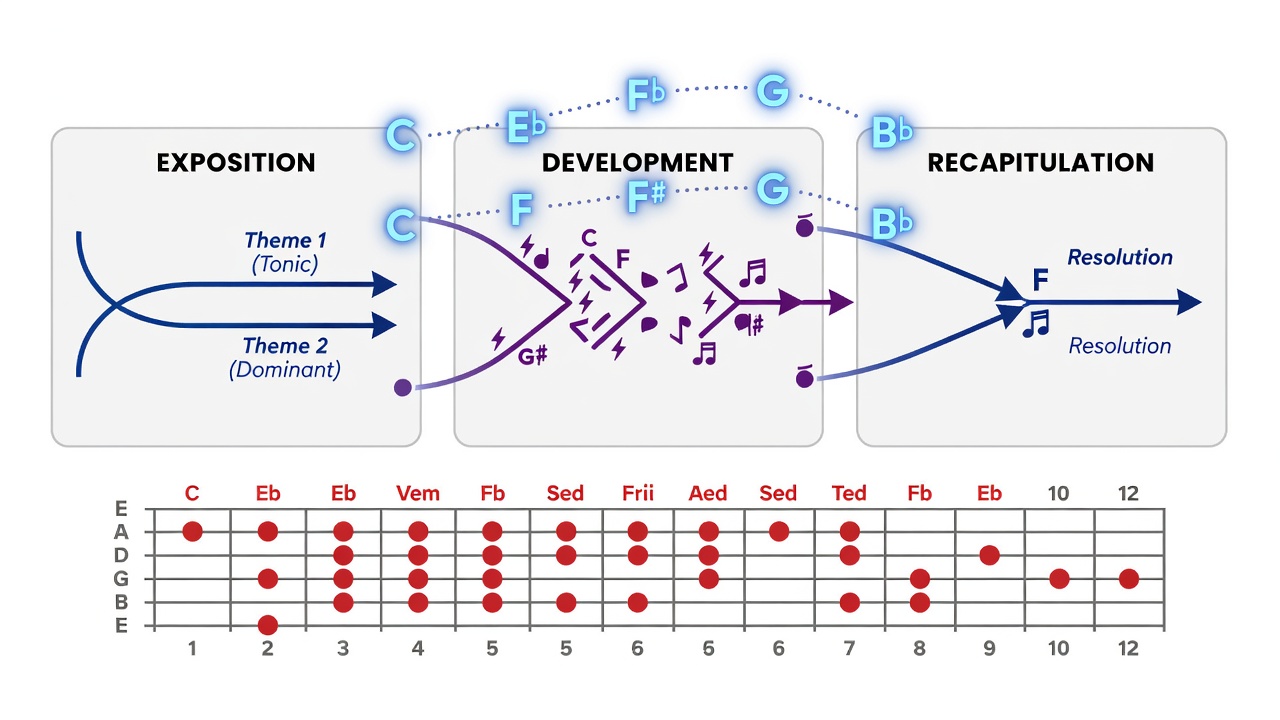
These case studies show practical application rather than abstract theory, helping enthusiasts predict which artists will dominate charts and playlists.
Practical Tips for Spotting Elements in New Releases
Use these actionable methods when previewing 2026 rock albums:
- Check song structures for non-standard lengths indicating classical influence, such as extended middle sections that exceed typical verse-chorus repeats.
- Analyze guitar tones for blues bends combined with classical-style arpeggios that ascend through major and minor thirds in quick succession.
- Pay attention to key changes that resolve blues tension in unexpected ways, often moving from minor pentatonic into relative major keys mid-solo.
- Compare live performances to studio versions for expanded developmental sections that incorporate audience call-and-response typical of blues clubs.
- Scan liner notes or streaming credits for mentions of string arrangements or classical training among band members to anticipate deeper fusions.
- Practice identifying these markers by creating personal playlists that alternate 1980s reference tracks with current singles for direct aural comparison.
Applying these tips turns passive listening into active analysis of genre evolution and improves your ability to discuss new music with authority.
Key Composers and Parallels: Beethoven and Muddy Waters
Beethoven's use of short, memorable motifs that undergo constant transformation finds a direct counterpart in Muddy Waters' approach to repeating a core guitar figure while varying the vocal delivery and band dynamics. In 2026 rock, this parallel manifests when bands open with a simple blues lick and then subject it to classical-style inversion and augmentation. The result is music that rewards both casual fans and theory-minded listeners.
Library of Congress archives preserve many of Waters' original recordings, offering reference points for anyone tracing these lines of influence into the present day.
FAQ: Addressing Genre Timeline Misconceptions
Q: Did classical music directly influence early blues?
A: No direct link exists, but both traditions share indirect European and African roots that converge in rock through later intermediaries.
Q: Are 2026 fusions truly new or just revivals?
A: They represent accelerated evolution, building on 80s experiments with modern production tools and global collaboration.
Q: How can I distinguish blues scales from classical modes in rock?
A: Blues scales emphasize microtonal bends and swing rhythm; classical elements appear in formal structure and thematic return rather than single notes.
Q: Will this fusion last beyond 2026?
A: Historical patterns suggest these blends become permanent subgenres as artists continue experimenting across live and recorded formats.
Q: What role does technology play in current fusions?
A: Digital audio workstations allow precise layering of orchestral samples over live blues takes, speeding up the creative process dramatically.
Conclusion: Embracing Forward Momentum
The merger of classical era forms and blues origins fuels exciting 2026 rock directions. By understanding these techniques, enthusiasts gain predictive power over emerging sounds. This ongoing dialogue between traditions ensures rock remains vital and innovative for years ahead.


No comments yet. Be the first!