 Instrumentiverse

Guitar Guide 2026: Essential Strumming Patterns
Learning to strum effectively is one of the most important skills for any guitarist. This guitar guide focuses on practical techniques that help beginners develop strong rhythm skills using common musical instruments like acoustic and electric guitars. Whether you are picking up the guitar for the first time or refining your foundation, these patterns will improve your timing and musical expression. Strumming is the heartbeat of countless songs, and mastering it early creates a solid platform for everything else you will learn on the instrument.
Why Strumming Matters in Your Guitar Journey
Strumming provides the rhythmic backbone of most songs across genres. Unlike intricate solos, effective strumming keeps listeners engaged and supports vocals or melodies. In this guitar guide, we emphasize building consistency before adding complexity. Practice daily with a metronome to internalize beats and prevent rushing or dragging. Good strumming also improves your sense of groove, allowing you to play with other musicians more confidently. Many beginners overlook rhythm in favor of learning chords or scales, yet rhythm is what makes music feel alive and danceable.
Fundamentals: Posture, Hand Position, and Pick Selection
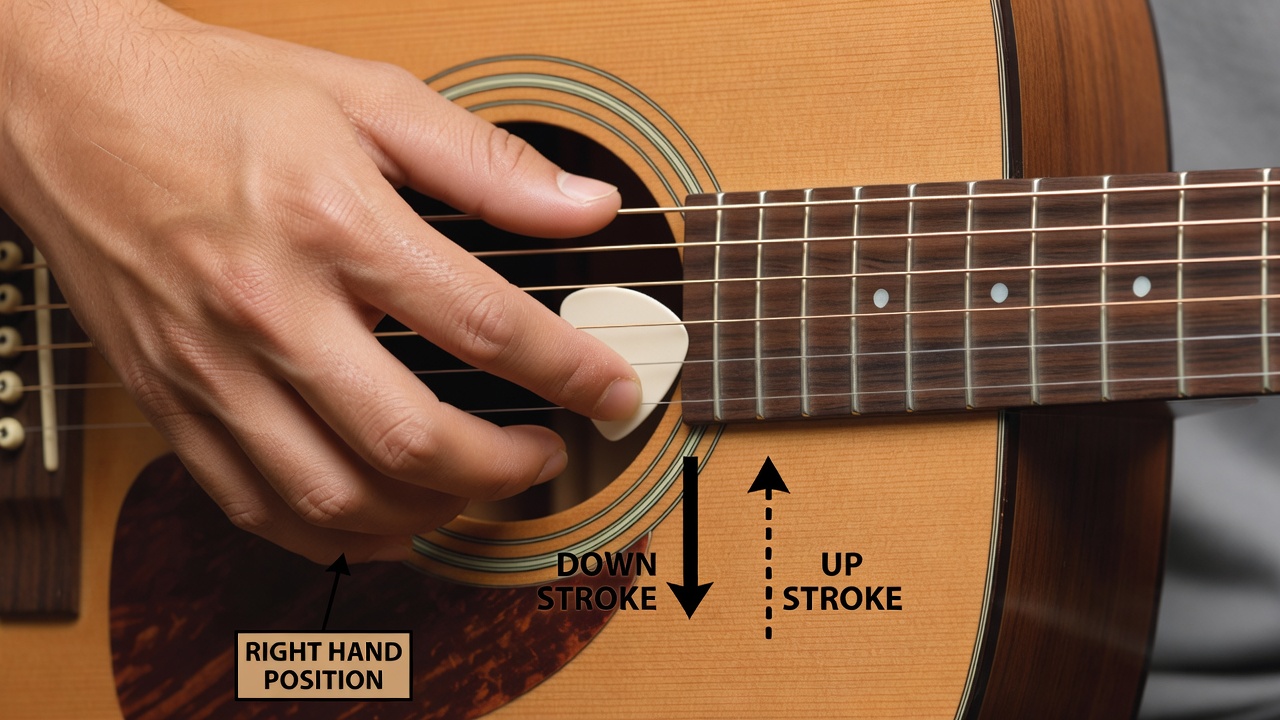
Before diving into patterns, establish proper fundamentals. Sit or stand with the guitar balanced against your body so your strumming arm moves freely. Keep your shoulders relaxed and your elbow slightly away from your torso. Hold the pick between the thumb and index finger with a firm yet flexible grip. The tip of the pick should extend roughly one centimeter beyond your fingers. Experiment with different pick thicknesses; thinner picks offer flexibility for beginners while medium picks provide more control as you progress. Proper posture prevents fatigue and tension that can slow your development.
6 Core Strumming Patterns with Step-by-Step Instructions
Here are six foundational patterns every beginner should master. Each includes the count, motion direction (D for down, U for up), recommended genres, and targeted practice advice to help you internalize the feel.
1. Basic Downstroke Pattern
Count: 1 2 3 4. Motion: D D D D. Start with steady downstrokes on each beat. Focus on relaxed wrist movement rather than arm swings. This pattern builds even timing and is perfect for slow ballads or simple chord progressions. Practice it at 60 BPM for two minutes, then increase by five beats per minute every session until you reach 80 BPM comfortably.
2. Down-Up Alternate Strum
Count: 1 2 3 4. Motion: D U D U. Alternate directions on every eighth note. This builds coordination for faster tempos and appears in pop, rock, and folk music. To master it, count out loud while strumming: “one-and, two-and, three-and, four-and.” Record yourself to check that upstrokes land exactly on the “and” beats.
3. Folk Strum Pattern
Count: 1 2 3 4. Motion: D D U U D U. Emphasize beats 2 and 4 with slight accents. Ideal for acoustic songs and singer-songwriter material. The double upstroke on beats 2 and 3 creates a lilting feel. Try applying this pattern to a G-C-D progression while singing a simple melody to feel how the rhythm supports vocals.
4. Reggae Off-Beat Strum
Count: 1 2 3 4. Motion: D U (rest on 2 and 4) D U. Mute strings on downbeats for the signature skank sound. This pattern teaches you to play in the spaces between beats. Start slowly, muting with the side of your palm on beats 1 and 3 while striking on the off-beats. It translates well to many upbeat genres once you have the muting technique dialed in.
5. Country Strum Pattern
Count: 1 2 3 4. Motion: D U D D U D U. Add a quick double down on beat 3 for bounce. The extra downstroke gives country music its characteristic drive. Practice switching between this pattern and the basic down-up pattern to develop versatility. Focus on keeping the double down clean without rushing the following upstroke.
6. Rock Power Strum
Count: 1 2 3 4. Motion: D D U D U D U. Use palm muting on downstrokes for drive. This pattern works across rock, punk, and indie styles. Begin without muting, then gradually add palm pressure until you achieve a tight, percussive tone. Combine it with power chords to experience the full energy of the pattern.
Common Mistakes and How to Avoid Them
Many beginners struggle with the same issues. Rushing the tempo is common; always use a metronome starting at 60 BPM and only increase speed after playing cleanly for two full minutes. Tense wrist and grip cause fatigue and uneven volume. Keep shoulders relaxed and hold the pick loosely. Inconsistent volume occurs when players hit harder on downstrokes; aim for even dynamics by practicing in front of a mirror to observe your motion. Ignoring muting leads to muddy chord changes. Practice controlled string damping on every pattern so transitions stay crisp. Another frequent error is looking at the strings too much; train your muscle memory by practicing with eyes closed for short intervals.
Tempo Adjustments and Practice Routines
Begin at slow tempos and gradually increase speed by 5 BPM each session. A recommended routine lasts thirty minutes: ten minutes on pattern repetition using one chord, ten minutes on chord transitions while maintaining the pattern, and ten minutes playing along with simple songs. Track progress weekly by recording yourself and noting the highest clean tempo achieved. For endurance, extend sessions to forty-five minutes once you can maintain steady rhythm for ten minutes straight. Use apps that provide click tracks with subdivisions to refine your internal clock.
Comparing Strumming to Fingerpicking Styles
Strumming delivers full chord energy while fingerpicking offers melodic independence. Many players combine both; start with strumming to lock in rhythm, then layer fingerstyle elements. Authoritative resources such as Wikipedia's guitar overview explain these stylistic differences in depth. Strumming tends to feel more percussive and supportive of group playing, whereas fingerpicking allows intricate melodies within the same hand. Experiment by taking a strumming pattern and converting the downstrokes into thumb plucks to understand the contrast.
Integrating Patterns into Songs
- Choose a simple three-chord song such as “Horse with No Name” or “Knockin’ on Heaven’s Door.”
- Apply one pattern across the entire progression until it feels natural.
- Switch patterns at section changes (verse to chorus) to create dynamic contrast.
- Experiment with dynamics to match song emotion, playing softer during verses and stronger during choruses.
- Record a short verse using two different patterns and compare which one fits the mood better.
Explore manufacturer guides at Fender for song-specific examples and further technique videos. Additional inspiration can be found at Acoustic Guitar magazine resources.
Hand Positioning and Progression Tracking – FAQ
How should I position my strumming hand?
Rest your forearm lightly on the guitar body with the wrist relaxed and angled slightly downward. Hold the pick between thumb and index finger, allowing the tip to extend about one centimeter. Adjust the angle so the pick strikes the strings at roughly 45 degrees for smoother tone.
How do I track my progression?
Record weekly practice sessions, note BPM achievements, and set monthly goals such as mastering two new patterns or playing through a full song without stopping. Keep a practice journal listing the date, tempo, and patterns worked on.
Should I use a metronome every session?
Yes. Even advanced players rely on metronomes to maintain accuracy. Start with quarter-note clicks, then switch to eighth-note subdivisions once patterns feel solid.
How long until I can strum along with songs?
Most dedicated beginners can play simple songs cleanly within four to six weeks of consistent daily practice using the routines outlined above.
What if my strumming sounds uneven?
Focus on wrist relaxation and even pick pressure. Practice the basic downstroke pattern on a single open string for five minutes daily until volume becomes consistent.
Conclusion
Consistent practice with these six patterns will transform your playing. Return to this guitar guide often as you advance, and remember that steady rhythm beats flashy technique every time. Keep a patient, methodical approach and you will soon find yourself strumming confidently through full songs with musical instruments of any style.


No comments yet. Be the first!