 Instrumentiverse
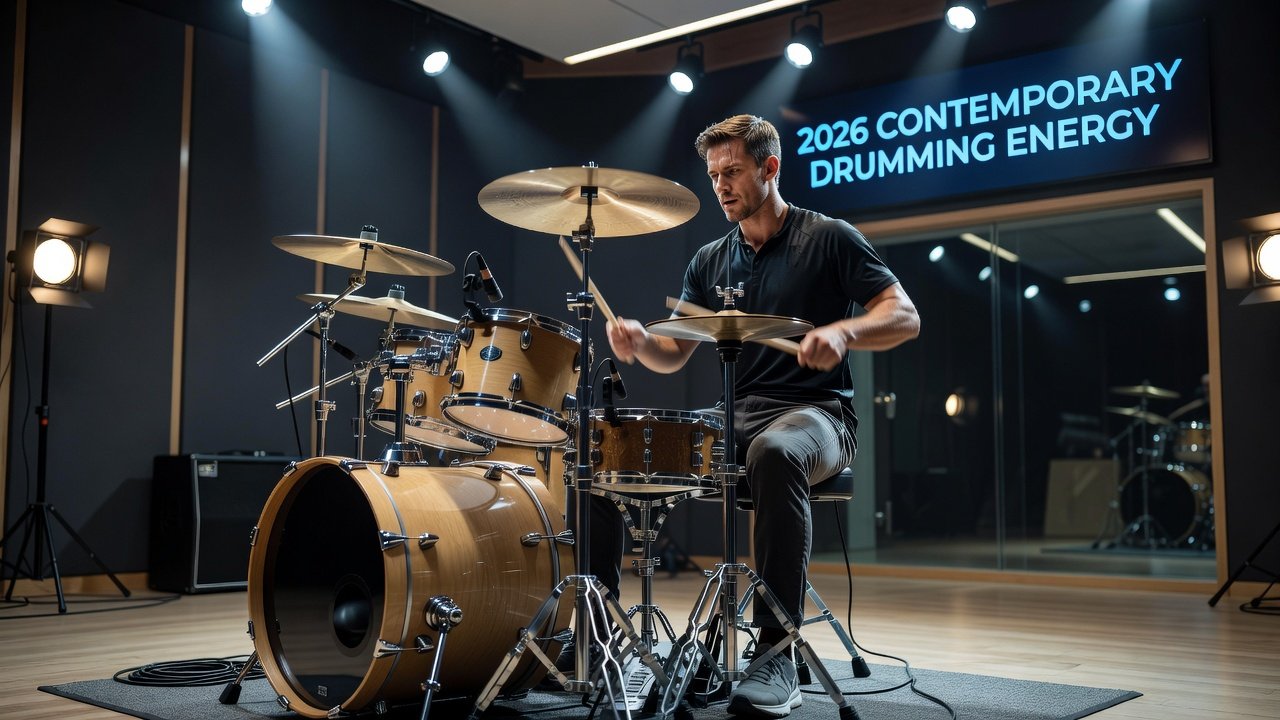
Introduction to Dynamic Drum Fills in 2026
Drum fills remain one of the most powerful tools for drummers looking to elevate basic beats into captivating performances. In 2026, modern drumming styles across rock, electronic, hip-hop, and jazz demand fills that not only maintain groove but also inject energy and surprise. This guide explores eight actionable techniques to help you progress beyond simple patterns, with real-world examples and structured practice advice. Whether you are recording in a home studio or playing live, mastering fills requires understanding timing, dynamics, and kit integration. We will compare basic versus advanced approaches, outline gradual tempo progressions, and address common pitfalls through a dedicated FAQ section that covers timing issues and frequent errors.
Drum fills serve as transitional phrases that connect sections of a song, building tension and release. In contemporary 2026 productions, producers often layer electronic samples with acoustic drums, making versatile fill techniques essential. Beginners can start by focusing on one technique per practice session, while intermediate players benefit from combining multiple approaches. The goal is always musicality over complexity, ensuring every fill enhances the overall rhythm rather than disrupting it.
Technique 1: Linear Fills for Clean Momentum
Linear fills move sequentially across the kit without overlapping hits. Start with eighth notes on snare, then tom, then crash. This creates space and clarity, ideal for indie and alternative genres popular in 2026. To practice, set a metronome at 70 BPM and play the pattern four times before resolving to the backbeat. A real-world example appears in modern indie tracks where linear fills on the toms lead into a chorus drop, providing a sense of forward motion without cluttering the mix.
Advanced variations include adding ghost notes on the snare between main hits. This technique works especially well in lo-fi and bedroom pop productions common today. Always listen back to recordings to ensure the fill sits naturally within the song structure.
Technique 2: Syncopated Patterns
Syncopation places accents on off-beats. Try shifting a standard fill to emphasize the "and" of beat 3. This technique shines in funk and modern pop productions. Begin by clapping the rhythm first, then transfer it to the kit starting with the snare and hi-hat combination. In 2026 hip-hop influenced drumming, syncopated fills often incorporate rimshots for extra punch.
Compare this to straight-time fills by recording both versions over the same groove. The syncopated version typically creates more listener engagement and danceability. Practice at slow tempos to lock in the off-beat feel before increasing speed.
Technique 3: Full-Kit Integration
Move beyond the snare and toms by incorporating the kick, hi-hat, and cymbals. A full-kit fill might start on the ride, drop to floor tom, and resolve with a kick-cymbal combo for dramatic effect. This approach mirrors professional setups seen in arena rock and electronic live performances. Break the fill into quadrants of the kit and practice each quadrant separately before linking them.
Genre examples include using the kick drum to echo bass lines in EDM-influenced drumming. Integration improves when you visualize the kit as a single instrument rather than isolated pieces.
Technique 4: Building Energy with Gradual Dynamics
Begin fills softly and crescendo into the next phrase. Practice starting at mezzo-piano and building to forte over four bars. Use your body posture to control volume naturally rather than relying solely on stick height. In jazz fusion styles popular in 2026, dynamic fills often transition from brushes to sticks mid-phrase.
Record yourself playing the same fill at three dynamic levels and compare the emotional impact. Gradual builds prevent abrupt energy shifts that can jar listeners.
Technique 5: Genre-Specific Adaptations
Rock fills often use powerful tom runs, while electronic styles favor short, crisp samples. Adapt your approach by listening to current 2026 chart hits. For country music applications, incorporate cross-stick patterns that mimic guitar rhythms. Study reference tracks from major artists to internalize genre conventions before creating original variations.
Technique 6: Polyrhythmic Layers
Overlay a triplet feel over straight time for tension. Resolve the polyrhythm cleanly on the downbeat to maintain listener engagement. Start with simple 3-over-2 patterns on the snare and hi-hat before moving to full-kit applications. This technique appears frequently in progressive metal and experimental electronic music of 2026.
Practice with a metronome subdivided into both straight and triplet clicks to develop independence. Clean resolution is more important than the complexity of the overlay.
Technique 7: Short and Punchy vs Extended Fills
Short fills (one or two beats) work well in fast tempos. Extended fills spanning two or four bars suit ballads and builds. Create a decision tree: choose short fills when the song tempo exceeds 140 BPM, and extended fills for slower grooves under 90 BPM. Experiment by inserting both types into the same backing track to hear the difference in pacing.
Basic vs Advanced Comparison
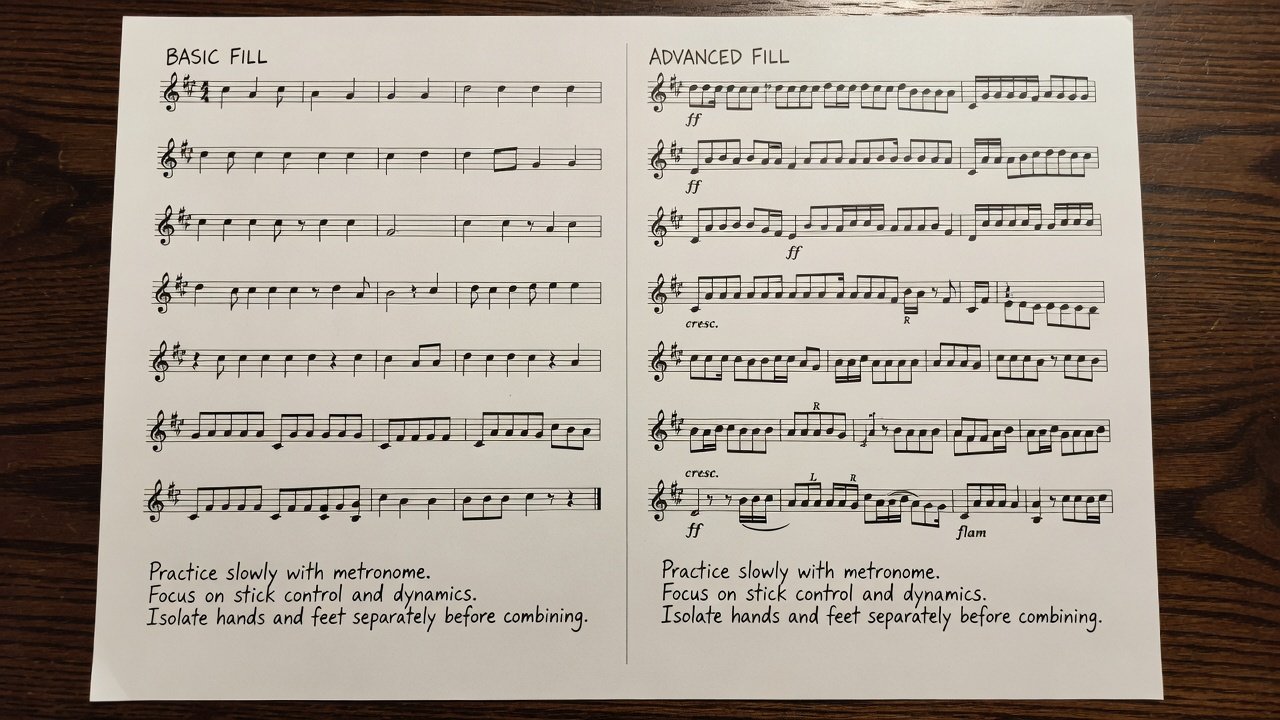
- Basic fill: Four snare hits followed by crash – simple but effective for beginners.
- Advanced fill: Snare ghost notes leading into a linear tom sequence ending on open hi-hat with a kick resolution – adds texture and professionalism.
- Basic: Straight eighth notes on toms.
- Advanced: Mixed rudiments including paradiddles and flams across the full kit.
Technique 8: Practice Progression from Slow to Performance Tempo
Begin at 60 BPM using a metronome. Increase by 10 BPM only after clean execution. Record yourself weekly to track improvement. Break sessions into warm-up, focused technique work, and application over songs. Many drummers find success using resources from MusicTheory.net for rhythm reading support alongside their kit practice.
Downloadable Practice Charts and Resources
Print blank staff paper and notate each technique. Many drummers reference official metronome apps and rhythm training sites such as MusicTheory.net for timing exercises. Create your own charts by dividing pages into columns for each of the eight techniques, marking tempo milestones as you progress. Supplement with video tutorials from established platforms like Drumeo to see professional demonstrations of the same concepts.
Common Mistakes to Avoid
Overplaying, rushing the tempo, and neglecting dynamics are frequent errors. Always prioritize groove over flash. Additional pitfalls include ignoring song context, failing to match fill length to section needs, and poor stick control leading to uneven volume. Address these by slowing down and focusing on one element at a time during practice.
FAQ: Timing Issues and Troubleshooting
- How do I fix rushed fills? Practice with a click track at half tempo until the feel solidifies.
- What if my fills feel disconnected? Focus on seamless transitions back to the main beat by rehearsing the last two beats of the fill with the following groove.
- Are these techniques suitable for beginners? Start with Techniques 1–3 before advancing to polyrhythms and extended patterns.
- How long should I practice each day? Aim for 20-30 minutes dedicated to fills within a full session.
- Can I apply these to electronic drums? Yes, the same musical principles apply, though sample selection adds another creative layer.
Conclusion
Applying these eight techniques will transform your drumming in 2026 and beyond. Consistent, mindful practice turns basic rhythms into dynamic musical statements that captivate audiences. Return to the fundamentals regularly and adapt the methods to your unique style for the most rewarding results.


No comments yet. Be the first!