 Instrumentiverse

Introduction
Buying musical instruments online has become the go-to method for beginners and enthusiasts alike in 2026. Whether you're searching for your first guitar, a digital piano, a drum kit, or a violin, the convenience is unmatched—but so are the risks of scams and subpar quality. This comprehensive guide walks you through every step to purchase safely, focusing on budget planning, brand checks, warranties, and verification processes with real-world examples. As more musicians turn to digital marketplaces, understanding how to navigate online transactions ensures you receive authentic, high-quality instruments without falling victim to fraud. The search intent for secure online instrument purchases centers on avoiding counterfeit products, hidden fees, and unreliable sellers, all while securing the best value for your investment.
Budget Planning for Your First Instrument
Start by setting a realistic budget that accounts for the instrument, accessories, and potential setup costs. Consider your skill level and long-term goals. Beginners often benefit from mid-range options that balance quality and affordability rather than the cheapest listings, which frequently signal quality issues. Factor in ongoing expenses such as strings, tuners, cases, and lessons. For instance, a new guitarist might allocate funds not only for the guitar itself but also for a reliable amplifier and maintenance tools. Planning ahead prevents overspending and helps prioritize features that matter most, such as durability for frequent practice or portability for travel. Review your finances over the next six months to determine what you can comfortably afford without compromising on essential safety features like secure payment options.
Checking Brand Reputation
Always research brands thoroughly before committing. Established names like Yamaha, Fender, and Gibson maintain strong reputations for durability and resale value. Cross-reference official brand sites with independent reviews to confirm authenticity and avoid counterfeits. Look into company history, customer service records, and any recent recalls or quality complaints. Newer brands may offer innovative designs but require extra scrutiny through forums and musician communities. Real-world examples show that sticking with proven manufacturers reduces the likelihood of receiving defective products or instruments that fail shortly after delivery. Use search tools to compare models across multiple retailers and verify serial numbers directly with the brand when possible.
Warranty Options and Return Policies
Warranties protect your investment. Look for at least a one-year manufacturer warranty plus retailer return windows of 30 days or more. Read the fine print on what is covered, such as defects versus user damage, and confirm international shipping policies if buying from overseas sellers. Extended warranties from third parties can add peace of mind but often come with strict conditions. In practice, a buyer who purchased a violin online discovered a manufacturing flaw only after two months; the robust warranty allowed for a full replacement without additional costs. Always save all packaging and documentation to streamline any future claims.
Step-by-Step Seller Verification Process
Follow this proven sequence to vet any online seller: 1. Confirm business registration via official directories. 2. Check for secure payment options like credit cards or trusted processors. 3. Verify contact details and physical address. 4. Review recent transaction feedback on multiple platforms. This process helps eliminate fraudulent listings quickly. Expand each step by contacting the seller directly with specific questions about the instrument's condition and origin. For example, ask for additional unedited photos or videos of the item in different lighting. Legitimate sellers respond promptly and transparently, while scammers often evade or provide generic answers. Document every interaction for your records.
Comparing Popular Online Platforms
Major marketplaces differ in buyer protections. Dedicated music retailers often provide expert support and better warranties than general e-commerce sites. Always compare shipping times, return ease, and customer service ratings side by side. Platforms specializing in instruments may offer virtual try-before-you-buy options or partnerships with local music stores for in-person inspections. General sites might have broader selections but weaker oversight on musical gear authenticity. Weigh these factors based on your location and the type of instrument to choose the safest channel for your purchase.
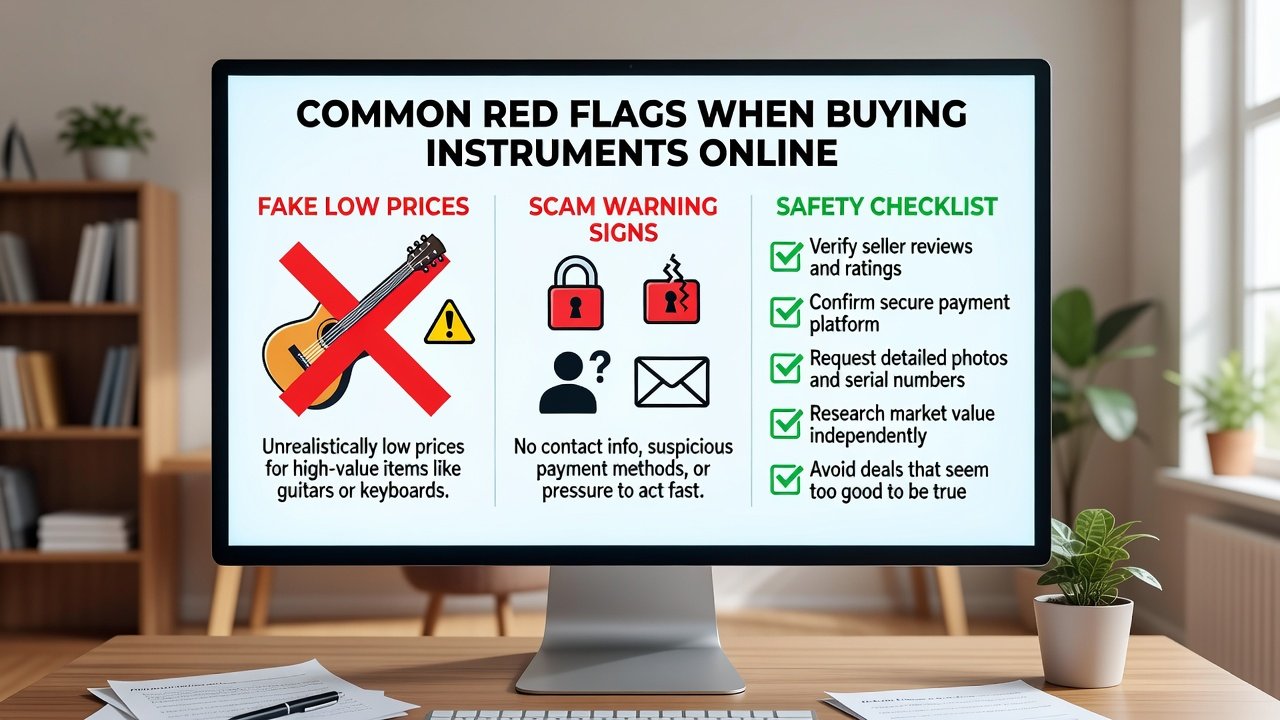
Red Flags in Online Listings
Unrealistic pricing is the most common scam indicator. Additional warnings include sellers with no reviews, pressure to use untraceable payment methods, and vague product descriptions lacking specifications or photos from multiple angles. Use this checklist to scan every listing: mismatched images, grammar errors in descriptions, and unusually fast shipping claims from distant locations. Another red flag is sellers who insist on wire transfers or cryptocurrency payments, bypassing standard buyer protections. In one documented case, a beginner drummer lost money to a listing that appeared legitimate until the instrument never arrived and communication ceased. Always trust your instincts and walk away from deals that feel too good to be true.
Checklist for Inspecting Listings
- High-resolution photos from all sides, including close-ups of serial numbers and hardware
- Detailed specifications matching the model year and any included accessories
- Clear seller contact information and comprehensive return policy stated upfront
- Recent positive reviews with photos from verified buyers showing the actual product received
- Secure checkout process with buyer protection programs enabled
- Transparent shipping details including insurance coverage and tracking options
- Evidence of professional packaging and handling procedures
Tips for Reading Reviews Effectively
Focus on verified purchase reviews from the past six months. Look for patterns in complaints about quality or shipping rather than isolated negative comments. Cross-check reviews on independent sites to detect fake feedback. Pay attention to how sellers respond to criticism—professional replies indicate good customer service. Beginners should also search for video reviews on external platforms to see the instrument in action before deciding. This layered approach reveals both strengths and potential weaknesses not mentioned in official descriptions.
Payment Security Best Practices
Always use credit cards or established payment platforms that offer dispute resolution. Avoid direct bank transfers or gift cards, which provide little recourse if problems arise. Enable two-factor authentication on all accounts and monitor transactions closely after purchase. These habits align with official consumer protection guidelines and significantly reduce risk when transacting online for high-value items like musical instruments.
Common Mistakes Beginners Make
Many first-time buyers overlook the importance of measuring their available space for larger instruments such as pianos or drum sets. Others skip reading the full return policy, leading to disappointment if the item does not meet expectations. Rushing the decision without comparing at least three similar listings is another frequent error. Taking time to follow the verification steps outlined earlier prevents these pitfalls and leads to more satisfying purchases.
Shipping, Setup, and Aftercare Advice
Factor in shipping insurance and professional setup costs for larger instruments like pianos or drum kits. Many retailers offer virtual setup guides or partner with local technicians. After arrival, register your instrument immediately for warranty activation and store all documentation securely. Proper aftercare includes regular maintenance checks and climate control for wooden instruments to prevent warping. For violins and guitars, consider humidity packs and cases to extend lifespan.
Frequently Asked Questions
How long does shipping usually take?
Domestic orders typically arrive in 3–7 business days, while international shipments may require 2–4 weeks with proper tracking and insurance. Always confirm estimated delivery windows at checkout.
What if the instrument arrives damaged?
Contact the seller within 48 hours with photos and use the return policy or insurance claim process immediately. Reputable platforms provide step-by-step guidance for filing claims.
Can I get help with initial setup?
Many platforms provide video tutorials or connect buyers with certified local technicians for professional assembly and tuning. Some include free virtual consultations as part of the purchase.
Are used instruments a safe option online?
Yes, when purchased from verified sellers with detailed condition reports and return options. Inspect serial numbers and request service history to ensure quality.
How do I handle returns across borders?
Review international return policies carefully, as shipping costs may not be refundable. Use platforms with clear cross-border buyer protections to simplify the process.
Conclusion
With careful planning and the verification steps outlined above, buying musical instruments online in 2026 can be both safe and rewarding. Prioritize reputable sellers, thorough inspections, and strong warranties to enjoy your new instrument for years. Start your search today with confidence using these proven strategies. For additional consumer protection resources, visit ftc.gov and bbb.org.


No comments yet. Be the first!