 Instrumentiverse

Introduction to Ear Training for Multiple Instruments
Ear training strengthens your ability to recognize pitches, rhythms, and harmonies by sound alone. This 2026 guide focuses on beginner-to-intermediate musicians who want practical results without heavy theory. Daily 10-minute sessions deliver steady progress across guitar, piano, drums, and violin. Many players struggle with intonation or timing because they rely too heavily on visual cues or muscle memory instead of active listening. By dedicating short focused time each day, you develop relative pitch skills that transfer directly to performance, composition, and improvisation.
Whether you play one instrument or several, these exercises target real musical situations. You will learn interval recognition drills, rhythm matching exercises, and chord identification methods tailored to each instrument. The routines require no expensive equipment beyond what you already own, and they build foundational listening accuracy that supports more advanced theory later.
Why Consistent Ear Training Matters
Strong ears improve intonation, timing, and improvisation. Guitarists hear chord changes faster during band practice. Pianists catch wrong notes quickly when sight-reading. Drummers lock into grooves with greater precision. Violinists refine pitch accuracy under varying room acoustics. Research from institutions like MusicTheory.net shows that short daily practice outperforms long weekly sessions because it reinforces neural pathways through repetition. Consistent training also reduces performance anxiety since you trust your hearing more than sheet music alone.
Without ear training, musicians often plateau at the intermediate level. They can play scales and chords but struggle to learn songs by ear or transpose on the fly. Ten minutes daily creates compounding benefits over weeks and months.
Interval Recognition Drills
Start with major and minor seconds, then expand to perfect fifths and octaves. Sing the interval before playing it on your instrument to connect voice and ear. Record yourself and compare playback to reference tones. Practice ascending intervals first, then descending, and finally mixed directions.
Guitar Approach
Use open strings as reference points. Play the low E string, then move to the A string for a perfect fourth. Repeat while humming the notes. Try this on different positions of the neck to hear how timbre changes affect perception. A common example is recognizing the first two notes of "Amazing Grace" as a perfect fourth.
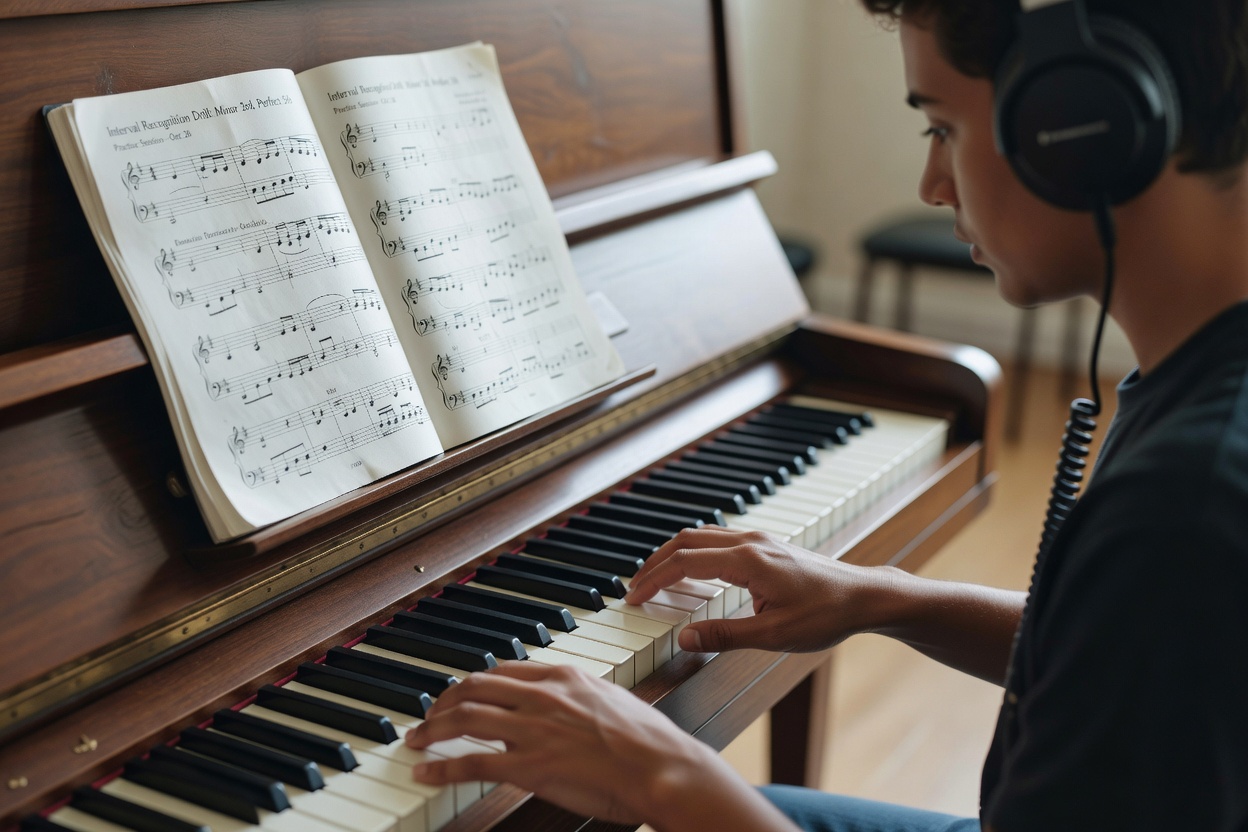
Piano Approach
Press middle C, then move to E for a major third. Visualize the keyboard shape while listening. Practice with both hands separately to train each ear independently. An effective drill involves playing a random note and guessing the interval before checking.
Drums Approach
Focus on rhythmic intervals using hi-hat and snare patterns. Count the space between hits to internalize timing intervals. Use a metronome at 60 BPM and insert one-beat gaps to simulate simple intervals in time.
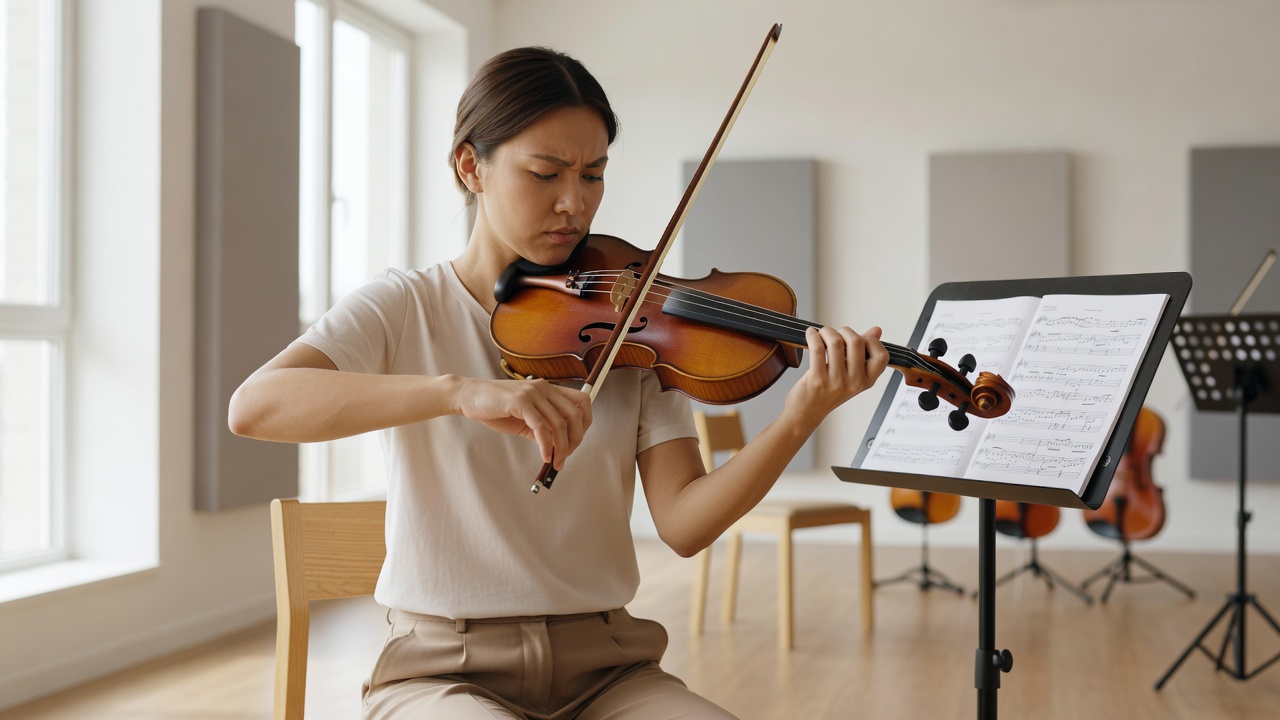
Violin Approach
Play open A, then shift to D for a perfect fourth. Use open strings to anchor your ear. Shift positions slowly while sustaining the note to hear microtonal differences. Double stops help reinforce interval relationships physically.
Rhythm Matching Exercises
Clap or tap along with a metronome, then match recorded loops. Increase complexity by adding subdivisions. Record your attempts and listen back critically for accuracy in placement and dynamics. Start simple and layer polyrhythms later.
- Week 1: Simple quarter notes at 60 BPM for five minutes
- Week 2: Add eighth notes and rests while maintaining steady pulse
- Week 3: Introduce syncopation using off-beat accents
- Week 4: Mix meters such as 3/4 and 6/8 with gradual tempo increases
These exercises build groove awareness that benefits all instruments, especially drums and guitar strumming patterns.
Chord Identification Methods
Listen for the quality of major, minor, dominant seventh, and diminished chords. Start with root position only before moving to inversions. Play the chord, pause, and sing the root note back. Compare similar chords side by side to isolate the third or seventh that defines quality.
| Instrument | Chord Exercise | Tip |
|---|---|---|
| Guitar | Strum open chords while identifying by ear | Mute strings to isolate bass notes |
| Piano | Play block chords in different inversions | Focus on the third of the chord |
| Drums | Match kick-snare patterns to chord changes | Listen for harmonic rhythm |
| Violin | Double stops to hear intervals within chords | Compare to open strings |
Common Mistakes to Avoid
Many beginners rush through drills without singing first. Others skip recording playback and miss subtle errors. Avoid practicing only in one key or at one tempo. Rotate between instruments if you play multiple to prevent ear fatigue. Do not rely solely on apps; combine them with acoustic playing for better transfer to live music.
Sample 4-Week Progression Plan
Week 1: Focus on intervals only, 10 minutes daily. Spend three minutes singing, five minutes playing, and two minutes reviewing recordings. Week 2: Add rhythm drills for the second half of each session. Week 3: Introduce basic triads and identify major versus minor qualities. Week 4: Combine all three skills in short musical phrases by playing simple melodies and guessing the underlying harmony. Track accuracy in a notebook or spreadsheet to visualize improvement.
Frequently Asked Questions
How long until I notice improvement?
Most players report clearer hearing after 14–21 consistent days of 10-minute sessions.
Do I need perfect pitch?
No. Relative pitch is sufficient and more useful for most musicians in ensemble settings.
Can I train without an instrument?
Yes. Singing and clapping exercises work anywhere and build the core skill of internal hearing.
What if I hit a plateau?
Change one variable such as tempo, key, or instrument. Add a new interval type or practice with a partner for accountability.
Free Resource Links
Explore further at MusicTheory.net for interactive interval trainers. Visit BBC Sounds for high-quality audio examples and Khan Academy for supplementary music lessons that reinforce listening concepts. Stay consistent and your ears will guide your playing with greater confidence and musical intuition.
No comments yet. Be the first!