 Instrumentiverse

2026 Guide: Common Mistakes When Learning Guitar, Piano, Drums & Violin
Learning a musical instrument in 2026 offers exciting opportunities for creative expression and personal growth, but beginners frequently encounter avoidable errors that slow progress or cause frustration. This comprehensive guide examines the most frequent mistakes across guitar, piano, drums, and violin, focusing on posture habits, practice routines, equipment misuse, and progression plateaus. Drawing from real examples and proven strategies, you'll discover instrument-specific issues, step-by-step corrections, practical routines, a comparison table, expanded case studies, and an FAQ to help build sustainable skills that last throughout the year and beyond.
Incorrect Posture Habits Across Instruments
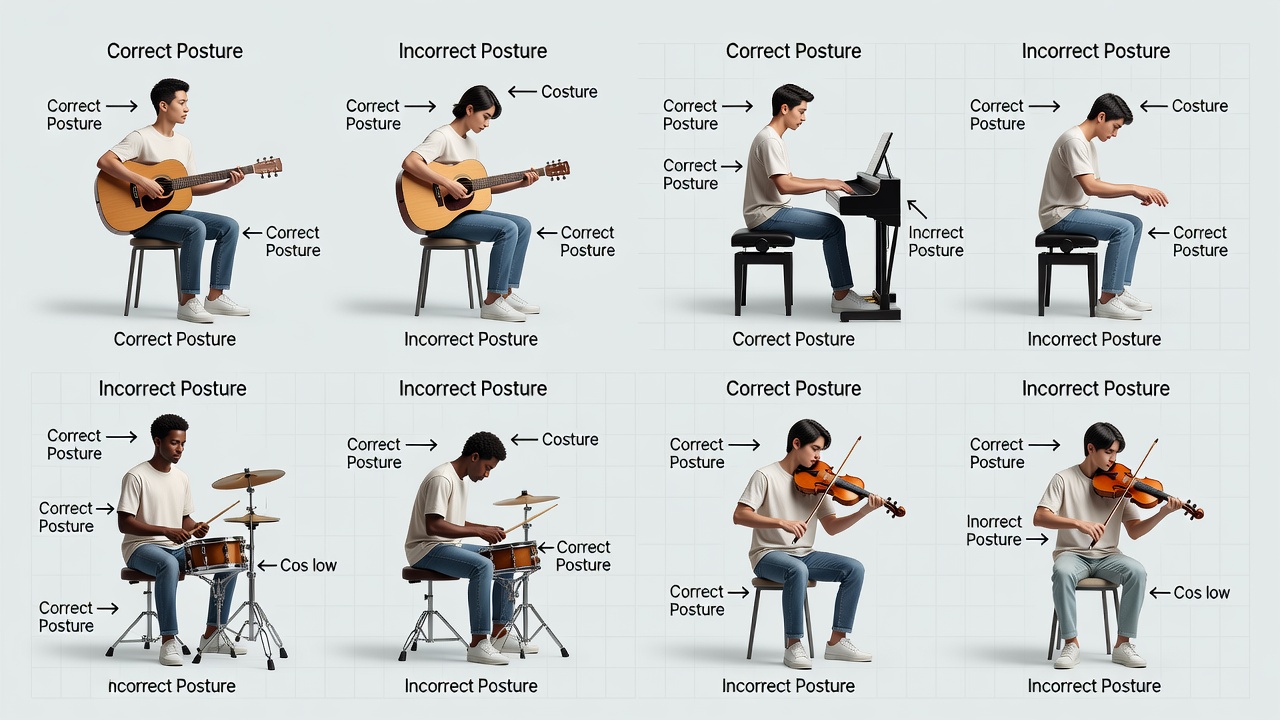
Poor posture is one of the earliest and most damaging mistakes beginners make. It leads to tension, pain, fatigue, and inconsistent sound production. Guitarists often slouch forward while seated or standing, which strains the lower back and wrists over time. Pianists commonly sit too low or hunch their shoulders, restricting finger independence and reach across the keys. Drummers may lean excessively forward on the throne, throwing off balance and reducing control over pedals and cymbals. Violinists frequently tilt their heads at awkward angles without proper support, resulting in neck and shoulder strain that limits bow control.
Step-by-step fixes start with awareness. Guitar players should use an adjustable strap or footstool to position the instrument at roughly a 45-degree angle, keeping the back straight and shoulders relaxed. Pianists need to adjust bench height so forearms remain parallel to the floor and wrists stay level. Drummers should set throne height for feet flat on the floor with knees at 90 degrees. Violinists benefit from a quality shoulder rest and chin rest combination for neutral head position. Incorporate weekly mirror checks or video recordings of practice sessions to identify and correct issues early. Consistent attention to posture prevents long-term injuries and improves tone quality across all four instruments.
Poor Practice Routines and How to Fix Them
Another widespread problem involves ineffective practice habits. Many beginners practice sporadically, skip foundational exercises, or focus exclusively on playing songs without building technique. Guitarists often bypass scale work and chord transitions, leading to sloppy playing. Pianists neglect sight-reading and hand independence drills. Drummers avoid rudiment practice, resulting in weak timing and coordination. Violinists skip intonation and bowing exercises, creating uneven tone.
To build better routines, aim for focused 30-to-60-minute daily sessions. Begin each practice with a five-minute warm-up of technique exercises such as scales or arpeggios. Move to targeted repertoire work, then dedicate time to reviewing mistakes from previous sessions. End with a cool-down of slow, mindful playing. Use a metronome or app to develop timing, and maintain a practice journal to track goals and improvements. For guitar, include alternate picking drills. Pianists should alternate hands-separate and hands-together exercises. Drummers can rotate through single-stroke rolls and paradiddles. Violinists benefit from open-string bowing and scale intonation checks. Over time, these structured routines replace random playing and accelerate skill development.
Equipment Misuse and Practical Corrections
Improper equipment handling creates unnecessary obstacles. Guitarists using the wrong pick size or gauge struggle with control and speed. Pianists often overlook proper pedal technique on digital or acoustic instruments, missing opportunities for expressive phrasing. Drummers may overtighten drumheads, producing harsh tones and shortening head life. Violinists apply excessive rosin to bows, causing scratchy sounds and buildup on strings.
Corrections involve matching gear to current skill level and learning basic maintenance. Start guitar with medium-thickness picks and experiment gradually. Pianists should study basic sustain and soft pedal functions early. Drummers need a drum key and follow step-by-step tensioning patterns around each head. Violinists learn to apply rosin lightly in short strokes. Always consult manufacturer guidelines and consider professional setup for new instruments. These adjustments improve sound quality immediately and extend equipment lifespan.
Overcoming Progression Plateaus
Plateaus happen when motivation wanes or challenges feel overwhelming. Beginners may repeat the same material without introducing new concepts. A comparison table highlights instrument-specific errors to watch for:
| Instrument | Posture Error | Practice Mistake | Equipment Issue |
|---|---|---|---|
| Guitar | Slouching over neck | Skipping scales | Wrong pick size |
| Piano | Low bench height | No sight-reading | Ignoring pedals |
| Drums | Forward lean | Neglecting rudiments | Overtightened heads |
| Violin | Awkward head tilt | Poor intonation focus | Excess rosin |
Real-World Case Studies of Beginners
Case study one involves a 28-year-old guitarist who corrected chronic slouching by adding a padded strap and raising the instrument angle. Within three weeks, stamina increased dramatically, allowing longer practice without back pain. Case study two features a teenager learning piano who incorporated 15 minutes of daily sight-reading from simple hymn books. After six weeks, reading speed improved noticeably and plateaus disappeared. Case study three describes a drummer who adjusted throne height and learned proper head tensioning; back discomfort vanished and groove consistency rose. Case study four follows a violin beginner who switched to a better shoulder rest and reduced rosin application, achieving clearer tone and reduced tension within a month. Each example demonstrates how targeted fixes produce measurable results when applied consistently.
Building Sustainable Skills in 2026
Long-term success requires combining deliberate practice with occasional expert feedback. Create weekly goals, record progress videos monthly, and join online communities for accountability. Explore structured courses from Berklee College of Music or Juilliard for guided learning paths. Incorporate rest days to prevent burnout and always prioritize listening skills alongside technical work.
Common Mistakes to Avoid
- Practicing longer than focused attention allows
- Ignoring warm-ups before playing
- Buying advanced equipment too early
- Comparing progress to others instead of personal benchmarks
- Skipping ear training and theory basics
FAQ
How long before seeing noticeable improvement? Most dedicated beginners observe clear changes in 4-6 weeks of consistent daily practice.
Is it better to learn multiple instruments simultaneously? Focus on one instrument initially to build strong foundational habits before adding others.
Are online tutorials sufficient in 2026? Yes, when combined with deliberate practice, self-recording, and periodic live feedback from teachers.
What should I do when motivation drops? Set small achievable goals, change practice locations, or join group lessons for renewed energy.
How important is professional setup for new instruments? Essential; a proper setup prevents many equipment-related frustrations from the start.
By addressing these common mistakes with concrete strategies, beginners can develop reliable skills and enjoy musical growth throughout 2026 and future years.

No comments yet. Be the first!