 Instrumentiverse
Introduction: Bridging Rock Legacy with Electronic Innovation
In 2026, electronic music producers continue to mine classic rock catalogs for fresh creative fuel. Overlooked tracks from the 1960s through the 1980s deliver distinctive riffs, dynamic structures, and organic tones that translate exceptionally well into synth-driven productions. This comprehensive guide examines five underappreciated rock recordings, offering detailed breakdowns, tempo mapping strategies, and practical DAW workflows that help producers integrate guitar-driven elements into modern electronic contexts. Whether you are building tech-house grooves, ambient techno pads, or bass-heavy hybrids, these techniques emphasize original recreation over direct sampling to stay copyright compliant.
Electronic music has long borrowed from rock, yet many producers overlook deeper cuts in favor of obvious hits. By focusing on lesser-known material, you gain access to unique harmonic movement and rhythmic phrasing that stand out in today’s crowded market. The following sections provide concrete examples, step-by-step adaptation processes, and genre-blending comparisons that turn historical rock elements into contemporary electronic assets.
Track Breakdowns: Five Overlooked Rock Gems for 2026 Productions
Each track below contains specific musical features that map directly to electronic production techniques. Rather than sampling the commercial masters, the goal is to recreate and transform these elements using modern tools.
1. "The Rover" by Led Zeppelin (1975)
Jimmy Page’s palm-muted main riff combines syncopated bends with driving eighth-note chugs. The original sits around 92 BPM and features a gritty, midrange-focused tone ideal for layering beneath punchy electronic kicks. Producers can slow the riff to 82 BPM for deeper low-end synergy, then process it through a modeled amp plugin to retain bite while feeding it into a sidechained compressor. Pairing the recreated riff with a rolling 808 bassline creates a hybrid groove suited to 2026 tech-house sets.
2. "Kashmir" by Led Zeppelin (1975)
Although well-known, the orchestral string-like guitar lines and descending motifs offer rich source material for ambient and progressive electronic music. The track’s slow 80 BPM pulse and modal phrasing translate beautifully when stretched across evolving synth pads. Use wavetable oscillators to mimic the bowed-string quality, then modulate filter cutoff with an LFO synced to 1/4 notes for movement that echoes the original’s swelling dynamics.
3. "Echoes" by Pink Floyd (1971)
The 23-minute composition contains sonar pings, reversed guitar textures, and a haunting four-note motif. At roughly 60 BPM, the motif stretches naturally across downtempo or IDM productions at 128 BPM when granular synthesis is applied. Isolate the motif, apply heavy time-stretching, and feed the result through a spectral processor to generate shimmering harmonic layers that retain the original’s eerie atmosphere.
4. "Hocus Pocus" by Focus (1971)
This instrumental track features rapid yodeling guitar passages and flute melodies over a driving rock rhythm. The main riff sits near 140 BPM and contains quirky intervallic leaps perfect for glitch or electro reinterpretation. Transpose the riff up a perfect fifth, quantize it lightly, and route it through a bit-crusher and resonant filter to create sharp, synthetic stabs that cut through dense electronic arrangements.
5. "Frankenstein" by The Edgar Winter Group (1972)
The track’s powerful organ stabs and tight rhythmic hits provide excellent source material for trap and future-bass drops. The original hovers around 108 BPM. Map the stab patterns to a sampler, trigger them via MIDI, and layer with 808s and rapid hi-hat rolls. This approach preserves the energetic call-and-response feel while fitting contemporary electronic drum programming.
Tempo and Riff Adaptation: Detailed Step-by-Step Workflow
Adapting rock riffs requires careful timing and tonal adjustments. Follow this expanded workflow in any major DAW:
- Import the reference track and use built-in BPM detection or third-party analyzers to confirm tempo.
- Isolate the riff using narrow EQ cuts and transient designers to emphasize attack.
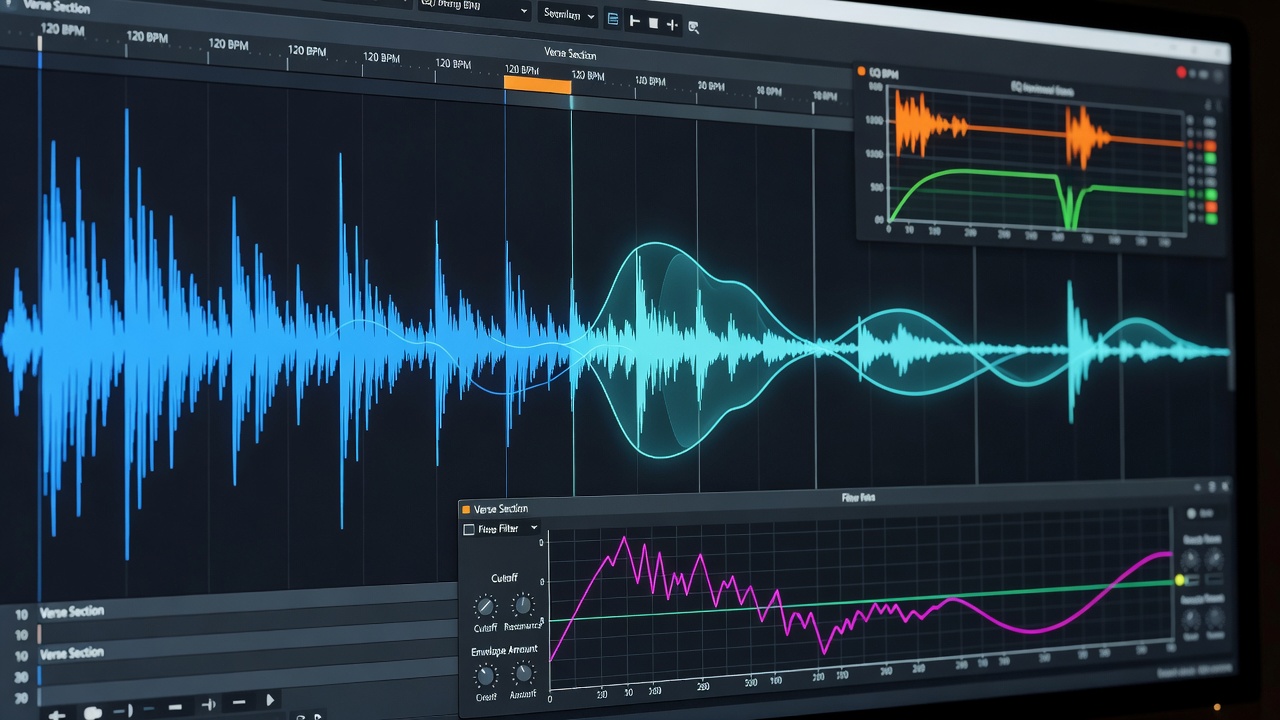
- Apply time-stretching algorithms that preserve swing; most DAWs offer groove templates that maintain the original feel at new tempos.
- Recreate the riff using either sampled guitar or synth emulations—Serum or Phase Plant excel at modeling guitar harmonics through wavetable or additive engines.
- Process the recreated part with saturation, subtle chorus, and automated filter movement to add electronic character.
- Sidechain the entire guitar/synth layer to the kick drum for rhythmic pumping that locks the element into the electronic groove.
- Export stems and A/B against reference electronic tracks to ensure mix balance.
These steps can be repeated across multiple sections of a song, allowing producers to build full arrangements inspired by rock structures without direct copying.
Genre Blending Comparisons
Rock’s analog warmth and dynamic range differ markedly from electronic music’s precision and repeatability. Queen’s multi-layered guitar walls, for instance, achieve width through physical tracking variations, while modern supersaw stacks rely on detune and unison voices. Comparing Black Sabbath’s down-tuned riffs to current bass-music sub-bass design reveals parallel approaches to low-frequency weight. Producers working in psych-rock and IDM hybrids often reference early Tangerine Dream alongside classic rock for atmospheric builds that feel both nostalgic and futuristic.
Integrating Guitar Tones into Synth-Driven Tracks
Authentic guitar tones remain essential when bridging genres. Load amp simulators such as Guitar Rig or Amplitube, then route the signal through parallel chains—one clean for body and one heavily saturated for presence. Blend these with synth pluck patches using bus processing and mid-side EQ to carve space. Record live guitar whenever possible; even short DI takes can be re-amped and processed to match the energy of the original rock performances while remaining fully original creations.
Copyright Basics and Sampling Pitfalls: Expanded FAQ
- How much of a recording can I legally use? There is no fixed percentage; even short excerpts can trigger claims. Always recreate musical elements manually or obtain clearance through proper channels.
- What resources help verify public-domain status? Consult the U.S. Copyright Office for current guidelines on pre-1929 recordings and termination rights.
- Are there recommended archives for historical reference? The Rock & Roll Hall of Fame maintains extensive liner notes and session documentation useful for understanding original production techniques.
- What common mistakes should producers avoid? Over-reliance on recognizable melodies, neglecting key changes, and ignoring arrangement differences between rock and electronic forms all reduce originality.
Additional guidance appears on the Library of Congress copyright pages, which outline fair-use factors relevant to music creators in 2026.
Conclusion
These overlooked rock tracks supply timeless building blocks for 2026 electronic music. By studying their structures, recreating their tones, and adapting their tempos with care, producers develop distinctive sounds that respect both history and current legal standards. Experiment with the workflows above, iterate on the examples provided, and share your resulting productions within the community.

No comments yet. Be the first!