 Instrumentiverse
Introduction to Music Genre Evolution in 2026
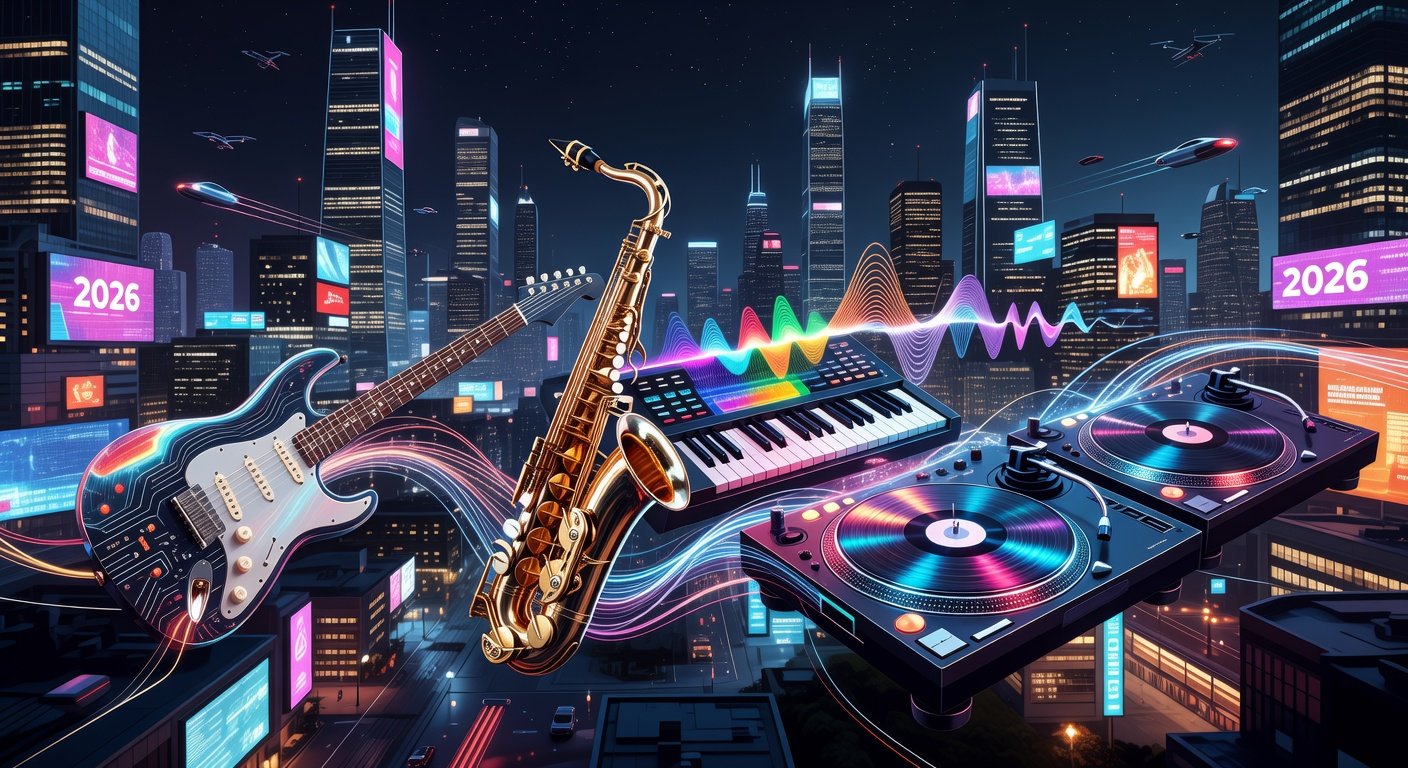
The landscape of music in 2026 reflects decades of creative fusion. Rock's raw energy, hip hop's rhythmic innovation, jazz's improvisational depth, and electronic music's sonic experimentation have intertwined to create hybrid sounds that define contemporary listening. This guide examines these connections for beginners, offering timelines, artist examples, and actionable steps to explore fusions. The interconnected nature of these genres means that understanding their histories unlocks new appreciation for current tracks dominating streaming platforms.
Understanding these evolutions helps listeners appreciate how early milestones continue to influence today's productions. From 1950s rock foundations to 2026 playlist curation, the journey reveals endless cross-pollination. Genre boundaries have blurred significantly, allowing artists to draw from multiple traditions simultaneously for richer compositions.
Early Rock Milestones and Their Lasting Impact
Rock emerged in the 1950s with pioneers blending blues, country, and rhythm and blues. Artists like Chuck Berry and Little Richard laid groundwork through energetic guitar riffs and storytelling lyrics. These elements directly inspired hip hop's breakbeats and sampling techniques in the 1970s Bronx scene. The driving backbeat of early rock records became the template for looped drum patterns that hip hop producers would later isolate and manipulate.
Jazz improvisation techniques, rooted in bebop and swing eras, found parallels in rock's extended solos. By the 1960s, bands incorporated jazz chords into rock arrangements, foreshadowing later electronic textures. This era also saw the rise of concept albums that encouraged narrative depth, a trait later adopted in hip hop storytelling and jazz suites.
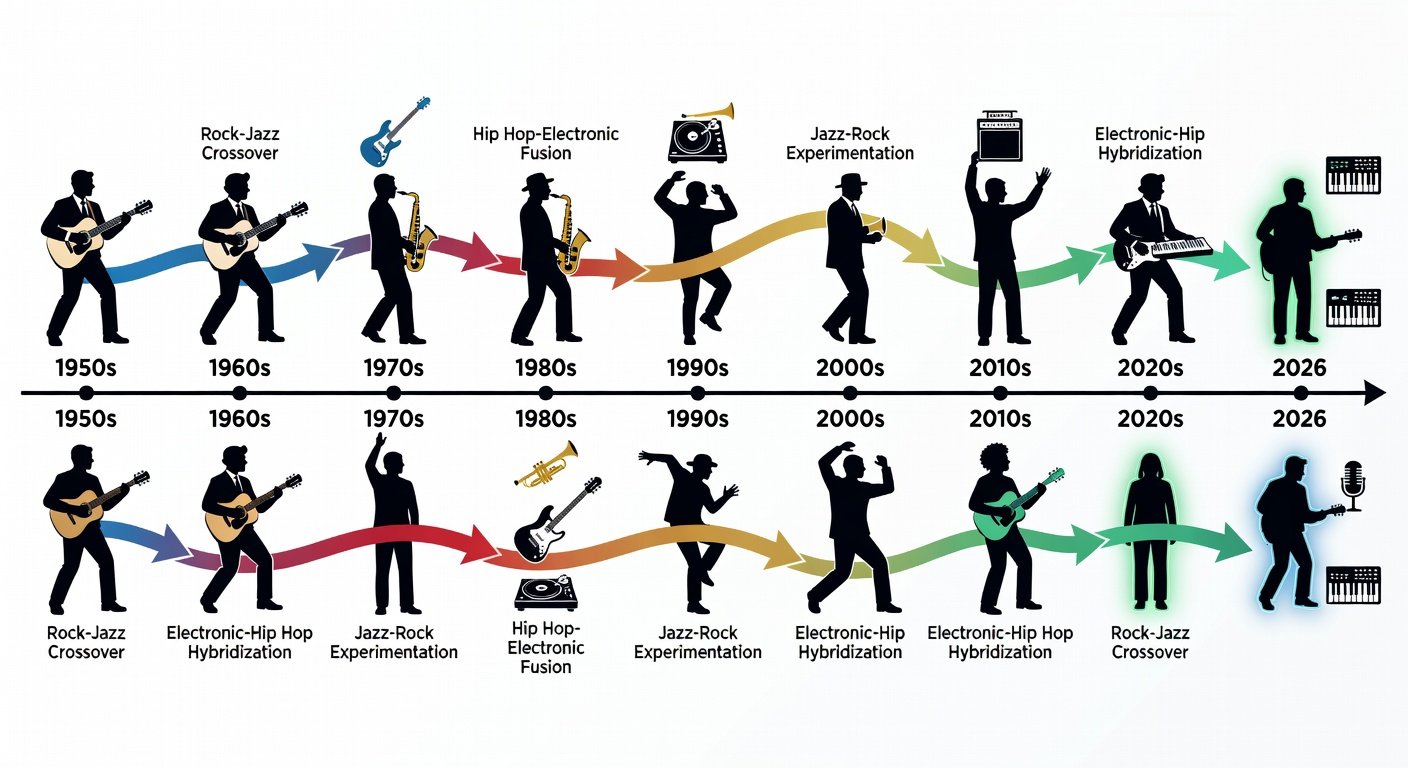
Timeline of Key Rock Crossovers
- 1950s: Birth of rock 'n' roll influences hip hop sampling decades later through iconic guitar licks and vocal styles.
- 1960s-1970s: Progressive rock merges with jazz for complex compositions that expanded song structures beyond three-minute formats.
- 1980s: Rock-rap hybrids emerge, paving way for electronic remixes and genre-blending experiments in clubs worldwide.
- 1990s-2000s: Nu-metal and alternative scenes integrate hip hop flows with rock instrumentation for mainstream crossover hits.
- 2010s-present: Digital production fuses all genres into new forms, with AI-assisted tools accelerating 2026 innovations.
Hip Hop Rhythms Born from Rock and Jazz
Hip hop producers drew from rock drum breaks and jazz basslines to craft their foundational sound. Grandmaster Flash's turntablism echoed rock's live energy while adopting jazz's syncopation. In 2026, modern tracks often layer rock guitars over hip hop beats with jazz piano accents, creating dense sonic layers that reward repeated listens. This borrowing extends to live instrumentation where jazz horn sections punctuate rap verses.
Standout examples include Public Enemy's use of rock samples and Kendrick Lamar's jazz-infused albums that demonstrate rhythmic sophistication. These fusions demonstrate how rhythms evolve across genres, turning historical elements into contemporary tools for emotional expression and cultural commentary.
Jazz Improvisation Meets Electronic Production
Jazz's emphasis on spontaneity translates seamlessly into electronic music through modular synths and live looping. Artists like Miles Davis experimented with electric instruments, influencing 2026 producers who blend acoustic jazz with digital effects for atmospheric depth. Electronic genres such as house and techno incorporate jazz scales for melodic depth, creating immersive soundscapes popular in today's streaming charts.
Further crossovers appear in downtempo and ambient styles where saxophone improvisations ride over glitchy beats. This combination allows for extended musical conversations that mirror live jazz sessions but within digital frameworks accessible to bedroom producers.
Standout Artist Examples Across Eras
Key figures illustrate the bridges between genres. Jimi Hendrix fused rock with jazz phrasing in his guitar work. Run-DMC brought rock energy to hip hop through collaborations. Herbie Hancock explored electronic jazz fusions that prefigured modern production. In 2026, artists like Anderson .Paak continue this legacy by merging all four genres in live performances and recordings.
Additional examples include The Roots incorporating live band elements reminiscent of rock and jazz into hip hop, and electronic acts like Bonobo drawing on jazz harmonies for their downtempo tracks. These cases provide concrete models for listeners to trace influences.
Building Your 2026 Playlist: Practical Listening Exercises
Start with foundational tracks from each era, then progress to fusions. Follow these steps for a structured approach:
- Listen to classic rock like The Beatles' Revolver for structural influences on songwriting and arrangement.
- Explore early hip hop such as Afrika Bambaataa's works to hear rhythm borrowing from rock breaks and jazz phrasing.
- Study jazz essentials from John Coltrane before moving to electronic hybrids that reinterpret improvisation digitally.
- Compare side-by-side versions of the same song covered across genres to spot evolutionary changes.
- Curate mixes using free tools like streaming playlists, focusing on cross-genre transitions and thematic flow.
- Experiment with daily listening challenges, dedicating one week to each genre before combining them.
Compare timelines side-by-side using resources from Grammy.com, Billboard.com, and Library of Congress music collections for historical charts and archival recordings. This builds recognition of blending techniques and helps avoid superficial genre labels.
Common Mistakes to Avoid When Identifying Genres
- Overlooking subtle jazz harmonies in electronic tracks that add emotional layers beyond surface beats.
- Ignoring rock guitar influences in modern hip hop beats, which often provide the backbone for aggressive flows.
- Assuming strict boundaries rather than fluid evolutions that allow constant reinvention by new generations.
- Skipping historical context when analyzing 2026 releases, leading to incomplete understanding of creative references.
FAQ: Genre Identification and Blending Techniques
How do I tell rock from hip hop in fused tracks?
Focus on core elements: prominent electric guitars signal rock roots, while looped drums and rhymes point to hip hop. In 2026 fusions, listen for layered production that combines both with jazz or electronic flourishes for hybrid appeal.
What are effective ways to blend jazz with electronic music?
Start with improvisation over beats, adding synth pads to acoustic solos. Practice with software to experiment safely, then refine live performances incorporating real instruments for authentic texture.
Where can beginners find reliable genre timelines?
Consult established music archives and official sites for accurate historical context and crossover examples that span multiple decades of innovation.
How has electronic music accelerated genre fusions by 2026?
Digital tools enable rapid sampling and real-time collaboration, allowing producers to merge rock riffs, hip hop rhythms, and jazz chords faster than ever before in accessible home studios.
Conclusion
The evolution connecting rock history, hip hop, jazz, and electronic music continues to thrive in 2026. By engaging with timelines, artists, and listening exercises, newcomers can build meaningful playlists that celebrate these rich interconnections. Dive in today to experience the ongoing story of musical innovation and expand your sonic horizons through deliberate exploration.
No comments yet. Be the first!