 Instrumentiverse

Introduction: Blending Jazz Essentials with Modern Beats
Producers constantly search for ways to stand out in hip hop and electronic music. Jazz essentials offer a powerful toolkit for adding depth, groove, and unpredictability. Swing rhythms inject organic feel into rigid 808 patterns, while improvisation techniques spark creative sample manipulation and harmonic structures enrich chord progressions beyond basic triads. This approach moves productions away from formulaic loops toward expressive, layered soundscapes that resonate with listeners seeking something fresh. Many contemporary artists have already demonstrated success with these fusions, proving the viability of integrating jazz vocabulary into beat-driven genres.
The search for creative inspiration often leads producers to explore beyond standard trap or house templates. Jazz brings centuries of rhythmic innovation and harmonic complexity that can transform a simple beat into a dynamic journey. In this comprehensive guide, we break down swing rhythms, improvisation methods, and advanced harmonic applications with concrete examples drawn from modern tracks. You will also find step-by-step workflows, comparisons to rock history influences, and answers to frequent production questions. By the end, you will have actionable strategies to experiment confidently in your own sessions.
Understanding Swing Rhythms in Hip Hop Production
Swing, rooted in jazz, offsets the second and fourth beats slightly to create a laid-back pulse that feels human and breathing. In digital production environments, this effect is achieved by adjusting MIDI note timing in your DAW. Begin with a standard boom-bap beat at 90 BPM, then shift hi-hats and snares by 20-30 percent swing while keeping the kick drum straight for contrast. This creates tension and release that standard quantization cannot replicate. Modern examples include Kendrick Lamar’s “DNA,” where swung percussion blends seamlessly with trap elements to give the track its distinctive bounce.
Further applications appear in J Dilla’s influential work, where uneven swing on drums became a signature sound that countless producers still emulate. To implement swing effectively, start by importing a straight drum loop and gradually increasing the swing percentage while monitoring groove on both headphones and club speakers. Avoid over-swinging beyond 40 percent, as it can cause rhythmic confusion. Rock history shows early influences from artists like Chuck Berry, who borrowed swing phrasing from jazz, which later filtered into hip hop’s foundational grooves during the 1980s golden era.
Improvisation Techniques for Electronic Textures
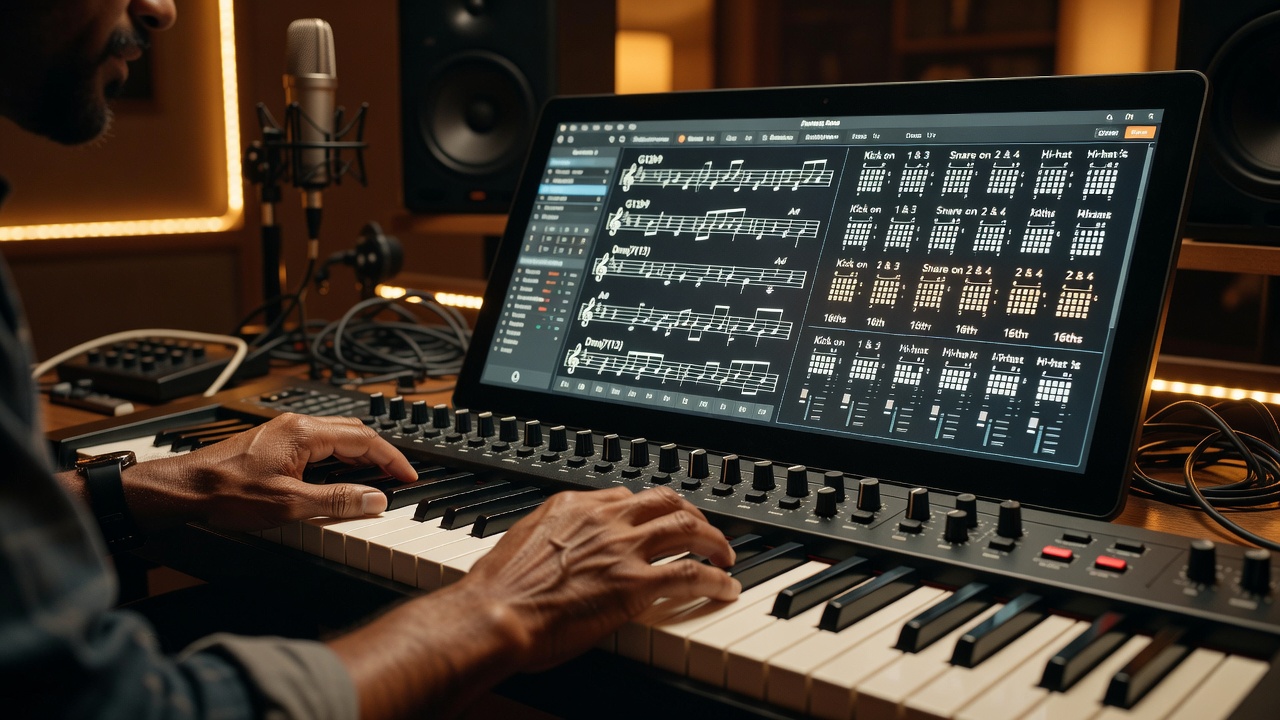
Jazz improvisation encourages real-time variation and spontaneous decision-making that translates powerfully into electronic production. Record live MIDI performances of synth leads or chop vocal samples without quantization initially. Tools like Ableton’s Capture feature allow you to preserve fleeting ideas that would otherwise disappear. Once recorded, selectively quantize only the foundational elements while leaving melodic lines loose to retain organic movement. This method mirrors how jazz musicians trade solos over changing chord changes.
A detailed step-by-step example comes from Flying Lotus productions. Layer a jazz-inspired piano riff using sampled acoustic keys, then improvise variations with pitch bends and velocity changes. After capturing several takes, comp the best phrases together and process them through granular effects to create evolving textures that sit atop electronic beats. Another practical workflow involves using a MIDI keyboard to trigger drum samples in real time, allowing fills and accents to emerge naturally rather than from pre-programmed patterns. This technique adds unpredictability that keeps listeners engaged across repeated plays.
Harmonic Structures: Beyond Basic Progressions
Jazz harmony introduces extended chords such as major and minor 7ths, 9ths, 11ths, and altered dominants that add color and tension. Replace simple minor triads in hip hop chord progressions with ii-V-I movements in your basslines and pads. For electronic music, automate filter sweeps and resonance on these rich voicings to produce pads that evolve throughout a track. Rootless voicings help prevent muddiness when combined with heavy low-end elements like 808s.
Rock history influence appears clearly in progressive rock bands that fused jazz harmony with electric guitars, a lineage later echoed in experimental hip hop productions by Madlib and others. To practice, load a jazz standard such as “Autumn Leaves” into your session and reharmonize sections using tritone substitutions. Then map the resulting chords onto synths or sampled instruments within your beat. This exercise builds intuition for sophisticated movement that elevates even the most minimal electronic arrangements.
Practical Steps to Integrate Jazz Essentials
- Load a jazz sample pack into your sampler and pitch elements to match your track’s key while preserving original swing timing.
- Apply swing quantization selectively to drums and percussion while maintaining a straight kick pattern for solid foundation.
- Experiment with call-and-response between improvised synth lines and chopped vocal phrases to create conversational energy.
- Reference full albums from artists like Robert Glasper for hybrid models that successfully merge live jazz instrumentation with programmed beats.
- Layer acoustic recordings of live instruments over electronic drums, then process the acoustic tracks with saturation and light compression.
Modern Track Examples and Analysis
Robert Glasper Experiment’s album “Black Radio” fuses jazz improvisation directly onto hip hop beats by importing live drum recordings and layering electronic 808s underneath. Producers can replicate this workflow by recording a jazz drummer playing swung patterns, then aligning them loosely with programmed kicks. Kaytranada’s productions frequently feature swung rhythms paired with rich jazz chords, demonstrating how these elements create dancefloor-ready fusions without sacrificing pocket or feel.
Additional examples include Kamasi Washington collaborations that bring expansive saxophone solos over hip hop foundations, showing how extended improvisation sections can function as breakdowns in electronic arrangements. Analyze these tracks by isolating stems where possible and noting how harmonic movement supports rather than competes with rhythmic elements. This analytical listening builds a mental library of successful fusion techniques.
FAQ: Avoiding Common Pitfalls in Jazz-Hip Hop Production
- How much swing is too much? Limit swing percentages to 25-40 percent and test mixes on multiple playback systems to ensure clarity and danceability.
- Do jazz chords clash with 808s? Use rootless voicings and apply sidechain compression triggered by the kick to maintain low-end clarity.
- Where to source authentic jazz elements legally? Check platforms and resources such as Grammy resources for guidance on licensing and sample clearance.
- Should I quantize everything? Leave melodic and solo lines unquantized or only lightly quantized to preserve authentic improvisation feel.
- How do I balance live and programmed elements? Start with programmed drums for consistency, then replace or layer select hits with live recordings for organic variation.
Conclusion: Elevate Your Beats with Jazz Foundations
Integrating jazz essentials transforms standard hip hop and electronic productions into layered, expressive works that stand out in crowded playlists. By focusing deliberately on swing, improvisation, and advanced harmony, producers unlock fresh creative territory while honoring influential cross-genre histories from rock and beyond. Experiment methodically, refine through repeated listening tests, and document what works in your sessions. Further exploration is supported by authoritative sources including NPR Jazz and Sound on Sound.
No comments yet. Be the first!